



Mesh Integration Hair Systems for Thinning Hair | Boston Hair Loss Solutions
Hair loss can affect how you look and how you feel. The mesh integration hair system is designed to bridge that gap—blending seamlessly with your natural hair to restore volume, coverage, and confidence without surgery. By combining a breathable mesh base, high-quality human hair, and careful customization, this approach delivers a natural hairline and a comfortable fit that moves like your own hair. Whether your thinning is caused by diffuse hair loss, alopecia, or trichotillomania, working with a specialist in Hair Loss Boston solutions can help you find a customized system that looks natural and protects your existing hair.
Whether your thinning is diffuse, patchy, or concentrated at the crown or hairline, a tailored mesh system can be matched to your color, texture, and lifestyle for results that feel authentic from day one. At Noelle Salon, we provide custom hair loss solutions Boston clients trust for mesh integration systems, toppers, and non-surgical hair replacement. This guide outlines what mesh integration is, how it works step by step, the key benefits, installation timeline, and long-term care.
Mesh Integration at Noelle Salon

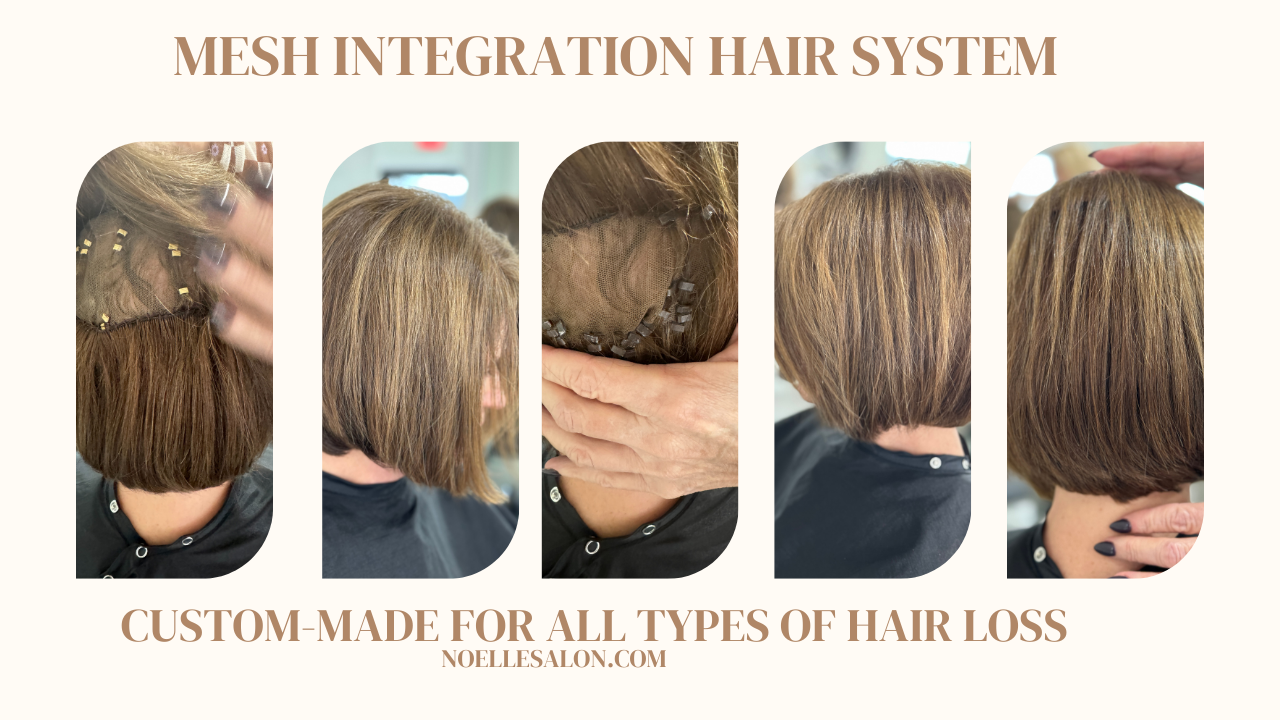
Left: the mesh integration base with a sew-in topper. Right: the finished, blended result at Noelle Salon in Melrose, MA.

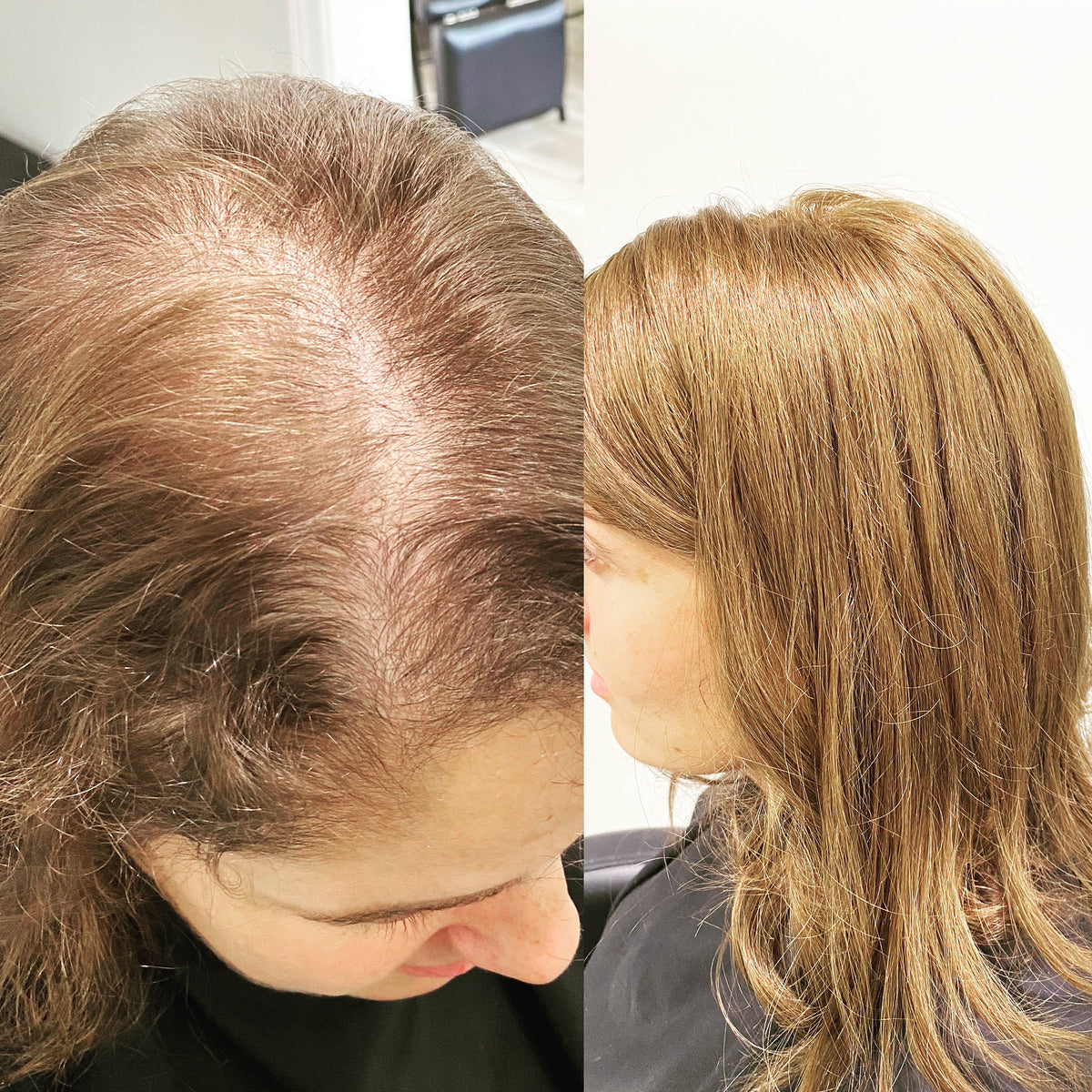
Before and after a mesh integration hair system at Noelle Salon.
What Is a Mesh Integration Hair System and How It Works (Step-by-Step)
A mesh integration hair system is a non-surgical hair replacement solution that attaches a lightweight, breathable mesh to areas of thinning or loss, then blends the wearer’s natural hair through the mesh and adds hair wefts or closures to complete coverage. The goal is to create a secure, undetectable enhancement that mimics the movement, color, and density of your own hair while preserving access to your scalp for comfort and care. Here’s how it works at a glance; full step-by-step details follow below.
Main Components of the Mesh System
- Soft mesh or HD lace base: A flexible foundation measured to your hair-loss pattern, designed to sit comfortably and allow airflow to the scalp.
- Microbeads or tiny anchors: Small attachment points that secure the mesh in healthy hair zones for stability and minimal tension.
- Micro wefts and toppers: Real human hair is sewn around the anchor points to build density; a small closure or topper can be added where extra coverage is needed.
- Color and texture matching: Custom blending ensures the added hair matches your shade, curl pattern, and natural movement.
Tips for Seamless Hairline Finishing
Careful placement and styling help the front blend invisibly with your own hairline, creating a soft, undetectable transition that holds up in different lighting.
Customization Options for Color and Texture
Effectively integrating the mesh base is central to achieving a truly natural result. A stylist begins by assessing your natural growth patterns, density, and scalp condition to determine where and how the mesh should sit. Careful mapping of the hairline, part, and swirl ensures the system mirrors the way your own hair falls. Matching the system’s shade and undertone to your natural hair color—and blending multiple tones when needed—creates a smooth, undetectable transition that looks right in different lighting conditions. Attention to proportional density keeps the result believable and flattering from every angle.
Integration with your natural hairline and shade is what creates that seamless appearance. When the system is positioned properly, your own hair is gently drawn through the mesh to intermix with added strands, which helps the overall look read as authentically yours. This approach is versatile enough to address thinning hair, partial hair replacement needs, and patterned loss, and it can be adapted whether you’re seeking subtle enhancement or fuller coverage. Proper at-home care and scheduled maintenance further support longevity, comfort, and day-to-day styling ease.
Key Benefits of Using a Mesh Integration Hair System
Now that you understand how the mesh integration system functions, let’s explore its key benefits.
Mesh Scalp Lace Functionality and Benefits
The mesh scalp and lace base provide a soft, breathable structure that supports both comfort and realism. This human hair system integrates with your own hair to deliver instant volume and a secure feel, while the flexible mesh contours to your head for a natural look. Because the base is thin and responsive, it can be tailored to cover only the areas that need it—minimizing bulk while maximizing coverage. When installed and maintained correctly, the system supports many lifestyles and remains a reliable, long-term option for those seeking a natural hair replacement solution.
Mesh Integration for Trichotillomania: Support and Coverage
For individuals with trichotillomania, the mesh integration system can offer both aesthetic and practical benefits. The system provides instant volume, a soft, realistic hairline, and a comfortable barrier that may help reduce direct access to areas prone to pulling. By blending naturally with existing hair, it supports confidence while offering gentle coverage where breakage or patchiness is most noticeable. Our clients who have tried other types of hair loss systems often describe mesh integration as a more natural-looking and comfortable option that supports day-to-day life without drawing attention.

Step-by-Step Details: How the Mesh Integration System Works
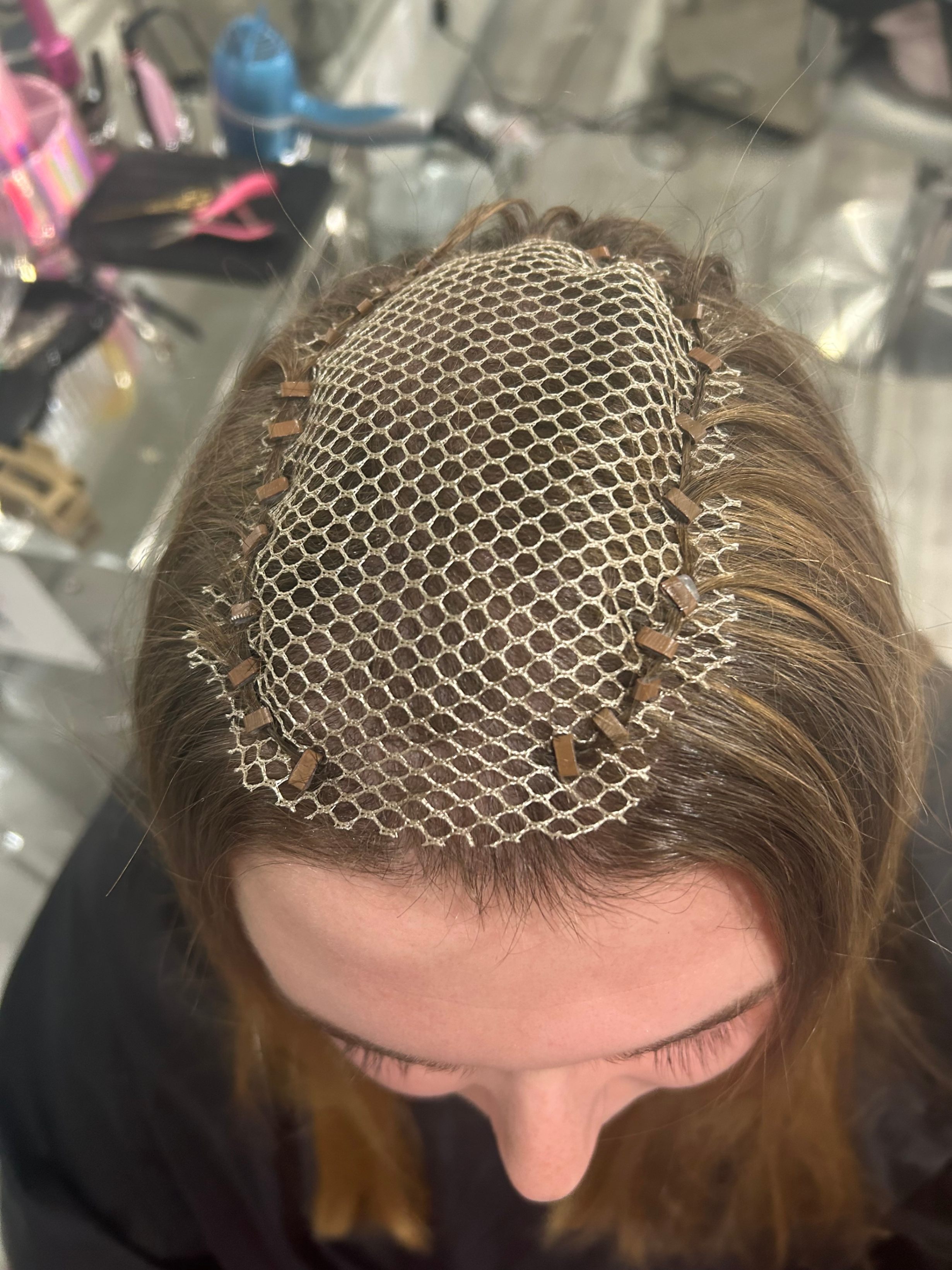
Building on the overview above, a comfortable HD lace base is measured to the exact dimensions of your thinning or hair-loss area—this is especially helpful for patterns such as female pattern baldness. Your existing hair is gently guided through the lace and secured with microbeads, placed only in healthy hair zones to maintain scalp comfort. Once the foundation is set, the stylist selects and blends micro wefts to build natural density, then sews them around the anchored beads for stability. Where extra coverage is needed—such as the crown or front—a small closure or topper can be added and carefully blended into your part or hairline.
This step-by-step process allows your natural hair and the added hair to intermix in a way that maintains believable movement. Because the system is custom-fit, it avoids unnecessary weight in delicate areas while still achieving the fullness and profile you want. The result is a breathable, stable base with a finished style that can be worn confidently and cared for with straightforward routines.
Step-by-Step Installation and Same-Day Service
Having explored the benefits, it’s essential to know how installation works and what to expect with same-day service.
Our salon is fully stocked with hair toppers, hair extensions, and lace closures in a wide range of textures and colors. With multiple HD lace shades to match your scalp, you can sit with a stylist who will customize a mesh integration system to mirror your color, texture, density, and placement needs. From selecting the right blend to sewing and finishing, we tailor each step so your enhanced hair looks and feels like your own, replacing volume exactly where it’s missing.
Many clients find the system lasts with manageable upkeep. It’s designed to feel super comfortable for sleep, to style with ease, and to look convincingly natural day after day. Because we carry a comprehensive inventory, we can often complete measurements, color blending, and installation the same day, depending on your needs and hair condition.

Benefits in Everyday Use
If you’re seeking a hair loss solution with a comfortable fit, a natural-looking hairline, and notable longevity, a mesh integration system delivers. Its breathable mesh and tailored placement allow for instant volume and coverage without the bulk of traditional options. Because it integrates with your existing hair, the finished style is seamless and low profile. For many, it’s a more intuitive choice than traditional wigs or surgical approaches, offering a confident, natural look with straightforward upkeep.
Comfort and Convenience of Mesh Integration Systems
Designed for daily wear, the mesh integration system seamlessly integrates with natural hair and supports a routine that feels familiar. Instant coverage and volume allow the style to look finished with minimal effort, while the soft mesh and realistic hairline reduce the need for heavy styling products or constant adjustments. Unlike traditional extensions intended primarily for length or fullness, mesh integration focuses on coverage over thinning areas and density balance across the scalp. The end result is a comfortable, discreet solution that complements a range of personal styles, from polished blowouts to air-dried texture.
Natural Appearance and Texture Matching
The defining strength of mesh integration is its soft, natural appearance. By matching not only color but also texture—straight, wavy, or curly—the system drapes like your own hair and moves naturally. The mesh base is subtle enough to disappear once styled, and strategic density prevents the “too full” look that can make enhancements noticeable. When you run your fingers through your hair, you’ll feel lightness at the scalp and believable body through the mid-lengths and ends, which helps the style hold its shape without stiffness.
Long-Term Care for Your Mesh Integration System
Longevity of Mesh Integration Hair Systems
Quality materials and careful installation are key to long-lasting results. Regular maintenance supports durability by preserving the mesh base, keeping attachment points secure, and refreshing the style as your natural hair grows. Simple at-home care—like gentle cleansing and light, hydrating products—also helps the hair maintain its softness and luster. Fit matters too: a comfortable, properly balanced system reduces friction and tension, which can help extend the life of the mesh and added hair.
Because mesh integration systems are worn continuously, maintaining a healthy scalp environment is an important part of long-term comfort and hair wellness. At Noelle Salon, we take a scalp-conscious approach to hair loss support by combining lightweight, breathable systems with restorative scalp and hair treatments designed to support scalp comfort and healthy-looking hair over time. Treatments may include essential oils, conditioning rituals, steam therapy, and relaxing scalp massage to help refresh the scalp between maintenance appointments.
Durability and Maintenance Tips
The longevity of a real human hair system—including the mesh base, anchor points, and hair piece—is closely tied to upkeep. Because the mesh is delicate by design, it benefits from mindful handling, gentle detangling, and routine check-ins to keep everything aligned. When integrated with your natural hair, the system relies on well-placed attachments and proportional density, so routine maintenance appointments help preserve both comfort and styling versatility. The coverage area, your hair habits, and how you wear your style day to day all play roles in overall durability.
The cost of a mesh integration hair system can vary widely, typically ranging from several hundred to a few thousand dollars. Factors that influence pricing include the size of the coverage area, the quality and type of real human hair, the level of customization for the mesh base, and the experience of the professional creating and installing the system. Ongoing maintenance and timing of refresh appointments can affect the total investment over time, which is why discussing goals, budget, and expectations during a consultation is so valuable.
How Hair Growth Affects Mesh Integration Systems
Your natural growth patterns, hair thickness, and activity level all influence the maintenance rhythm. As your hair grows, attachment points shift slightly, which is why periodic adjustments help sustain comfort and coverage. Clients with faster growth or rigorous routines may benefit from more frequent light tune-ups, while others can go longer between refits. The aim is to maintain a gentle, secure hold at the root so the mesh stays comfortable and the style remains balanced and natural-looking. For additional fullness, options like real hair extensions, hair replacement systems, or temporary wigs can complement your plan if your needs change seasonally or over time.
Additional Installation Notes: Timing and Customization
This section continues Step-by-Step Installation and Same-Day Service with added timing and customization insights. Every successful installation starts with a thorough initial consultation. During this stage, your stylist maps the coverage area, evaluates scalp health, and reviews your color and texture to determine the most natural blend. Precision is paramount when placing the mesh and securing it with microbeads, as this foundation determines how comfortably the hairpiece will sit. The shape of your head, the health of anchor areas, and your natural hairline guide every decision so the final result fits securely and looks seamless when styled.
We sew micro wefts into the system, often blending a variety of complementary shades to emulate your natural hair and add dimension. While installation time varies with the amount of hair loss, density needs, and the selected hair, many clients complete the process in about two hours. Because each system is customized, the outcome is designed to align with your daily routine, preferred parting, and styling habits so you can step out feeling camera-ready and comfortable.
At-Home Care Checklist
As part of Care and Maintenance, regular maintenance sessions help protect the delicate mesh and keep attachment points stable. A light cleansing routine, gentle detangling from ends to roots, and minimal heat styling are often recommended to maintain the integrity of the hair and the base. Over time, full refit sessions reposition the mesh to align with new growth and refresh coverage. Adhering to general care tips—like using soft brushes, sleeping on a smooth pillowcase, and avoiding heavy, oily products near the base—supports longevity while preserving a natural look and feel.
Non-Surgical Hair Replacement with Mesh Integration
If you prefer to avoid invasive procedures, a breathable mesh integration system offers a realistic alternative. This innovative hair piece blends with your own hair to recreate the density and movement you miss, helping you regain confidence with a natural, everyday look. Because it can be adapted for short-term needs or worn as a long-term solution, it supports a range of hair-loss journeys—from early thinning to more defined patchiness—while staying true to your preferred style and lifestyle.
Love the Way You Look with Mesh Integration Results
Imagine stepping out with enhancements that elevate your natural texture and complement your features. The mesh integration system makes it possible to achieve a style that feels effortlessly your own, so you can focus on your day rather than managing your hair. With seamless blending and a light, flexible base, you can enjoy a look that draws attention for the right reasons. Many wearers share that the system feels comfortable, looks incredibly natural, and genuinely restores their confidence. Friends and family often can’t tell a system is in place—what they notice is that you look refreshed and self-assured.
Ready to Experience Noelle Salon’s Mesh Integration Expertise?
Your path to a new hair system starts with a personalized consultation at Noelle Salon. Our stylists assess your coverage goals, color and texture, and day-to-day routine to recommend mesh integration options tailored just for you. From there, we guide you through selecting the blend, density, and finishing details that best reflect your vision. The process is collaborative, clear, and focused on results that align with your lifestyle and hair goals—so you leave knowing what to expect and how to care for your enhanced style.
Book a Private Hair Loss Consultation
Mesh integration hair systems can be life-changing for individuals struggling with thinning hair, alopecia, trichotillomania, or patchy hair loss. When customized properly, they provide breathable coverage, natural movement, and a comfortable fit that allows you to feel confident in everyday life.
At Noelle Salon, we specialize in non-surgical hair replacement solutions designed for fine hair and sensitive scalps, including mesh integration systems, toppers, barrier systems, and customized hair extensions for hair loss.
Every consultation is personalized based on your hair density, scalp condition, lifestyle, and coverage goals so we can recommend the most natural-looking solution for your needs.
If you’re exploring options for thinning hair or hair replacement, we invite you to schedule a private consultation to discuss what may work best for you.
Book a Hair Loss Consultation Boston today to learn more about mesh integration hair systems and customized hair loss solutions.


