



The right haircut can make a big difference in how you feel, especially during transition. A good cut frames your face, softens your features and gives you a style you can manage every day.
Here are the cuts we recommend most often for trans women at Noelle Salon in Melrose, just north of Boston, plus what to do while your hair grows and if you're dealing with hair loss.

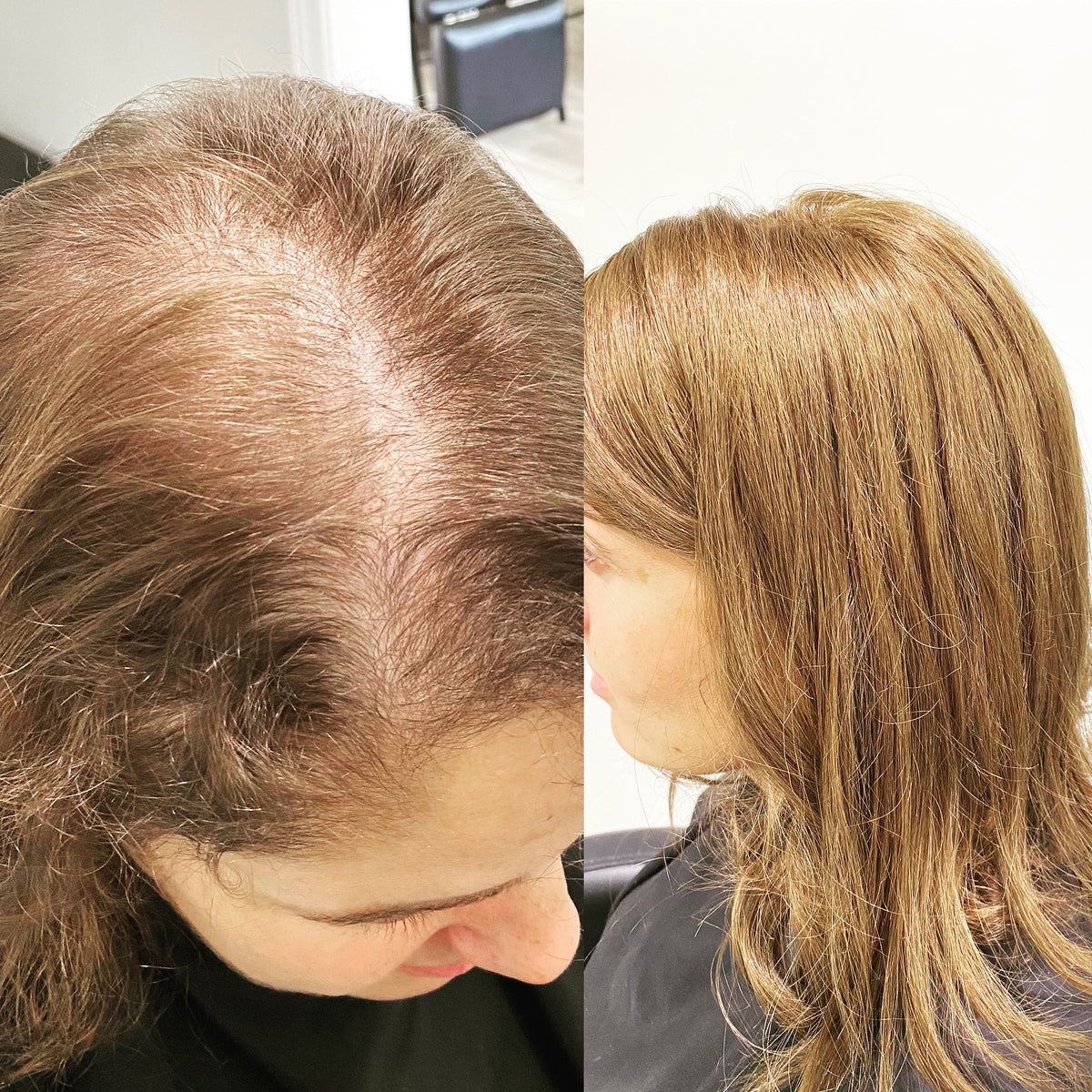
An MTF hair transformation.
How Hormones Can Change Your Hair
Many trans women notice their hair gets softer and finer on hormone therapy, and some find their hair loss slows down. Everyone is different, and hormones usually can't bring back hair that's already gone. Talk to your doctor about the medical side. We'll help you choose a style that works with your hair as it is now.
Top Haircuts for Trans Women
Long Layers With Face-Framing Pieces
Long layers add movement and keep long hair from looking heavy. Pieces cut around the face soften the jawline and cheekbones. This is the style we're asked for most.

Soft, face-framing layers.
Curtain Bangs or Side-Swept Bangs
Bangs frame the face and can soften a strong forehead. They're also one of the easiest ways to hide a receding hairline.
Shoulder-Length Waves
A great in-between length while you grow your hair out. Soft waves add fullness and look feminine without much styling.
A Soft Bob
A bob with some layering and a side part looks polished and is easy to care for. It works well if your hair is fine.
A Pixie or Short, Textured Cut
Short doesn't have to mean masculine. A pixie with soft, wispy pieces around the face can look very feminine, especially with bangs.
Growing Your Hair Out
The grow-out stage is the hardest part for many clients. Hair extensions can give you length and fullness right away while your own hair catches up. Extensions need hair to attach to, so you need about 70% of your own hair and at least 4 to 5 inches of length. If you aren't ready for anything attached, custom clip-ins are an option.

Creative extensions for short hair.
If You Have Hair Loss
If your hair is thin on top or your hairline has receded, a hair topper can give you coverage where you need it. We attach toppers to your own hair with small beads, with no shaving. Many clients wear a topper with extensions underneath for length. Read our guide to transgender hair replacement for all the options.

A hair topper, attached to her own hair.

A hair topper with hair extensions.
Adding Color
Highlights, balayage or soft dimension around the face can brighten your complexion and make a cut look softer. If you'd like something bolder, we do that too.

Bold color, done in the salon.
Caring for Your Hair
- Use a sulfate-free shampoo and a good conditioner.
- Use a heat protectant, and keep hot tools at a moderate temperature.
- Get regular trims so your ends stay healthy and the shape holds while you grow it out.
- Avoid tight ponytails and elastics, especially around the hairline.
Book a Free, Private Consultation
Bring photos of styles you love, and we'll tell you honestly how they'll work with your hair. We have a private room if you'd prefer it. You can also email photos of your hair to noelle@noellesalon.com first.
Book a free gender-affirming hair consultation or learn more about our transgender hair services.
Frequently Asked Questions
Can bangs hide a receding hairline?
Often, yes. Curtain bangs or side-swept bangs cover the hairline and soften the face. If there's too little hair to cut bangs from, a topper with bangs can do the same job.
What haircut should I get while growing my hair out?
Shoulder-length layers or a soft bob grow out well. Regular trims keep the shape while you get to the length you want, and extensions can get you there faster.
Can I color my hair while on hormones?
Usually, yes. Tell your stylist about any changes in your hair's texture so the color is done safely.


