



Exosomes for Hair Loss: What to Know Before You Try It

Exosome therapy is one of the most talked-about new treatments for thinning hair. Clients ask us about it all the time, so here is an honest overview of what it is, what is and isn't known yet, and how to decide whether it's worth pursuing.
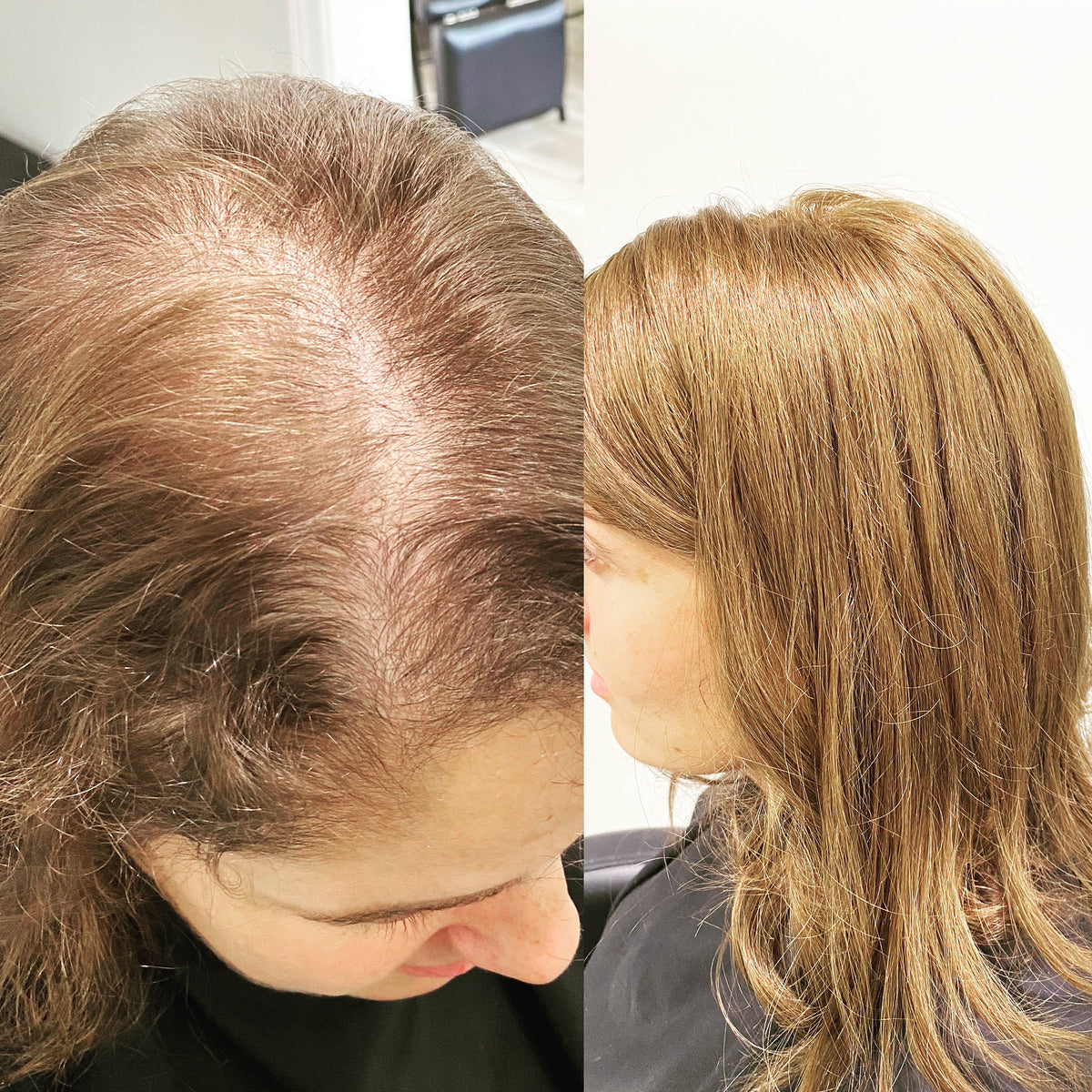
One thing to be clear about up front: exosome therapy is a medical treatment. Noelle Salon does not perform it. If you're exploring options for hair loss Boston, we can help you with the non-medical side—toppers, hair systems and extensions—while you and your doctor decide on treatment.
What Are Exosomes?
Exosomes are tiny particles that cells release to send signals to other cells. They carry proteins, growth factors and genetic material. The exosomes used in aesthetic treatments are usually taken from stem cells grown in a lab.
The idea behind using them for hair loss is that these signals might encourage weak or resting hair follicles to return to the growth (anagen) phase and stay there longer.
What the Research Says So Far
Early studies and clinic reports are encouraging, but the research is still young. Most studies are small, use different products and methods, and don't follow patients for very long. That makes it hard to say how well exosomes work, for whom, or how long any results last.
It's also important to know that, as of 2026, the FDA has not approved any exosome product to treat hair loss. Products on the market vary a lot in where they come from and how they're made, and the FDA has warned consumers about unapproved exosome and stem cell products.
How the Treatment Is Done
Exosome treatments for hair loss are usually injected into the scalp, sometimes combined with microneedling. Because it involves injections, it should only be done by a licensed medical provider, such as a dermatologist, who can review your medical history and tell you exactly which product they use.
Questions to Ask a Provider
- What is causing my hair loss, and has it been diagnosed?
- Where does your exosome product come from, and how is it tested?
- What results do you realistically expect for my type of hair loss, and over what timeframe?
- How many sessions will I need, what will they cost, and will I need ongoing maintenance?
- How does this compare with proven treatments such as minoxidil, prescription medications or PRP for my situation?
Any treatment for hair loss works best when the cause is known. Thinning from genetics, hormones, stress, nutrition or an autoimmune condition can each call for a different approach.
How We Can Help While You Explore Treatment
Medical treatments for hair loss take months to show results, if they work at all. In the meantime, you don't have to live with thinning hair you're unhappy with. At Noelle Salon, we offer:
- Hair toppers for thinning on top of the head or at the crown
- Custom hair systems and patches attached to your existing hair, with no glue or shaving
- Lightweight extensions for mild thinning
- Wigs for more extensive hair loss
These options work alongside medical treatment and don't interfere with it. Many of our clients wear a topper or hair system while they wait to see whether a treatment is working.
Conclusion
Exosome therapy is a promising area of research, but it's still early, and no exosome product is FDA-approved for hair loss. If you're interested, talk to a board-certified dermatologist who can diagnose the cause of your hair loss and explain all of your options.
If you'd like fuller-looking hair now, book a free hair loss consultation and we'll show you what's possible without surgery or medication.
Frequently Asked Questions
Does Noelle Salon offer exosome therapy?
No. Exosome therapy is a medical treatment and should be done by a licensed medical provider. We offer non-medical hair loss solutions such as toppers, hair systems, extensions and wigs.
Is exosome therapy FDA-approved for hair loss?
No. As of 2026, no exosome product is FDA-approved to treat hair loss.
Does exosome therapy work?
Early results are encouraging, but the studies so far are small and short-term. A dermatologist can tell you whether it makes sense for your type of hair loss.
Can I wear a topper or hair system while having medical treatment?
Yes. Toppers and hair systems attach to your existing hair and can be worn while you have medical treatment. Let your doctor know you're wearing one, and we'll work around any treatment schedule.


