

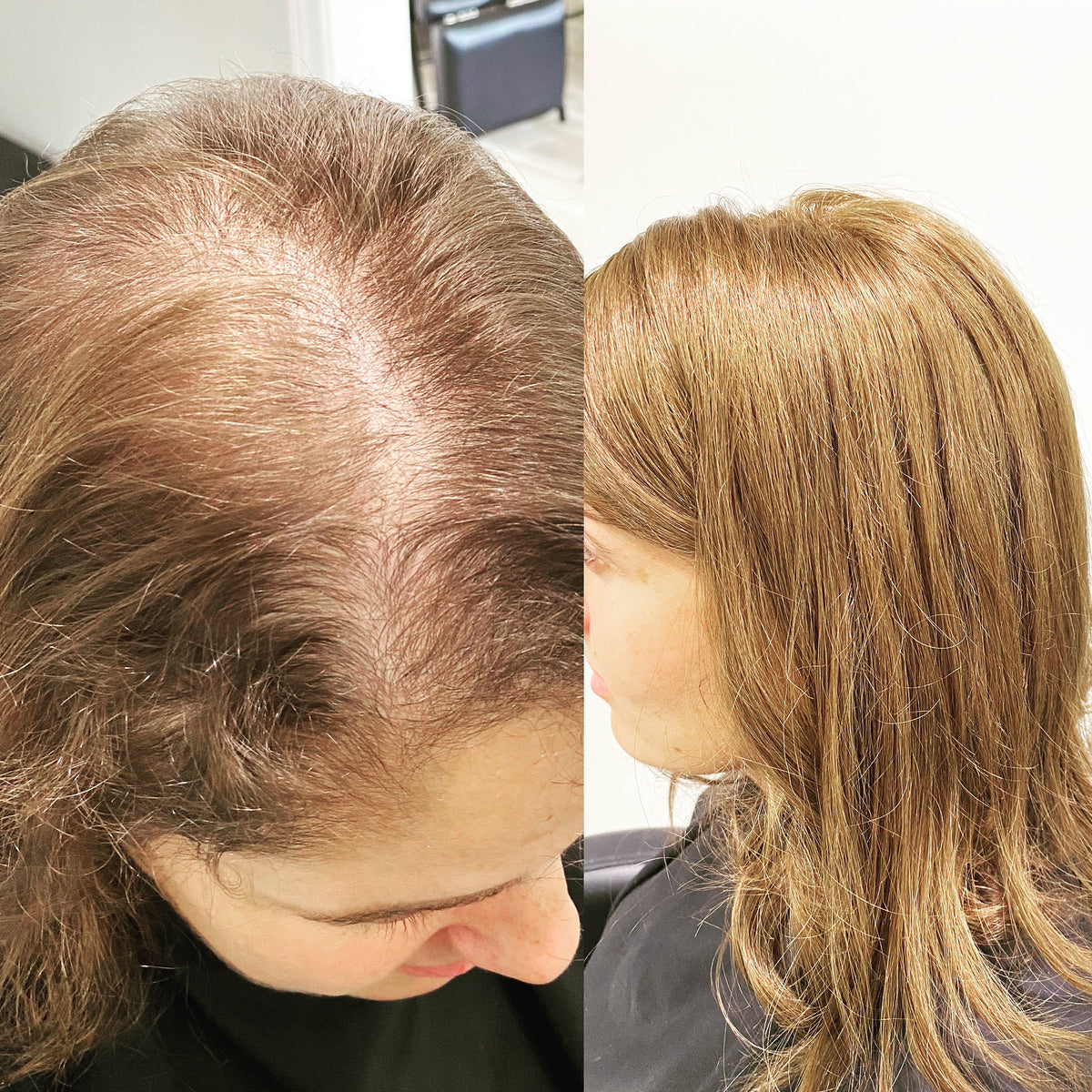


Choosing the Best Extensions for Relaxed Hair: A Guide
Relaxed hair is chemically straightened, typically with sodium hydroxide or ammonium thioglycolate (perm solution). Because most hair starts out textured and relaxers may not leave it pin-straight, the finish can range from silky to softly textured.
When weighing the best hair extensions in Boston for relaxed hair, choose extensions for chemically relaxed hair that mirror your sheen and movement. Ultra-sleek, glassy straight pieces do not always blend, so careful texture matching matters for a seamless, believable result.
Choosing the Best Extensions for Relaxed Hair
- Virgin (one-donor) hair: generally has a gentle wave with subtle texture, mimicking silky relaxed hair without looking overly glossy. Our Veila Pull-Thru method uses virgin hair, which helps it blend with hair that’s been relaxed to a smooth, softly textured finish.
- Textured curly hair: (Veila derives from Brazii) can be blown out and lightly pressed to mirror relaxed texture. The advantage is a realistic look; the trade-off is more time blow-drying and styling, especially in humidity.
- Saharian Smooth hair: a strong match for relaxed hair that retains a bit of body. It carries slight texture, yet responds well to blow-drying and thermal smoothing, blending with medium-textured relaxed hair without constant heat.
- Yaki Hair: ranges from soft to coarse, echoing relaxed textures from sleek to more robust. Available in non-Remy to Remy (cuticles aligned) qualities; Remy Yaki is typically preferred for longevity. Yaki hair is often steam-textured from straight through curly finishes—despite the name, it denotes texture, not the animal.
- Natural hair: true unprocessed human hair is challenging to source; occasional donations exist, but texture and color consistency are limited.
How to blend extensions with relaxed hair: texture matching tips
- Assess your finish: is your relaxed hair silky, medium, or slightly textured?
- Choose fiber texture first, then select density and length.
- Do a strand test by blow-drying or lightly pressing the extension sample to see if it mirrors your everyday styling—this is how to blend extensions with relaxed hair for a seamless look.
- Check blend in natural light and under indoor lighting to confirm both texture and sheen.
Application methods for extensions for chemically relaxed hair
Extensions for chemically relaxed hair can work with several installation methods. The most common for added fullness and length are beaded sew-ins or braided weaves. Tape-in hair extensions and keratin bond extensions are also options. Regardless of the method, plan around relaxer touch-ups; removing or carefully working around extensions during chemical services protects hair and attachment points. Prioritize relaxer-safe extensions and timing to safeguard results.
We recommend reusable methods that make it simpler to schedule relaxer maintenance between move-up appointments. Relaxers can be strong on both hair and scalp, so low-tension systems are helpful. The Veila Pull-Thru method avoids glue, tape, and sewing, offering a tension-free, relaxer-safe approach when timed with touch-ups. When texture pairs well with the virgin hair used in pull-thru, it can reduce stress and support long-term wear.
Pros and cons of common methods
- Beaded sew-in or braided weave: reliable for volume and length; can feel heavier if too dense; plan removals before relaxer touch-ups.
- Tape-ins: flat and lightweight; adhesives require careful care; remove prior to chemical services for best results.
- Keratin bonds: customizable placement and natural movement; must avoid applying relaxer near bonds and be meticulous during any chemical process.
- Pull-thru (Veila): no glue, tape, or sewing; designed to be tension-free, relaxer-safe, and reusable; texture match with virgin hair is key for a flawless blend.
Practical application checklist
- Clarify hair gently and dry fully before installation.
- Select the closest texture first; then fine-tune density and length.
- Place extensions away from sensitive or previously over-processed areas.
- Schedule move-ups and coordinate them with relaxer touch-up timing.
- Use low to medium heat; protect both your hair and extensions with heat protectant.
- Maintain moisture with lightweight leave-ins; avoid heavy oils at attachments.
The less heat used on relaxed hair, the better. Frequent hot combs and flat irons can weaken relaxed strands and degrade extensions. Build in air-drying, roller sets, or low-heat techniques to preserve integrity and shine.
Not everyone with textured hair chooses to relax. Natural textures are celebrated, and there are curly hair extensions designed to complement coils, curls, and waves. Embracing your curl pattern can support hair health and a fashionable, low-tension routine.
At our salon, the goal is to stock a complete range of textures—from silky smooth to virgin, relaxed-inspired textures, and multiple curl patterns. We offer free consultations and same-day service so you can see, touch, and compare textures. For at-home care, we emphasize a simple regimen, and for relaxed hair specifically, we provide weekly blow-outs and wet curl sets under a dryer for consistent, gentle styling.
Have you faced these relaxed-hair challenges?
- Struggling to find a texture that truly mirrors your relaxed finish?
- Unsure which method balances longevity with low tension?
- Curious whether your current options feel sufficient for your lifestyle and styling habits?
Key takeaways
- Start with texture matching; then choose the method that protects your relaxed hair.
- Coordinate relaxer touch-ups with extension maintenance to safeguard bonds and your scalp.
- Use low heat and consistent care to extend the life of both hair and extensions.
- When in doubt, test-blend a sample and assess movement, sheen, and feel before committing.
Conclusion
If your relaxed hair has been difficult to match or you’re unsure which method will protect your hair long term, you can book a free hair extension consultation to create a seamless, natural blend tailored to your texture, routine, and maintenance schedule.


