



Postpartum Hair Loss: Causes, Timeline, and Solutions After Childbirth
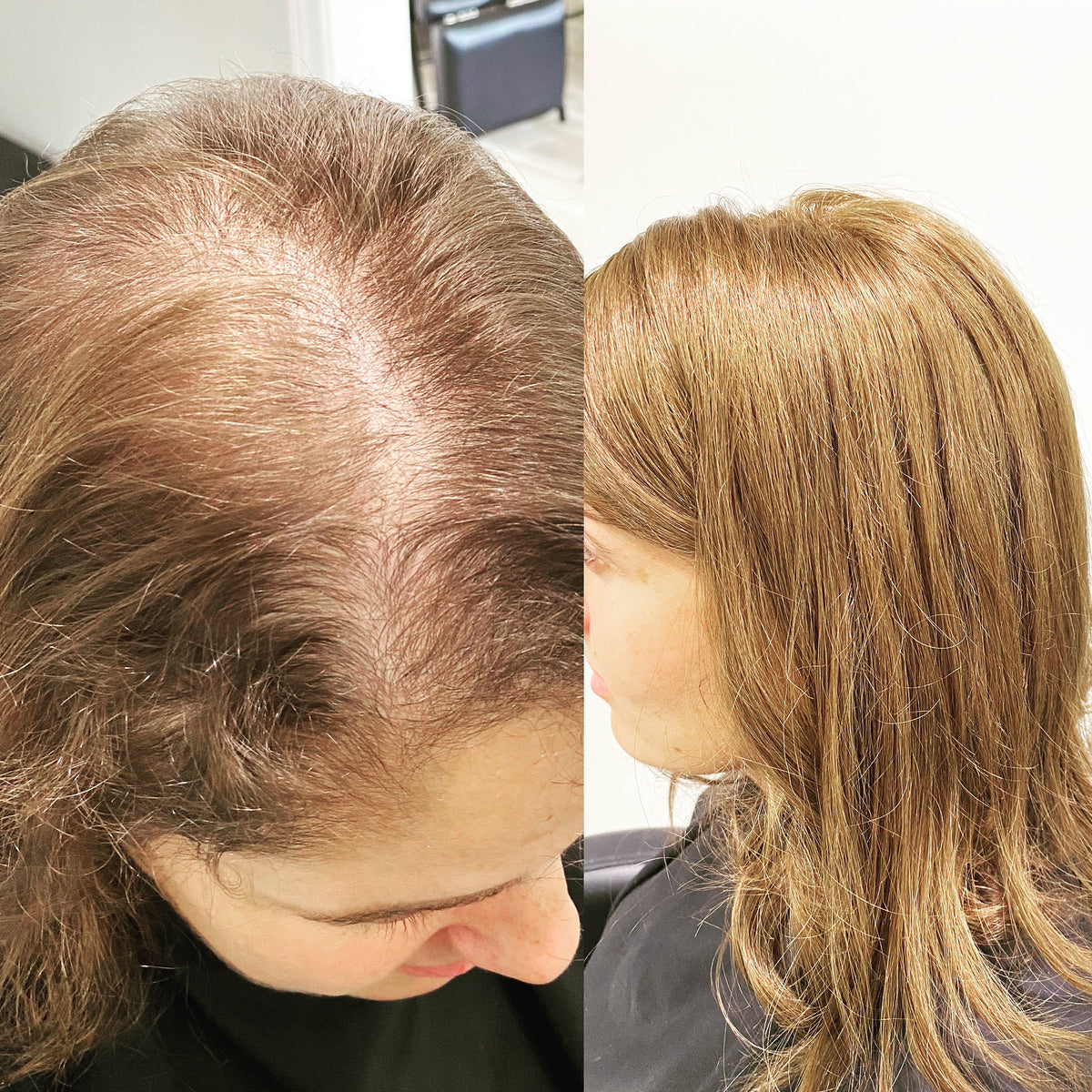
Postpartum hair loss Boston can feel sudden and overwhelming—especially when you’re already adjusting to life with a new baby. One day your hair feels normal, and the next you’re noticing excessive shedding in the shower, strands covering your brush, and visible thinning at your part or hairline.
For many women, this experience comes as a shock. It’s rarely talked about in detail, and when it happens, it can feel like something is wrong. In reality, postpartum hair loss is extremely common and often linked to hormonal shifts after childbirth—but that doesn’t make it any less emotional when you’re going through it.
Some women see their hair return to normal within a few months. Others notice that shedding lingers, density doesn’t fully recover, or their hair feels thinner than it did before pregnancy. Understanding what’s happening—and what you can do about it—can make the experience far less stressful and far more manageable.
In this guide, we’ll break down why postpartum hair loss happens, how long it typically lasts, and what steps you can take to support regrowth and restore confidence in your hair.

Tara’s story:
“After baby number two, I did everything I could think of for healthy hair—took vitamins, ate well, and followed every tip I could find.
Still, by month four to five postpartum, I noticed patchy thinning and small bald spots around my hairline, and even by months nine to ten they had not fully grown back. I used to work in radio and now I’m in media, so being on camera and at events made me extra aware of what was happening on my scalp.
I met with a former client who performs hair transplants to learn about my options. I was 35 at the time and wanted a solution that fit my lifestyle.
I started using a Capillus laser cap and have worn it consistently for about two years. It helped slow the shedding I was dealing with. Genetics plays a big role in how thick or thin our hair is, so I never expected a fully dense mane—I’ve always had fine hair—but the bald spots are not obvious now.
I was also one of the first in my friend group to have kids, and later almost all of my close girlfriends experienced similar shedding after one or two children. Doctors don’t always prepare you for it, so when you see clumps in the shower, it can be scary. Add in fluctuating hormones and the emotions that come with adjusting to life with a new baby, and panic is easy. There are many options today. I recommend waiting at least 10 to 12 months after delivery to see how regrowth settles, then explore treatment paths from there.”
As a hair salon owner who specializes in hair loss, I hear stories like Tara’s often. We collaborate with medical professionals to widen the support available to our clients. We invited Deborah Fauci of Ponce DeLeon Med Spa to share her expertise with Platelet-Rich Fibrin (PRF), a treatment approach many clients have found helpful for encouraging hair growth—especially when hair toppers and pieces do not have enough healthy base hair to secure to.
Postpartum hair loss explained: why shedding happens after birth
Most postpartum shedding is related to shifting hormones. During pregnancy, higher levels of certain hormones can keep more hairs in a growth phase, so your hair may feel fuller. After delivery, those levels drop and a larger-than-usual number of hairs move into a resting and shedding phase over the next few months. This process, often called postpartum telogen shedding, can lead to thinner ponytails, receding edges, and visible scalp.
Other contributors can include stress, nutritional gaps, and styling habits. Tight hairstyles, frequent heat, or chemical processes may aggravate fragile, shedding hair. While many people notice improvement as hormones stabilize, some continue to struggle, particularly if underlying factors like genetics or long-term stress are involved. Understanding the postpartum hair regrowth timeline can help set realistic expectations during recovery.
What is PRF—and how does it differ from PRP?
Platelet-Rich Fibrin (PRF) is a next-generation version of Platelet-Rich Plasma (PRP). Both are blood-concentrate therapies that use a small amount of your own blood. With PRF, the process avoids additives and chemicals, resulting in a 100% natural, unmodified concentrate. Another difference is how the blood is spun: PRF is processed at a slower speed compared to PRP.
In simple terms, PRF taps into the body’s healing abilities. A small blood draw is placed in a centrifuge, which separates out a layer rich in platelets and fibrin.
Platelets carry growth factors—proteins that signal tissue to repair and renew. When re-injected into targeted areas of the scalp or skin, these growth factors are released, encouraging surrounding cells to activate, supporting repair, and helping wake up dormant hair follicles. The aim is to stimulate healthier growth from within.
How PRF supports hair growth
PRF is often described as a regenerative approach to postpartum hair loss treatment. By delivering growth factors to precise areas, it supports your body’s natural repair response. Many people pursue a series of sessions, spaced out based on professional guidance. While results and timelines vary, the intent is to reduce shedding, enhance density where possible, and improve overall scalp health. Some women find PRF a more comfortable, natural-feeling option compared to surgical procedures.
We share many clients with Deb, including Trans-women who are eager to encourage their own growth. From what we’ve seen, PRF can help awaken dormant follicles, and within weeks some clients notice early signs of new growth. This can be especially helpful for those considering toppers or hair pieces but who need more density for secure placement.
Other approaches: vitamins, topicals, and at-home devices
Topical products can be part of a routine, though results vary, and many look for natural remedies for postpartum hair loss to support scalp and hair health. Vitamins like Nutrafol may be useful for some people, but cost and outcomes differ, and our informal poll reflected a mixed success rate. Low-level light devices, like certain laser caps, are another noninvasive option some users prefer, as Tara mentioned. It is important to be consistent and patient.
Have you explored different treatment options for postpartum hair loss, and which ones have seemed most helpful for you?
Practical steps for dealing with postpartum hair loss
- Be gentle with styling: loosen tight ponytails, reduce heat, and avoid harsh chemical services during heavy shedding.
- Adopt a scalp-first routine: cleanse regularly, and consider light scalp massage to support circulation.
- Support nutrition: focus on balanced meals rich in protein, iron, and other key nutrients that contribute to healthy hair.
- Create a low-stress hair plan: simple styles, soft brushes, and protective habits reduce unnecessary breakage.
- Track changes: take monthly photos to monitor progress as your hormones settle over time.
- Seek professional input: consult a trusted stylist and medical provider to tailor a plan that fits your needs and goals.
Considering professional care
Have you consulted a professional about postpartum hair loss treatment options? A collaborative approach can make a meaningful difference—especially when treatment paths include medical and cosmetic options. For PRF, work with an experienced provider who can evaluate whether you are a good candidate, set expectations, and recommend a realistic timeline.
Salon partnerships and aesthetic solutions
In the salon, we consider style, density, and lifestyle together. For some, strategic cutting, color placement, and volume-focused styling offer an immediate confidence lift. For others, toppers or pieces can bridge a thinning phase. When base density is limited, medical treatments like PRF may improve attachment options over time. By combining approaches, clients often feel more in control while awaiting regrowth.
Clear definitions, realistic expectations
It helps to understand the language around treatments. PRF uses your own blood concentrate, free of added chemicals, spun at a slower speed to preserve a fibrin matrix that carries growth factors. Those growth factors help signal repair.
This process is not a quick fix; it is a steady, regenerative strategy. Timelines and outcomes depend on many factors, including baseline density, genetics, stress, and routine hair care.
While some women do not respond as well to surgical transplant methods, many prefer options that are less invasive and more cost-conscious. The goal is to protect the hair you have, encourage healthier growth where possible, and rebuild confidence along the way.
Bringing it all together
Postpartum hair loss is common, unsettling, and deeply personal. It can start months after delivery and may take time to improve. For some, shedding slows and regrowth becomes noticeable with supportive care. For others, medical treatments like PRF, at-home devices, or salon solutions provide a path forward. A thoughtful plan—guided by professionals and supported by gentle daily habits—can make the journey far less daunting.
We also discuss topical solutions, but in our experience, results are mixed. Vitamins can be pricey, and benefits vary by person. Consistency matters. If you try something new, give it time and track progress, then adjust with professional guidance.
We hope you listen to our podcast for additional insights—there is a lot of practical advice here for anyone dealing with hair loss, not only new mothers.
Conclusion: you have options and support
Postpartum hair loss can feel overwhelming, but in many cases, it is a temporary phase linked to hormonal changes. Gentle care, balanced nutrition, and low-tension styling can support your hair as it moves through the natural regrowth cycle.
For those who need additional support, treatments like PRF and other targeted therapies can complement salon-based solutions such as customized toppers, strategic cutting, and volume-enhancing techniques. The key is creating a plan that aligns with your lifestyle, your timeline, and how you want your hair to look and feel during recovery.
Progress may be gradual, but with the right support, it is absolutely possible to regain both your hair and your confidence.
👉 Book your free hair loss consultation and explore personalized options designed to support your postpartum hair recovery.


