

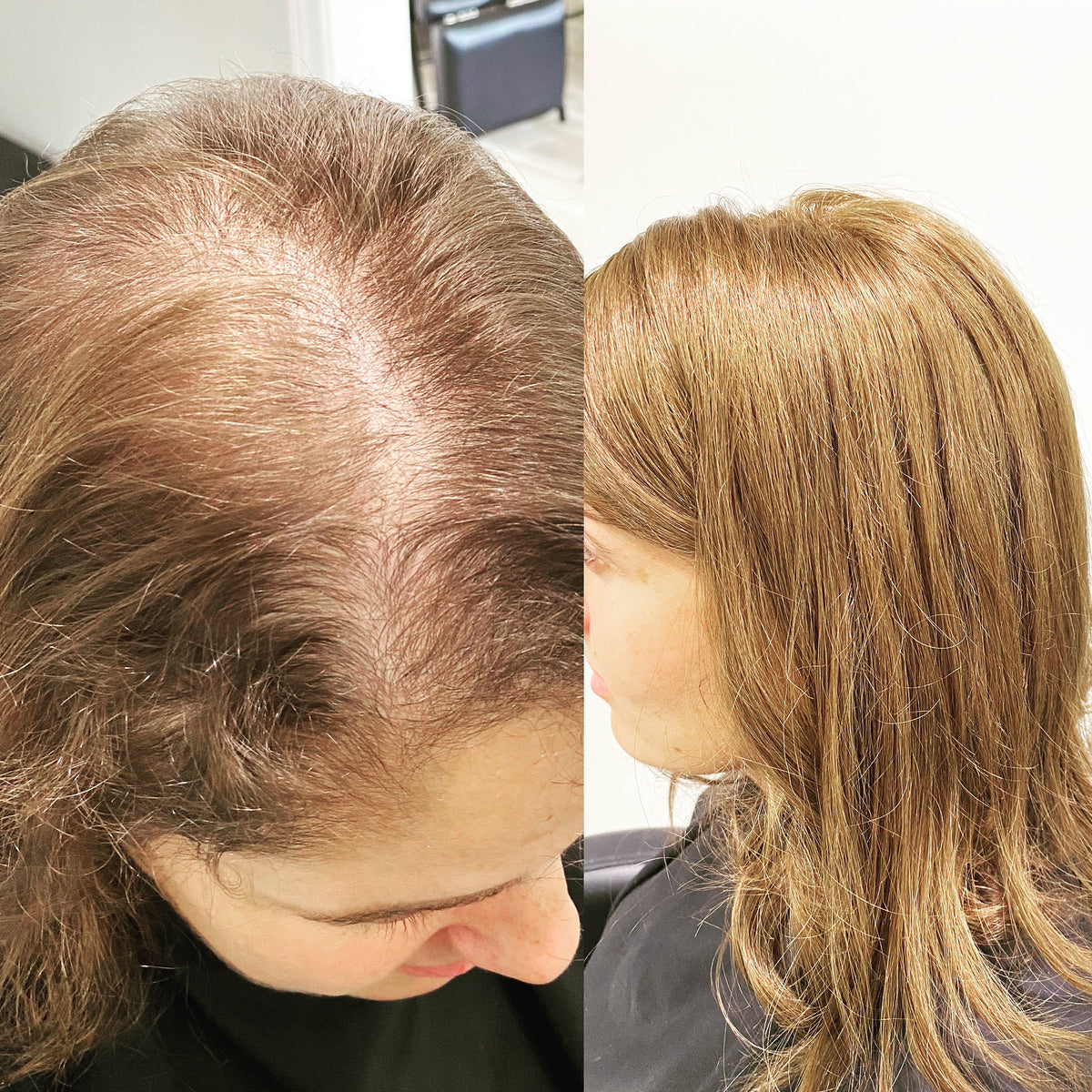


How to Make Hair Topper Look Natural? Tips & Tricks
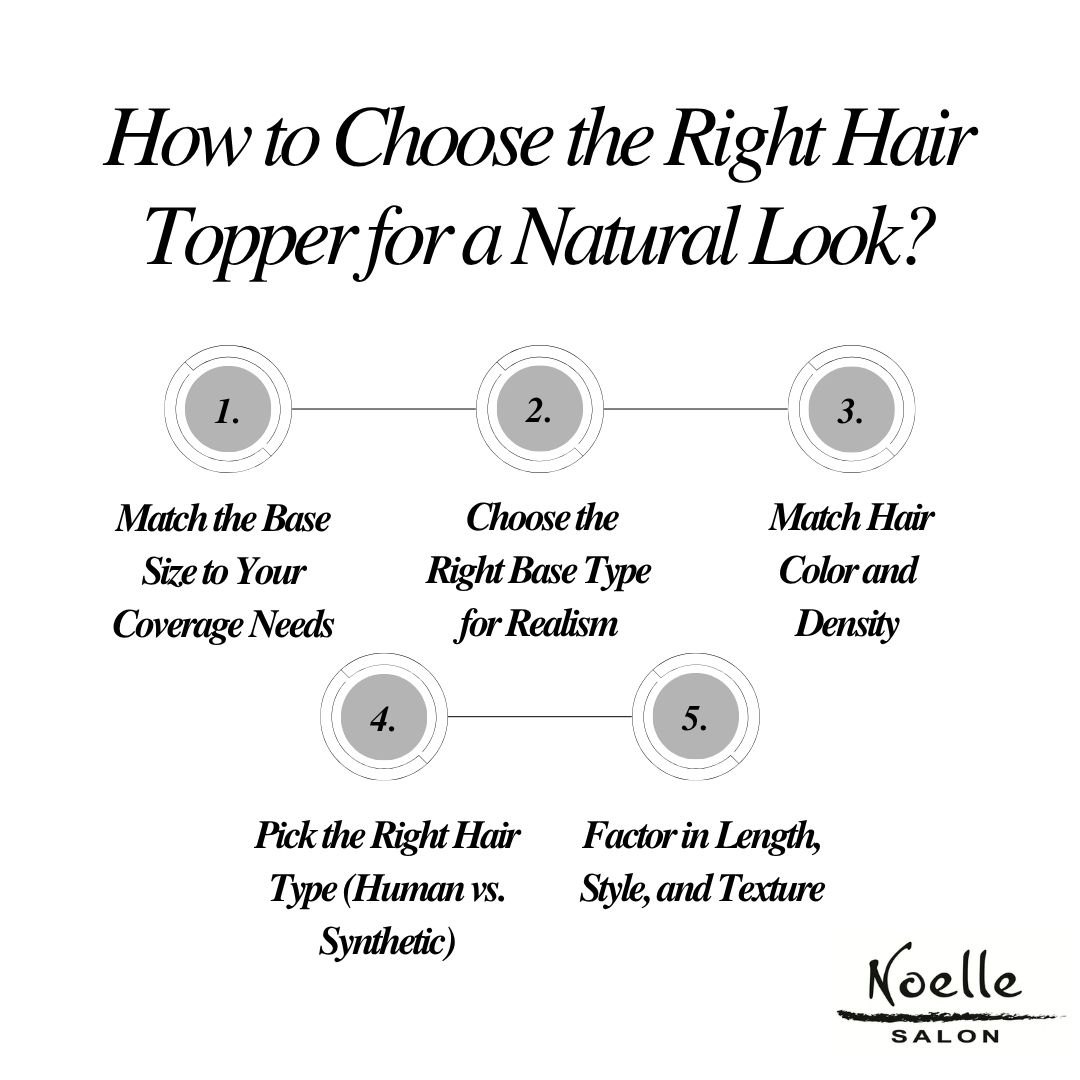
Choosing the right hair topper is the foundation of a natural, undetectable finish. For those exploring solutions related to hair loss Boston, understanding how to select the right combination of size, color, and construction makes all the difference in achieving a seamless result.
With options that vary in base size, material, hair type, color, and attachment method, the process can feel overwhelming at first. However, once you understand what to evaluate—and how to properly measure your hair loss area—selecting a topper that blends effortlessly with your bio hair becomes much more straightforward.
The key is focusing on the details that impact both appearance and comfort. Use the following tips to narrow your options and choose a topper that feels natural, secure, and easy to wear every day.
1. Base Size: How to Match the Base Size to Your Coverage Needs?
The topper base is the part that sits against your scalp and covers thinning areas. If the base is too small, it won’t provide enough coverage or security. If it’s too large, it can feel bulky or look unnatural.
If you have early or minimal thinning, consider a smaller base (around 2”–4” wide). For moderate to advanced hair loss, a medium to large base (5”–7” or more) provides better coverage and versatility. To find your ideal size, measure the thinning area from front to back and side to side, adding a small margin to ensure the clips can anchor comfortably in healthy hair.
- How to measure: Use a soft tape measure on dry hair. Note the distance from the front hairline to the back of the thinning spot, then measure width across the widest area.
- Fit test: Place a sheet of paper cut to your measurements on your head to visualize coverage. Adjust as needed before you buy.
- Scenario to consider: If your hair loss pattern is widening at the part, a narrower, slightly longer base may suit you better than a wide, short base.
Question to reflect on: Where exactly is your thinning most noticeable, and does your chosen base size match that shape and area?
2. Base Type: How to Choose the Right Base Type for Realism?
The base material affects realism, breathability, and styling flexibility at the scalp. Here are common choices and how they differ:
- Mono bases allow multi-directional parting and offer a believable scalp effect.
- Lace bases are lightweight and breathable—great for sensitive scalps and warm climates.
- Silk tops hide knots between layers for a highly realistic scalp appearance, though the material can feel slightly thicker.
Balance realism with comfort and your lifestyle. If you tend to part your hair in different places, a mono base can be useful. If you prioritize airflow and a feather-light feel, lace might suit you best. If a hyper-realistic part is your top priority, consider a silk top.
Ask yourself: Which matters more day-to-day—maximum realism at the part line, airy comfort, or flexible styling?
3. Hair Color and Density: How to Match for a Seamless Blend?
Color matching is essential. Your topper should reflect your natural hair color—including highlights, lowlights, and root shades when applicable. If you’re in between colors, choose a shade slightly lighter; darkening is commonly easier than lightening. Density matters just as much as shade: a piece that’s too thick can look artificial, while a topper that’s too sparse may not blend or cover effectively.
- Compare in natural light to gauge warmth, ash tones, and dimension.
- If your hair has visible roots, consider a rooted shade or add a touch of root powder after placement for added realism.
- For density, hold a small section of your hair and compare its fullness to the topper’s strands. Aim for a close match rather than “more volume.”
4. Hair Type: How to Pick the Right Hair Type (Human vs. Synthetic)?
Human hair toppers usually offer the most authentic movement and styling freedom—you can curl, straighten, and treat them similarly to your own hair, and they often last longer with proper care. Synthetic toppers are typically more budget-friendly and low-maintenance, though their styling options may be limited depending on the fiber.
- Human hair: Highly realistic, heat-style compatible, and adaptable to humidity or seasonal changes with your routine.
- Synthetic: Retains its shape with minimal upkeep and can look very natural in high-quality fibers, but may be less flexible if your natural texture changes day to day.
For everyday wear and the truest blend, many choose human hair. If ease and consistency are your top priorities, a premium synthetic can be a smart option.
5. Length, Style, and Texture: How to Choose What Mirrors Your Hair?
Length and texture should mimic your natural hair as closely as possible. A mismatch in curl pattern or finish is one of the biggest giveaways. If you wear a sleek, straight style every day, pick a straight topper. If your hair is naturally wavy or you typically curl it, choose a piece with a similar pattern.
- Go slightly longer than your current length and have a stylist trim it to blend with your cut.
- Opt for face-framing layers if you already wear them—this helps the topper melt into your style.
- Match not just texture but finish (matte vs. glossy) for the most cohesive look.
How to Blend and Style Your Hair Topper for a Natural Look?

If you want to transform your look with a hair topper and make it appear completely natural, precise placement and thoughtful styling are essential.
Even with the ideal base, length, and color, poor blending can reveal the piece. Use the step-by-step process below to refine your technique and elevate your results.
Step 1 (Place): How to Position Your Hair Topper Correctly?
Start by putting on the hair topper the right way. Align the front edge with your natural hairline or place it slightly behind if blending with bangs or a fringe. Then secure the clips for an even, comfortable fit.
- Part or section the hair where the topper will sit so the clips can anchor in sturdy strands.
- Lightly tease the roots at the attachment points if needed for extra grip.
- Snap clips from front to back, checking symmetry and tension as you go.
- Gently press along the base to ensure it lies flat—no bumps or gaps.
Scenario: You’re short on time before a meeting. By pre-marking your ideal placement with a subtle eyeliner dot near the hairline, you can clip in quickly and consistently.
Question: After placing the topper, does the front edge align with your natural growth pattern without tugging or lifting?
Step 2 (Blend): How to Blend the Part Line Like a Pro?
The part line draws attention first, so it must look like scalp. Use small, strategic adjustments to create a believable finish.
- If your topper has lace or silk, tap a small amount of concealer or powder that matches your scalp tone along the part for a “skin” effect.
- Try a soft zigzag part rather than a perfectly straight line—organic lines look more natural.
- If shades are slightly off, use root powder or a tinted dry shampoo at the roots where your hair meets the topper.
- Comb a few strands from your bio hair over the edge of the part to blur lines.
Tip: Use a pointed tail comb to gently lift and place individual strands where you need extra coverage without disturbing your clips.
Question: In natural light, can you distinguish where your part starts and the topper part begins—or do they read as one?
Step 3 (Customize): Why Should You Cut and Personalize Your Topper?
Most toppers arrive in a standard cut that doesn’t automatically mirror your personal style. Customizing the piece to harmonize with your face shape and everyday haircut can transform the overall effect.
- Add long layers to help the topper flow into your natural lengths instead of sitting on top like a cap.
- Soft face-framing angles, wispy bangs, or curtain layers can replicate the nuances of your usual cut.
- If the density feels too heavy, a stylist can use thinning shears to remove bulk while preserving coverage.
Step 4 (Style): How to Use Heat Tools for a Seamless Finish?
For human hair toppers, controlled heat styling helps unify textures and erase boundaries. The key is to style your hair and the topper together.
- Use a curling iron or straightener on both your bio hair and the topper in the same session so they share the same bend or sleekness.
- Add soft waves or curls to create movement and volume that conceal meeting points.
- With a round brush and blow dryer, lift at the roots for natural-looking scalp volume.
Always apply a heat protectant first and keep temperatures at a safe level for the hair type. For synthetic pieces, only use heat if the fiber is labeled heat-friendly.
Step 5 (Camouflage): How to Hide the Edges for a Natural Look?
Edges—especially near the temples and nape—deserve special attention. Clever styling tricks can make them vanish.
- Pull out a few fine strands of your own hair around the perimeter and blend them over the topper’s edge.
- Use a headband, scarf, or decorative clip to mask challenging areas while adding polish.
- Braid or twist the front pieces together with the topper for a soft, romantic look that disguises the hairline.
These details help on windy days or when you’re on the go.
Step 6 (Accessorize): How to Enhance Blending Through Accessories?
Accessories offer style and extra camouflage with minimal effort. Choose pieces that won’t disturb your clips or shift the base.
- Create half-up looks, ponytails, or side-swept styles with claw clips, barrettes, or scrunchies.
- Hats, turbans, or silk scarves are perfect for casual days when you want effortless confidence.
- Use volume powder or texturizing spray at the crown to blur transitions and add lift.
Handle accessories gently to avoid pulling or dislodging the topper while styling.
How to Make a Hair Topper Look Natural Through Smart Maintenance
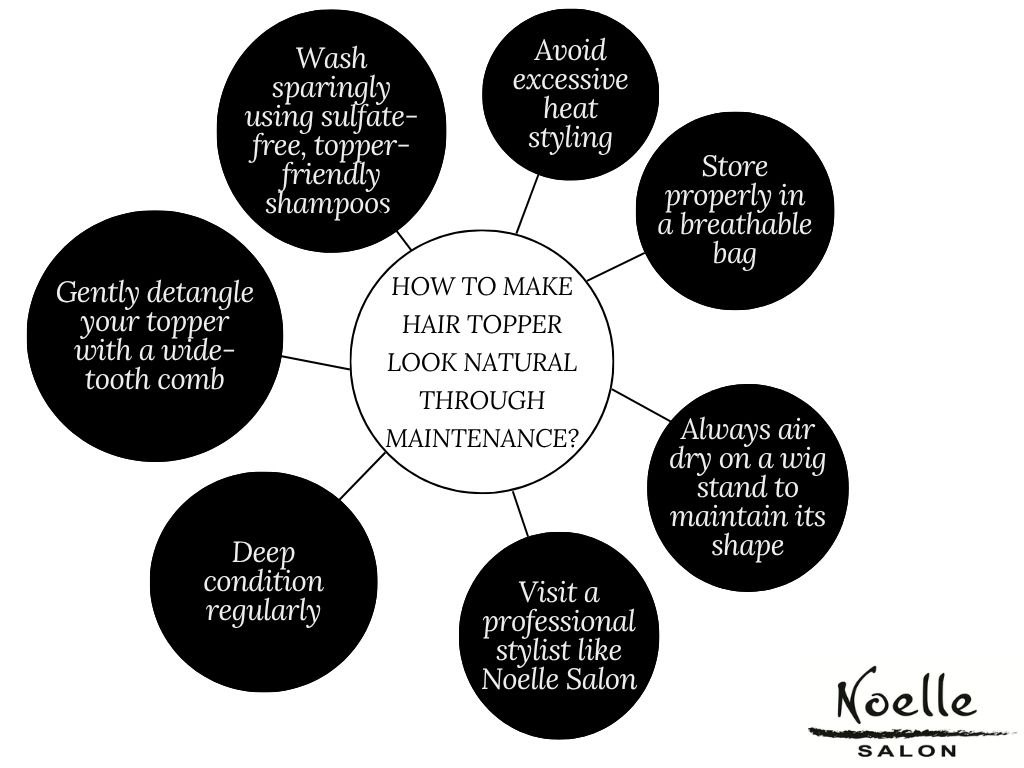 Even the best hair toppers need consistent, gentle care to keep their softness, movement, and realism.
Use this simple, step-by-step routine to protect fibers, preserve the shape, and keep your blend looking salon-fresh.
- Detangle before washing: Use a wide-tooth comb or detangling brush. Hold the base, start at the ends, and work upward to avoid tension on knots and clips.
- Set a wash schedule: Synthetic toppers—wash every 6–8 wears. Human hair toppers—wash about every 2–3 weeks, sooner if you use lots of product or face humidity/smoke exposure.
- Choose the right products: Pick sulfate-free, paraben-free shampoo and conditioner. For synthetic pieces, use formulas made specifically for synthetic fibers.
- Wash gently: Fill a basin with lukewarm water and a small amount of shampoo. Submerge and swirl—don’t rub or wring. Rinse thoroughly with cool water to help seal in moisture.
- Condition with care: Apply from mid-lengths to ends (avoid the base), wait a few minutes, then rinse with cool water for smoothness and shine.
- Dry the safe way: Pat with a soft towel to remove excess water. Place on a wig stand or mannequin head to air dry completely—avoid direct heat. Set the part while damp.
- Store to protect: When not in use, keep the topper on a stand or in a breathable bag in a cool, dry place. Close clips to prevent snagging and reduce tangles.
- Mind the heat: Limit hot tools; use only on human hair or heat-friendly synthetics and always apply heat protectant.
- See a pro periodically: Schedule trims or adjustments every few months to refresh layers, refine density, and keep the shape natural.
Build a routine: Detangle after each wear, follow your wash schedule, condition thoughtfully, air-dry on a stand, and store properly when off your head.
Common Challenges With Hair Toppers—and How to Solve Them
Even with the right piece, you may encounter a few hurdles as you learn how to blend a hair topper.
Here’s how to overcome the most common issues while preserving a natural look.
Visible Part or Scalp Discrepancy
- Issue: The topper’s part looks too perfect or the color doesn’t match your scalp tone.
- Fix: Create a soft zigzag part and dab a small amount of concealer or powder that matches your scalp color. Blend a few of your own strands across the part line for added realism.
Ask: Does your part look slightly irregular—like a real one—or does it appear too straight and uniform?
Density Mismatch
- Issue: The topper looks fuller than your hair, or too thin to blend.
- Fix: Reduce bulk with thinning shears (professionally) or add soft layering. If the topper is too light in density, use volumizing products on your own hair to meet in the middle.
Ask: When you fluff the crown, do topper strands and bio hair look equally full from every angle?
Color Off by a Shade
- Issue: The color almost matches but looks slightly too warm, cool, light, or dark.
- Fix: Opt for a slightly lighter shade and darken if needed, or use tinted dry shampoo and root powders at the blend line for subtle correction.
Ask: In daylight, do the topper’s undertones echo your own hair’s hue, or do you see a shift?
Slippage or Discomfort
- Issue: The topper shifts or tugs on your scalp during the day.
- Fix: Reassess base size and clip placement. Lightly tease anchor points or swap to gentler clips if needed. Ensure the piece is snug but not tight.
Ask: After several hours, does the topper still feel secure and pressure-free?
Edge Visibility in Wind or Motion
- Issue: The perimeter becomes visible outdoors or while exercising.
- Fix: Pull out a few perimeter strands of your own hair, use a thin headband, or style a small braid to conceal edges without bulk.
Ask: Would a subtle accessory make you feel instantly more confident when you’re active?
Looking at these fixes, which challenge will you tackle first—and what small adjustment will you test today?
How Can Noelle Salon Help Make Your Hair Topper Look Natural?
At Noelle Salon, every step is designed to make your hair topper look and feel like your own hair. From precise fitting that respects your hairline and coverage needs to customized cutting, color refinement, and styling, each detail is tailored to blend seamlessly with your bio hair, face shape, and lifestyle.
Whether you need density adjustments, a refreshed cut, or ongoing maintenance to keep your topper looking polished, expert guidance ensures a natural, consistent result week after week.
The goal is simple: a topper that moves, styles, and wears like your own hair—without the guesswork.
If you’re ready for a solution that looks effortless and feels completely personalized, the next step is expert support.
👉 Book your free hair loss consultation and discover how natural your hair topper can look with the right fit, color, and customization.
Frequently Asked Questions
For the smoothest experience, start with selection, then move through blending, maintenance, wearability, and scalp comfort—use this order to find fast, relevant answers.
What is the most natural looking hair topper?
Human hair toppers often deliver the most realistic movement and shine, blending smoothly with your own hair for a natural result. While high-quality synthetic fibers can look very good, human hair typically offers the best match in feel, flexibility, and overall appearance—ideal when a natural look is your top priority.
How do I stop my hair topper from looking fake?
Blend is everything. Match the topper’s color and density to your hair, align the base comfortably, and refine the part with a touch of makeup for a scalp-like effect. Style your hair and the topper together so they share the same wave pattern or sleekness, and soften the edges by pulling out a few perimeter strands or adding a simple accessory.
How often should I wash my hair topper?
For synthetic toppers, wash every 6–8 wears. For human hair toppers, wash about every 2–3 weeks, adjusting based on product buildup and environment. Always detangle first, use gentle sulfate-free, paraben-free products, and air-dry on a stand to maintain a natural look between washes.
Can I wear a hair topper during physical activities?
Yes, high-quality hair toppers with lightweight caps can work well during workouts or other active movement. Clip the piece securely and confirm the fit before you exercise. That way you’ll enjoy comfortable wear and stability, even during quick or intense routines.
Will a hair topper damage my real hair?
When applied correctly, hair toppers should not damage your natural hair. The key is a secure but gentle fit—clips must anchor in healthy strands without pulling, and the base should sit flat without causing scalp discomfort. If you experience pain or tightness, reassess placement, tease anchor sections lightly for grip, and ensure you are not attaching too close to fragile areas.


