


Hair Extensions in Boston, MA

Natural, Seamless Results for Fine, Thinning & Full Hair
Quick Answer:
At Noelle Salon, most hair extension installations start at $450, including premium hair. Tape-ins start at $400, V-Light & CombLine strand placements for thinning areas start at $200, partial sets start at $500, and full sets run $500–$1,800 including hair, application and styling. Your exact price depends on the method, length and color. We keep hair in stock, so many clients can have extensions put in the same day.
Keratin bonds last the longest, while tape-ins offer flexibility and faster maintenance.
Hair extensions in Boston aren't one-size-fits-all. The right method depends on your hair type, density, and long-term goals—especially for fine or thinning hair where the wrong technique can cause damage.
At Noelle Salon, we specialize in customized hair extensions for natural-looking volume, length, and hair loss solutions. Whether you're looking for subtle fullness or a complete transformation, every service is tailored for seamless blending, comfort, and long-term hair health.
Specializing in natural-looking results for fine, thinning, and full hair.
With over 35 years of experience, Noelle Salon has helped clients across Boston and the North Shore achieve natural, confidence-boosting results.

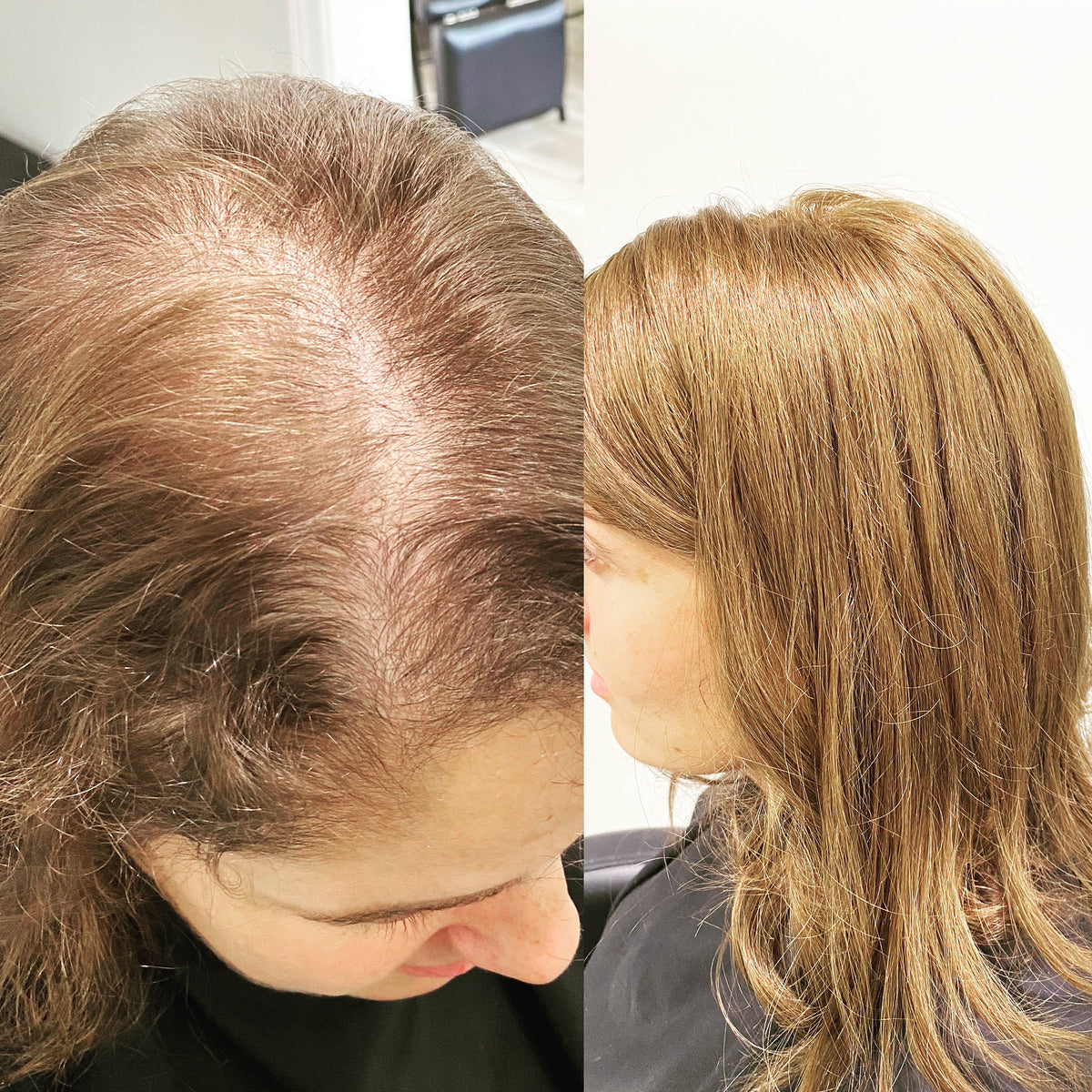
Before and after: hair extensions on fine hair at Noelle Salon in Melrose.
We also proudly offer a transgender-friendly space where every client feels seen, heard, and supported.
Same-Day Hair Extensions, With Hair in Stock
Most salons have to order hair after your consultation, which means waiting a week or more. We keep K-tip, I-tip, sew-in wefts and tape-ins in stock in a wide range of shades, so in many cases we can color-match and put your extensions in the same day, depending on stylist availability. Book a same-day appointment.

A finished install in front of our in-stock hair wall.
Book a Hair Extension Service
Already know what you're looking for? Choose a service below to see details and book your appointment directly.
Sew-In & Beaded Weft Extensions
Wefts secured with beads or a sew-in for full volume and length.
Book NowWhy Choose Noelle Salon for Hair Extensions
Regrowth takes time—we provide immediate, natural-looking results.
Hair extensions can be a powerful solution for hair loss caused by thinning, alopecia, trichotillomania, or medical treatments—when the right method is used.
Hair Loss – A personalized solution for thinning, alopecia, trichotillomania, and other forms of hair loss, designed to restore natural-looking density and confidence.
Alopecia – Restore volume and coverage with customized, natural-looking extensions.
Hair Thinning – Add fullness without damage, designed to blend seamlessly with your natural hair.
Scalp Concerns – Lightweight, breathable options that protect sensitive or compromised areas.
Or Just Because – Enhance your look with added volume, length, or a complete transformation.
Your hair is personal—and the right extensions should enhance it, not compromise it. Let's make it happen.
Who Will Be Doing Your Hair
Noelle Spinosa has been doing hair for more than 35 years and opened Noelle Salon in 1992, specializing in hair extensions and hair loss. She created the Veila pull-thru hair extension method, is also trained in Bellami extensions, and has trained other stylists in extensions. Her clients have included Steven Tyler and Rosie Woods DiMare of The Real Housewives of Rhode Island, and her work has been featured in the Boston Globe, the Boston Herald, AARP Magazine and on Fox 25. She was profiled by HuffPost, and in 2026 Yahoo Shopping quoted her on keeping hair long, healthy and strong as it changes with age.

Rosie Woods DiMare of The Real Housewives of Rhode Island, hair extensions by Noelle Salon.

Every install is placed by hand and blended to your natural hair.
Types of Hair Extensions We Offer (Quick Guide)
1. Sew-in Hair Extensions

Sew-in hair extensions give you a secure, natural look by stitching wefts of hair onto tight, cornrowed braids. Your stylist will use a needle and thread to sew them in place, ensuring they stay put no matter what.
What it does best – Avoids the use of glue, delivers full-bodied, head-turning volume and length that stays put, no matter what.
Best for – Athletes, dancers, and anyone who lives life in motion.
2. Keratin Bond Extensions

Keratin bond extensions are individual strands of hair fused to your natural hair using a keratin protein bond. Applied with heat, these lightweight bonds create a natural flow that moves just like your own hair.
What it does best – Uses heat to bond keratin-tipped extensions to your natural hair, creating a flawless, move-with-you finish that lasts up to 5 months.
Best for – Short haired individuals, or those who are looking for an alternative to chemical, strand pressure and damage.
3. V-Light & Combline Extensions (For Thinning Hair)

The Combline and V-Light method uses a UV-cured adhesive to securely bond extensions while minimizing damage to your natural hair. This technique creates a lightweight, flexible hold that lasts.

V-Light extensions being set with UV light at our Melrose salon.
What it does best – Adds natural-looking volume to thinning areas using a secure, non-damaging attachment method that won't stress fragile hair. Lasts between 6 to 10 weeks.
Best for – Anyone struggling with thinning hair, receding hairlines, or patchy hair loss.
4. I-Tip Hair Extensions

I-Tip hair extensions are individual strands with a keratin-based tip shaped like an "I." No heat, no glue—just a small, silicone-lined bead that holds everything in place.
What it does best – Uses tiny, secure microbeads to attach individual strands for a full, natural look. Plan on a move-up every 6 to 8 weeks.
Best for – Individuals who want an alternative to hair damage options and heating options at the same time.
5. Tape-in Hair Extensions

Tape-in extensions bond naturally to your hair with a medical-grade adhesive, lying flat for an undetectable, natural look. Opt for 100% Remy human hair for smooth, tangle-free styling that moves just like your own.
What it does best – Instantly adds volume and length with thin, flexible wefts that lie flat against the scalp. Perfect for fine or thinning hair without the bulk. Wear them up to about 5 months, with move-ups every 6 to 8 weeks.
Best for – Busy professionals, new moms, and anyone who wants a fast, commitment-free glow-up.
6. Sew-in Beaded Extensions

With the Beaded Row method, there's no need for glue, tape, or tight braids. Instead, extensions are secured using small beads that hold the wefts in place, offering a lightweight, natural feel with minimal stress on your hair.
What it does best – Attaches securely using small, undetectable beads, preventing breakage while adding thick, natural-looking length and volume.
Best for – People with medium to thick hair who want a long-lasting, damage-free solution that can handle an active lifestyle.
7. Mesh Integration Extensions

Mesh integration uses a custom-fitted, breathable mesh base that blends with your natural hair. The base supports either hair extensions for added volume and coverage, or a full cranial prosthesis for hair loss.
What it does best – Creates a secure foundation for added volume and coverage, making thin or patchy areas disappear instantly.
Best for – Individuals with alopecia, severe hair thinning, or scalp concerns who want a natural, non-invasive solution that lasts.
Book a free hair loss consultation · Existing clients: Hair Topper & Mesh Integration Maintenance
Not sure which option is right for you? Book a one-on-one consultation and let's find the perfect match.
Choosing the right type of hair extensions depends on your hair type, lifestyle, and desired result. At Noelle Salon, we specialize in customized solutions designed for natural-looking, damage-free results.
Keratin Bond Extensions
Individual strands bonded to your natural hair for the most seamless, long-lasting result. Ideal for full transformations and natural movement.
Tape-In Extensions
Lightweight, flat wefts that blend easily into finer hair. A great option for adding volume and length with flexible maintenance.
I-Tip (Micro Bead) Extensions
Attached using small, silicone-lined beads without heat or glue. Offers a reusable, versatile option with natural movement.
Sew-In / Beaded Row Extensions
Wefts secured using beads or braiding techniques for added volume and durability. Best suited for medium to thicker hair types.
V-Light & Combline Extensions (For Thinning Hair)
Advanced methods designed for fragile or thinning areas. Provides targeted volume without stress on delicate hair.
Mesh Integration Systems
A custom, breathable mesh base that supports hair extensions or a full cranial prosthesis for significant hair loss, with full coverage and a natural appearance. Existing clients: book maintenance.
Not sure which type is right for you?
A personalized consultation ensures the best method for your hair, lifestyle, and long-term goals.
Hormonal shifts, medical treatments, postpartum changes, or just the natural aging process—your hair stays with you no matter what.
On the days that feel a little harder, let us give your hair the care, strength, and love it deserves. Whether you need volume, coverage, or just a fresh start, we're here to make sure your hair moves with you through every chapter.
Versatile, non-permanent, and fully customizable, hair extensions let you take control of your look on your terms. Let's help you take better care of it.❤️
How Much Do Hair Extensions Cost?
Luxury hair, without the luxury price tag.
Hair extension pricing varies based on:
- Method used
- Hair length and density
- Color matching and customization
- Installation time
Typical ranges:
- Most installations: from $450 (includes hair)
- V-Light & CombLine strand placements: from $200
- Tape-ins: from $400
- Partial sets: from $500
- Full sets: $500–$1,800 (includes hair, application and styling)
Maintenance costs:
- Move-ups and adjustments every 6–10 weeks
Because your hair is one of a kind. Special requests like color, length, and extension type may reflect in pricing. Get your Hair Extension Consultation here. For a full breakdown by method, see our complete hair extensions pricing guide.
Real Stories, Real Results

Before and after: added length and fullness on dark hair.

Before and after: blonde extensions blended with dimensional color.

Nicole McSweeney
After losing my hair to chemotherapy, I was nervous about finding a solution that felt natural. The team at Noelle's made me feel comfortable from the start, offering a private space and walking me through every option with care. Diane created the perfect blend of a topper and extensions to help me through regrowth, giving me back my confidence without damaging my hair.
Lame Lashton
Most salons shut down ideas, but Noelle's listens. They work with you to create a look that suits you perfectly. Plus, they're trans-friendly. If you're FTM and tired of stylists only offering pixie cuts, this is the place for you.
Caitlyn Eaton
All I can say is—I wish I had done this years ago.
How to Choose the Right Hair Extension Salon
Key factors:
- Experience and specialization
- Consultation process
- Hair quality (ethical sourcing)
- Customization and color matching
Choosing the right Boston specialist ensures:
- natural results
- minimal damage
- longer-lasting extensions
Your Hair, Your Rules
Let's get to know your hair better- Sit down with our experts for a one-on-one consultation and discover the perfect extensions designed to match your style, needs, and lifestyle.
Book Your Hair Appointment
Rediscover Your Confidence
Ready to fall in love with your reflection again? Imagine running your fingers through fuller, longer hair that moves, shines, and styles exactly the way you want. That instant boost of confidence is why so many people choose hair extensions—they help you step into your day with a little extra glamour and a whole lot of ease. From adding length and volume to refreshing your color story without commitment, professional hair extensions open the door to fresh possibilities for every texture and lifestyle.
Whether you're growing out a short cut, dealing with thinning, or just craving a change, high-quality extensions can elevate your look while protecting your natural hair. Hair extensions can be customized in many different ways depending on your hair type, lifestyle, and goals. When done correctly, hair extensions can deliver natural-looking results that feel effortless and easy to maintain.
If you're looking for professional hair extensions in Boston, you can learn more about our hair extension services and consultation process.
Understanding the Benefits & Purpose of Hair Extensions
Hair extensions are more than a beauty accessory—they're a personalized solution for common hair goals. They add instant length, build believable volume, and expand your styling options while prioritizing a natural blend—the core benefits of hair extensions. Many clients choose extensions to navigate a grow-out phase, others to correct a haircut that's too blunt or short, and some simply to refresh their style for an upcoming milestone. Extensions can also help balance areas of uneven density and introduce highlights without chemical processing. Think of them as a versatile toolkit: you can go subtle and seamless for everyday wear or amped-up and glamorous for events. What would you change first—extra inches, enhanced fullness, or a soft touch of color?
Are Hair Extensions Worth It? What to Know Before You Book
Thinking about getting hair extensions? What most people don't realize is that the wrong method can actually cause breakage, thinning, or extensions that don't blend at all—especially if you have fine or delicate hair. Choosing the least damaging hair extensions is critical to protecting your natural hair.
Not every extension type works for every hair type, and what you see on Instagram doesn't always translate to real life. If you have fine or thinning hair, it's important to understand which methods actually work—see our guide on best hair extensions for fine hair.
In many cases, the biggest mistakes come down to improper placement, not just the hair itself. Knowing how to choose a hair extension salon in Boston can make all the difference in your results.
At our Boston salon, we specialize in customizing extensions for fine and thinning hair—so you get natural results without damage. If you're exploring your options, start with a free consultation.
If you want to see the exact methods and customization approach we use, you can explore our work with Rosie Woods–inspired hair extension techniques and personalized applications.
What to Do Before You Book
Before choosing hair extensions, it's important to consider your hair type, lifestyle, and maintenance expectations. The right method should feel comfortable, blend naturally, and support the long-term health of your hair.
If you're unsure which option is right for your hair, starting with the right guidance can make all the difference.
If you're considering a transformation like this, our hair extension services are customized to your hair type, lifestyle, and desired outcome.
Explore More on Hair Extensions
Types & Methods
- Complete Guide to Nano Ring Hair Extensions
- How Many Tape Extensions Do I Need Find Out Now
- Micro Weft Hair Extensions Enhance your Beauty
- New Clip in Hair Extension Innovation
- No Sew Beaded Weft Extensions Beginners Guide
- Tape Hair Extensions vs Pull Thru Hair Extensions
- The Ultimate Guide to Invisible Bead Hair Extensions Boston Massachusetts
- Ultimate Guide: Keratin Bond Hair Extensions
- Ultimate Guide Strand by Strand Hair Extensions
Extensions for Hair Loss & Thinning Hair
- Best Hair Extensions for Fine Hair
- Can Hair Extensions Cause Hair Loss What 35 Years Has Taught Me
- Can You Wear Hair Extensions If You have Hair Loss
- Hair Extensions Transformations for Fine and Thinning Hair
- Hair Extensions for All Hair Types
- Hair Extensions for Relaxed Hair
Care, Health & Maintenance
- Balayage Hair Extensions Damage Free Color Solutions
- Can Hair Extensions Be Colored
- Expert Hair Growth Tips While Wearing Hair Extensions
- How Are Hair Extensions Dyed
- How to Test Hair Extensions Quality Beginners Guide
- How to Wash Fine Hair with Hair Extensions
- Why Do Hair Extensions Hurt Common Causes Warning Signs and What to Do
Guides & Real Results
- Bespoke Hair Extensions your Guide to Customized Beauty
- Best Platinum Hair Extensions How to Choose Boston
- Butterfly Haircut with Hair Extensions Layered Volume Guide Boston Massachusetts
- Essential Guide Hair Extension Methods Boston
- Expert Hair Extension Specialists in MA your Ultimate Guide
- How Much Do Hair Extensions Cost in Boston: Pricing Guide
- Hair Toppers or Hair Extensions Choosing the Right Fit
- The Complete Guide to Hand Tied Hair Extensions
- Ultimate Guide to Human Hair Extensions Expert Tips Boston
- What to Expect During a Hair Extension Consultation What 35 Years Has Taught Me
More on Hair Extensions
- Achieve your Dream Look with Brazilian Hair Extensions
- Add Highlights with Hair Extensions
- Affordable Volume Weft Hair Extensions Shop Online Now
- Are Preloaded Micro Beads for Hair Extensions Worth It
- Beautiful Hair Secrets Hair Extensions
- Bellami Hair Extensions Compared to Veila Hair Extensions
- Best Hair Extensions for Thin Hair
- Beware of Brazilian Knot Hair Extensions
- Expert Tips for Human Hair Extensions Mastery
- Express Yourself Cool Hair with Extensions Ideas Massachusetts
- Hair Extensions Not Just for Long Hair
- Invisible Hair Extensions the Key to Fuller Hair Boston
- Is Brazilian Hair Good for Hair Extensions
- New Virgin Curly Hair Extensions in Boston
- Uv Hair Extensions My Personal Experience
- What Are Weft Hair Extensions
- What Are the Most Affordable Hair Extensions
- What Lifestyle Changes Do You Have to Make in Wearing Hair Extensions
- Why Indian Hair is the Best for Hair Extensions Boston
Visiting Our Melrose Salon, Just North of Boston
Noelle Salon is at 195 Green St., Melrose, MA, just north of Boston and a few minutes from Route 93. Clients come to us from Boston, Cambridge, Somerville, Medford, Malden, Stoneham, Wakefield, Winchester, Reading, Saugus and across the North Shore. Learn more about our Melrose salon and the areas we serve.

Look for the "We Sell Hair Extensions" window at 195 Green St.
Frequently Asked Questions
How much do hair extensions cost at Noelle Salon?
Most installations start at $450, including premium hair. Tape-ins start at $400, V-Light & CombLine strand placements for thinning areas start at $200, partial sets start at $500, and full sets run $500–$1,800 including hair, application and styling. The price depends on the method, how much hair you need, length and color matching. See our complete pricing guide, or book a free consultation for an exact quote.
Can I get hair extensions the same day?
Often, yes. We keep K-tip, I-tip, sew-in wefts and tape-ins in stock in a wide range of shades, so there's no waiting for hair to be ordered. Same-day installs depend on stylist availability, so call or book a consultation first.
How long do hair extensions last?
Nothing attached to your hair should stay in longer than about 5 months. Depending on the method, you'll come in for a move-up every 6 to 10 weeks as your hair grows.
Do hair extensions damage your hair?
Not when they're the right method, placed correctly and maintained. Damage usually comes from too much weight on fine hair, too much tension, or skipped move-ups. We choose the method and amount of hair based on your hair's density and condition.
What are the best hair extensions for fine or thinning hair?
Lightweight methods like V-Light, CombLine, small keratin bonds and carefully placed tape-ins work best on fine hair. For more significant hair loss, a mesh integration system may be the better choice. Read our guide to the best hair extensions for fine hair.
How long does my hair need to be for extensions?
For most methods, your hair should be at least 4–6 inches long so the attachments can be hidden and the extensions blend naturally.
Can hair extensions be colored?
Human hair extensions can be toned or darkened by a professional, but they shouldn't be lightened or bleached. We color-match your extensions at your appointment and can add color to your own hair at the same visit.
Where are you located?
We're at 195 Green St., Melrose, MA, just north of Boston, and see clients from Boston, Cambridge, Somerville, Medford and across the North Shore. See the areas we serve.
Book a free consultation with Noelle and see for yourself.