

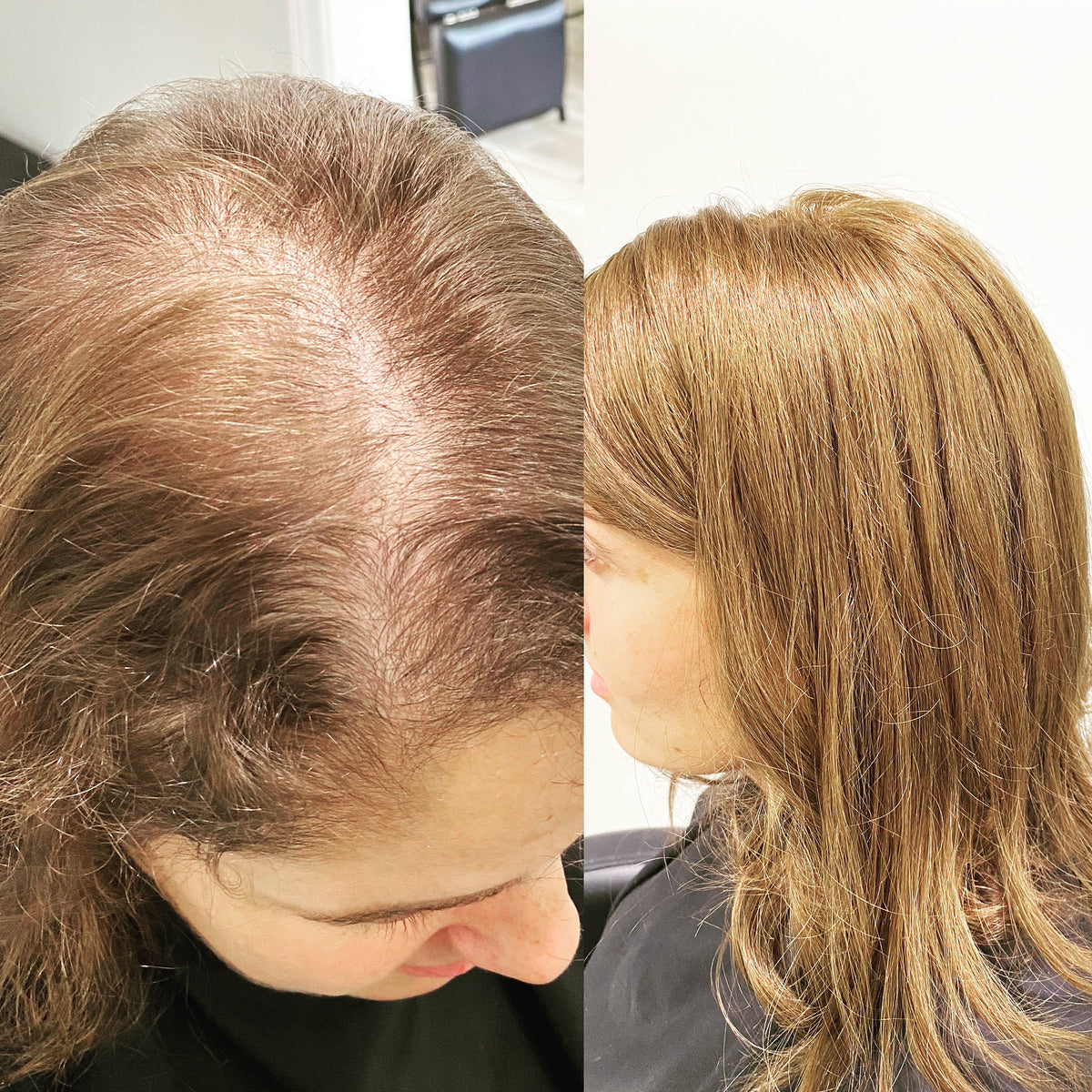


Lichen Planopilaris: What Women Need to Know About This Scarring Hair Loss
Over the past 20 years, I’ve seen a noticeable increase in women diagnosed with Lichen Planopilaris (LPP), a form of scarring hair loss Boston often linked to autoimmune conditions. Unlike other types of hair loss, LPP can be particularly distressing because once the hair sheds, it is replaced by scar tissue, permanently damaging the hair follicle and preventing regrowth in that area.
This condition often presents as patchy hair loss along the front hairline or throughout the scalp, and many of my clients describe a long and frustrating journey to diagnosis. It’s common for women to see multiple physicians or dermatologists before receiving clear answers, which only adds to the emotional toll.
What makes LPP especially challenging is that, unlike other forms of alopecia that may go into remission with regrowth, LPP requires time, careful management, and often a trial-and-error approach with medications before the condition stabilizes. Because of its potential connection to autoimmune disorders, proper medical evaluation and testing are an important part of the process.
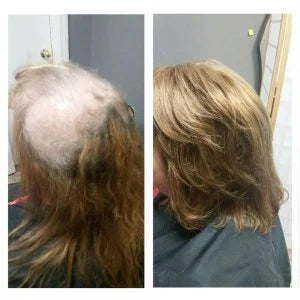
Often clients complain of itchiness, inflammation and sometimes pain on their scalp and this is when it is important to seek medical attention. A diagnosis is often given by a dermatologist after a scalp biopsy and once diagnosed the goal is to keep hair loss at bay.
Some good news; after 6 months +/- of taking the below medicines, the hair loss may slow down or cease. Many of our clients seek aesthetic help at this point (not during active shedding) and we can help with hair pieces and wigs. Medications often prescribed:
Conclusion
Lichen Planopilaris can be one of the most emotionally challenging forms of hair loss because of its permanent, scarring nature and the uncertainty that often comes with diagnosis and treatment. While medical care is essential to stabilize the condition, feeling confident in your appearance during and after that process is just as important.
With the right combination of medical support and gentle, non-damaging hair solutions, it’s possible to manage both the physical and emotional impact of LPP. Creating a healthy scalp environment, avoiding further stress to the follicles, and choosing the right coverage options can make a meaningful difference in how you look and feel day to day.
If you’re navigating Lichen Planopilaris and want guidance tailored to your situation, book a free hair loss consultation and let us help you explore safe, natural-looking options that support your confidence every step of the way.


