



Many women tell me the same story.
Their hair used to be thick, easy to style, and forgiving. Then sometime during perimenopause or menopause, everything changed.
The ponytail became smaller.
The scalp became more visible.
The crown became thinner.
The hair felt brittle, fragile, and difficult to style.
Some women notice increased shedding. Others experience gradual thinning that seems to happen so slowly they don't recognize it until they see photographs of themselves from a few years earlier.
As someone who has personally experienced changes in my own hair during perimenopause, I understand how emotional this process can be. Many of my clients have visited doctors, tried supplements, purchased expensive products, and searched for answers for years before finding out that menopause is playing a major role in their hair changes.
If you're not sure whether menopause is the cause, our guide on Why Is My Hair Thinning? The 12 Most Common Causes of Hair Loss for Women in Boston explains the most common reasons women experience hair loss, including hormonal changes, menopause, stress, medical conditions, and nutritional deficiencies.
Women searching for Hair Loss Boston solutions are often surprised to learn that there are aesthetic options available that can immediately improve density, reduce scalp visibility, and restore confidence while protecting the integrity of their existing hair.
The transformations below showcase real examples of how customized hair toppers, hair extensions, mesh integration systems, and other non-surgical hair loss solutions can help women experiencing menopausal hair loss.
Watch This Menopausal Hair Loss Transformation
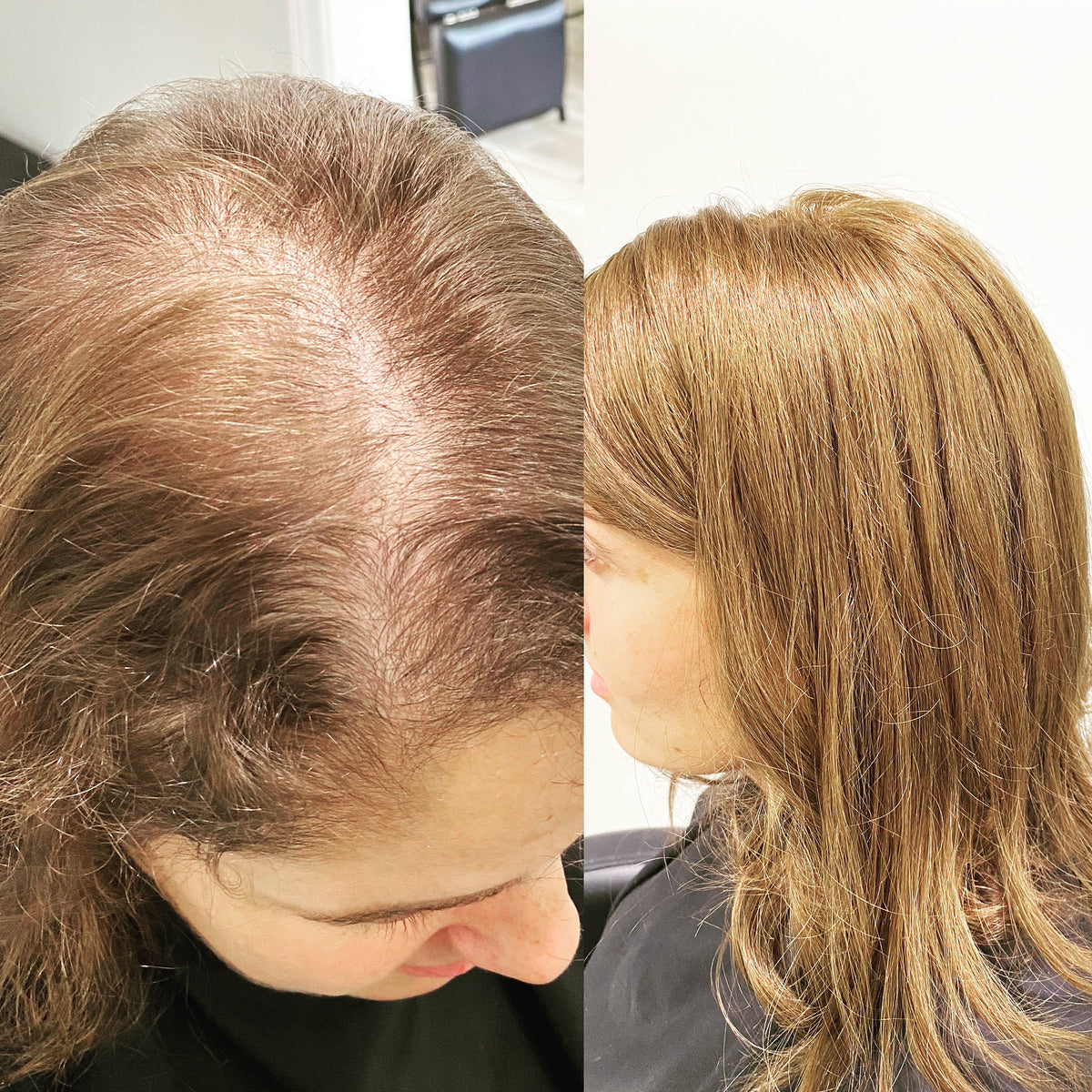
This client experienced significant thinning associated with menopause. Using a customized mesh integration system and a realistic bob design, we were able to restore density, reduce scalp visibility, and create a natural-looking result that blended seamlessly with her existing hair.
What Menopausal Hair Loss Looks Like

One of the most common misconceptions is that menopausal hair loss affects the entire head equally.
In reality, many women continue to have healthy hair around the sides and back of the head while experiencing noticeable thinning throughout the crown, top, and part line.
Common signs include:
- Increased scalp visibility
- A widening part
- Reduced density at the crown
- Hair breakage
- Loss of volume
- Hair that no longer holds style the way it once did
Because the pattern of hair loss is often concentrated at the top of the head, many women are not interested in wearing a wig and don't actually need one.
Instead, integrating additional hair into the existing hair often creates a far more natural-looking solution.
Hair Topper Solutions for Menopausal Hair Loss

Type of Hair Loss
Hormonal crown thinning and scalp visibility associated with menopause.
Challenge
This client still had healthy hair throughout most of her head, but the crown and top had become noticeably thinner over time.
Solution
A customized hair topper was selected to create density exactly where she had lost volume while blending naturally with her existing hair.
Result
The client regained fullness, coverage, and confidence without needing a full wig.
For many women experiencing menopausal hair loss, a hair topper can be one of the most effective ways to restore density while maintaining a natural appearance.
Hair Extensions for Menopausal Hair Loss

Type of Hair Loss
Menopause-related density loss and thinning throughout the hair.
Challenge
Many women still have enough hair to support extensions safely but no longer have the density they once enjoyed.
Solution
Lightweight Hair Extensions Boston solutions were carefully selected and placed to increase fullness while protecting the integrity of the natural hair.
Result
The client achieved fuller, healthier-looking hair with improved movement and body.
Mesh Integration for Advanced Menopausal Hair Loss

Type of Hair Loss
Diffuse thinning throughout the top and crown of the scalp.
Challenge
The amount of thinning made traditional extensions alone insufficient to create the desired coverage.
Solution
A customized mesh integration foundation was created to support additional hair while working with the client's existing hair.
Result
Scalp visibility was dramatically reduced while maintaining a natural-looking hairline and realistic density.
Many women who visit our salon tell us they have already tried everything. They have spoken with doctors, experimented with supplements, purchased expensive shampoos, and searched for answers for years.
What makes menopausal hair loss particularly frustrating is that the sides and back of the hair often remain relatively healthy while the top and crown continue to become thinner.
Because of this, many women are not candidates for a full wig and don't want one. They simply want to restore density and confidence while keeping their own hair.
Some clients leave the salon in tears because they haven't recognized themselves in years. Many later tell us their spouse, children, friends, and coworkers immediately noticed they looked healthier, younger, and more confident.
For many women, the goal isn't simply having more hair. It's feeling like themselves again.
Fill-In Hair Pieces and Localized Hair Loss Solutions

Not every client requires a full topper or mesh integration system.
Some women experience localized thinning that can be addressed with smaller customized solutions designed specifically for the affected area.
Depending on the location of the hair loss, custom fill-in pieces can provide targeted coverage while blending naturally with existing hair.
Are GLP-1 Medications Making Menopausal Hair Loss Worse?

Excessive shedding and reduced density are common concerns among women experiencing both menopause and significant weight loss from GLP-1 medications such as Ozempic, Wegovy, and Zepbound.
One trend we are seeing more frequently involves women navigating both menopause and significant weight loss through GLP-1 medications such as Ozempic, Wegovy, and Zepbound.
While every situation is different, rapid weight loss can sometimes increase shedding and make existing menopause-related thinning appear more noticeable.
Many women are now dealing with two separate factors affecting their hair density at the same time.
This is one reason consultations have become so important. Understanding the pattern of hair loss helps determine whether a hair topper, mesh integration system, hair extensions, or another solution will create the most natural-looking result.
Many women experiencing both menopause and significant weight loss have questions about hair loss after Semaglutide, Ozempic, Wegovy, and other GLP-1 medications.
Related Reading: Hair Loss After Ozempic or GLP-1 Medications
Why Menopausal Hair Loss Often Requires Different Solutions
One thing we frequently see is that menopausal hair loss looks very different from many other forms of hair loss.
Many women still have healthy hair around the sides and back of the head while experiencing significant thinning through the crown and top.
Because of this, many are not candidates for a full wig and don't want one.
Instead, customized solutions that integrate with their existing hair often create the most natural results.
Depending on the amount of thinning, scalp visibility, and hair density, we may recommend:
- Hair Toppers
- Hair Extensions
- Mesh Integration Systems
- V-Light Applications
- CombLine Techniques
- Customized Combination Solutions
No two clients experience menopause-related hair loss exactly the same way.
Frequently Asked Questions About Menopausal Hair Loss
Can menopause cause hair thinning?
Yes. Hormonal changes associated with menopause can affect hair density, shedding, texture, and overall volume.
What is the best solution for menopausal hair loss?
The best solution depends on the amount of hair loss, scalp visibility, existing hair density, and personal goals.
Are hair toppers better than wigs for menopausal hair loss?
Many women experiencing menopausal hair loss are better candidates for hair toppers because they still have healthy hair throughout much of the scalp.
Can mesh integration help menopausal hair loss?
Yes. Mesh integration can be an excellent option for women experiencing advanced thinning who still have enough hair to support integration.
Are hair extensions safe for menopausal hair loss?
When properly selected and applied, lightweight extension methods can often help restore density while protecting the natural hair.
Will my hair grow back after menopause?
Every woman is different. Some women experience temporary changes while others experience progressive thinning over time. Consulting with your physician can help determine potential contributing factors.
Book a Free Hair Loss Consultation
If you are experiencing thinning hair, scalp visibility, menopause-related hair loss, or changes in density, we can help determine which solution may be right for you.
Whether the answer is a hair topper, mesh integration system, lightweight hair extensions, or a customized combination approach, our goal is to create a natural-looking result that helps you feel like yourself again.


