

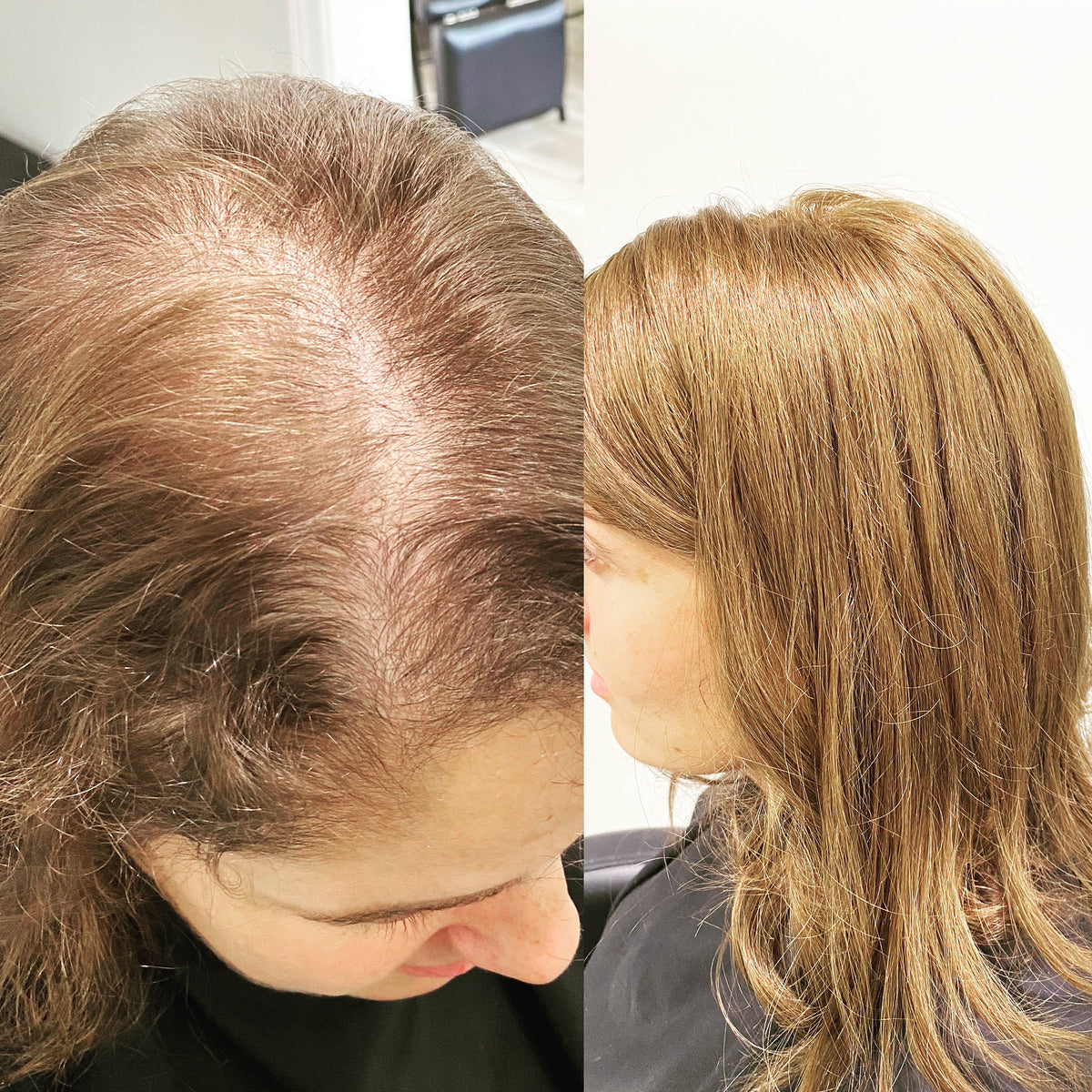


How to Find the Best Hair Loss Treatment for Women Near You
Key Highlights
Finding effective women’s hair loss solutions in Boston can restore confidence, protect long-term hair health, and reduce daily stress around styling and appearance.
Female hair loss can result from hormones, genetics, stress, nutritional factors, postpartum changes, autoimmune conditions, or medication side effects.
Professional providers conduct personalized evaluations to identify root causes and design non-surgical hair solutions that fit your goals, lifestyle, and hair type.
Treatment options may include topical solutions, prescription support, PRP, laser therapy, scalp wellness therapies, and cosmetic density enhancers like extensions or hair systems.
Early intervention typically improves outcomes by protecting follicles and encouraging regrowth cycles before thinning progresses.
Maintenance and follow-up care sustain progress by adapting treatments to your hair’s response, seasonality, and hormonal changes.
Reviews, consultations, and clear expectations help you choose the right specialist while avoiding overpromises and quick fixes.
A customized plan provides safer, more predictable results than DIY routines, minimizing potential irritation, traction damage, or wasted time and expense.
Experiencing shedding, reduced volume, widening parts, or visible scalp can be deeply personal and sometimes overwhelming. Many women describe the emotional toll as equal to the physical change, especially when the cause is unclear or progress seems slow. It’s common to start by searching for the best hair loss treatment for women near me and to feel hopeful yet uncertain about where to begin. That first search is meaningful—it signals you’re ready to take action and regain control.
Unlike temporary shedding, ongoing thinning typically needs a focused, evidence-informed plan. What works for one woman may underperform for another depending on the pattern of loss, hormones, genetic predisposition, stress, or scalp health. Identifying the root cause and matching it with the right women’s hair loss treatment can make a measurable difference in both density and confidence. In the guide below, you’ll find how to evaluate providers and the most common non-surgical hair solutions available near Noelle Salon in Greater Boston.
Why Noelle Salon Is a Trusted Choice for Women’s Hair Loss Treatment in Boston
Noelle Salon is widely recognized for its compassionate, results-driven approach to hair loss treatment for women. If you want trusted, non-surgical hair solutions in Massachusetts, our salon stands out for discretion, technical skill, and individualized care. The team focuses specifically on thinning, alopecia, and medically related hair loss, tailoring each solution to match your lifestyle, texture, and density goals.
Hair loss can feel isolating. At Noelle Salon, privacy and empathy are central to the process. Consultations are thoughtful and thorough, and solutions are designed for same-day transformation when appropriate—offering a fast, natural-looking path to confidence without surgery or daily reliance on medication.
What We Specialize In
Hair loss treatment is a core specialty at Noelle Salon. Every client begins with an in-depth consultation to review shedding history, pattern, potential triggers, and styling goals. This careful intake helps our team recommend women’s hair loss treatment options that restore fullness while protecting hair and scalp comfort over time.
Hair Loss Treatments and Solutions
Non-Surgical Hair Solutions: Replacement Systems: Custom-designed systems that match your color, curl pattern, density, and lifestyle for an undetectable finish and realistic movement.
Women’s Hair Loss Treatment for Alopecia and Thinning Hair: Specialized options for traction alopecia, androgenetic alopecia, postpartum thinning, and hair loss related to medical factors.
Same-Day Non-Surgical Hair Solutions: Immediate, non-surgical hair solutions available following consultation for those seeking fast, confidence-boosting results.
Consultations and Scalp Assessments
Private Hair Loss Consultations: One-on-one, judgment-free hair loss consultation in a discreet setting to explore goals and options.
Scalp and Hair Loss Assessments: Detailed analysis to guide a targeted plan, prioritizing safety, scalp comfort, and natural blending.
Personalized Treatment Planning: No one-size-fits-all systems—every solution is tailored to your needs and maintenance routine.
Why Noelle Salon Leads in Women’s Hair Loss Care
Women throughout Massachusetts trust Noelle Salon for their human-first approach and deep category knowledge:
Female-Focused Expertise: A nuanced understanding of women’s hair loss patterns, hormonal shifts, and styling sensitivities.
Private, Compassionate Care: Confidential consultations and supportive communication throughout your journey.
Natural-Looking Results: Solutions are crafted to blend seamlessly with your bio hair for believable fullness and movement.
Non-Surgical Options: Results-driven, non-invasive alternatives for those avoiding surgery or medication-led approaches.
Address: 195 Green St., Melrose, Massachusetts, USA
Contact: 781-324-9779
If you’re noticing thinning or visible scalp and want expert guidance with same-day, non-surgical hair solutions, Noelle Salon provides a safe, supportive place to begin. A private consultation for women’s hair loss treatment and non-surgical hair solutions is often the first step toward restoring your confidence and everyday ease.
Scenario: Postpartum Thinning with a Busy Schedule
Imagine a client at Noelle Salon struggling with postpartum hair loss. She’s short on time, self-conscious about her widening part, and avoids certain hairstyles. During a private consultation, the team completes a scalp assessment and recommends a natural-looking topper with minimal daily styling needs. She leaves the same day with restored coverage, a simple maintenance plan, and a renewed sense of normalcy—without surgery or extended downtime.
Women’s Hair Loss Treatment: How to Compare Non-Surgical Hair Solutions
Non-surgical options can be powerful, especially when you want visible improvement without downtime. If you’re comparing women’s hair loss treatment options, these non-surgical hair solutions can complement medical guidance or offer immediate cosmetic coverage.
Topical Support: Daily applications that encourage the growth phase and reduce shedding. Works best when applied consistently and paired with gentle scalp care.
Prescription Pathways: Physician-directed options address hormonal or inflammatory factors. These require professional guidance, realistic timelines, and monitoring.
PRP: A clinical therapy that may stimulate follicles and improve hair quality. Often combined with at-home protocols and scalp-friendly routines.
Low-Level Laser Devices: Non-invasive tools intended to promote circulation and support density when used regularly.
Scalp Wellness Therapies: Exfoliation, hydration, and soothing treatments to optimize scalp conditions for hair growth and comfort.
Extensions, Toppers, and Systems: Cosmetic, non-surgical hair solutions that produce immediate coverage and fullness. Best when customized for low tension, proper blending, and manageable maintenance.
Step-by-Step Checklist: How to Evaluate a Women’s Hair Loss Treatment Provider
Use this practical guide to assess a provider confidently. Bring notes to your consultation so you know what to ask:
Credentials and Focus: Do they regularly treat women’s hair loss, or is it a minor add-on? Ask about training with thinning hair, alopecia, and non-surgical hair solutions.
Consultation Process: Will they review your shedding history, part changes, breakage vs. loss, recent health shifts, and styling habits? Do they examine your scalp?
Treatment Philosophy: Are options explained clearly, with realistic timelines and expected maintenance? Do they prioritize comfort and hair integrity?
Customization: For extensions or systems, how do they match color, density, texture, and lifestyle? What’s the plan for low-tension placement and blending?
Safety and Aftercare: What is the maintenance schedule? How do they minimize traction or irritation? Do they provide written care instructions?
Before-and-After Expectations: Can they describe typical outcomes for situations like postpartum thinning, traction-related hair loss, or diffuse shedding?
Budget and Longevity: What are the short- and long-term costs, including follow-ups and replacements? How do they help you plan sustainably?
Communication Style: Do you feel heard and supported? Is the team responsive to questions and clear about limitations?
Maintenance Fit: Will the routine work with your schedule, activity level, and styling preferences?
Progress Tracking: Do they document changes and adjust as needed, or is it a one-time visit?
How Do I Know If a Specialist Is Right for My Hair Loss?
Choosing a provider is both practical and personal, especially when your confidence is involved. A strong specialist will educate you, set realistic expectations, and guide you toward safe, effective women’s hair loss treatment options rather than pushing a one-size-fits-all fix. Consider these indicators as you evaluate your options.
1. Clear, Personalized Explanation of Your Hair Loss
A knowledgeable specialist explains the “why” behind your shedding or thinning in terms you can understand. They discuss contributing factors and tailor recommendations accordingly so you feel informed, not rushed.
2. Evidence-Informed Recommendations You Can Trust
The right provider offers options supported by clinical knowledge and observable outcomes. They outline logical next steps, clarify how each option works, and avoid exaggeration.
3. Plans Designed Specifically for Women
Women’s hair loss patterns differ from men’s. A capable specialist considers hormones, pregnancy or postpartum stages, styling habits, and long-term goals, building a plan that protects scalp comfort and hair integrity.
4. Honest Timelines and Maintenance Expectations
Progress takes time. Expect a clear explanation of how long improvements may take, how often you’ll follow up, and what daily or monthly care is required.
5. Continuous Monitoring and Adjustments
Effective care includes regular check-ins and refinements. A strong specialist tracks changes, hears your feedback, and updates your plan accordingly.
Practical Tips: Building a Sustainable Routine
Start Simple: Choose a core routine you can maintain, then layer on advanced treatments or non-surgical hair solutions if needed.
Protect the Scalp: Gentle cleansing, mindful product use, and low-tension styling lower the risk of irritation or traction.
Track Changes: Monthly photos and notes help you and your provider assess progress and pivot when needed.
Be Patient but Proactive: Early action plus consistent care often yields the most satisfying results.
Conclusion
Finding the best hair loss treatment for women near me begins with understanding your hair, your health, and what success looks like for you. With the right evaluation, a realistic plan, and ongoing support, many women see improvements in density, scalp comfort, and day-to-day confidence.
Start with a thoughtful consultation from a provider who specializes in women’s hair loss treatment and offers non-surgical hair solutions tailored to your life. Ask questions, and choose a plan you can commit to consistently. Taking that first step today can help you feel more like yourself tomorrow.
If you’re ready to explore your options, schedule a private consultation to discuss women’s hair loss treatment and non-surgical hair solutions. A personalized conversation can quickly clarify your next best move.
Frequently Asked Questions
How do I find the best women’s hair loss treatment near me?
Look for providers who offer comprehensive evaluations, personalized plans, and proven therapies. A strong intake typically includes a review of shedding patterns, family history, scalp condition, nutritional and hormonal considerations, and a discussion of maintenance so your plan is safe, achievable, and results-oriented—including non-surgical hair solutions where appropriate.
Do women need different hair loss treatments than men?
Yes. Women more commonly experience diffuse thinning rather than receding patterns. Plans should consider female pattern hair loss, telogen effluvium, and hormonal influences. A women-first approach helps align treatment with life stages such as postpartum shifts and perimenopausal changes.
How long does it take to see results from hair loss treatment?
Timelines vary by diagnosis and consistency. Some women notice reduced shedding within months, followed by visible new growth as follicles transition out of the resting phase. Steady daily use, gentle scalp care, and addressing contributing factors earlier usually improve outcomes.
Is PRP effective for women’s hair loss?
PRP may help stimulate follicles and support hair thickness, particularly for certain types of pattern loss. It’s often paired with at-home routines or prescription options, plus professional guidance to set expectations and track response over time.
Are hair loss treatments permanent?
Most approaches require maintenance because underlying influences—like hormones, stress, or genetics—can persist. Long-term success typically depends on consistent care, smart styling habits, and periodic plan adjustments to sustain progress.
When should I seek professional treatment for hair loss?
Consider professional care if you notice widening parts, increased shedding, or sudden thinning. Early evaluation helps confirm the type of hair loss, rule out medical concerns, and protect follicles before changes progress.
How effective are laser therapy treatments for female hair loss?
Laser therapy may support circulation and density for some women, especially when used consistently and combined with complementary at-home care. It’s best viewed as part of a broader plan rather than a sole solution.
Are there any FDA-approved topical treatments for women’s hair thinning?
Yes. Certain topical formulations are FDA-approved and used daily to support the growth cycle and reduce shedding. Consistent application and proper technique are important for best results.
What prescription medications are typically used to treat hair loss in women?
Depending on the diagnosis, doctors may recommend oral or topical medications that target hormonal pathways or follicle sensitivity. These require medical oversight, patience, and realistic expectations around timelines and potential side effects.
Which over-the-counter products are recommended for treating women’s hair loss?
Common options include topical foams or solutions, supportive supplements, gentle shampoos and conditioners, scalp serums, and certain at-home devices. Pairing these with a low-tension styling routine and regular check-ins often yields better consistency and results.


