

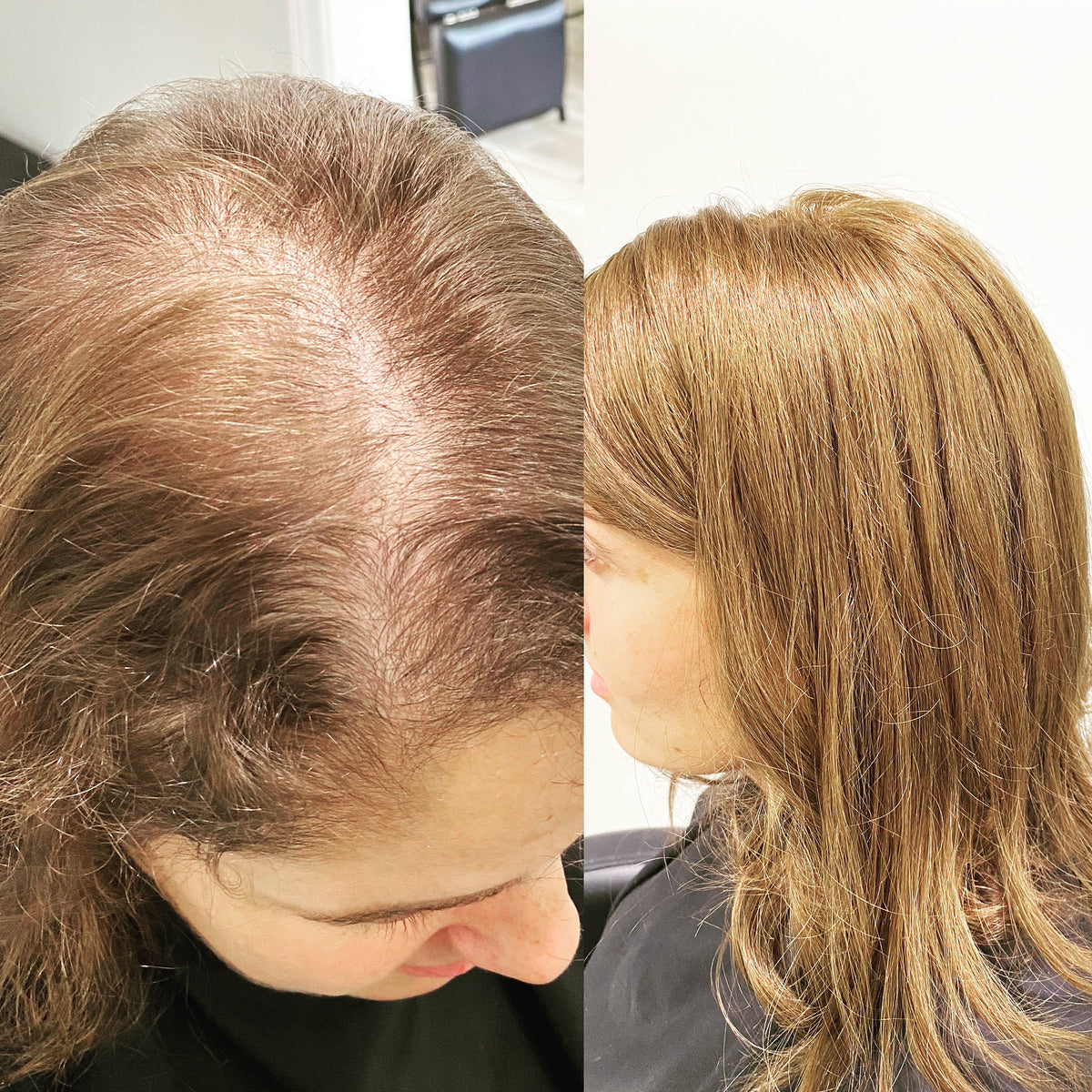


Are Natural Hair Extensions for Thinning Hair Worth It?
At Noelle Salon, we work with thinning and fine hair clients every week, many of whom have been told hair extensions will either “fix everything” or cause damage. After 30+ years behind the chair, we’ve learned that extensions for thinning hair are not about adding more hair — they’re about choosing the right weight, placement, and method for fragile strands.
Key Highlights
-
Natural hair extensions for thinning hair can be safe and natural-looking when lightweight, low-tension systems are chosen and placed correctly.
-
Not all extension types suit thin hair; halo, clip-in, tape-in, hand-tied wefts, and nano rings work best when matched to hair density and lifestyle.
-
Making hair extensions look natural with thin hair depends on flat attachment points, even weight distribution, and precise color and texture matching.
-
Common mistakes such as heavy extensions, poor placement, excessive volume, and skipped maintenance make extensions more visible on thin hair.
-
Long-term safety depends on regular maintenance, proper breaks between extension cycles, and ongoing assessment of hair health.
-
Choosing the best hair extensions for thin hair requires realistic volume goals, professional guidance, and methods that protect fragile strands.
Thinning hair often brings mixed emotions. Many people want fuller hair but feel unsure whether extensions will help or make thinning more noticeable. Worries about damage, comfort, and natural-looking results can make the decision feel heavy.
The good news is that fine hair does not need more hair; it requires the right approach. When extensions are chosen and placed with thinning in mind, they can add soft fullness that blends naturally and feels comfortable, without drawing attention to fragile areas.
For more advanced or patchy hair loss, solutions like mesh integration can provide a more secure and natural-looking result.
This blog aims to provide clear, practical guidance on natural hair extensions for thinning hair. It explains which extension types work best, how to avoid common mistakes, and how to choose options that support hair health while creating a natural, confidence-boosting result.
What Makes Hair Extensions Look Natural on Thinning Hair?
When hair starts thinning, concerns shift from simple damage to visibility. Many people worry extensions will draw attention to sparse areas, look obvious in bright lighting, or change throughout the day. Natural-looking results come from understanding how fine hair behaves and working with it, not overwhelming it.
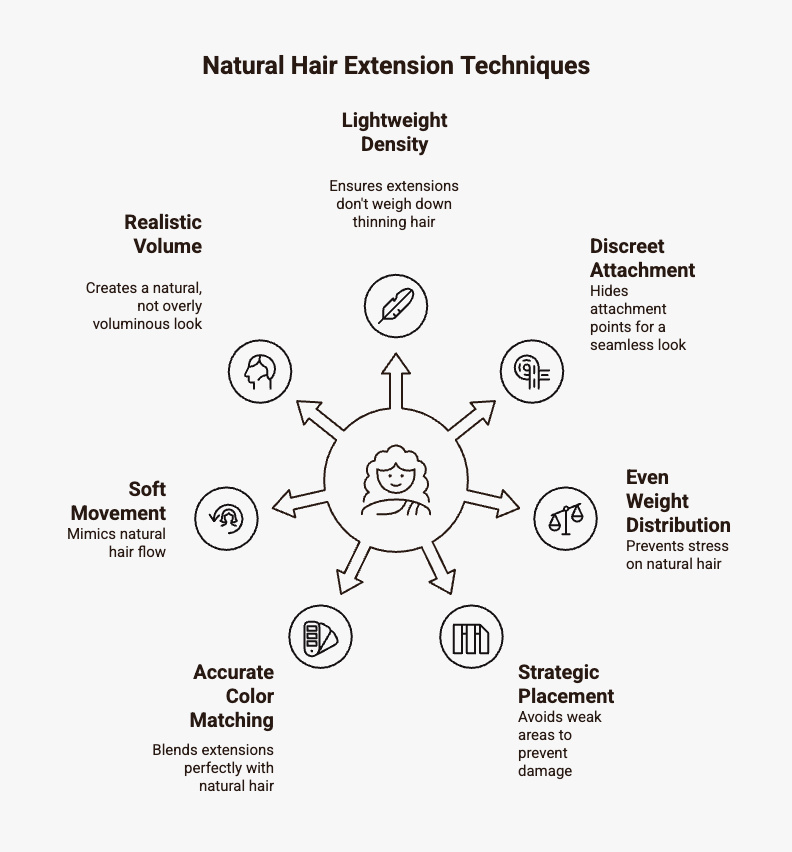
What truly gives natural looks to hair extensions on thinning hair is subtlety. The goal is not dramatic volume, but believable fullness that blends seamlessly with your own hair.
Key factors that make the difference:
-
Lightweight strand density: Thin hair cannot support heavy extensions. Lower-density hair mimics natural hair and prevents a bulky, top-heavy appearance.
-
Flat, discreet attachment points: Raised bonds or thick clips create visible bumps. Flat systems sit close to the scalp and blend more easily with fine hair.
-
Even weight distribution: Spreading weight across multiple sections reduces tension. This helps protect delicate follicles and prevents pulling or separation.
-
Strategic placement away from weak areas: Extensions should not be placed directly over visibly thinning zones unless specifically designed for hair loss. Proper placement allows natural hair to cover attachment points naturally.
-
Accurate color and undertone matching: With thin hair, even slight color differences stand out. Matching undertones is just as crucial as matching shade.
-
Soft, natural movement: Extensions that are stiff or overly thick move differently from fine hair. Flexible hair blends better and avoids an artificial look.
-
Realistic volume expectations: Natural results come from gradual fullness. Adding too much volume at once often makes thinning hair more noticeable.
When done correctly, hair extensions should feel like a quiet confidence boost, not something you constantly worry about. The right system blends in, protects your natural hair, and lets you move through your day without thinking about it.
What Types of Natural Hair Extensions Work Best for Thinning Hair?
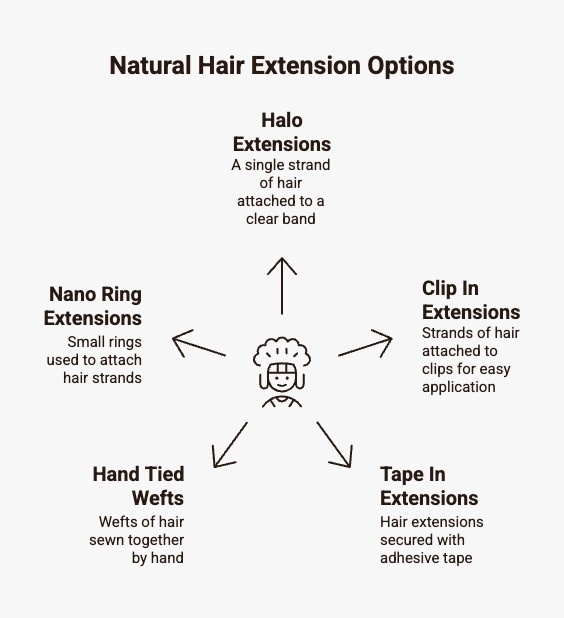
Choosing hair extensions when your hair is thinning can feel overwhelming. It is not just about appearance, but about protecting what you already have and avoiding anything that could make thinning more noticeable.
Many people worry that extensions will look obvious, feel uncomfortable, or cause further damage. The truth is, some extension types are explicitly designed to work with fine hair, not against it. When chosen carefully, the right system can blend seamlessly, feel lightweight, and restore confidence without stressing fragile strands.
1) Halo Extensions
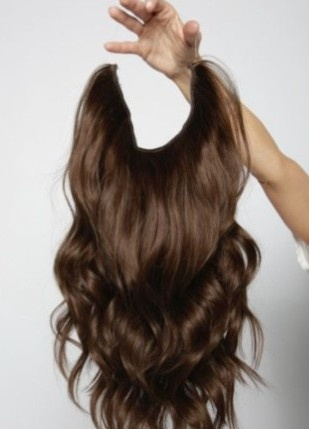
Halo extensions are designed to sit gently on the head using a thin, nearly invisible wire that rests around the crown. Unlike other methods, they do not attach to your natural hair. This makes them one of the least invasive options available, especially for thinning or fragile hair. The extension hair blends over your natural strands, creating the appearance of fuller length and volume without altering your hair structure.
Best For:
People with thinning hair who want temporary volume for events, photos, or occasional wear.
2) Clip In Extensions
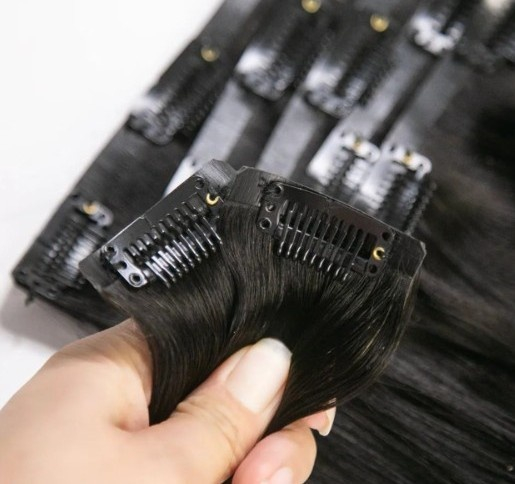
Clip-in extensions consist of wefts with small clips that attach directly to sections of your natural hair. They are designed for flexibility, allowing you to add volume where needed and remove them at the end of the day. For thinning hair, the key is using lightweight wefts and limiting the number of clips to avoid unnecessary tension. Proper placement is essential to keep them hidden and comfortable throughout wear.
Best For:
Short-term use or styling changes when you want volume without a long-term commitment.
3) Tape In Extensions
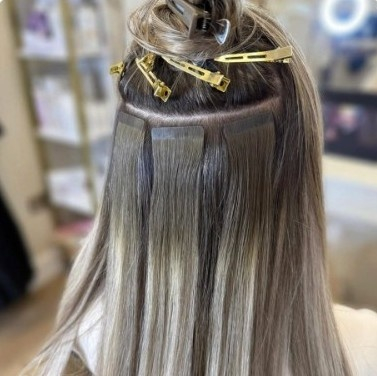
Tape-in extensions use thin adhesive panels that secure small sections of natural hair between two lightweight strips. This sandwich method allows the extensions to lie flat against the scalp, which is especially important for fine or thinning hair. Because the panels are evenly spaced, the weight is distributed more evenly than with bulkier methods. Tape-ins also move naturally with your hair, helping them blend seamlessly.
Best For:
Fine hair that needs subtle, natural-looking volume for everyday wear.
4) Hand Tied Wefts
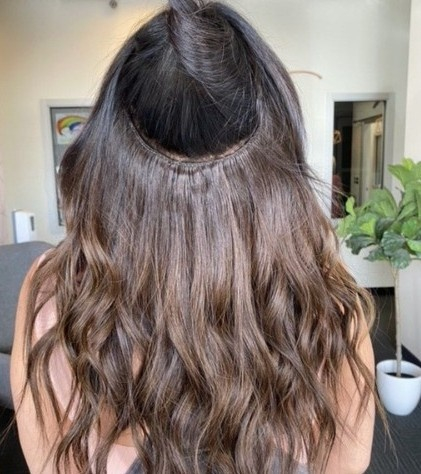
Hand-tied wefts are created by sewing extension hair onto a thin thread, resulting in a lightweight and flexible weft. These wefts are typically attached to the hair using a beaded foundation, which helps distribute weight evenly across the scalp. For thinning hair, this even distribution is critical in reducing strain on individual strands. Hand-tied wefts also sit flat, making them easier to conceal.
Best For:
Those looking for semi-permanent volume that feels natural for daily wear.
5) Nano Ring Extensions
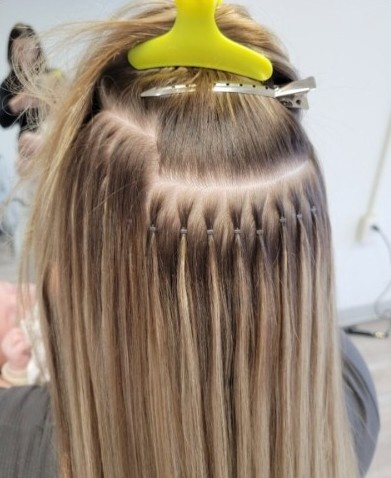
Nano ring extensions attach individual strands of extension hair to your natural hair using tiny metal rings. These rings are significantly smaller than traditional micro rings, making them less visible and lighter overall. Because no heat or glue is involved, the method can be less harsh when applied correctly. Precision placement is critical for thinning hair to avoid stress.
Best For:
People are seeking a longer-lasting solution that still looks discreet and lightweight.
There is no single solution that works for everyone, and that is okay. Thinning hair deserves a gentle, thoughtful approach, not a one-size-fits-all fix. With the correct extension type, proper placement, and realistic expectations, you can add fullness in a way that feels natural, comfortable, and supportive of your hair’s long-term health.
How Do You Choose Natural Hair Extensions for Fine Thin Hair?
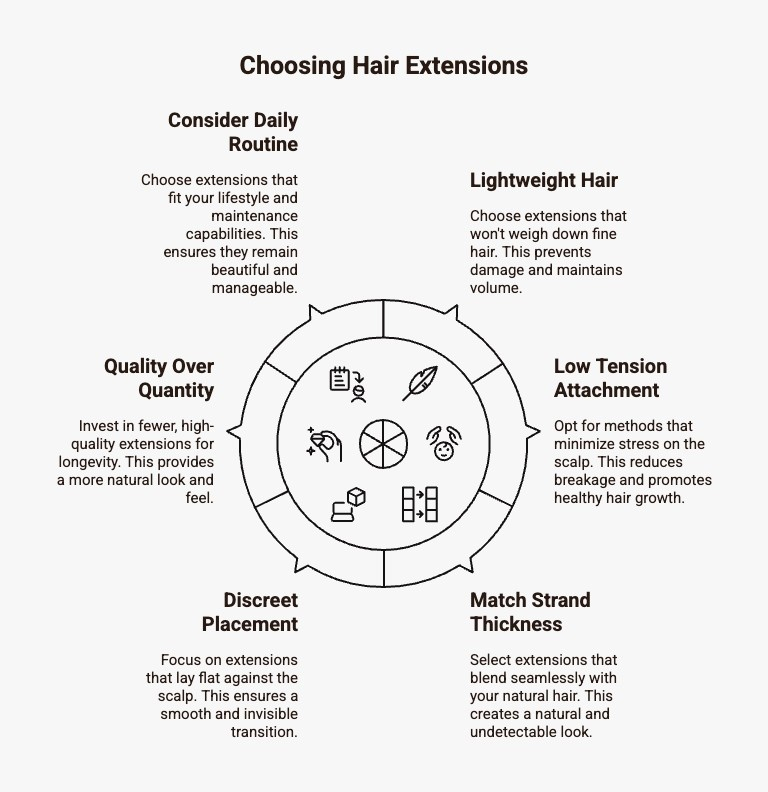
Choosing hair extensions for fine or thinning hair is less about style and more about suitability. The goal is not maximum volume, but a solution that blends quietly, feels comfortable, and protects fragile strands. The best results come from making a few key decisions in the correct order.
Step 1: Start With Weight, Not Length
The first decision is how much hair your natural strands can realistically support. Fine hair shows strain quickly, so lightweight extensions should always come before length or fullness. If an option feels heavy in the hand, it will look heavy once installed.
Step 2: Rule Out High-Tension Methods Early
Before comparing styles, eliminate methods that rely on tight pulling, rigid bonds, or bulky attachment points. Fine hair cannot hide tension. Low-tension systems that distribute weight evenly are far more forgiving and easier to blend.
Step 3: Match Strand Thickness, Not Just Hair Type
Even high-quality hair can look unnatural if the strand thickness does not match your own. Extensions should mirror the fineness of your natural hair so movement, texture, and light reflection stay consistent.
Step 4: Think Placement Before Volume
Decide where fullness is actually needed. Thin hair benefits from targeted enhancement, not overall density. Flat, discreet placement away from weak or exposed areas usually creates the most natural result.
Step 5: Choose Quality Over Quantity
Adding small amounts of hair in the right locations almost always looks better than adding a lot everywhere. Fine hair blends best when extensions support shape rather than overwhelm it.
Step 6: Factor In Your Daily Routine
Finally, consider how you live with your hair. How often you wash, style, exercise, or tie it back should influence the method you choose. A solution that fits your routine will look better in the long term than one that feels high-maintenance.
Choosing natural hair extensions for fine, thin hair becomes much easier when decisions are made in sequence. Asking which hair extension systems blend best with natural hair shifts the focus away from volume and toward compatibility. When weight, tension, placement, and lifestyle are aligned, extensions stop feeling risky and start feeling supportive.
What Mistakes Make Hair Extensions Obvious on Thin Hair?
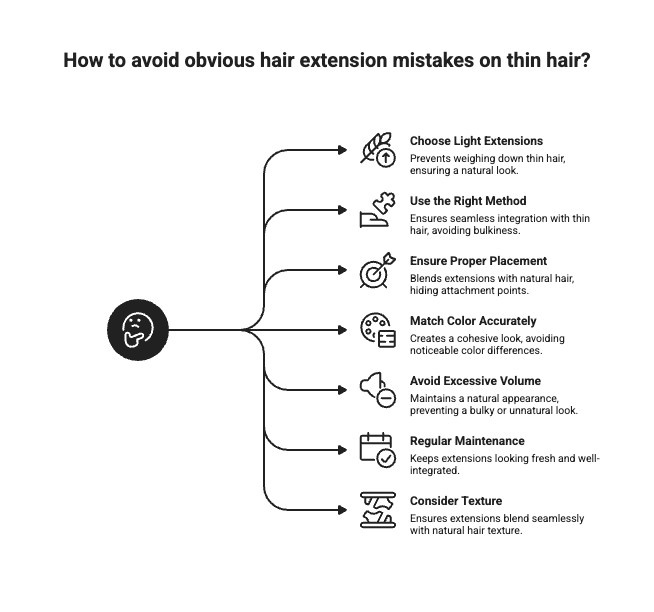
When hair is thin, small choices show immediately. Extensions themselves do not cause most visible extension issues; rather, it is mismatched decisions that add weight, tension, or contrast, where fine hair cannot hide them.
1) Choosing Heavy Extensions
How it happens: Volume is mistaken for fullness.
Early warning sign: The stylist recommends “adding more hair” to fix thin areas.
What goes wrong: Heavy extensions pull away from fine strands, expose attachment points, and move differently than natural hair. The result looks obvious, not fuller.
2) Using the Wrong Method
How it happens: Methods designed for thick hair are treated as universal.
Early warning sign: Large bonds, tight braids, or rigid attachment points.
What goes wrong: Thin hair cannot conceal bulk or tension, leading to visible bonds, discomfort, and accelerated thinning.
3) Poor Placement
How it happens: Extensions are placed where coverage is weakest.
Early warning sign: Attachments sit near the part, temples, or crown.
What goes wrong: Movement exposes connections, especially in natural light or when hair shifts during the day.
4) Color Mismatch
How it happens: Matching shade but ignoring undertone.
Early warning sign: The match looks fine indoors, but off near windows.
What goes wrong: Thin hair reflects light differently, making even subtle tone differences stand out immediately.
5) Adding Too Much Volume
How it happens: Thinning is treated as something to hide aggressively.
Early warning sign: Dramatic fullness added all at once.
What goes wrong: Excess density overwhelms fine strands, creating separation and visible gaps rather than a blend.
6) Skipping Maintenance
How it happens: Extensions are left in too long between adjustments.
Early warning sign: Slight shifting that is easy to ignore.
What goes wrong: On thin hair, small shifts become visible quickly, causing uneven blending and exposed attachments.
7) Relying on Density Alone
How it happens: Extensions are used as camouflage rather than support.
Early warning sign: No discussion of placement, hair growth, or comfort.
What goes wrong: Density without strategy looks artificial and puts unnecessary stress on fragile hair.
Thin hair does not need more hair. It requires restraint, precision, and the proper method. When extensions are chosen thoughtfully, they blend quietly, move naturally, and support your hair rather than compete with it.
Why Noelle Salon Is a Trusted Choice for Thinning Hair Extensions?
Choosing hair extensions for thinning hair is not just about the method. It is about who applies them. At Noelle Salon, the focus is always on protecting natural hair first, especially when working with delicate or fragile strands. Every extension service begins with a careful consultation that looks at hair density, thinning patterns, lifestyle, and long-term hair health, not just immediate volume goals.
Noelle Salon specializes in creating natural-looking results using lightweight, low-tension extension systems that blend seamlessly with thin hair. Stylists are trained to prioritize discreet placement, realistic density, and comfort, ensuring extensions feel as natural as they look. Whether you are exploring subtle volume for the first time or looking for a safer, long-term solution, the team guides you through options that suit your hair rather than overwhelm it.
Clients with thinning or fine hair often need a more thoughtful approach than standard extension methods. At Noelle Salon, we specialize in hair extensions for thinning hair, using lightweight, low-tension systems that are placed strategically to blend seamlessly and protect long-term hair health. A professional consultation helps determine the safest method, placement, and maintenance plan for your hair today — not just how it looks on day one.
Ready to explore hair extensions that feel natural and safe for thinning hair?
Book a free consultation at Noelle Salon to get personalized guidance on lightweight, low-tension extensions designed to blend seamlessly with fine hair and protect long-term hair health.
Conclusion
If you are considering hair extensions for thinning hair, the next step is not choosing the most popular method, but selecting the one that fits your hair today. Start by honestly assessing your hair’s density, fragile areas, and daily routine. Look for lightweight, low-tension systems, and avoid adding volume too quickly. A professional consultation can help you map placement, maintenance, and realistic expectations before anything is installed.
Most importantly, listen to your hair. If something feels heavy, uncomfortable, or stressful, it is a sign to adjust your approach. With thoughtful choices, regular check-ins, and a focus on hair health first, extensions can become a supportive solution rather than a risk, helping you enjoy natural-looking fullness with confidence over time.
Frequently Asked Questions
Are clip-in hair extensions suitable for thinning hair?
Yes, clip in hair extensions for thin hair work well temporarily, especially when lightweight human hair wefts are used carefully. They add volume for events, avoid daily tension, and suit fine strands when applied sparingly.
Will hair extensions damage thin or fine hair?
Hair extensions can be safe for thin hair and hair extensions coexist well when methods are lightweight, professionally applied, and maintained. Avoid high tension systems, schedule regular refits, and prioritize scalp comfort to reduce breakage.
How can I blend hair extensions with my natural thinning hair for a seamless look?
To make hair extensions look natural with thin hair, match color, undertone, and texture precisely. Strategic placement, soft layering, and conservative density help extensions blend seamlessly without exposing attachment points during movement or daily styling.
Are there instant fill-in hair extensions available for thinning hair?
Yes, natural hair extensions for thinning hair include halo systems and lightweight toppers that provide instant fullness. They sit gently, require no bonding, and blend quickly, making them ideal for confidence boosts without long commitments.
What should I look for when choosing hair extensions for thinning hair?
The best hair extensions for thin hair are lightweight, low tension systems matched to your density. Look for flat attachment points, customizable placement, and realistic volume goals that enhance fullness without overwhelming fragile strands naturally.
Are there instant fill-in hair extensions available for thinning hair?
Instant fill in extensions differ by offering quick volume without installation time. Options like halos or toppers focus on coverage rather than length, helping thinning areas look fuller immediately while remaining comfortable and to remove.
How are thinning hair fill-in extensions different from regular hair extensions?
Thinning hair fill in extensions focus on targeted coverage rather than overall volume. They are lighter, smaller, and designed to blend into sparse zones, unlike regular extensions that add length and density throughout the head.
How should you maintain clip-in hair extensions between uses?
Between uses, store clip in extensions flat, detangled, and clean. Brush gently, avoid heat styling unnecessarily, and keep them dry to preserve texture, shine, and lifespan before the next wear for future styling sessions safely.


