



Real Stories of Trichotillomania: Rachel’s Journey and What Others Can Learn
We’re honored to welcome our special guest, Rachel, and incredibly grateful for her openness in sharing her personal journey with trichotillomania, a hair-pulling condition that many people experience in silence.
As a salon specializing in trichotillomania Boston, we’ve seen how isolating this condition can feel, especially when you don’t see your experience reflected in others. Trichotillomania is classified as a Body-Focused Repetitive Behavior (BFRB), alongside habits like skin picking and nail biting. While each behavior may look different, they often share common emotional and sensory triggers that can be difficult to explain to those who haven’t experienced them.
What makes Rachel’s story so powerful is how relatable it is. From noticing specific hair textures that trigger pulling, to navigating anxiety, confidence, and relationships, her experience reflects what so many others quietly go through. By sharing her journey, she helps bring clarity to a condition that is often misunderstood and gives others permission to feel seen, understood, and supported.
In this interview, Rachel offers honest insight, practical advice, and real-life perspective for anyone navigating trichotillomania. Our hope is that her story helps you or someone you love feel less alone and more confident taking the next step toward support and healing.

Interview with Rachel: Real Experiences Living with Trichotillomania
Rachel, you’ve been both a client and a friend of our salon, and you’ve been so open about your journey. You’ve helped so many people feel less alone, and we truly thank you for that.
1) How old were you when you first noticed signs of trichotillomania?
Rachel first noticed signs in 8th grade after experiencing a bout of lice. Even after the lice were gone, she remained itchy and became hyper-focused on her hair. She started noticing different textures growing from the root, and soon after, began pulling hairs that felt “different” or unique.
2) Many people with trichotillomania struggle with anxiety and isolation. Was that part of your experience?
Rachel has experienced both anxiety and OCD. While not everyone with trichotillomania shares this experience, a high percentage do, and it can contribute to feelings of isolation if not addressed.
3) What treatments have you tried, and what worked best for you?
Rachel found that antidepressants were not effective for her personally. However, she did find that certain over-the-counter amino acids helped reduce her urge to pull.
4) What advice would you give to parents who discover their child is pulling their hair or brows?
Rachel emphasizes the importance of compassion. She experienced two very different parenting styles—her father was supportive, while her mother was more strict. She believes calm, understanding conversations are far more helpful than punishment or control.
5) Today, trichotillomania is more recognized, but still misunderstood. You lead a full, successful life—how did you get there?
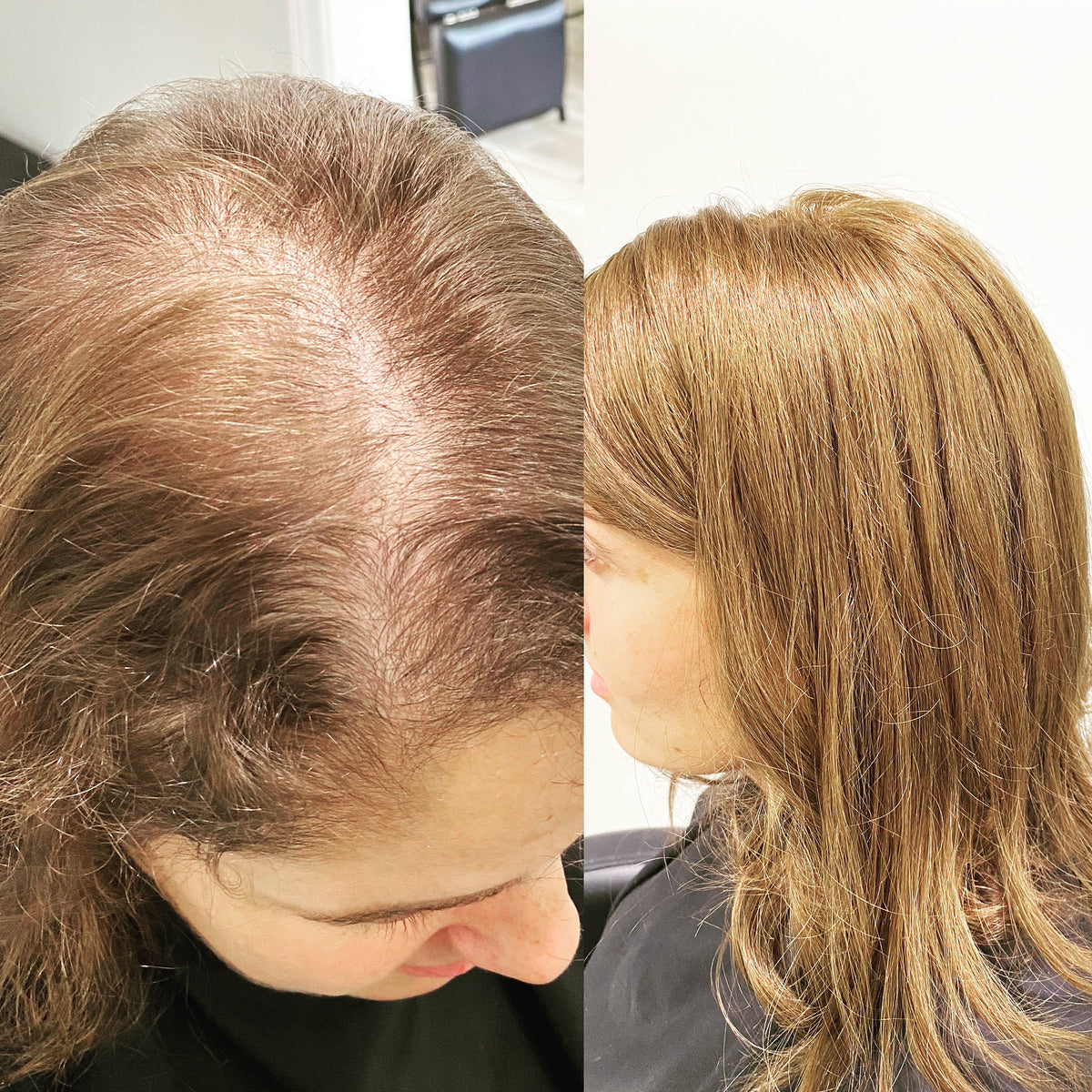
Rachel is now a college professor and has worked hard to reach a place of acceptance. She wears a hairpiece from our salon for added confidence and security, which helps her feel comfortable in her daily life.
6) Do you talk about trichotillomania with friends or partners?
Rachel is selective about who she shares her experience with. She typically only opens up when she is in a serious, trusting relationship.
7) You wear a hairpiece integrated into your own hair. Do you see this as a long-term solution?
Rachel does have some long-term hair loss and could live without a hairpiece, but she chooses to wear one because it boosts her confidence. At Noelle Salon, we attach hairpieces without shaving or glue, using gentle methods that protect natural hair.
8) You have such a positive and confident presence. What advice would you give someone newly diagnosed with trichotillomania?
Rachel shares that it was a long journey, but having a strong support system—friends, family, and a supportive salon environment—helped her feel normal again. Her message is simple: you are not alone, and you are not “different.”
9) What are your thoughts on tools like the HabitAware bracelet?
Rachel and many clients at Noelle Salon have found the HabitAware bracelet by Keen to be incredibly helpful. Created by a fellow trichotillomania sufferer, the bracelet detects pulling or picking motions and gently vibrates to bring awareness to the behavior. This increased awareness can help interrupt the habit and reduce pulling over time.
Conclusion
Rachel’s story is a powerful reminder that trichotillomania does not define who you are. With the right support system, awareness, and tools, it is absolutely possible to manage the behavior, rebuild confidence, and move forward with a full, meaningful life.
What makes the biggest difference is not trying to handle it alone. Whether it’s connecting with others who understand, working with professionals, or finding solutions that help you feel comfortable in your appearance, every step forward matters.
At Noelle Salon, we’ve seen firsthand how the right approach can help clients regain control and confidence, especially when combining emotional support with non-damaging hair solutions.
If you’re ready to explore options that help you feel more like yourself again, book a free hair extension consultation and let us guide you toward a solution that supports both your hair and your confidence.


