



TL;DR
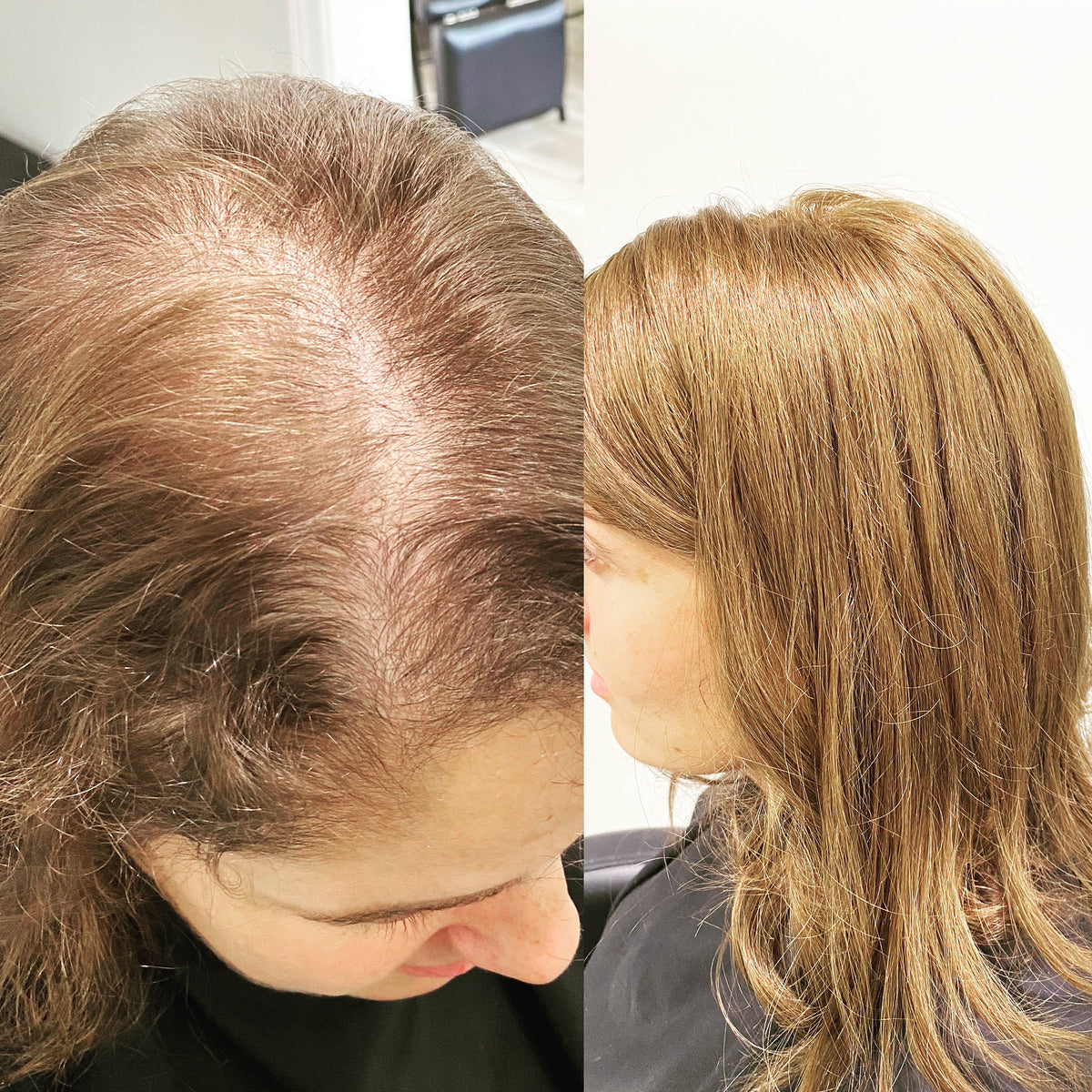
Hair toppers are partial hairpieces designed to camouflage thinning at the crown, part line, or top of the scalp while blending with your natural hair for targeted volume and natural-looking coverage. Unlike wigs or extensions, they provide lightweight, breathable coverage only where it’s needed—making them ideal for early to moderate thinning. With the right match in color, texture, and density, hair toppers can create a seamless, undetectable result. Proper care, gentle handling, and correct storage help maintain their longevity and appearance.
If you’re noticing thinning at the crown or a widening part, you’re not alone. Many clients searching for solutions related to hair loss Boston are looking for a way to restore volume without committing to a full wig. Hair toppers offer a practical, natural-looking solution that blends with your own hair while giving you back fullness and confidence.
In this guide, we’ll break down exactly what hair toppers are, who they’re best for, how they compare to other options, and how to wear and maintain them for the most natural results.
Hair Toppers vs. Wigs and Extensions: Key Differences in Coverage and Volume
Hair toppers differ from extensions and wigs in both intent and coverage. Wigs cover the entire scalp and are ideal for complete or advanced hair loss, offering a uniform look from hairline to nape. In contrast, a hair topper targets thinning zones—especially at the top or part—so your natural hair remains visible and part of the style.
Extensions add length and body to the sides and back but do not mask loss at the top. A hair topper is designed to address exactly that problem area, delivering breathable coverage and realistic scalp effect without the volume or weight of a full wig or long wefts. If you prefer to keep your bio hair in play while camouflaging only where needed, a topper is often the most comfortable, low-commitment solution. With that context, it’s easier to understand how a topper actually functions in day-to-day wear.
How Hair Toppers Work: A Closer Look at Design and Functionality
Hair toppers attach to your existing hair with built-in pressure-sensitive clips. You place the base over the thinning zone—crown, part, or front—then close the clips for a secure, yet gentle hold. The base is engineered to mimic a natural scalp so, once positioned and blended, the top looks seamless and the part appears lifelike.
Whether synthetic or human hair, a topper can be cut, shaped, and styled to harmonize with your haircut and texture. The outcome is targeted fullness where you want it most, while the rest of your hair remains visible and movable. If you’ve been wondering what a human hair topper can do differently, think flexible styling and a feel that closely mirrors your own hair.
Now that you know how a topper functions, let’s look at who benefits most and why.
Benefits of Hair Toppers: Who Can Gain from This Stylish Solution?

A hair topper is ideal when thinning is localized—at the crown, the part, or the frontal area—yet you still have enough surrounding hair for clips to anchor. It’s a practical path to fuller-looking hair without surgery or long recovery, especially if you want your own hair to show. Whether your concerns are medical, hormonal, or lifestyle-related, a topper can deliver instant coverage and a confidence lift while remaining discreet.
Addressing Common Causes of Thinning Hair: Why Women Choose Hair Toppers
Below are common scenarios and causes of thinning where a topper can help.
People who can benefit include:
-
Women with thinning at the crown or along a widening part due to genetics or aging
-
Postpartum mothers experiencing temporary shedding and uneven density
-
Individuals navigating hormonal shifts in perimenopause or menopause
-
Those with medical conditions such as alopecia or thyroid disorders
-
People recovering from chemotherapy and managing early regrowth phases
-
Anyone with traction alopecia caused by tight hairstyles or heavy extensions
-
Professionals, performers, or public figures who want fast, reliable volume for daily wear or special events
Because toppers are customizable in base size, fiber, and density, you can tailor the coverage—from subtle fill-in at the part to broader crown concealment—so you regain control of your look and your routine. Ask yourself: Which area do you notice first in photos or under bright lighting? Pinpointing that spot helps you choose the most effective hair topper size and shape. If you’re weighing options, the next section compares toppers with other approaches.
Hair Toppers vs. Other Hair Loss Solutions: What to Consider
Choosing a strategy for hair loss often involves weighing immediacy, maintenance, comfort, and cost. A hair topper offers instant coverage and non-surgical ease, but how does it compare to other options?
-
Topical products and supplements: These approaches may support scalp and hair health over time, but results vary and often take months. In contrast, a topper delivers instant visual fullness, which can be reassuring while you explore longer-term treatments.
-
Scalp micropigmentation: This can reduce the contrast of visible scalp; however, it doesn’t add physical volume. If lift and body are your goals, a topper creates dimensional fullness you can touch and style.
-
Wigs: For advanced or total loss, wigs are comprehensive. If you have partial thinning and prefer to show your natural hairline or length, a hair topper keeps your own hair in the spotlight while completing the look on top.
-
Hair extensions: Great for length and side volume, extensions won’t hide loss along the part or crown. A topper directly addresses that top zone and can be paired with extensions if desired.
-
Surgical options: Procedures can offer permanent change for some candidates but involve cost, recovery, and suitability assessments. A hair topper is non-invasive, budget-flexible, and immediately reversible, making it an appealing daily solution or bridge while considering other paths.
In short, a hair topper complements many approaches and can be worn alone or alongside treatments. Consider your lifestyle, budget, and whether you want instant results. Would a quick, clip-on fix before work give you the confidence you’re looking for? If so, a topper may be the most practical first step. If a topper suits your goals, the next step is choosing the right base construction and design.
Types of Hair Toppers: Exploring Base Designs and Their Benefits
Hair toppers are built on different base constructions, each affecting realism, breathability, and styling freedom. Your best choice depends on which feature matters most: an ultra-natural part, an invisible hairline, or a scalp look that photographs beautifully. Here are the best toppers for hair loss and what sets them apart:
1. What Is a Mono Hair Topper?
A monofilament base uses a fine, breathable mesh with individually hand-tied hairs, creating the effect of strands emerging from a realistic scalp. You can usually shift the part for styling versatility, and the mesh feels soft and light, which is helpful for sensitive scalps. If you prioritize comfort and natural parting, a mono topper is a reliable everyday choice.
2. What Is a Lace Front Hair Topper?
A lace front hair topper places a sheer lace panel at the front hairline with hand-tied hairs to emulate a natural growth pattern. This allows you to style hair off the face and achieve a convincing hairline that looks seamless at the forehead. If you love updos or side-swept styles, a lace front helps your hairline read as real.
3. What Are Silk Base Toppers?
Silk base toppers hide knots beneath a silk layer, eliminating any visible grid. The result is a hyper-realistic part and scalp look that photographs beautifully. Silk can be slightly thicker and less airy than mono or lace, but if top-tier realism is your goal, a silk base delivers a “growing from the scalp” impression that many users love. With base types in mind, it’s time to look at materials—the fiber affects realism, care, and styling.
Synthetic vs. Human Hair Toppers: Which Material Is Right for You?
Choosing the right fiber is just as important as choosing the right base. Your lifestyle, styling habits, and budget will guide the decision between synthetic and human hair.
-
Synthetic toppers: Pre-styled fibers hold their shape well, even in humidity, and require less day-to-day maintenance. They’re often more affordable and an excellent option for consistent, ready-to-wear looks. However, unless labeled heat-friendly, they shouldn’t be heat-styled. Even heat-friendly synthetics typically have lower temperature thresholds than human hair and may not offer the same long-term durability.
-
Human hair toppers: With a human hair topper, you can heat-style, curl, and straighten more freely, achieving a look that feels and behaves like your own hair. Human hair usually offers longer wear potential with proper care and can be colored by professionals within safe parameters. The trade-offs are higher price and more maintenance—just like caring for your natural hair.
Ask yourself: Do you want a “set it and forget it” routine, or do you love restyling your hair? A synthetic hair topper caters to simplicity, while a human hair topper rewards those who enjoy customization. Once you’ve narrowed base and fiber, you’re ready to measure, install, and style your topper.
How to Wear and Style Your Hair Topper: Step-By-Step for a Natural Look

Wearing a hair topper for the first time can feel new, but a clear process turns it into a quick daily ritual. From measuring your thinning area to the final blend, every step supports a seamless transition. As you read, imagine which steps solve your current challenges: part visibility, crown flattening, or breakage around the hairline.
What You’ll Need to Get Started (Tools & Essentials)?
Before you begin, gather the following:
-
A flexible measuring tape
-
A fine-tooth or tail comb for precise parting
-
Hair clips or sectioning clips
-
One or two mirrors for visibility
-
Your chosen hair topper
-
Optional: hair fibers or concealers for added blending, and heat tools if appropriate for your fiber
Step 1 (Measure) - How to Measure Your Hair Loss Area?
Locate the zone where your hair appears sparse—usually the part, the crown swirl, or the frontal top. Measure front-to-back and side-to-side across the thinning area. Add about a half inch to an inch around the perimeter so the clips can anchor to strong, healthy hair. This ensures a secure and comfortable fit and reduces tension on delicate strands.
Tip: If your hair loss evolves, you can reassess these measurements over time and consider a larger base later for continued coverage.
Step 2 (Select) - How to Select the Right Base and the Right Size?
Choose a base slightly larger than the measured area so all clips land on stable hair. For mild thinning, a compact base offers a subtle boost. For moderate to advanced thinning, opt for a larger base to distribute clips comfortably and create even coverage.
Base type matters too: monofilament for natural parting and comfort, lace front for a believable hairline and off-face styling, and silk base for the ultimate scalp illusion. The “right” hair topper feels secure, aligns with your styling routine, and mirrors your pattern of loss.
Step 3 (Match) - How to Match Hair Color and Texture?
Match the topper to the mid-lengths and ends of your hair (not the roots) because that’s where it blends most. Evaluate undertones—cool, warm, or neutral—and consider highlights or lowlights if your color is dimensional. Texture is equally critical: a straight hair topper won’t disappear into wavy layers, and vice versa. If you’re between shades, choose the slightly lighter color and blend with low-maintenance root powder or your natural regrowth for a realistic transition.
Step 4 (Install) - How to Put a Hair Topper On?
Brush and prep your natural hair. Part it where you usually do, then open all clips on the underside of the topper. Position the front edge where thinning begins—either at or just behind your natural hairline. Close the front clip first to anchor the placement. Next, secure the side clips, then the back clip(s), ensuring the base lays flat without pulling.
After attaching, gently blend the topper with your hair using your fingers or a comb. If needed, tease a small amount of hair at the roots beneath the clip locations for extra grip—especially useful for very silky hair. For additional blending along the part, you can lightly dab root powder or fiber at the seam to diminish contrast.
Step 5 (Styling) - How to Style a Hair Topper?
If you’re wearing a human hair topper, you can curl, wave, or straighten within safe temperature ranges to match your style. For synthetic hair toppers, use only tools rated for the fiber, and keep heat low. Style your topper and natural hair together for continuity—curl them in the same direction, or smooth them together with a brush for a flawless flow.
Lift at the crown with volumizing powder or gentle teasing at the base to erase flat spots. Finish with a light, flexible-hold spray. Before you leave the mirror, check the hairline, part, and perimeter in different lighting—soft daylight is ideal for catching any areas that might need a quick blend. After styling comes upkeep—consistent care preserves comfort, realism, and longevity.
Caring for Your Hair Topper: Maintenance Tips for Longevity

With consistent, gentle care, your hair topper will look fresher, last longer, and stay comfortable. Whether you prefer synthetic or human hair, a mindful maintenance routine preserves texture, shine, and base integrity. Here’s how to keep your topper looking its best.
How to Wash a Hair Topper?
Detangle gently from ends upward before washing. Fill a basin with lukewarm water and add a small amount of sulfate-free, topper-safe shampoo. Submerge and swirl softly—avoid scrubbing or twisting. Rinse thoroughly. Apply a light conditioner to mid-lengths and ends (skip the base to maintain clip and knot security). Rinse again, then blot with a soft towel—never wring. Place on a wig stand or mannequin head to air dry fully before brushing or styling.
How to Store a Hair Topper?
When not in use, store on a wig stand or mannequin head to preserve shape and prevent creases. If traveling or short on space, turn the topper inside out (hair inward) and place it in a satin or silk bag. Always store in a cool, dry place away from direct sunlight and humidity. Avoid long-term storage in plastic bags that can trap moisture.
How to Brush and Detangle a Hair Topper?
Use a wide-tooth comb or a topper-safe wig brush. Support the base with one hand to reduce tension on clips and knots, and work from ends to roots. For curly or wavy styles, finger-combing protects the pattern and prevents frizz. If tangles persist, mist lightly with a detangling spray formulated for your fiber and proceed slowly.
How to Protect Your Hair Topper from Heat Damage?
For heat-friendly synthetic fibers and human hair, always apply heat protectant before styling. Keep temperatures conservative—stay within the safe range for your specific fiber—and minimize frequent heat passes. Consider heatless methods like foam rollers, flexi rods, or braids to extend style longevity between washes.
Hair Topper Care Checklist (Quick Reference)
-
Before each wear: Check clip tension, gently detangle, and verify the base lays flat.
-
After each wear: Remove gently, brush from ends up, and let the piece air out on a stand.
-
Washing cadence: Wash only when needed—usually after several wears—using gentle, fiber-appropriate products.
-
Storage: Use a stand for shape; use a satin bag for travel. Keep away from heat and sun exposure.
-
Heat styling: Apply protectant every time; keep tools at safe temps for your fiber.
-
Base care: Avoid saturating or scrubbing the base; treat knots and clips with care.
-
Routine check: Inspect clips, stitching, and parting for wear; address minor maintenance early.
Real-Life Scenarios: How Different People Use Hair Toppers
Sometimes the easiest way to picture the right hair topper is to imagine your life with it in place. Which of these scenarios feels most like you?
-
The busy professional: You start meetings early, and under bright office lighting your part looks sparse. A silk base hair topper with a subtle part gives you a camera-ready scalp illusion, while a quick pass of root powder perfects the blend.
-
The new parent: Postpartum shedding left thinner patches at the crown. A small mono base hair topper clips in fast without irritating your scalp, and because it’s lightweight, it feels comfortable during long days on the go.
-
The active enthusiast: You’re in motion—walking, yoga, errands. A lace front hair topper keeps your hairline natural so you can tuck pieces back or wear a soft headband, and the breathable base helps you stay cool.
-
The style chameleon: You love waves one day and sleek hair the next. A human hair topper lets you heat-style to match your mood and integrates seamlessly with layers for a sophisticated finish.
Consider your day-to-day routines. Do you value quick application, a flawless hairline, or maximum styling freedom? Your answer points to the best base and fiber for your needs.
Common Mistakes to Avoid With Hair Toppers
-
Choosing a base that’s too small: Clips need solid hair to grip. If the base is undersized, it may feel tight or shift during the day.
-
Mismatching density: If your topper is denser than your bio hair, the blend can look top-heavy. Opt for a density close to your own hair and adjust with styling.
-
Overwashing: Washing too frequently can shorten fiber life. Clean only as needed and refresh between washes with gentle detangling and light product.
-
Ignoring undertone: A seemingly “perfect” shade can still clash if undertones don’t align. Compare in natural light to confirm harmony.
-
Rushing attachment: Take a moment to align the front and part, then secure clips in sequence. A calm, methodical install pays off with all-day comfort.
Fitting a Hair Topper: Step-by-Step Guide for First-Time Users
Ready for a deeper walkthrough? This expanded sequence adds small details first-time wearers find helpful:
-
Prep your bio hair: Part it naturally, smooth flyaways, and lightly tease at clip sites if your hair is very silky.
-
Open all clips: Confirm each clip opens and closes smoothly; replace any that feel loose to maintain hold.
-
Position the base: Align the front edge at or just behind your hairline, depending on where coverage is needed most.
-
Secure the anchor clip: Close the front clip first to lock in placement before moving to the sides and back.
-
Check tension: If a clip pulls, open it, adjust positioning by a few millimeters, and re-secure on stronger hairs.
-
Blend the perimeter: Use a tail comb to pull through small sections of your hair over the topper’s edge for a soft, concealed seam.
-
Refine the part: If your base allows, shift the part slightly to mimic your natural growth and break up uniformity.
-
Set the style: Curl, wave, or smooth as allowed by your fiber. Finish with a light mist and a fingertip check around the edges.
Pro tip: If you wear glasses or sunglasses on your head, confirm they don’t catch the clips. A quick mirror check from multiple angles can save surprises later in the day.
Where Can I Try on Hair Toppers Near Me?
At Noelle Salon, you can try on hair toppers in a comfortable, private setting where your confidence is the priority. If you’re searching for solutions related to hair loss Boston, working one-on-one with a specialist allows you to explore different base types, fibers, sizes, and colors to find the most natural match for your hair and lifestyle.
Because hair loss is personal, a customized consultation ensures the right fit, blend, and level of coverage—so your topper looks seamless and feels secure. From selection to customization, you’ll receive expert guidance every step of the way.
When you’re ready to explore your options, the best place to start is with personalized support.
👉 Book your free hair loss consultation and find a solution designed specifically for you.
Still have questions? The FAQ below covers common concerns.
Frequently Asked Questions About Hair Toppers
Where can I buy a hair topper near me?
Hair toppers are available at wig boutiques, salons, and online stores that specialize in hair loss solutions. Noelle Salon provides high-quality options along with personalized consultations and fittings to help you find a topper that blends naturally and fits securely.
How much does a hair topper cost?
Pricing depends on hair type, base construction, and brand. Synthetic toppers start around $150, while human hair versions typically range from $300 to $1,200 or more. Noelle Salon carries a variety of options across budgets and offers expert guidance to help you invest wisely.
How do hair toppers stay on?
Most hair toppers use pressure-sensitive clips that gently grip your natural hair. Some designs support tape or adhesive for extra hold—useful if your thinning is advanced or you prefer a longer-wear application.
How to trim a hair topper?
For the most natural integration, have a professional stylist customize your hair topper while it’s on your head. Noelle Salon specializes in cutting and styling toppers to mirror your haircut, face shape, and density for a flawless finish.
What are the best quality hair toppers?
Top-tier options are often 100% Remy human hair with hand-tied bases such as monofilament or silk. These deliver realism, longevity, and styling versatility. Noelle Salon is known for premium human hair toppers that can be tailored to your preferences.
What is the difference between a hair piece and a hair topper?
“Hairpiece” is a broad term for partial hair additions—clip-in bangs, ponytails, and other enhancements. A hair topper is a specific type of hairpiece designed to cover thinning at the crown or part while blending with your existing hair, prioritizing natural scalp appearance and targeted coverage.
Are Hair Toppers Easy to Use? Debunking Myths and Misconceptions
Yes—most designs clip in within minutes and can be removed just as easily. With basic placement and blending, first-time users typically master a natural look after a few tries.
How to Choose the Right Hair Topper for Your Needs
Match base size to your thinning area, pick a construction that suits your styling goals (mono, lace front, or silk), and align color, texture, and density to your bio hair for the most seamless blend.


