

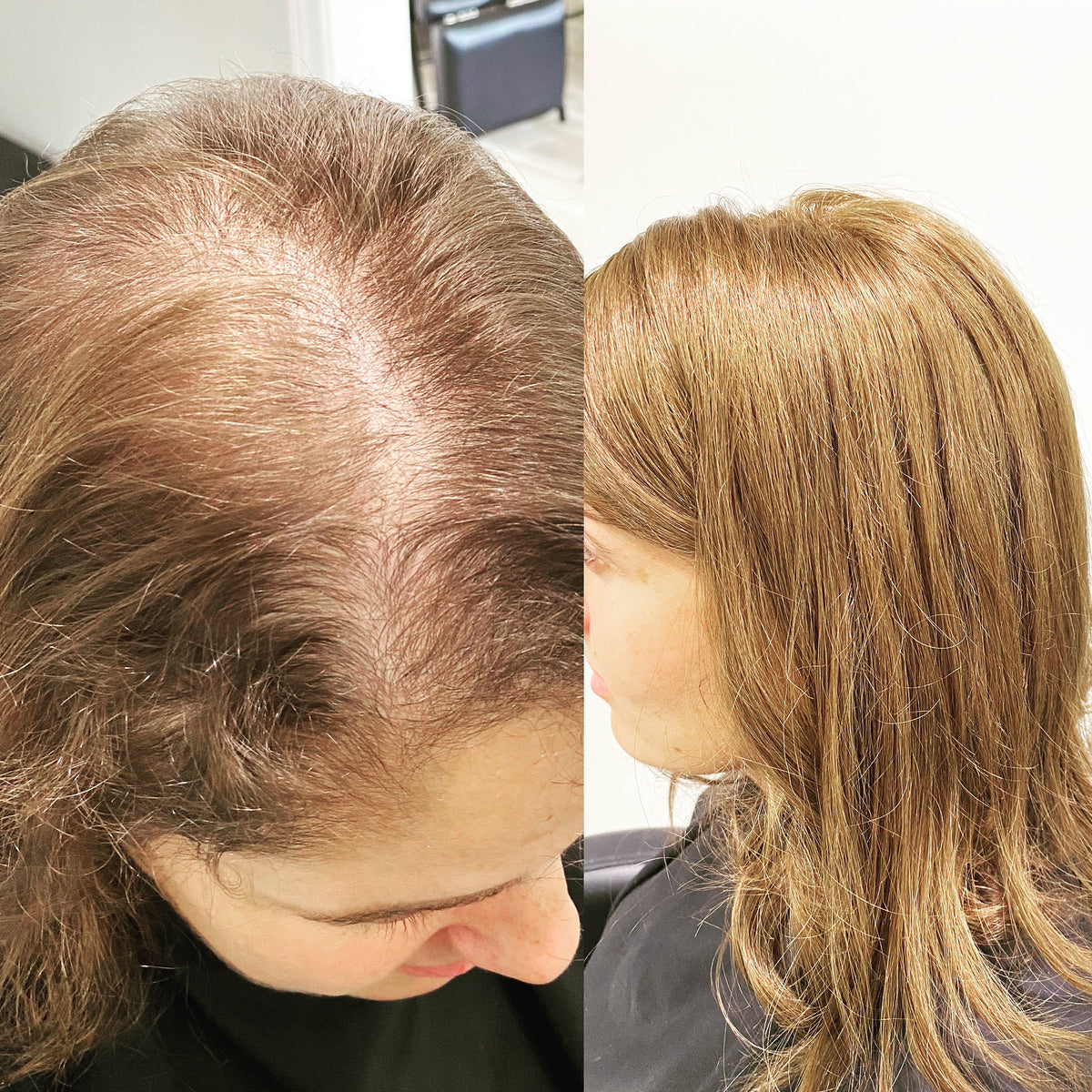


What Are the Least Damaging Hair Extensions for Thin Hair?
Do Hair Extensions Damage Thin Hair?
If you have fine or thinning hair, choosing the wrong extensions can do more harm than good—leading to breakage, scalp tension, or even more hair loss.
For clients searching for hair extensions Boston, the biggest concern isn’t just how the extensions look—it’s whether they’re actually safe for your hair type.
The good news is that the right extensions, when chosen and applied correctly, can add volume and fullness without damaging your natural hair.
👉 Book a free hair extension consultation to find out which methods are safest for your hair type, density, and thinning pattern.
Which Are the Least Damaging Hair Extensions for Fine Thin Hair?

Choosing hair extensions that are gentle on thin hair involves more than the method itself. Application technique, weight, placement, and ongoing care all play a role in protecting delicate strands. Even well-regarded options can cause stress if these factors are overlooked.
Knowing what truly supports fine hair helps you make a confident, long-term decision:
1) Hand Tied Extensions

Hand-tied extensions are considered some of the least damaging hair extensions for thin hair because they distribute weight evenly across the scalp. When installed correctly, they reduce tension on fine strands and help prevent breakage. These are often recommended as non damaging hair extensions for thin hair, especially for clients seeking long-term wear with minimal stress.
Best for: Fine hair that needs consistent volume with even weight distribution and long-term wear.
2) Micro Bead Extensions

Microbead extensions can work well for fine, thin hair when lightweight beads and proper spacing are used. Poor installation can cause damage, but a professional application makes them among the best hair extensions for thin hair. They avoid glue and heat, which helps reduce the risk for those concerned about hair extensions damaging thin hair.
Best for: Fine hair with enough strength to support minor attachment points without added tension.
3) Clip In Extensions

Clip-in extensions are a safe, temporary option for thin hair when worn occasionally. Because they are removable, they allow natural hair to rest between uses. Lightweight clip-ins are often considered no-damage hair extensions for thin hair if the clips are small and not placed repeatedly in the same areas.
Best for: Occasional wear, events, or short-term volume without ongoing commitment.
4) Tape In Extensions

Tape-in extensions can be low-impact when they are applied and removed by a professional. Many people ask, Do tape in extensions damage thin hair? The answer depends on weight, placement, and maintenance. Ultra-thin, medical-grade tapes reduce tension on fine strands, making them a viable choice for the least-damaging hair extensions for fine, thin hair.
Best for: Fine hair that needs subtle volume with a flat, discreet finish.
5) Flat Weft Extensions (Skin Weft, Genius Weft, Micro Weft)

Flat weft extensions are designed to sit close to the scalp, reducing bulk and pressure on thin hair. Options like skin weft, genius weft, and micro weft feature ultra-thin seams that blend seamlessly with fine density hairlines. Because they distribute weight evenly and avoid excessive layering, these wefts help minimize root stress. This makes them a popular choice for invisible least damaging hair extensions for thin hair, exceptionally when installed and maintained professionally.
Best for: Fine hair that needs even volume across wider areas without visible seams.
6) Mesh Integration Systems

Mesh integration systems are ideal for very thin or thinning hair because they distribute weight across a breathable mesh base. Instead of pulling on individual strands, hair is evenly supported, reducing the risk of damage. These systems are often recommended when clients ask if hair extensions will damage thin hair. To keep the system comfortable and secure as natural hair grows, scheduling regular hair topper maintenance appointments helps maintain balance, blending, and long-term hair health.
Best for: Advanced thinning or low-density areas where traditional attachments are not suitable.
When the correct method is paired with professional application and mindful upkeep, hair extensions can enhance thin hair safely, focusing on support and preservation rather than pushing hair beyond its limits.
What Are the Best Hair Extensions for Thin Hair Based on Hair Type?
Not all thin hair behaves the same. The best hair extensions for thin hair depend on texture, density, and scalp sensitivity, since a method that works for fine straight hair may not suit curly hair or hair loss concerns.
|
Hair Type |
Best Extension Options |
Why It Works |
|---|---|---|
|
Fine Straight Hair |
Flat wefts, hand tied extensions |
Lay flat, blend easily, and avoid visible bulk |
|
Fine Wavy Hair |
Hand tied extensions, micro bead extensions |
Allow natural movement with balanced weight |
|
Fine Curly Hair |
Mesh integration systems, custom wefts |
Support curl pattern without disrupting texture |
|
Thin Hair With Hair Loss |
Mesh integration systems |
Distribute weight evenly and reduce strand stress |
|
Thin Hair With Sensitive Scalp |
Lightweight tape ins, flat wefts |
Minimize pulling and scalp irritation |
Choosing extensions based on hair type ensures better comfort, natural results, and long-term protection for thin hair.
How Can You Reduce Damage When Wearing Extensions on Thin Hair?

Protecting thin hair while wearing extensions comes down to how they are chosen, applied, and cared for. When extensions match your hair’s strength and routine, they can add fullness without increasing breakage or discomfort.
Even gentle extension methods need proper care. These simple habits help protect thin hair while wearing extensions:
1) Choose Lightweight Extensions
Lightweight extensions place less strain on thin hair and help prevent root breakage. Heavy wefts or dense hair bundles can pull on fragile strands, weakening them over time. Choosing extensions explicitly designed for fine or thin hair helps distribute weight more evenly and reduces unnecessary stress on the scalp and natural hair.
2) Avoid Excessive Tension
Tension is one of the leading causes of damage when wearing extensions on thin hair. Tight installations, over-tightened beads, or closely packed attachments can strain the hair follicles. Proper spacing and gentle application help protect delicate strands and reduce discomfort, shedding, and long-term thinning caused by constant pulling.
3) Follow Proper Maintenance
Regular maintenance is essential to keep extensions from damaging thin hair. Allowing extensions to grow out too long can cause tangling and uneven tension. Professional check-ups ensure attachments stay secure and properly positioned. Gentle brushing, sulfate-free products, and careful washing also help maintain healthy, natural hair while wearing extensions.
4) Limit Heat Styling
Thin hair is more sensitive to heat, and extensions can add extra stress during styling. Excessive heat weakens both natural hair and attachment points for extensions. Using low heat settings, heat protectant products, and air drying when possible helps preserve hair strength and prevents dryness, breakage, and unnecessary damage over time.
5) Schedule Regular Adjustments
As natural hair grows, the placement of extensions changes. Without regular adjustments, extensions can pull unevenly on thin strands. Scheduling professional repositioning helps maintain balanced tension and proper weight distribution. Timely adjustments also reduce matting near the scalp and prevent stress-related hair loss caused by poorly positioned extensions.
6) Remove Extensions Safely
Improper removal can cause immediate damage to thin hair. Pulling, cutting, or using harsh products can lead to breakage and hair loss. Professional removal ensures adhesives, beads, or threads are released gently. Safe removal protects the integrity of natural hair and prepares it for future extensions or recovery periods.
With the correct extension type, gentle care practices, and professional maintenance, thin hair can enjoy added volume and length without long-term damage or unnecessary stress.
What Hair Extensions Should You Avoid If You Have Thin Hair?

While many extensions are designed to protect thin hair, specific methods can do the opposite by adding excess weight, tension, or chemical stress:
-
Heavy Sewn-In Extensions: Add continuous weight that pulls on thin strands and weakens the hair at the root.
-
Thick or Bulky Wefts: Sit unevenly on fine hair, creating pressure points and poor blending.
-
Glue-Based Extensions: Use strong adhesives and removal solutions that can damage fragile hair.
-
Oversized Micro Beads: Concentrate weight on small sections of hair, increasing breakage risk.
-
Overly Tight Installations Cause constant tension on the scalp and can lead to traction-related hair loss.
-
Long-Term Wear Without Maintenance: Allows extensions to shift and tangle, causing uneven stress on thin hair.
Avoiding these types of extensions helps preserve hair strength and supports healthier, long-term results for thin hair.
How Can You Maintain and Care for Extensions on Thin Hair?
Proper aftercare is key to protecting thin hair while wearing extensions. Small, consistent habits can improve comfort, maintain strength, and help extensions last longer.
Below are simple care routines that support healthy wear on fine or thinning hair:
Daily Care Tips:
-
Brush gently with a soft-bristle or loop brush, starting at the ends and working upward.
-
Avoid brushing when hair is wet, as thin hair is more prone to stretching and breakage.
-
Keep hair loosely tied when sleeping to reduce friction and tension.
Washing and Product Use:
-
Use sulfate-free, lightweight shampoos to avoid dryness and buildup.
-
Apply conditioner only to mid-lengths and ends, not near attachment points.
-
Wash hair no more than two to three times per week to prevent weakening the roots.
Styling and Heat Protection:
-
Limit heat styling and always use a heat protectant.
-
Avoid direct heat on bonds, beads, or tapes.
-
Choose low heat settings to protect fine strands.
Professional Maintenance:
-
Schedule regular adjustment appointments to prevent uneven tension.
-
Have extensions removed or repositioned only by a professional
-
Take breaks between installs to allow natural hair to recover.
With consistent care and professional support, extensions can remain safe, natural-looking, and comfortable on thin hair.
Why Choose Noelle Salon for Thinning Hair Extensions?
At Noelle Salon, we specialize in hair extensions for thin and fragile hair, focusing on lightweight, low-tension methods that protect your natural hair while creating seamless, natural results.
Every service starts with a personalized assessment to choose the safest method based on your density, scalp condition, and goals—so you get results that actually last without causing damage.
Conclusion
When it comes to thin or fragile hair, the least damaging hair extensions are the ones that prioritize lightweight design, proper placement, and long-term hair health.
The right method should enhance your hair without adding stress, tension, or unnecessary weight—and that’s where professional guidance makes the biggest difference.
If you’re considering hair extensions Boston, we specialize in safe, customized solutions for fine hair, thinning areas, and hair loss.
👉 Book your free hair extension consultation and we’ll help you choose the safest, most natural-looking option for your hair.


