

Mastering Hair Extensions for Short Hair: Tips for Every Texture
Short hair can be one of the most challenging scenarios when applying hair extensions Boston clients trust, requiring advanced blending techniques and careful method selection. Whether your hair is fine or thick, achieving a seamless, natural result depends on proper placement, weight distribution, and choosing the right type of extensions for your texture.
Tips For Short Fine Hair
1) A reverse application from top to bottom is the best way to go. When working with thin hair, we start the application at the top sides and crown of the head, not at the nape of the neck. Most of us are taught to start our application below the occipital bone (mid-part) of the head. Applying for hair extensions at the sides and crown, and blending in short strands into the extensions will allow for better blending, then address the back of the head.
2) Mapping out the number of extensions and size of the head before applying will ensure proper blending as well as establishing a price for the extensions. This will avoid any unforeseen overcharges.
3) Using a hybrid technique (mixing extensions methods), will address which hair extensions will work best for thin areas vs. higher density areas of the head.
4) Be prepared to have a layered style. Layers blend short hair to the extensions avoiding harsh steps and the "mullet style." Layers are created using a feather razor or a cutting shear glide technique which subtly texturizes the ends of the extensions.
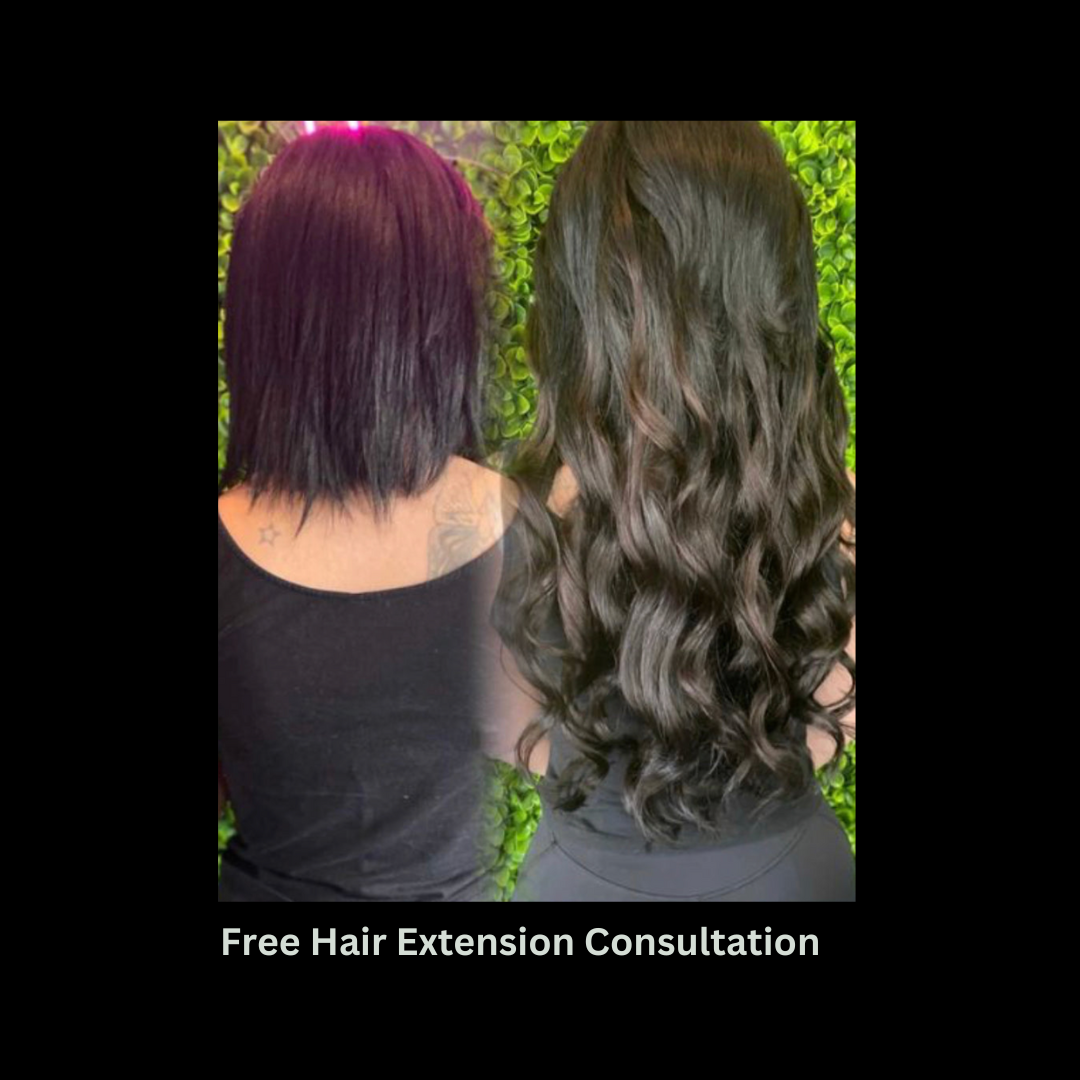
Yodit used tape extensions to create this natural-looking bob style on short hair.
Tips For Thick Hair
1) The above reverse application will enable your stylist to blend thick hair into hair extensions. Thick hair will easily support the weight from hair extensions, therefore, extra hair will be applied to the sides and crown of the hair.
2) Prepare for extra time to dry and style when hair is thick. Thick hair requires double the amount of hair extensions which equates to more time styling.
3) Hair thinning or texturizing on the top layer of hair will enable a seamless blend from your natural hair to the hair extensions. We prefer to only cut the top layers left out to hide the extensions versus the entire head of hair.
4) The hybrid technique also works extremely well on thick hair, combining hand-tied hair with Veila Pull-Thru hair extensions will keep hair healthy and avoid tension on natural hair.

Both thin and thick short hair have hurdles to overcome when applying length with hair extensions, curling the hair will help to hide hair the hair attachments. Many use hair extensions to grow in their hair during that "awkward growth stage," and by the next few appointments plan on easier blending and fewer hair extensions applied, as well as a decrease in cost.
The goal is to keep your natural hair healthy and if your ultimate goal is to eventually not wear extensions, then hair masks and treatments will keep hair pliable and supple. Backcombing, a.k.a teasing your hair, will also help to hide hair extensions attachments at the top of the head. In the 1960s, 70s, and 80s a tight hair tease created a ton of volume, today I suggest a few strokes of backcombing with a comb or teasing brush simply to hide hair extensions.
Conclusion
Applying hair extensions to short hair requires precision, experience, and the right combination of techniques to achieve a seamless blend. Whether your hair is fine or thick, proper placement, layering, and method selection make all the difference in creating natural-looking length and volume without compromising hair health.
For hair extensions Boston clients trust for short hair transformations, customization is key. Book a free hair extensions consultation to evaluate your hair, determine the best approach for your length and density, and create a plan that grows with your hair while maintaining a flawless blend.


