

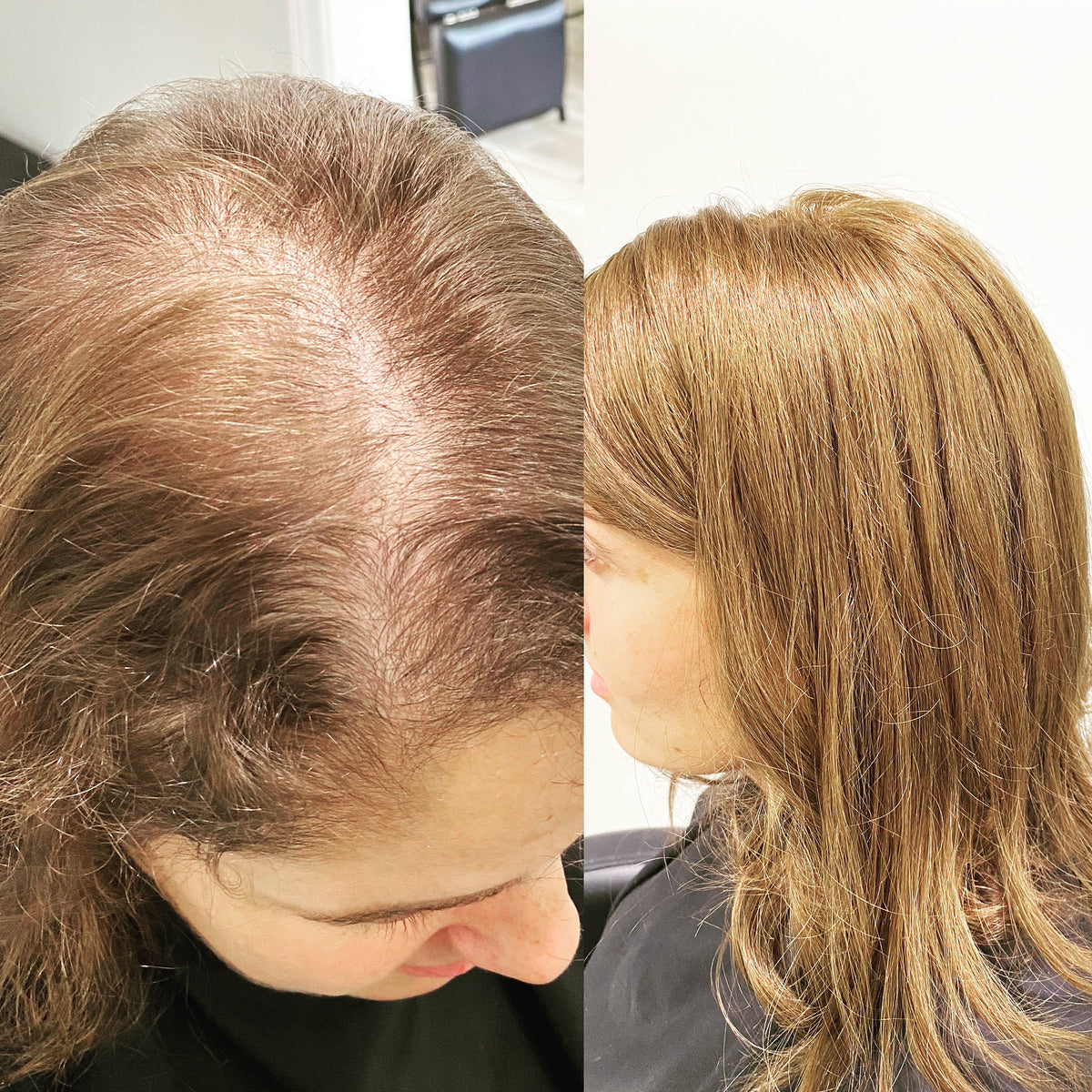


Hair Extension Correction Boston: How To Recover From a Bad Hair Extension Installation
At Noelle Salon, we've spent more than 35 years helping clients achieve natural-looking hair extensions and correcting extension problems from salons throughout Massachusetts and New England. As one of the first salons in the Boston area to specialize in professional hair extensions, our team has worked with thousands of extension clients over the past three decades.
We've seen nearly every extension mistake imaginable—from severe matting and traction damage to visible rows, poor blending, excessive weight, and installations that were never appropriate for fine or thinning hair.
If you're searching for Hair Extensions Boston and are worried about a previous extension experience, recovery is often possible—but choosing the right strategy matters.

How Do You Know If You Have a Bad Hair Extension Installation?
Not every extension problem is obvious immediately.
Many clients initially love their hair extensions but begin noticing issues weeks later.
Common warning signs include:
- Excessive shedding
- Scalp discomfort
- Tangling near attachment points
- Visible rows or bonds
- Difficulty styling
- Uneven weight distribution
- Breakage around attachments
- Increasing scalp visibility
- Extensions that feel too heavy
What clients don't always realize is that discomfort is often an early warning sign.
Healthy hair extensions should feel secure, comfortable, and natural.
Why Hair Extensions Sometimes Cause Damage
Hair extensions themselves do not automatically damage hair.
In our experience, damage is usually caused by one or more of the following:
Excessive Weight
One of the most common mistakes we see is attaching too much hair to too little natural hair.
When the supporting hair cannot safely support the extension weight, tension increases.
Over time this may lead to:
- Breakage
- Thinning
- Traction damage
- Scalp discomfort
Poor Placement
Extension placement must be customized to:
- Hair density
- Hairline structure
- Crown visibility
- Natural growth patterns
Improper placement can create excessive tension and visible attachment points.
Using The Wrong Method
Not every extension method is appropriate for every client.
Fine hair, thinning hair, menopause-related hair changes, alopecia, and trichotillomania often require specialized approaches.

The Most Common Hair Extension Mistakes We Correct
Over the years, we've noticed several recurring issues.
Visible Rows
Extensions should blend naturally.
If rows are visible while wearing your hair normally, concealment may not have been properly considered.
Poor Color Matching
Extensions should disappear into the natural hair.
Color mismatches often make extensions look artificial even when installation is technically correct.
Excessive Density
Many clients assume more hair creates a better result.
Often the opposite is true.
Especially with fine hair, less hair frequently creates the most believable result.
Poor Blending
Incorrect cutting and shaping can leave a shelf-like appearance where natural hair and extensions meet.

This Is Why Hair Extensions Get A Bad Reputation
One poorly executed installation can create years of frustration.
We've seen clients arrive after experiencing:
- Excessive shedding
- Scalp pain
- Visible attachment points
- Severe matting
- Hair breakage
- Loss of confidence
Many assume extensions are the problem.
More often, the real issue is poor installation, improper maintenance, or choosing the wrong method.
This video demonstrates one of the most common extension mistakes we encounter and explains why properly customized installations are critical for protecting natural hair.
How We Correct Bad Hair Extensions
Every correction begins with a thorough evaluation.
We assess:
- Hair density
- Scalp health
- Existing extension method
- Areas of breakage
- Hair loss patterns
- Future goals
From there, we develop an individualized correction strategy.
Sometimes that means reinstalling extensions correctly.
Sometimes it means changing methods entirely.
Sometimes it means temporarily removing extensions to allow recovery.
When We Recommend A Different Solution
One thing that separates our salon from many extension providers is that we don't believe extensions are always the answer.
In some situations, alternative solutions may create better long-term results.
These may include:
- Hair Toppers
- Partial Mesh Integration
- Full Mesh Integration
- V-Light Extensions
- CombLine Extensions
- Customized Hair Loss Solutions
This is particularly important for women experiencing:
- Menopause-related thinning
- Alopecia
- Trichotillomania
- Significant crown thinning
- Diffuse hair loss

Fine hair requires a completely different approach.
At Noelle Salon, we frequently use:
- Lightweight Keratin Bonds
- V-Light Extensions
- CombLine Extensions
- Custom Weft Strategies
- Hair Topper Integration
The goal is never simply adding more hair.
The goal is creating the most natural result while protecting the integrity of existing hair.
This philosophy has made us a destination for women seeking help with:
Hair Extensions Boston
Hair Toppers Boston
and complex correction work.
Healthy Hair Extensions Should Look Like This
The best extensions are often invisible.
When properly installed, extensions should:
- Blend naturally
- Move naturally
- Feel comfortable
- Support styling flexibility
- Preserve natural hair health
Clients should feel more confident—not more worried.

Frequently Asked Questions
Can damaged hair recover after bad extensions?
In many cases, yes. Recovery depends on the severity of the damage, hair density, scalp health, and the correction strategy implemented.
Do hair extensions always cause hair loss?
No. Properly selected and professionally installed extensions should not automatically cause hair loss.
What is the safest extension method for fine hair?
This varies by client. Keratin bonds, V-Light extensions, CombLine extensions, toppers, and mesh integration may all be appropriate depending on density and scalp visibility.
What if my hair is too thin for extensions?
Some clients are better candidates for hair toppers or mesh integration systems than traditional extensions.
Schedule Your Complimentary Hair Extension Correction Consultation
Ready to restore healthy, natural-looking hair? Book your complimentary hair extension consultation and let our expert team create a customized plan designed around your hair density, lifestyle, and goals.
If you're struggling with:
✔ Extension damage
✔ Visible rows
✔ Breakage
✔ Thinning hair
✔ Hair loss
✔ Poor blending
✔ Extension discomfort
our experienced team can help evaluate your options.
During your consultation, we'll determine whether the best solution is:
- Hair Extensions Boston
- Hair Loss Boston Solutions
- Hair Toppers
- Partial Mesh Integration
- Full Mesh Integration
- V-Light Extensions
- CombLine Extensions
Our goal is simple:
Create beautiful, natural-looking hair while protecting the health of your natural hair for years to come.


