

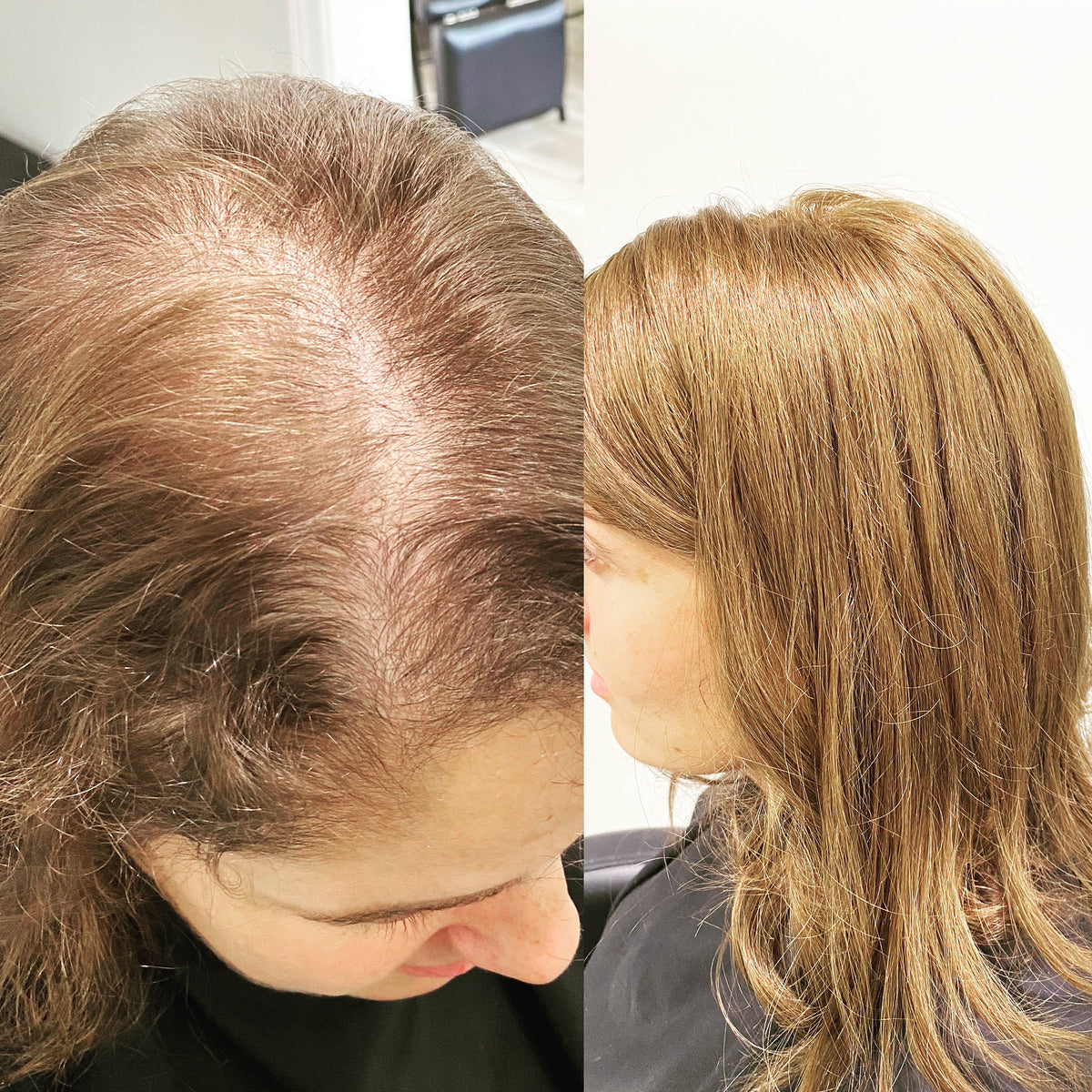


Understanding Lupus Alopecia: Navigating Hair Loss and Treatment Options
Receiving a lupus diagnosis can be overwhelming—and for many women, one of the most distressing symptoms that follows is hair loss. In fact, nearly half of individuals with lupus will experience some form of alopecia, making it one of the most common and visible effects of this autoimmune condition. For those searching for answers around hair loss Boston, understanding how lupus affects the hair and scalp is an important first step toward managing both the condition and its impact.
Lupus-related hair loss occurs when the immune system mistakenly attacks healthy hair follicles, leading to thinning, shedding, or patchy loss. While lupus itself is treatable, it is not currently curable, which makes early diagnosis and consistent medical care essential. The sooner the condition is managed, the better the chances of slowing hair loss and supporting regrowth.
At Noelle Salon, we work closely with clients experiencing lupus alopecia, helping them navigate both the emotional and aesthetic challenges that come with it. While medical treatment focuses on controlling the disease, our role is to restore confidence by offering safe, non-damaging solutions that work with your hair—not against it.
Before exploring solutions, it’s important to understand the different types of lupus-related hair loss and how each one affects the scalp and hair growth cycle.
Lupus Alopecia
Lupus Alopecia (hair loss and/or thinning) occurs when the body rejects it's own hair follicles causing them to thin or fall out.
The goal is to treat the disease in early stages, this will help decrease hair loss the quicker lupus is treated. A marker of high disease activity is greater hair loss which decreases hair regrowth.
Alopecia is a common diagnosis for "hair loss" which can occur for many reasons. We are focusing on hair loss due to Lupus which is very common. Like Alopecia there are three specific types of hair loss from lupus.
1). Diffuse - Hair loss and thinning hair all over the scalp as well as top of the head, hair line and part.
2) Focal - Like Alopecia Areata this is hair loss in one focused area. Most often a quarter size area or larger
3). Lupus Hair - Thinning weak hair which presents with decreased hair density, sparse hair follicles and thin ends of the hair.
When to see your doctor
As previously mentioned, hair loss can occur in 50% of people diagnosed with lupus and 30% in children. We are not clinicians, rather we treat the look of the hair with hair loss systems and hair extensions. A physician will treat the disease and possibly the hair loss: often times with steroid lotions or injections.
If you are loosing hair and do not have a diagnosis it is important to see your Primary Care Physician who may send you to a Rheumatologist or Dermatologist. You should never diagnose yourself or receive a diagnosis from a non-medical establishment.
Next Step
If you are looking for help to improve the appearance of your hair, ask your physician if you are a candidate for a hair topper or hair extensions.
Upon entering our Hair Loss Studio, we will also evaluate your hair, discuss if you are using topical medicines and perform a tug test on strands of hair through out your scalp. If an over abundance of hair fall out while performing a tug test, then you are actively shedding hair and it is not a good time to attach a hair loss system or hair extensions to your hair.
Based on your evaluation, we will show you options of what will work best for your hair, aesthetically.
1) Hair Loss System: Looks like a partial wig, with a base that may allow topical medicines to penetrate. We attach by tying into your own hair, never shaving or gluing. Our goal is to maintain the health of your hair and future hair growth by not adding a hair loss system that is too large or heavy for your hair follicles. This system works well with hair loss at the top of the head such as "diffuse hair loss" and " Focal hair loss."
Maintenance is simple. We remove, wash your hair and the hair loss system and reattach every 4 weeks or so depending on how quickly your hair grows. You also have the option for a free tightening in between visits.
2) Hair Extensions: We offer a variety of hair extensions methods and attach based on your hair follicle strength. Individual style hair extensions are great for weak crown and sides of the hair and our Veila Pull-Thru hair extensions work perfectly on hair that has sparse ends that require thickness.
Conclusion
When working with lupus-related hair loss, protecting the health of your existing hair is just as important as restoring volume and coverage. Hair extensions can be an effective solution for diffuse thinning, but they must be applied carefully—without adding excessive weight or tension that could further stress fragile hair follicles. The right technique and customization make all the difference in achieving a natural, comfortable result.
Lupus alopecia can be emotionally challenging, but you don’t have to navigate it alone. With the right balance of compassion, experience, and tailored solutions, it’s possible to restore not just your hair—but your confidence as well.
If you’re experiencing lupus-related hair loss and want guidance that’s both safe and personalized, book a free hair loss consultation.


