

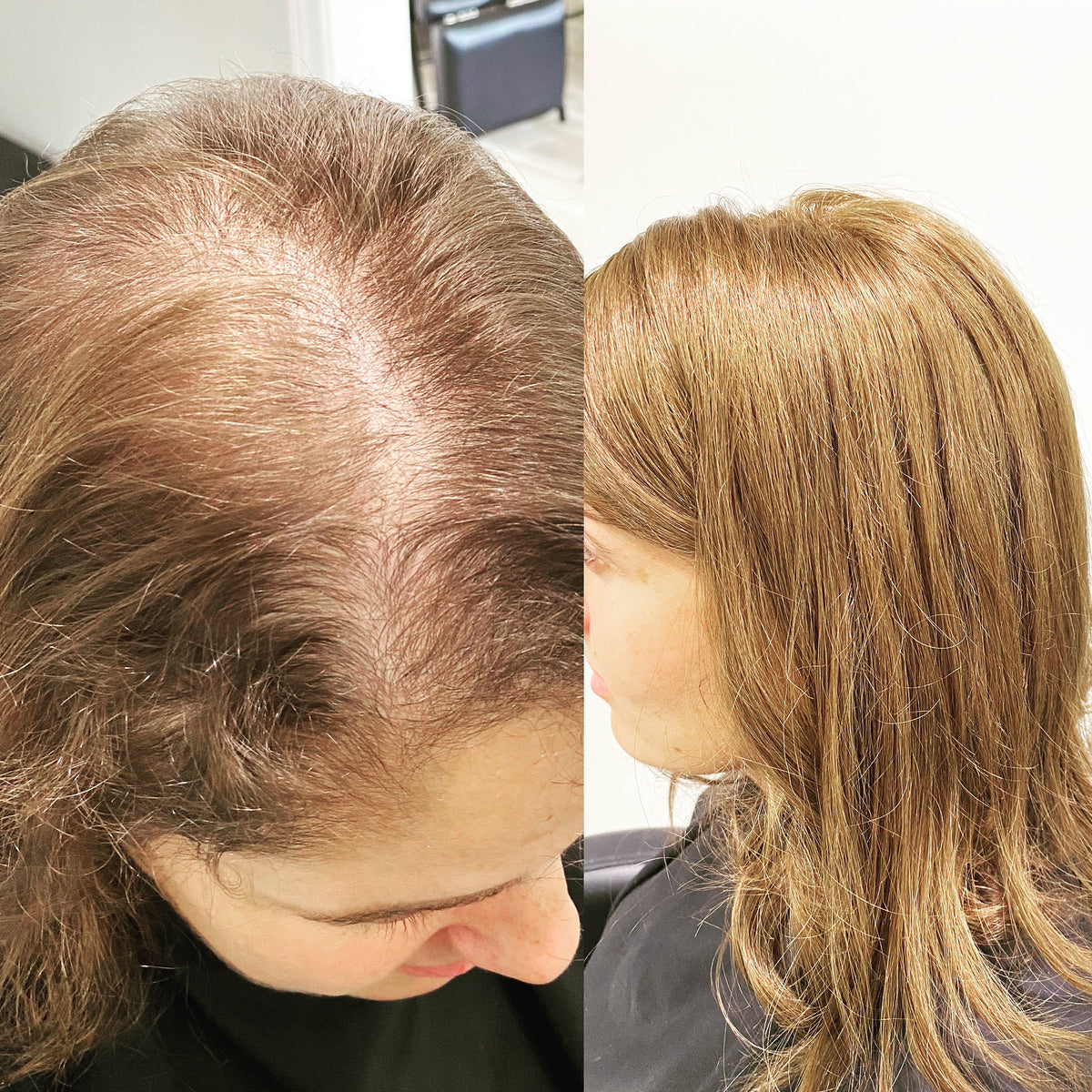


Custom Solutions for Thinning Hair Fill-In Extensions


Struggling with thin, flat hair that won’t hold volume—no matter what you try?
You’re not alone. Whether it’s due to genetics, stress, or hair loss, fine or thinning hair can make styling frustrating and limit the looks you feel confident wearing.
That’s where custom thin hair fill-in extensions make a real difference.
Designed specifically for fine and low-density hair, these extensions focus on strategic volume placement and seamless blending—so your hair looks fuller without feeling bulky or obvious. The goal isn’t just more hair—it’s natural-looking density that actually works with your hair type.
At Noelle Salon, specializing in hair extensions Boston, we customize every fill-in to match your density, texture, and lifestyle—so the result feels lightweight, comfortable, and completely your own.
In this guide, we’ll break down how fill-in extensions work, who they’re best for, and how to achieve fuller, healthier-looking hair without compromising your natural strands.

Understanding Thin Hair and Its Unique Needs
Understanding your hair type is crucial when it comes to choosing the right hair extensions. Thin hair requires special care and attention due to its unique characteristics. Thin hair tends to be lightweight and fine in texture, which can make it difficult to achieve volume and thickness. It is more prone to breakage and damage, and it may struggle to hold hairstyles. Thin hair often requires extra care to maintain its health and hair length.
When it comes to thinning hair, it's important to focus on maintaining the health of your natural hair. This means following a proper hair care routine, using products that promote hair health, and avoiding excessive heat styling or chemical treatments. It's also important to address any underlying issues that may be causing hair thinning, such as stress or medical conditions. By taking care of your natural hair and addressing any underlying issues, you can create a strong foundation for your hair extensions and achieve the best results.
The Basics of Hair Thinning and Loss
Hair thinning and loss can be a distressing experience, affecting both men and women. There are several factors that can contribute to hair thinning, including age, genetics, and hormonal changes. Stress levels and certain medical conditions can also play a role in hair loss.
Understanding the basics of hair thinning and loss can help you make informed decisions about hair extensions. Hair growth occurs in cycles, with each individual hair strand going through a growth phase, a resting phase, and a shedding phase. Hair thinning occurs when the hair follicles enter the resting phase and fail to produce new hair strands.
If you are experiencing hair thinning or loss, it's important to consult with a healthcare professional or a trichologist to determine the underlying cause and develop a treatment plan. Hair extensions can be a great solution for individuals with hair thinning, as they provide instant volume and thickness. However, it's important to address the underlying cause of hair thinning to achieve the best results and maintain the health of your natural hair.
Identifying Your Type of Hair Loss
Hair loss can manifest in different ways, and it's important to identify the type of hair loss you're experiencing to determine the best course of action. Hair shedding is a normal part of the hair growth cycle, with most individuals losing around 50-100 hairs per day. However, excessive hair shedding or noticeable thinning may indicate a more significant issue.
There are several types of hair loss, including androgenetic alopecia (male or female pattern baldness), telogen effluvium (temporary hair loss due to stress or hormonal changes), Trichotillomania,and alopecia areata (patchy hair loss). Each type of hair loss requires a different approach to treatment and management.
If you're unsure about the type of hair loss you're experiencing, it's best to consult with a healthcare professional or a trichologist. They can assess your hair and scalp health and provide guidance on the best course of action. Hair extensions can be a great solution for individuals with thinning hair on top of their head, regardless of the type of hair loss they're experiencing. By adding volume and thickness to your hair, extensions can help you achieve a fuller and more vibrant look on top of your head with half the amount of weight.

Introduction to Custom Thin Hair Fill-In Extensions
If you have thin or fine hair, you know the struggle of trying to achieve volume and thickness. Traditional hair extensions may not provide the desired results, as they can be too heavy or obvious. That's where Custom Thin Hair Fill-In Extensions come in.
Custom Thin Hair Fill-In Extensions are specifically designed for individuals with thin or fine hair. These extensions are made with high human hair and offer a seamless blend with your natural hair. They provide extra volume and thickness, making your hair appear fuller and more vibrant. Custom Thin Hair Fill-In Extensions are the perfect option for individuals who want to enhance their natural hair without causing any damage or discomfort. They are a game changer for those struggling with thinning hair or hair loss, providing a new level of confidence and style. These extensions are also a great solution for those with short hair, as they can instantly add length and volume to any hairstyle.

Benefits of Choosing Custom Fill-Ins Over Traditional Extensions
Choosing Custom Fill-In Extensions over traditional extensions offers several benefits for individuals with thin or fine hair. Some of these benefits include:
- Best results: Custom Fill-In Extensions are specifically designed for thin or fine hair, ensuring the best results.
- Great quality: Custom Fill-In Extensions are made with high-quality human hair, providing a natural and seamless blend with your natural hair.
- Natural blend: Custom Fill-In Extensions seamlessly blend with your natural hair, giving you a fuller and more vibrant look.
- Easy to apply and remove: Custom Fill-In Extensions are easy to apply and remove, allowing for versatile styling options.
- We will expertly match, apply, and style them.

Sizing Guide: From 1 to 6 Inches
When it comes to Fill-In Extensions, size matters. The length of the extensions you choose will depend on your desired look and the areas of your hair that you want to enhance. Here is a sizing guide to help you determine the right length for your Fill-In Extensions:
|
Length |
Description |
|
1 inch |
Ideal for adding volume and thickness to finer areas of your hair, such as the crown or sides. |
|
2 inches |
Provides additional volume and thickness to finer areas, ideal for creating a fuller look. |
|
3 inches |
Offers even more volume and thickness, suitable for enhancing the fullness of your hair. |
|
4 inches |
Adds significant volume and thickness to your hair, perfect for achieving a dramatic look. |
|
5 inches |
Provides maximum volume and thickness, ideal for individuals looking to transform their hair. |
|
6 inches |
Offers the ultimate level of volume and thickness, perfect for those with thin or fine hair. |
By considering the length of Fill-In Extensions that best suits your needs, you can achieve the desired volume and thickness for your hair.
Troubleshooting Common Fill-In Extension Issues
While Fill-In Extensions can enhance your natural hair and provide volume and thickness, there may be some common issues that arise. Here are some troubleshooting tips for common Fill-In Extension issues:
- Managing slippage and loosening: Ensure that the extensions are securely attached to your natural hair and use additional clips or bobby pins if necessary.
- Addressing discomfort and itching: If you experience discomfort or itching, it may be due to improper application or an allergic reaction. Consult with a professional hairstylist for guidance.
- Maintaining the health of your natural hair: Follow proper maintenance techniques to ensure the health of your natural hair, such as avoiding excessive heat styling or chemical treatments.
By troubleshooting common Fill-In Extension issues, you can enjoy a seamless and comfortable experience with your extensions.
Addressing Discomfort and Itching
If you experience discomfort or itching with your Fill-In Extensions, it's important to address the issue promptly. Here are a few steps to take:
- Check the fit: Ensure that the extensions are not too tight or pulling on your natural hair, as this can cause discomfort and itching.
- Properly cleanse your scalp: Cleanse your scalp regularly to maintain its health and prevent itchiness or discomfort.
- Avoid allergic reactions: If you suspect an allergic reaction to the extensions or any products used, consult with a professional hairstylist or a dermatologist for guidance.
By addressing discomfort and itching, you can ensure a comfortable and enjoyable experience with your Fill-In Extensions.
Professional Advice on Fill-In Extensions
When it comes to Fill-In Extensions, seeking professional advice is essential for achieving the best results. Here are some areas where professional advice can be beneficial:
- When to consult a specialist: If you have specific hair concerns or medical conditions, it's important to consult with a specialist or professional hairstylist for guidance and recommendations.
- Customization options for a natural appearance: A professional hairstylist can provide customized options for blending Fill-In Extensions with your natural hair, ensuring a natural and seamless look.
- Consultation appointments: Many salons offer consultation appointments where you can discuss your hair goals and concerns with a professional hairstylist, who can guide you in choosing the best Fill-In Extensions for your needs.
By seeking professional advice and guidance, you can ensure the best possible experience with your Fill-In Extensions.
When to Consult a Specialist
It's important to consult a specialist or professional hairstylist in certain situations to ensure the best results with Fill-In Extensions. Here are some instances when a consultation with a specialist may be necessary:
- Specific hair concerns: If you have specific hair concerns, such as hair loss or thinning, a specialist can assess your hair and scalp health and provide personalized recommendations.
- Medical conditions: If you have underlying medical conditions that may be contributing to hair thinning or hair loss, it's important to consult with a specialist who can address these concerns and provide appropriate treatment options.
- Customization options: If you're unsure about the best customization options for your Fill-In Extensions, a specialist can provide guidance and recommendations based on your specific hair type and desired look.
Conclusion
Thin hair fill-in extensions offer a highly customized solution for anyone struggling with hair thinning or loss—restoring volume in a way that looks natural, feels lightweight, and blends seamlessly with your existing hair.
The key is not just choosing extensions, but choosing the right approach—from precise color matching to strategic placement and secure, gentle application methods that protect your natural hair.
With proper care and maintenance, fill-in extensions can provide long-lasting results that enhance your everyday styling while boosting your confidence.
At Noelle Salon, specializing in hair extensions Boston, we focus on solutions designed specifically for fine and thinning hair—so your results never look bulky or obvious.
If you’re ready to feel like yourself again and achieve fuller, more natural-looking hair:
Book a free hair extension consultation and let us create a personalized plan tailored to your needs.


