

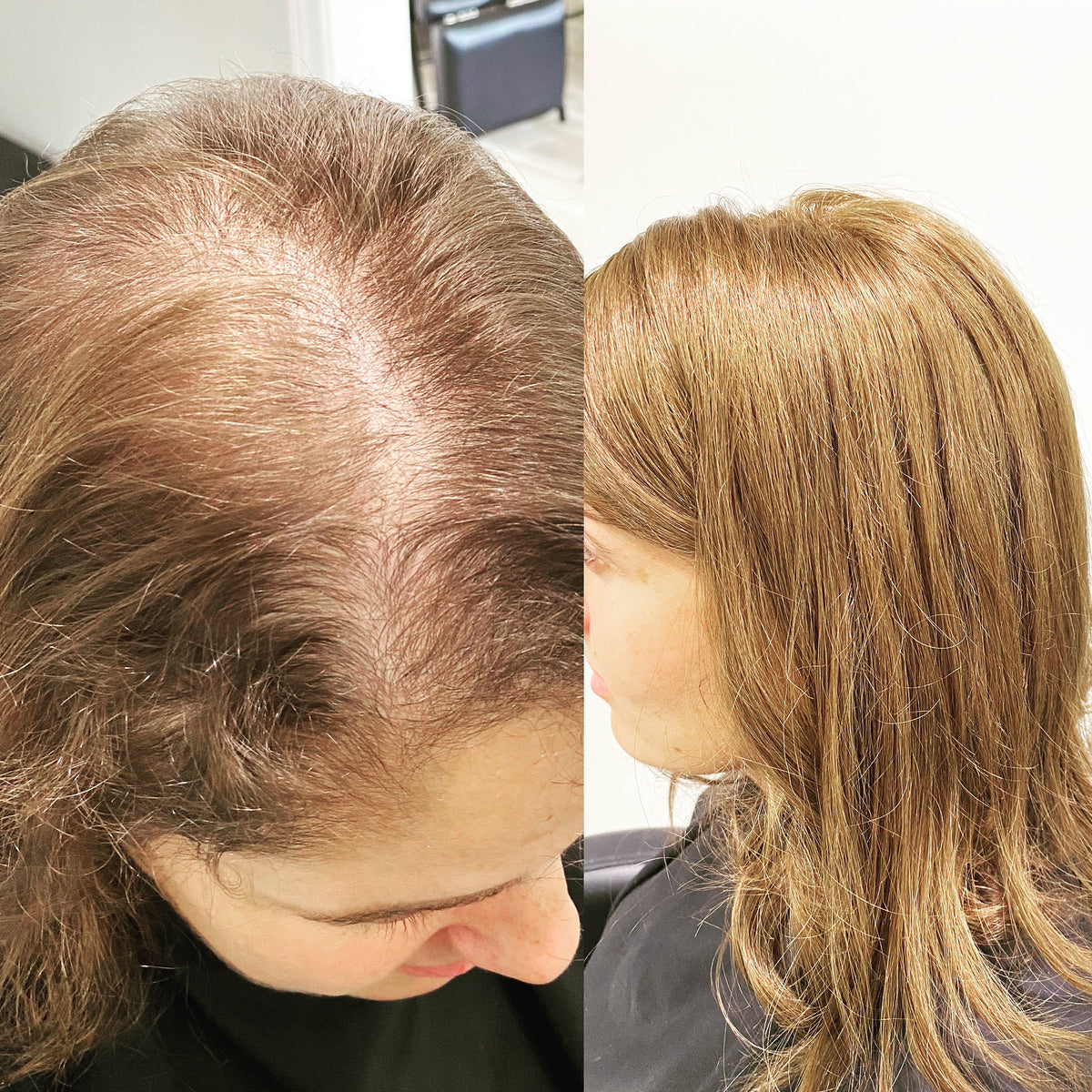


Discover the Most Natural-Looking Hair Extensions for Your Perfect Blend
What makes hair extensions look natural? The answer is surprisingly personal. For some, “natural-looking hair extensions” means a discreet boost that’s virtually undetectable; for others, it’s fuller volume and added length that still moves and blends like their own hair. In this article, we’ll focus on extensions that look like your own hair—extensions that blend seamlessly, match your color and texture, and complement your desired style. When I first trained in the early 1990s, the gold standard was an invisible, perfectly blended finish. Today, there’s no stigma around wearing hair extensions Boston, but for those who want the most natural look possible, the original principles of color matching, texture harmony, and skilled blending still matter most.
- Virtually undetectable boost that disappears into your style
- Fuller volume and length with a seamless blend
- Compatibility with your hair’s color and texture
For a truly natural look, three elements are non-negotiable—no matter which method you choose:
- Color match: Choose shades that mirror your natural dimension.
- Texture harmony: Align wave/curl patterns so movement is cohesive.
- Meticulous blending and cutting: Application matters, but refined blending is what sells the illusion.
Many educators emphasize application alone, but the most natural-looking results rely equally on proper cutting and blending. Extensions look their most natural when your leave-out hair (the hair not attached to extensions) covers the hair extension attachment area and transitions smoothly into the added hair. Ask yourself: when you look in the mirror, do you see seamless movement and a unified finish from roots to ends?
Instructional Video Below

The Answer: Custom Keratin Bonds
My professional experience is that custom-made keratin bonded hair extensions deliver the most natural-looking results. Why? Each small bundle is applied individually so the extensions follow your hair’s natural fall and pattern. Because you can vary the size of each bond, the density can be tailored to different parts of the head—smaller near finer hairlines and larger in denser regions. This individualized approach closely mimics how natural hair grows and moves, creating a soft, believable finish.
Although this technique has become something of a lost art, it remains one of the best ways to achieve a seamless blend from your natural hair into the extensions. Once applied with care, the need for heavy cutting is minimal; only light refining is required to perfect the blend. While many individual keratin extensions today are sold pre-bonded in set sizes, lengths, and textures, customizing the bonds and the blend still produces the most natural look.
Key Terms: Remy Hair and Keratin Bonds
- Remy hair: Human hair collected so that the cuticles remain intact and aligned in the same direction from root to tip. This alignment helps reduce tangling and preserves a smooth, realistic appearance, which is essential for natural-looking hair extensions.
- Keratin bonded extensions: Small, discreet bundles of hair attached using a keratin-based adhesive at the tip. Each bundle is fused close to the root and shaped into a tiny bond. Because they’re placed individually, they can be customized by size, color mix, and texture to blend seamlessly with your natural hair.
Why Custom Keratin Bonds Look the Most Natural
Custom bonds let you control the three pillars of a natural result:
- Color and texture blending that mirrors your hair’s natural dimension and pattern.
- Placement that follows growth, parting, and movement for believable flow.
- Bond sizing tailored to your density across different zones of the head.
Consider how your hair grows, flips, or parts—custom placement supports those tendencies rather than fighting them.
Advantages of Custom-Blended Extensions
- Texture blending without limits: You’re not confined to one texture like straight, wavy, or curly. Multiple textures can be combined in a single installation. This is especially powerful for curly hair, which can include tight curls, deep waves, loose curls, and textured coils. Blending textures where needed ensures consistent curl patterns and realistic movement throughout.
- Multi-shade color mixing: Several shades can be layered and blended—often up to four tones per extension—to mirror natural dimension. The result is a balanced, lived-in color effect with highlights and lowlights that look like your own.
- Layered application for softer ends: By cutting shorter pieces and shifting hair on a blending board before bonding, you can stagger lengths and create tapered ends. This reduces the need for aggressive after-cutting and preserves a feather-light, natural finish.
Hypothetical scenario: You have loose waves with subtle sun-lightened pieces. We combine two wavy textures so the pattern matches through the mid-lengths, blend three complementary tones (your base, a soft caramel, and a cooler lowlight) within each custom bundle, and stagger a few shorter strands for tapered ends. Visualizing this mix helps you imagine how color, curl, and shape would come together on your own hair.
Your turn: Which advantage best matches your goals—limitless texture blending, multi-tone color mixing, or layered application for softer, tapered ends?
Engaging question: What does “natural” look like for you—ultra-subtle fullness that no one can spot, or a believable transformation with length and volume that still behaves like your hair?
Imagine this: Your natural hair is a medium-brown, loose wave with sun-kissed lighter pieces near the face. For the most natural-looking hair extensions, we combine a base of medium-brown wavy strands, intersperse caramel highlights for dimension, and add a few looser curl bundles around the front so the wave opens up gently. At the ends, we taper the lengths so the finish is airy, not blunt. When you run your fingers through it, the transitions in color and texture feel fluid—exactly like your own hair on its best day.
What You Need to Create Custom Hair Extensions
A blending board is invaluable for laying out textures and colors before bonding. Hair is arranged, mixed, and trimmed directly from the board to build each custom bundle. You’ll also need an older pair of shears to cut the hair off the board and a keratin adhesive. Keratin-based adhesives come in a few formats:
- Keratin sticks for glue guns: These are designed specifically for hair extensions. They are not craft glue sticks—craft formulas melt at higher temperatures and can damage hair.
- Keratin pellets for a hot glue pot: Commonly melted in a florist-style glue pot; you dip the hair to form a keratin tip.
- Keratin re-bonds: Best melted on a hair extension connector, then worked into the hair to form a fresh tip.
- Hair extension connector: Helps distribute keratin evenly so each bond can be rolled into a neat, uniform shape.

Simple Checklist: How to Choose Natural-Looking Hair Extensions
- Color match in daylight: Compare shades in natural light and look for multi-tone options that mimic your own dimension.
- Texture alignment: Match or subtly enhance your wave or curl pattern so the blend remains cohesive from roots to ends.
- Hair quality: Opt for 100% Remy human hair so cuticles are aligned, which supports smoothness and longevity.
- Density and bond size: Ensure bond sizes reflect your hair’s density—smaller near finer areas, larger where hair is fuller.
- Placement plan: Map the parting, hairline, and high-movement zones so attachments stay hidden and comfortable.
- Maintenance needs: Choose a method that aligns with your styling routine and follow aftercare to protect the blend.
Instructional Video: Custom-Blended Keratin Bonds
I filmed the video below in 2013 to demonstrate exactly how custom-blended, natural-looking hair extensions are created. Trends evolve, but the foundational techniques that produce the most natural results remain effective. If you have questions, feel free to reach out or email noelle@noellesalon.com.
Hair Extensions Background: Methods, Hair Types, and Styling
At Noelle Salon, we begin by evaluating your natural hair and listening to your styling goals. We color match, assess texture, and discuss your ideal look. We work with human hair extensions such as 100% Remy human hair and Virgin Hair. Extensions can enhance short hair or add dramatic length, and we regularly work with a variety of methods including tape-in extensions, clip-in hair extensions, keratin bonds, and our pull-thru Veila Hair Extensions for easy care. Styling options range from flat-ironed sleek looks to enhancing natural curl or setting defined curls. If you want a single-day change—like a clip-in ponytail—a high-quality ponytail extension can instantly refresh your style without long-term commitment. Your natural hair journey can be supported with protective styling and routine maintenance so that hair growth and scalp health are prioritized alongside your desired appearance.
For Salon Owners and Stylists: Set Clients Up for Success
- Educate on blending: Demonstrate how texture and multi-tone color mixing mimics natural dimension.
- Customize placement: Map bonds to hair density and movement patterns so attachments remain hidden.
- Set aftercare expectations: Provide brushing, washing, and heat-styling guidelines to preserve the blend.
- Offer maintenance plans: Schedule check-ins for bond integrity, trimming, and rebalancing as hair grows.
Rhetorical question: Do your clients truly understand how precisely color, texture, and bond size can be blended to make their extensions indistinguishable from their own hair?
Practical Tips for the Most Natural Blend
- Mind the hairline and part: Use the smallest, lightest bonds near fine or exposed areas and reinforce with perfect color matching.
- Feather the perimeter: Taper lengths and densities around the edges to avoid heavy outlines that reveal extensions.
- Mirror natural movement: Follow your hair’s natural direction—cowlicks, part shifts, and growth patterns—to keep bonds invisible.
- Refine, don’t over-cut: After installation, use delicate point cutting or dusting for softness without removing vital weight from the blend.
FAQs for Natural-Looking Hair Extensions
- Will people notice I’m wearing extensions? With proper color, texture, density, and blending, extensions should look like your hair—only fuller or longer. Maintain the effect with routine maintenance and mindful styling.
- Do curly or textured styles look natural with extensions? Absolutely. Matching curl patterns and blending multiple curl types where needed yields an authentic, consistent pattern from roots through ends.
- How much cutting is required? With custom keratin bonds, less cutting is needed because the tapering and layering are built into the application. Final refinements are minimal to perfect the silhouette.
- What if my color is multi-dimensional? Multi-tone blending is ideal for natural-looking hair extensions. Mixing several complementary shades within the same installation can mirror lived-in highlights and lowlights.
Conclusion: Your Path to the Most Natural-Looking Hair Extensions
Natural-looking hair extensions come down to the right blend of color, texture, and placement—supported by quality hair like 100% Remy and executed with techniques that respect your hair’s density and movement. Custom keratin bonded extensions excel because they’re tailored strand by strand, allowing for precise color mixing, texture matching, and bond sizing. If you’re ready for a seamless, believable transformation, meet us at a free hair extension consultation so we can help to create your vision of dream hair.


