Trichotillomania Boston: You’re Not Alone—Here’s What Actually Helps
At Noelle Salon, helping clients with trichotillomania is not just a service—it’s a core part of what we do. As a leading resource for trichotillomania Boston, our owner, Noelle Spinosa, has worked with hundreds of clients navigating this hair-pulling condition and understands both the emotional and physical challenges it brings.
Through conversations, education, and real client experiences, we continue to share what actually helps—because no one should feel alone in this.
Understanding Trichotillomania
Trichotillomania is a body-focused repetitive behavior (BFRB) where individuals feel the urge to pull out their hair, often as a way to cope with stress, anxiety, or sensory triggers. While it may feel isolating, it is far more common than people realize.
Many clients tell us they’ve struggled silently for years before seeking help. What’s important to understand is that this is not about “willpower”—it’s about awareness, support, and having the right tools in place.
How We Help Clients Regain Control
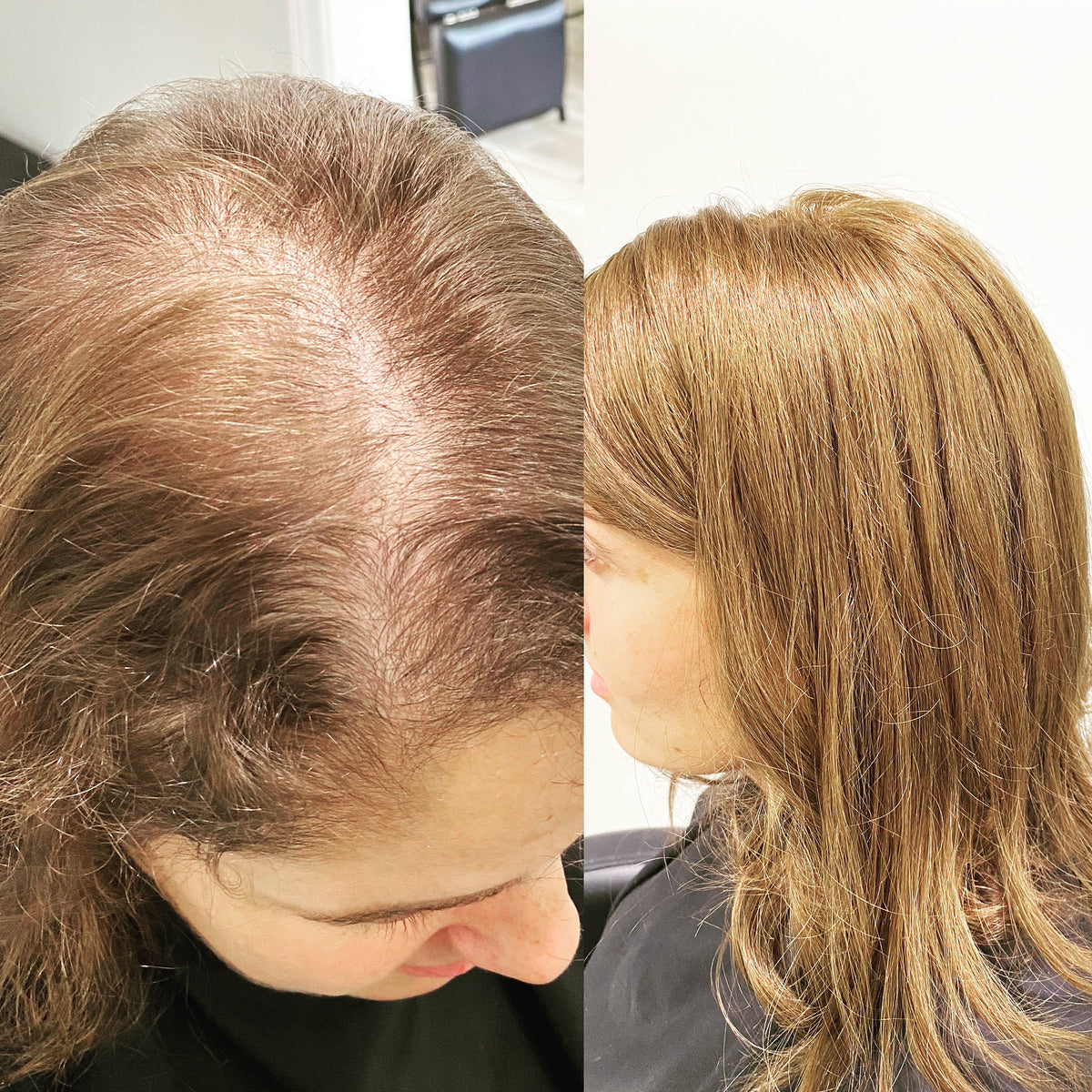
At Noelle Salon, our approach focuses on both aesthetics and behavior support. One of the most effective solutions we offer is a customized hair topper or scalp prosthesis.
These systems do more than restore the appearance of hair:
- They create a physical barrier that helps interrupt the urge to pull
- They allow natural hair to grow underneath
- They provide immediate confidence and relief
We use non-damaging application methods, such as our beaded matrix technique, avoiding glue, tape, or shaving so the natural hair and scalp remain healthy.
Supporting Hair Growth Along the Way
While the ultimate goal is to reduce or stop the pulling behavior, restoring hair growth is an important part of the journey. By protecting the scalp and minimizing access to pulling, many clients experience significant regrowth over time.
The most successful outcomes often come from combining:
- Hair systems (barrier method)
- Therapy or behavioral support
- Stress management techniques
- Awareness tools
This multi-layered approach creates real, lasting progress.
Why Awareness Matters
By speaking openly about trichotillomania, whether in consultations, media features, or client conversations, we aim to remove stigma and replace it with understanding.
When people realize they are not alone, everything changes.
Conclusion
Trichotillomania can feel overwhelming, but with the right support and solutions, it is absolutely manageable. You don’t have to navigate it alone, and there are options that can help you feel more in control—both emotionally and physically.
If you’re ready to explore a solution that supports hair growth while helping reduce pulling behaviors, book a free trichotillomania consultation and take the first step toward confidence, support, and lasting change.