



Best Hair Extensions for Thin Hair (Boston Guide for Fine Hair)

Finding the best hair extensions for thin hair isn’t just about adding length or volume—it’s about choosing a lightweight method that blends naturally without causing tension, bulk, or breakage.
Many clients searching for hair extensions Boston come to us after struggling with flat roots, visible attachment points, or extension methods that felt too heavy for their natural hair. Fine and thinning hair requires a more customized approach focused on scalp comfort, realistic density, and long-term hair health.
The reality is that not all extension methods are suitable for delicate hair. Poor placement, excessive weight, or the wrong installation technique can lead to discomfort, visible blending issues, and even long-term damage.
In this guide, we’ll break down the best hair extensions for thin hair, which methods work best for fine hair types, what to avoid, and how to create natural-looking fullness while protecting the integrity of your natural hair.
Understanding Fill-in Hair Extensions
Thin hair benefits from methods engineered for minimal weight and maximum blend. Fill-in extensions add density where hair is sparse, support everyday styling, and can be positioned strategically to rebalance shape.

Characteristics of Thin Hair
Thin hair is typically lightweight with a fine diameter, which makes it more susceptible to breakage and harder to style for long-lasting fullness.
Because each strand is smaller in circumference, fine hair often requires:
- Gentle washing and product use.
- Careful, supported detangling.
- Minimal tension from tools and accessories.
Common Causes of Hair Thinning
- Age-related changes and natural shedding cycles that reduce density.
- Hormonal shifts and nutritional gaps that influence thickness.
Learn more about patterns of hair thinning and contributing factors here: hair thinning.
How Veila Pull-Thru Panels Work for Thin Hair
Veila Pull-Thru Panels are designed to boost volume and length while minimizing strain on fragile strands. Each panel contains multiple hairs arranged for density, then secured through micro-openings using a small silicone-lined bead. The result is a secure hold without glue or sewing. Because tension is dispersed and components are compact, this method can feel lighter than many traditional options, making it a strong choice for thin hair that needs fullness but can’t tolerate bulk. They are a human hair extension system that creates less stress while adding lots of strands, offering a soft, natural blend when placed by an experienced technician.

Hand-Tied Hair Extensions
Hand-tied extensions can blend beautifully on fine hair when carefully installed in small, low-profile rows. They lay close to the scalp and, when constructed with finer wefts, can remain relatively lightweight.
Ideal textures include straight and wavy hair, but placement and row size are critical for comfort. Maintenance focuses on gentle detangling around attachment points and mindful heat styling.
Tape-in Hair Extensions
Tape-ins are a widely known method and can offer a smooth, nearly invisible blend when sized and placed for fine hair. Lightweight, narrow tapes are best for thin hair so that tension stays low and the bonds remain covered.
These provide a quick application and an easy removal process with appropriate solvent. As with all methods, longevity depends on gentle care, regular maintenance, and mindful styling. These tape-ins typically have a special adhesive for attaching them to your hair, and it’s important to keep products with oils away from the bonds so they don’t loosen prematurely.
Also Read: Micro Keratin Bonds: The Best Hair Extension Solution for Fine Hair
What to Consider Before Getting Extensions for Thin Hair
• Your hair density and scalp sensitivity
Fine hair requires lightweight methods and careful placement to avoid excess tension.
• Your volume and length goals
Adding too much hair or excessive length can make fine hair harder to blend naturally.
• Choosing the right extension method
Methods such as Veila Pull-Thru, lightweight keratin bonds, or carefully placed hand-tied extensions may work better for fine hair than heavier methods.
• Color and texture matching
A seamless blend is critical for fine hair since attachment points are easier to detect.
• Maintenance requirements
Regular move-ups, gentle brushing, and proper home care help protect natural hair and extend the life of the extensions.
• Working with a fine hair specialist
An experienced extension specialist can customize placement and density to create natural-looking fullness while protecting hair integrity.
Tips to Minimize Hair Thinning
A nourished scalp and resilient strands are the best foundation for extensions. A balanced diet with proteins, leafy greens, healthy fats, and hydration supports hair fiber and scalp function. Omega-rich foods and antioxidants can aid overall vitality, while consistent water intake helps reduce brittleness.
Scalp care matters too. Gentle, sulfate-free shampoos cleanse without stripping, while targeted massages encourage circulation. Consider spacing out chemical services and reducing unnecessary heat.
Can Hair Extensions Damage Thin Hair?
When installed and maintained correctly, extensions should not cause excessive stress to fine hair. The key is thoughtful placement, low weight, and consistent care.
Improper positioning, tight application, or over-styling can lead to breakage, especially on already fragile strands. Choosing lightweight options like Veila Pull-Thru and working with an experienced technician helps keep tension minimal and wear comfortable. 
Do’s and Don’ts of Applying Hair Extensions
- Do consult a professional before applying extensions so weight, size, and placement fit your hair density.
- Do ensure a precise color and texture match to keep blends invisible in different lighting.
- Do section cleanly and leave sufficient natural hair out to cover panels or bonds.
- Do follow your stylist’s aftercare and maintenance schedule to protect your investment.
- Don’t install too close to the scalp or along fragile hairlines where tension is highest.
- Don’t overload fine hair with heavy products that cause buildup and extra weight.
For thin hair with extensions, opt for gentle, sulfate-free formulas and hydrate through the mids and ends. Detangle slowly using a wide-tooth comb or an extension-safe brush while supporting roots with your free hand. Protect your hair extensions with a heat protectant before styling. Avoid overwashing so you don’t strip essential oils, and nourish with lightweight masks to keep fiber supple. If your hair tends to frizz, a silk scrunchie or pillowcase can reduce friction, minimize tangles, and help maintain moisture.
Avoiding Common Mistakes with Hair Extensions
Thin hair cannot comfortably support excess weight or tension, so even small mistakes can compound over time. To keep your extensions and natural hair healthy, avoid the following:
- Skipping the consultation. Without a density check, the method may be too heavy for you.
- Installing too near the hairline or part. These areas are fragile and may not conceal bonds well.
- Pulling your hair up too tightly. Sleek ponytails can tug on attachment points—wear them looser.
- Using oils and heavy creams at the roots. These can loosen tape adhesives and weigh hair down.
- Neglecting nighttime care. Sleeping with hair loose can cause tangling; a loose braid helps.
- Ignoring maintenance. Putting off adjustments may allow slippage or excess shedding around panels.
Are there any risks in using hair extensions for thin hair?
Hair extensions, when matched to your density and applied correctly, should not damage thin hair. However, proper home care and routine maintenance are essential to prevent breakage. Consulting an experienced stylist helps determine the safest option for you, including the lightest panel size and careful placement. Thin Veila Pull-Thru is often recommended because it reduces pull and concentrates weight away from delicate hairlines. Discuss your daily habits, styling tools, and preferred hairstyles so your technician can tailor the method and upkeep to your needs.
How to Care for Extensions With Thin Hair
Caring for extensions on thin hair requires a gentle, predictable routine. Start your wash with lukewarm water and a sulfate-free shampoo, working at the scalp with fingertips while allowing suds to run through the lengths. Rinse thoroughly, then apply a lightweight conditioner from mid-lengths to ends, keeping roots clean so attachments stay secure. If your hair tangles easily, use a detangling spray before combing to reduce breakage.
Dry by blotting instead of rubbing, then rough-dry on low heat until about 80% dry before using a brush to finish. Always apply a heat protectant prior to hot tools, and set irons to the lowest effective temperature. Limit direct heat at attachments. Between wash days, refresh with a lightweight leave-in and brush daily to prevent knots.
Realistic Scenarios for Fine Hair Extensions
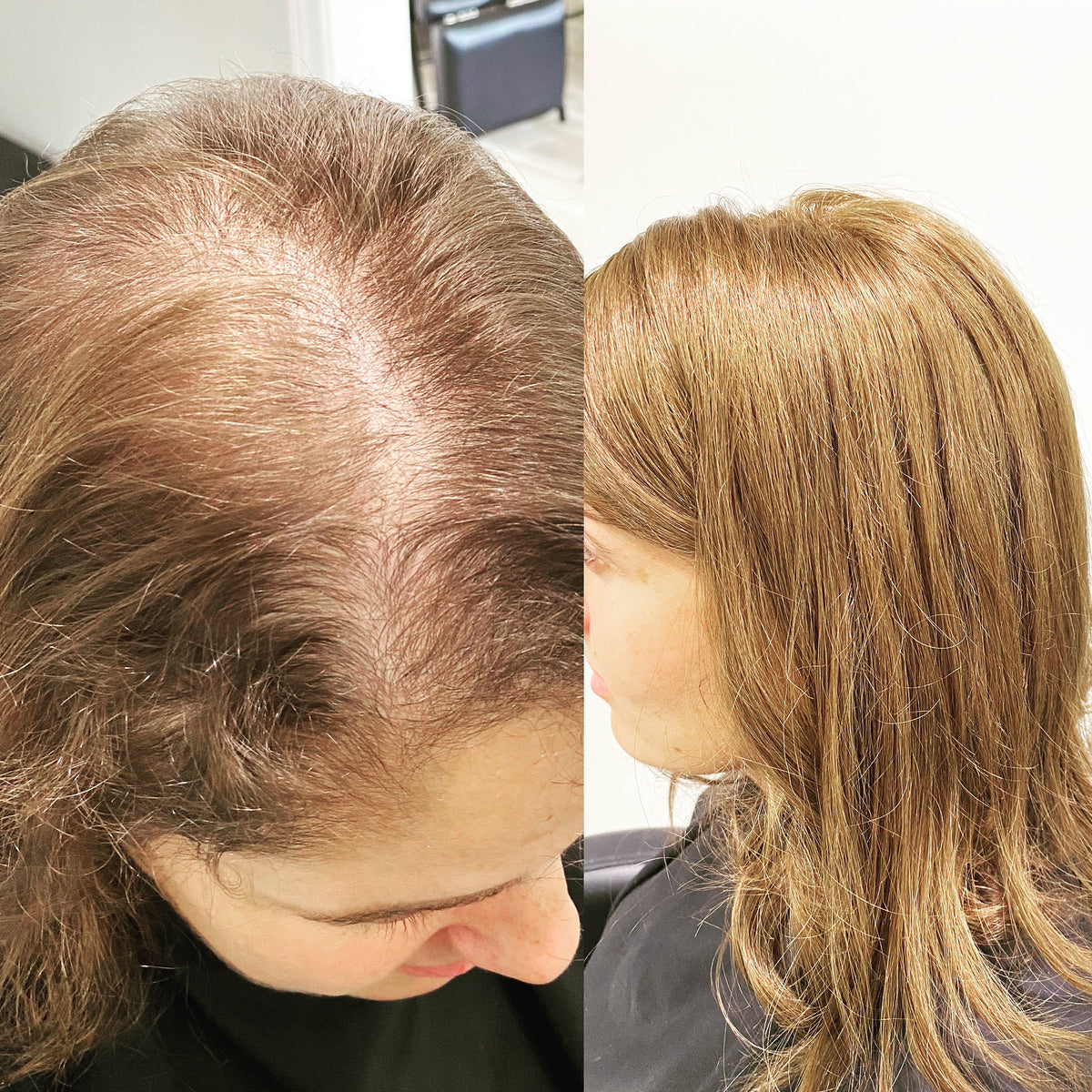
Many clients with fine hair want added fullness without dramatic length or heavy density. One client chose Veila Pull-Thru panels placed strategically through the sides and lower crown to create soft, natural-looking volume while keeping the overall result lightweight and comfortable.
With the right placement and density, fine hair extensions can create fuller-looking hair that still moves naturally and feels easy to manage day to day.
Conclusion: Choosing the Right Hair Extensions for Fine Hair
Fine or thinning hair requires a different extension strategy than thicker hair types. The goal isn’t simply adding more hair—it’s creating natural-looking fullness while protecting the health and integrity of your existing hair.
With the right method, lightweight placement, and proper maintenance, hair extensions can safely add volume, movement, and confidence without excessive tension or bulk. Options such as Veila Pull-Thru panels, lightweight hand-tied methods, and carefully customized strand extensions can create soft, seamless results when tailored specifically for fine hair.
The most important step is working with an experienced extension specialist who understands how to customize density, placement, and method selection for delicate hair types.
Book a Hair Extension Consultation to find the best lightweight extension solution for your fine or thinning hair and create a natural-looking result designed specifically for your hair goals and lifestyle.
Frequently Asked Questions
Will extensions look obvious on very thin hair?
With careful placement, a close color match, and the right method, extensions can be very discreet on fine hair. Veila Pull-Thru panels are slim and designed to sit close to the head, which helps your own hair blend over them naturally.
How long do hair extensions last when I have thin hair?
Longevity depends on growth rate, daily care, and styling habits. While the hair itself may last through multiple adjustments, your stylist will recommend intervals for maintenance and repositioning so attachments remain comfortable and well-concealed. For more on wear time and factors that influence it, explore the best hair extensions.
Can I color or heat-style my extensions?
High-quality human hair can be heat-styled with protectants and conservative temperatures. If you’re considering color, consult your stylist to safeguard both extensions and natural hair and to avoid impacting attachment points.
Are extensions suitable if my thinning is primarily on top?
Extensions are not ideal for isolated top-of-head loss where minimal hair is available to conceal attachments. A stylist can suggest alternatives or creative placement around the area for a fuller overall silhouette.


