



Quick Answer
Receiving a cancer diagnosis is overwhelming, and for many women, one of the first concerns is losing their hair. While chemotherapy hair loss is often temporary, the emotional impact can last far longer than treatment itself.
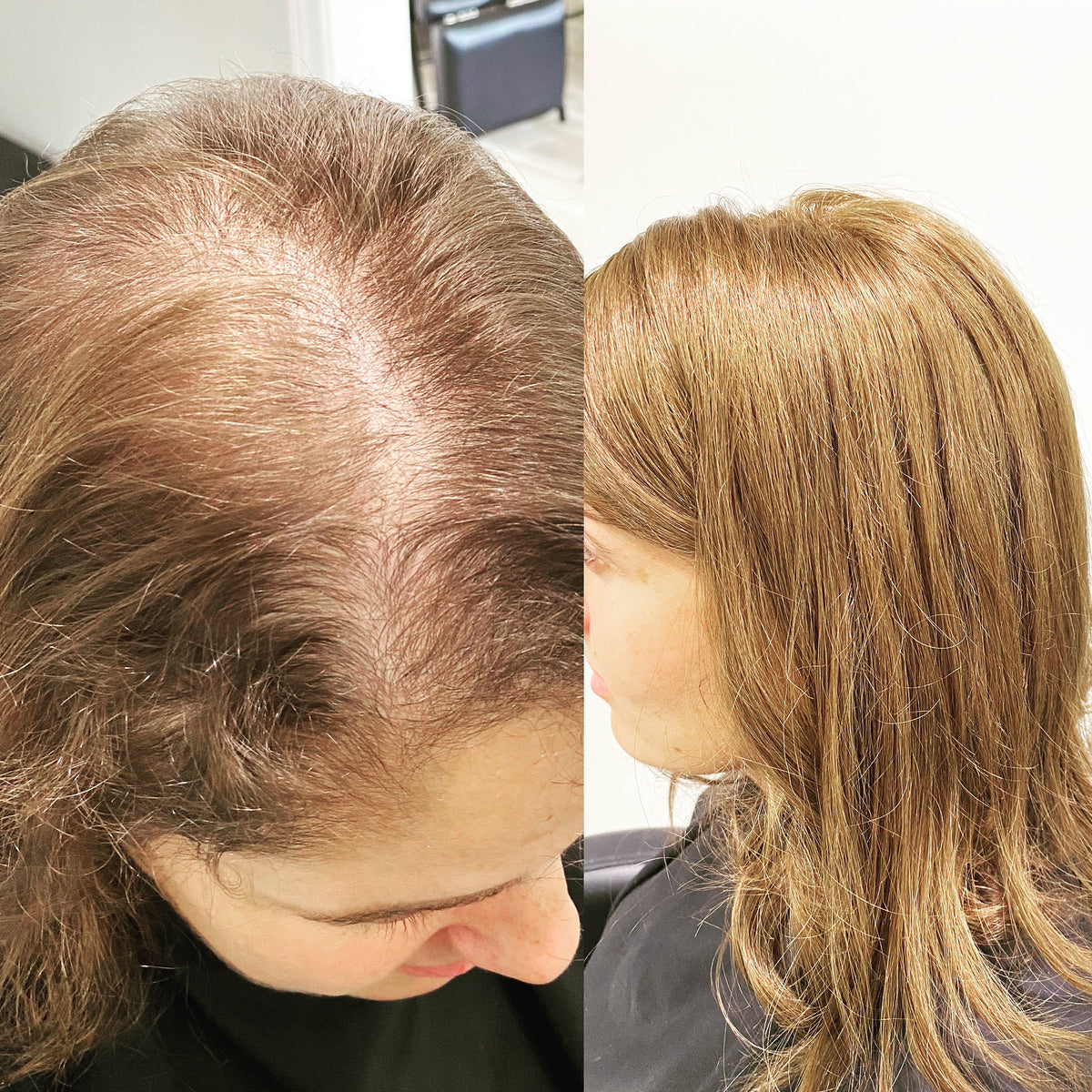
For more than 35 years, I've helped women throughout Boston and New England prepare for chemotherapy-related hair loss, customize human hair wigs before treatment begins, and safely transition back to their own hair through lightweight toppers, mesh integration, attached hair replacement systems, and hair extensions when medically appropriate.
Every woman's journey is different. Some women choose cold capping and preserve much of their hair. Others lose nearly all of it. Some continue wearing a wig throughout recovery, while others are ready to transition into lighter cosmetic hair solutions as their own hair begins to grow.
One thing has remained constant throughout my career:
Hair replacement isn't simply about replacing hair. It's about helping women feel like themselves again.
Related Resources: If you're exploring your options, you may also find these guides helpful: Hair Loss Consultation, Hair Toppers, Hair Extensions, Mesh Integration Hair Replacement, and Medical Wigs & Cranial Prosthesis.

Hair Restoration Is More Than Replacing Hair
Every woman experiences chemotherapy differently. My goal has never been to create the same solution for every client. My goal is to help each woman feel like herself again while respecting her scalp, her stage of recovery, and her medical team's recommendations.
One Of The First Questions Isn't About Chemotherapy
One of the first questions many women ask me after receiving a breast cancer diagnosis isn't about chemotherapy.
It isn't about medications.
It isn't even about losing their hair.
Instead, they quietly ask,
"Will I look like myself again?"
Over the years, I've noticed something remarkable.
Many women don't arrive carrying photographs of wigs.
They arrive carrying photographs of themselves.
Sometimes it's a vacation picture.
Sometimes it's a family portrait.
Sometimes it's simply a recent photo saved on their phone.
Rarely do they ask me to create a completely different hairstyle.
Instead, they say,
"I just want to look like me"
That simple request has shaped the way I've approached chemotherapy hair loss consultations throughout my entire career.
Hair is deeply personal.
For many women, it represents normalcy at a time when almost everything else feels uncertain.
Although I cannot change a cancer diagnosis, I can help women prepare for the journey ahead and create cosmetic solutions that allow them to continue recognizing the woman they see in the mirror.
My Role Is Different From Your Medical Team
One of the most important conversations I have during every chemotherapy consultation is explaining my role.
Your oncologist is responsible for treating your cancer.
Your oncology nurses guide your treatment.
Your dermatologist may help evaluate scalp or skin concerns.
My role is completely different.
I help women navigate the cosmetic side of hair loss while respecting every recommendation made by their medical team.
That means there are times when I recommend moving forward with hair replacement.
There are also times when I recommend waiting.
Sometimes the most professional recommendation I can make is simply,
Your hair isn't ready yet.
Experience isn't just knowing what services are available.
It's knowing when not to recommend them.
Before Chemotherapy: Preparing Before Hair Loss Begins
Many women assume their first appointment will be about choosing a wig.
In reality, that's only a small part of the consultation.
Most women want something much more meaningful.
They want to preserve the hairstyle they've spent years loving.
Before treatment begins, many clients bring photographs of themselves wearing their favorite haircut.
That allows me to recreate their hairstyle as closely as possible using a customized human hair wig.
Creating a natural result often involves much more than selecting a wig from a catalog.
Every wig should be individualized.
No two women bring the same hairstyle, face shape, hair texture, or personal goals into my consultation room.
That may include:
- Custom cutting
- Removing excess bulk
- Softening layers
- Custom toning
- Adding dimension through color
- Refining bangs or face-framing pieces
- Adjusting the fit
Those finishing details often make the difference between wearing a wig...
and recognizing yourself in the mirror.
When everything comes together, many women smile and quietly say,
"That looks like me."
Those four words remind me why this work matters.

Looking Like Yourself Can Be One Of The Greatest Comforts
Hair replacement isn't about becoming someone new.
It's about helping women preserve a sense of normalcy during one of the most difficult seasons of their lives.
During Chemotherapy: Every Journey Is Different
After helping hundreds of women experiencing chemotherapy-related hair loss, one thing has become incredibly clear.
No two journeys are ever the same.
Some women wear wigs every day.
Some alternate between wigs, scarves, and hats.
Some decide to shave their heads.
Others pursue cold capping in hopes of preserving as much hair as possible.
None of those decisions are right or wrong.
They're simply personal.
My responsibility isn't to convince someone which option to choose.
It's to support whichever decision allows her to feel most comfortable throughout treatment.
Every woman's emotional journey deserves the same level of respect as her physical one.
Sometimes simply listening becomes the most important thing I can offer.
What I've Observed About Cold Capping
Before sharing my observations, I want to make something very clear.
I am not a physician.
I cannot recommend whether cold capping is appropriate for you.
That conversation should always take place with your oncologist and medical team.
What I can share is what I've consistently observed after helping hundreds of women recover from chemotherapy over the past three decades.
Women who successfully complete cold capping often preserve significantly more of their natural hair.
In many cases, they have a stronger foundation available for future cosmetic hair restoration.
One observation I've noticed repeatedly is that the hair around the top and crown often appears weaker than the hair along the sides and back of the head.
I also frequently notice that women who preserve more of their hair through cold capping often experience less dramatic texture changes as their hair grows back, although every woman's experience is unique.
Another lesson I've learned comes directly from my clients.
Several women have shared that the fit of the cooling cap—and the experience of the professionals administering it—appeared to make a significant difference in their results.
Others have told me they felt the cap never fit correctly.
Because I meet women after treatment rather than during chemotherapy itself, I can't explain why experiences differ.
I observe.
And I continue learning from every woman who trusts me with her story.
Cold Capping Isn't The End Of The Story
One young client in her early thirties came to see me after being diagnosed with triple-negative breast cancer.
She decided to pursue cold capping throughout chemotherapy.
When she returned to my salon after treatment, she had preserved approximately 75 percent of her hair.
Like many women I've observed after cold capping, the hair around her crown remained somewhat weaker than the rest of her scalp.
Today, we're patiently waiting for her physician to let us know when her hair is healthy enough to safely support extensions.
Her story reminds me that sometimes the best recommendation isn't moving forward immediately.
Sometimes the greatest gift we can give the hair is simply more time.
Hair Loss Doesn't End When Chemotherapy Ends
One of the biggest misconceptions I see is that the journey ends when chemotherapy is over.
In reality, that's often when an entirely different chapter begins.
Hair begins to grow.
Texture changes.
Women become emotionally ready to stop wearing their wigs.
Questions about hair toppers, attached hair replacement systems, and hair extensions begin replacing questions about chemotherapy itself.
This is often when I meet women for a second time.
Not because they're losing their hair.
Because they're ready to begin feeling like themselves again.
Hair Regrowth: The Stage Almost Nobody Talks About
When treatment ends, many women expect their hair to simply grow back the way it was before.
Sometimes it does.
Often, it doesn't.
Some women return to my salon with only two or three inches of new growth.
Others notice their hair feels much finer.
Some experience changes in density.
Many experience what is commonly called chemo curl, where the new hair grows back curlier or with a completely different texture than before treatment.
This stage can be surprisingly emotional.
Many women tell me they are tired of wearing their wig.
They miss feeling the wind in their own hair.
They want to go back to work.
Go out to dinner.
Attend family gatherings.
Most of all...
They simply want to feel like themselves again.
Unfortunately, two or three inches of hair is often not enough to recreate the hairstyle they once loved.
That's when we begin talking about the next step.

The Transition Back Doesn't Have To Happen All At Once
Many women are emotionally ready to stop wearing a wig long before they have enough natural hair to recreate their previous hairstyle. Customized cosmetic hair solutions can help bridge that transition while natural hair continues to grow.
Hair Restoration Isn't One Appointment
One of the biggest misconceptions about chemotherapy hair loss is that choosing a wig is the final step.
In reality, hair restoration often becomes a journey that unfolds over many months.
Each stage brings different challenges, different emotions, and different cosmetic options.
| Stage | What Many Women Experience | How I Often Help |
|---|---|---|
| Diagnosis | Fear, uncertainty, wondering if they'll still look like themselves | Listening, education, consultation |
| Before Treatment | Preparing for hair loss | Customized human hair wigs styled to resemble their own hair |
| During Chemotherapy | Hair loss, scalp sensitivity, cold capping decisions | Cosmetic guidance while respecting the oncology team's recommendations |
| Early Hair Regrowth | Chemo curl, uneven growth, short hair | Evaluating hair growth and discussing future cosmetic options |
| Transition Back | Ready to stop wearing a wig | Lightweight toppers, mesh integration, meshless integration, or attached hair replacement systems |
| Longer Hair Goals | Wanting their former hairstyle back | Hair extensions after physician approval and evaluation of hair strength |
| Life After Treatment | Hair appointments become enjoyable again | Haircuts, color, styling, and celebrating another milestone |
No two women move through these stages in exactly the same way.
Some spend longer in one stage than another.
Some preserve much of their hair through cold capping.
Others lose nearly all of it.
Every recommendation should be based on the individual—not the timeline.
Every Recovery Looks Different
One of the greatest lessons my clients have taught me is that there is no single cosmetic solution for chemotherapy hair loss.
Every recommendation depends on:
- how much hair has returned
- the strength of the new growth
- scalp sensitivity
- physician recommendations
- personal lifestyle
- emotional goals
Some women are happiest continuing with a wig while their hair grows.
Others are ready for a lightweight attached hair topper.
Some benefit from mesh integration.
Others eventually become candidates for carefully selected hair extensions.
There isn't one correct solution.
There is only the solution that is right for that woman at that moment.

Sometimes Hair Extensions Become The Next Step
For women whose hair has regained enough strength and density—and after receiving physician approval—carefully selected hair extensions can help restore the hairstyle they loved before treatment.
Why I Sometimes Recommend Waiting
One of the most important parts of my consultation isn't recommending a service.
It's determining whether the hair is ready for one.
Although many women are understandably excited to restore their hair as quickly as possible, patience often produces the best long-term results.
Before recommending extensions, I evaluate:
- the strength of the new growth
- overall hair density
- scalp condition
- how securely the hair can support additional weight
I also perform a gentle tug test and discuss each woman's treatment history.
Most importantly, I encourage every client to receive approval from her oncologist or physician before moving forward with cosmetic hair extensions.
Healthy hair always comes before beautiful hair.
Sometimes Hair Extensions Become The Best Solution
Many people assume hair extensions are only used to create long, glamorous hairstyles.
In reality, they can also restore confidence after chemotherapy.
When enough healthy hair has returned, carefully selected lightweight extensions can restore fullness, blend uneven areas of regrowth, and help recreate the hairstyle a woman loved before treatment.
Because every head of hair is different, extension methods should always be selected with the health of the scalp and new hair growth in mind.
My goal is never to add the most hair.
My goal is to add only what the hair can safely support.
A Client Who Continues To Inspire Me
One of my clients lives with metastatic breast cancer and continues receiving monthly treatment.
Twice each year, she proudly models in the Runway for Recovery Fashion Show.
Over the years, we explored several cosmetic options together.
We tried a small hair topper.
We explored a hairline topper.
Technically, they worked.
Emotionally, they didn't.
She simply didn't feel like herself.
Instead, carefully customized micro hair extensions allowed her remaining hair to blend naturally while giving her the confidence she wanted each time she stepped onto the runway.
That experience taught me something I'll never forget.
The technically correct solution isn't always the emotionally correct solution.
Sometimes helping someone feel like herself again matters just as much as replacing the hair she lost.
Watching her step onto the runway reminds me why I've never measured success by the amount of hair someone has.
Success is seeing a woman smile, stand a little taller, and begin living her life again.
When Cancer Returns: Beginning Again With Hope
There are moments in my career that stay with me forever.
One of those moments involved a client who had already completed chemotherapy, grown her hair back, and finally reached the point where we were able to restore the hairstyle she had missed for so long with carefully selected hair extensions.
She smiled again.
She looked like herself again.
Life finally felt normal.
Then another tumor was discovered.
Suddenly, we weren't celebrating recovery.
We were preparing for chemotherapy all over again.
Because we had already walked this journey together once, everything felt different.
There was still heartbreak.
There was still uncertainty.
But there was also preparation.
We safely removed her hair extensions before treatment began.
We discussed gentle shampoos commonly recommended by her medical team for women pursuing cold capping.
We adjusted her haircut to help the cooling cap fit as comfortably as possible.
Instead of wondering what would happen next, we already had a plan.
Today, I continue following her journey, evaluating her hair throughout treatment and hoping alongside her that cold capping will preserve as much of her hair as possible.
Cancer may have changed her plans.
It didn't change her determination.
What Thirty-Five Years Has Taught Me About Chemotherapy Hair Loss
After helping hundreds of women through chemotherapy-related hair loss, there are a few things I know with certainty.
Hair almost always carries more emotion than people expect.
Very few women ask me to create a completely different hairstyle.
Most simply want to recognize the woman looking back in the mirror.
I've also learned that recovery doesn't follow a calendar.
Some women are ready for cosmetic hair restoration within a few months.
Others need much longer.
Neither journey is right or wrong.
I've learned that patience is often one of the most important parts of hair restoration.
Waiting a little longer can sometimes protect the long-term health of the hair and scalp.
Most importantly, I've learned that confidence doesn't come from having the most hair.
Confidence comes from feeling like yourself again.
Sometimes that happens with a human hair wig.
Sometimes with a lightweight hair topper.
Sometimes with mesh integration.
Sometimes with carefully selected hair extensions.
Every recommendation I make begins with one simple question:
"What is best for this woman's hair today?"
Not next year.
Not six months from now.
Today.
Some consultations end with a customized wig.
Others end with a recommendation to wait.
Some women are excellent candidates for hair toppers.
Others benefit from mesh integration or hair extensions after receiving physician approval.
There is no single cosmetic solution for chemotherapy hair loss.
There is only the solution that best supports the individual sitting in front of me.
That philosophy has guided my work for more than thirty-five years.
It continues to guide every consultation today.
"Although many of the women I work with are undergoing treatment for breast cancer, the cosmetic challenges and emotional journey of chemotherapy-related hair loss can affect women receiving treatment for many different types of cancer."
Frequently Asked Questions
Will my hair grow back after chemotherapy?
For most women, hair begins growing back after chemotherapy ends, but the timeline, density, color, and texture vary from person to person. Your oncology team can help you understand what to expect based on your specific treatment.
Why is my hair growing back curly after chemotherapy?
Many women experience what is commonly called chemo curl, where new hair grows back curlier, finer, or with a different texture than before treatment. In my experience, this often becomes easier to manage as the hair continues growing, although every woman's experience is different.
When can I stop wearing my wig?
There isn't one correct answer.
Some women stop wearing their wig as soon as they have a few inches of new growth.
Others prefer to wait until their hair is longer.
Many women choose lightweight cosmetic solutions, such as hair toppers or attached hair systems, to help bridge this transition.
When is it safe to wear hair extensions after chemotherapy?
This decision should always be made carefully and in consultation with your physician.
During every consultation, I evaluate the strength of the new growth, hair density, scalp health, and whether the hair can safely support extensions before making any recommendation.
Does cold capping guarantee that I won't lose my hair?
No.
Every woman's experience with cold capping is different.
Some preserve a significant amount of their hair, while others experience much greater hair loss.
Your oncology team is the best source of information about whether cold capping is appropriate for your treatment.
What if my hair never grows back the way it was before?
Some women notice permanent changes in texture, density, or color after chemotherapy.
Fortunately, there are many cosmetic solutions available today, including customized wigs, hair toppers, mesh integration, attached hair replacement systems, and hair extensions when medically appropriate.
The goal isn't simply replacing hair.
It's helping you feel like yourself again.
About The Author
For more than 35 years, I've helped women experiencing every type of hair loss imaginable—from chemotherapy and alopecia to trichotillomania, female pattern hair loss, and scarring alopecia.
My role has never been to replace medical care.
It has always been to listen, educate, and create realistic cosmetic solutions that respect each woman's stage of recovery, lifestyle, and goals.
Every consultation teaches me something new.
Every woman reminds me why this work matters.
With Gratitude
After more than thirty-five years, people sometimes ask me what keeps me passionate about helping women experiencing hair loss.
The answer has never been the hair.
It has always been the women.
Thank you to every woman who has trusted me during one of the most vulnerable chapters of her life.
Thank you to the daughters, husbands, mothers, sisters, and friends who have sat beside the chair.
Thank you to the oncologists, oncology nurses, and healthcare professionals who care for these women every day and allow specialists like me to become one small part of each woman's journey.
Most of all, thank you to every client who allowed me to witness not only the loss of her hair, but the incredible courage it took to reclaim her confidence.
You have taught me far more than I could ever teach you.
Helping you has been one of the greatest privileges of my career.
With gratitude,
Noelle Spinosa
Whether you're preparing for chemotherapy, exploring cold capping, transitioning away from a wig, or wondering if your hair is ready for a topper or extensions, every journey begins with a conversation.
If you'd like to discuss your options, I'd be honored to meet with you during a private consultation and help you understand what may be possible for your hair.


