

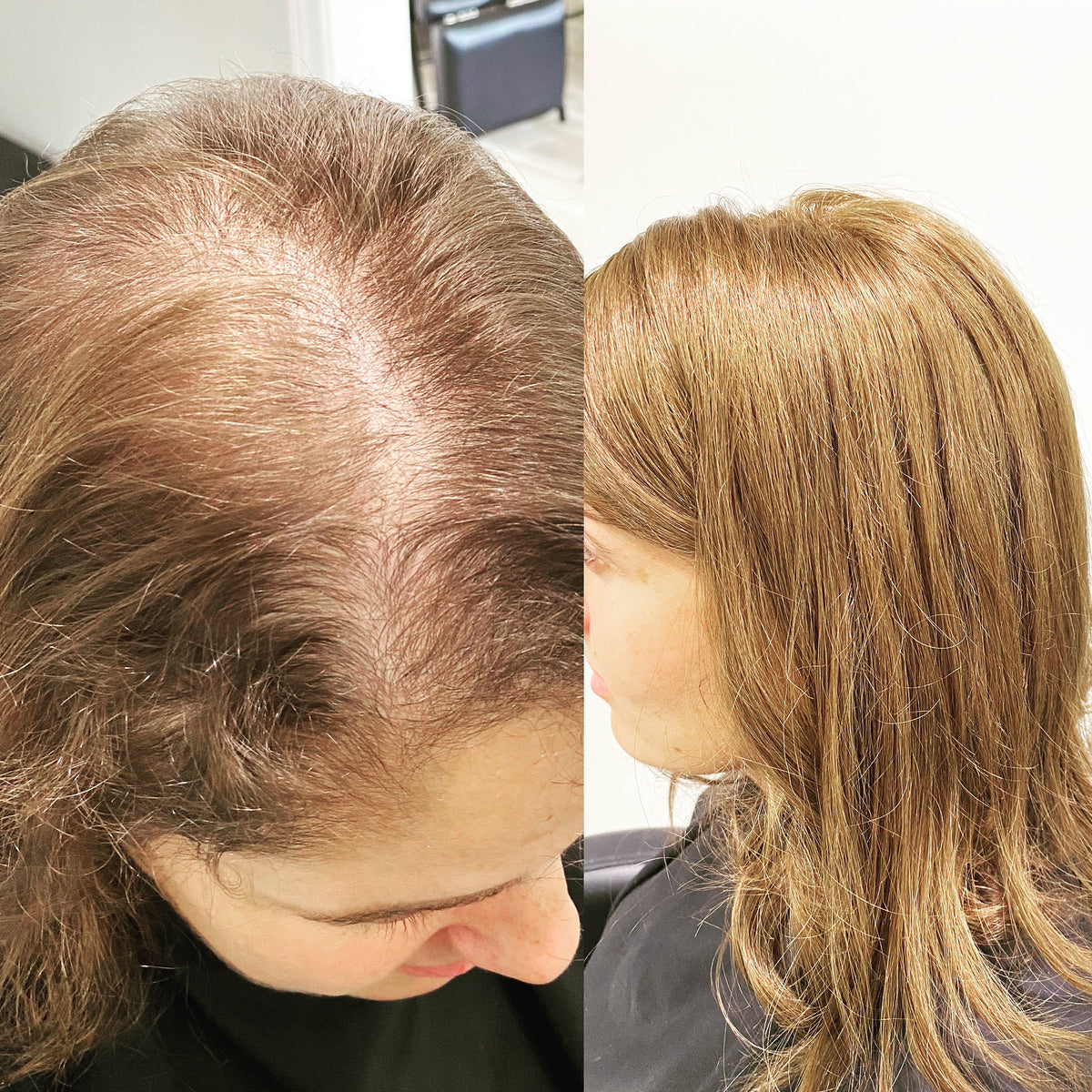


Hair Extension Myths vs. Facts: Get the Truth
Curious about hair extensions but overwhelmed by rumors? You’re not alone.
In the world of hair extensions in Boston, it’s easy to hear one story from a friend, another on social media, and end up more confused than when you started.
This guide cuts through the noise with clear, practical insights so you can choose confidently and care for your hair with ease. Whether you’re exploring extensions for the first time or returning for a new look, you’ll find the myths debunked and the facts explained in straightforward language.
Ready to separate fiction from reality and discover what truly works for your hair?
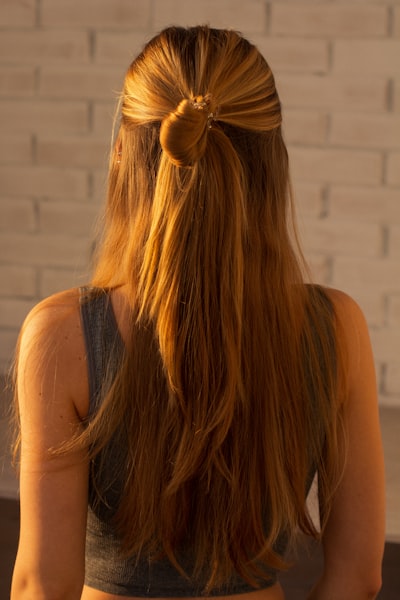
The Truth Behind Hair Extension Myths and Facts
Hair extensions are more popular than ever, but popularity can invite misunderstandings.
You might hear that extensions always break hair, never blend, feel heavy, or demand constant maintenance.
Common myths
- They always break hair.
- They never blend well.
- They feel heavy.
- They require constant maintenance.
Key facts
- Extensions can be safe when chosen correctly.
- Professional application is key.
- Proper care leads to longevity and versatility.
The reality is more balanced: when chosen well, applied by a professional, and cared for properly, extensions can be a safe, versatile way to achieve the length, fullness, and styling freedom you want.
Key definitions for understanding hair extension myths
Getting familiar with a few core terms helps you evaluate products and techniques with confidence:
- Remy hair: Human hair where the cuticles are intact and aligned in the same direction, which helps reduce friction, matting, and tangling while maintaining a soft, natural look.
- Virgin hair: Human hair that has not been chemically processed for color or texture, offering a natural feel and appearance.
- Tape-in extensions: Thin wefts of hair bonded to your natural hair using medical-grade adhesive tape; known for a flat, discreet profile and quick application.
- Micro ring (micro link) extensions: Individual strands attached with small metal rings or beads; they’re secured without glue and can be adjusted during maintenance.
- Keratin bond extensions: Individual extensions tipped with keratin that are fused to your own hair for a long-lasting attachment.
- Clip-in extensions: Temporary wefts you clip in and remove the same day; ideal for instant volume or a special-event style.
- Weft: A seam or “track” of hair used in many extension types; how it’s placed and concealed determines how natural your style looks.
With these basics in mind, you’ll be able to interpret each myth through a clearer lens.
After all, if the vocabulary makes sense, the facts follow more easily.
Myth: Hair extensions always damage your hair and leave it thin
It’s common to worry that extensions automatically mean hair loss, thinning, or breakage. You might have seen a friend remove extensions and assume the shedding was damage, or heard that adhesives pull on the scalp.
But these concerns usually come from poor application, unsuitable methods for a specific hair type, or neglecting maintenance—rather than from extensions themselves.
Here’s what’s actually going on:
- Your natural growth cycle continues whether or not you wear extensions. Shedding that would normally happen may be collected within an attachment point and become visible at removal, making it look like more hair has fallen out when it’s really just accumulated shed hair.
- When applied correctly, extensions distribute weight appropriately so that your follicles aren’t overstrained. The right method for your density and texture is crucial.
- High-quality hair paired with professional installation reduces friction and minimizes stress on your own strands.
Fact: Hair extensions can be safe when applied and cared for correctly
With the guidance of a trained stylist and a simple routine at home, extensions can coexist with your natural hair. To help safeguard your strands:
- Brush daily from the ends upward using an extension-safe brush to avoid tugging at attachment points.
- Use products recommended for extensions—lightweight conditioners, gentle detanglers, and shampoos appropriate for your method.
- Limit direct heat at the bonds or tapes; when styling, keep hot tools off attachment areas.
- Schedule regular maintenance so minor tangles are addressed early and attachments remain secure.
Professional stylists often recommend check-ins to adjust placement as your hair grows and to ensure weight is balanced. Over time, consistent care supports a healthy scalp and helps your style look fresh. Have you ever wondered how different your results might be with a guided routine tailored to your method?
Common Hair Extension Myths Explained: Can Extensions Blend with Your Natural Hair?
Another frequent worry is that extensions will look obvious.
If you’ve seen mismatched shades, blunt edges, or visible wefts, you might think that’s inevitable. But modern techniques and custom blending are designed to disappear into your own hair.
Myth: Hair extensions won't blend in with your natural hair
You may have heard that texture mismatches or color differences give extensions away. That can happen with one-size-fits-all choices or rushed applications. Today’s options make it easier than ever to achieve a believable result:
- Color selection can include multi-tonal wefts to mirror natural highlights and lowlights.
- Textures range from straight and wavy to curly patterns to complement your hair’s behavior.
- Placement and cutting techniques soften transitions so ends flow together naturally.
Think about a layering cut that blends the longest pieces with face-framing strands and internal texture. When extensions are shaped to your haircut, the eye can’t distinguish where your hair ends and the added length begins.
Fact: High-quality hair extensions can be seamlessly blended
Skilled stylists take into account your density, color variation, and styling preferences to tailor your installation. Customization might include:
- Mixing shades within a single application to replicate dimension.
- Strategic placement around part lines and hairline for a natural fall.
- Blending cuts to refine the silhouette and remove bulk where needed.
With the right match and technique, your extensions will move, shine, and style like your own. Your ponytail, beach waves, or sleek finish won’t announce anything other than great hair.
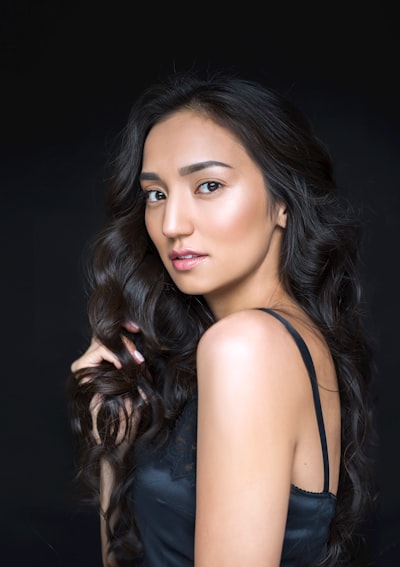
Exposing Hair Extension Myths About the Visibility of Extension Tracks
Let’s tackle the belief that extension “tracks” will always show. Visibility usually points to a mismatch between method and hair type or to placement that doesn’t consider parting habits or styling goals. With the right choices, tracks stay discreet.
Myth: Hair extension tracks will always show
“If I wear extensions, everyone will see them.” That fear stems from older techniques or installations that didn’t account for your individual hair. The truth is that track visibility is affected by:
- Method: Some approaches lie flatter than others; choosing a low-profile option can make a difference.
- Placement: Attachments aligned with your growth pattern and natural part prevent gaps.
- Density: Finer hair can benefit from smaller attachments and carefully spaced rows.
Hair Extensions Myths vs. Facts. What You Need To Know Before Getting Extensions. When your stylist maps where you part your hair and how you style it, placement supports your everyday look so tracks remain out of sight.
Fact: Expert hair extension applications can hide tracks effectively
Experienced stylists use precise, method-appropriate techniques to ensure your wefts and bonds are concealed. For example, micro ring or tape-in placements can be staggered for maximum coverage while keeping a smooth profile. During your appointment, your stylist will:
- Assess your scalp, density, and hairline to determine optimal placement zones.
- Place attachments in a pattern that supports your part and preferred styles.
- Blend edges and refine length to maintain a natural fall—even in motion.
When your tracks are thoughtfully hidden, your hair looks authentically yours from every angle.
Disproving Hair Extension Myths About Weight and Comfort
Another concern you might have is comfort. You may picture a heavy curtain of hair or assume extensions cause headaches. High-quality methods and correct weight distribution counter these worries, making extensions comfortable for daily wear.
Myth: Hair extensions will weigh you down and give you headaches
Discomfort often comes from too much weight on too little natural hair or from attachments applied too close to the scalp. Quality extensions are designed to be lightweight and balanced. When chosen for your density and applied by a pro, they feel natural:
- Attachments are sized to your strand strength and scalp sensitivity.
- Rows are spaced to distribute weight comfortably.
- Styling stays flexible, so you can wear ponytails and braids without strain.
Picture this: you opt for a lightweight method tailored to your fine-to-medium hair. Your stylist checks the tension at every row. You leave with hair that feels secure but not tight, and you hardly notice the attachments as you go about your day. If comfort is built into the plan, what would keep you from enjoying the look?
Fact: Quality hair extensions are designed for comfortable daily wear
Modern methods support all-day comfort and easy styling. Micro ring and tape-in options, in particular, are known for low-profile wear and secure, gentle attachment. Here’s what comfort looks like in practice:
- You can put your hair up without exposing attachment points when placement is customized.
- Sleeping with a loose braid or low pony helps prevent tangling and scalp tension.
- Light products and mindful brushing keep everything smooth with minimal effort.
Your stylist will coach you on pressure-free habits to protect your scalp and keep attachments balanced. Doesn’t a comfortable routine sound like the best way to extend the life of your style?
Hair Extension Myths: Are Hair Extensions High Maintenance and Prone to Tangling?
You might assume extensions require constant fussing. The truth: a few consistent habits replace the need for complicated routines.
When you pair quality hair with basic care steps, tangling and matting are easy to avoid. Would a short, repeatable checklist help you feel more at ease?
Myth: Hair extensions tangle easily and need high maintenance
If you’ve seen tangles at the nape or around attachment points, it’s natural to think extensions are hard to manage. That usually happens when brushing is inconsistent, products are too heavy, or maintenance is overdue. Modern extensions are designed with cuticle alignment and smooth wefts to reduce friction—especially when paired with simple care.
Myths about constant upkeep often come from outdated methods or skipping a few small steps. A better approach is to keep maintenance predictable and gentle. Would you try a routine that fits right into your day?
Fact: Regular care routines can keep hair extensions tangle-free and manageable
A consistent, low-effort routine helps your hair look great between appointments:
- Brush morning and evening, working from ends to mid-lengths to roots, and separate rows to prevent weft-to-weft tangling.
- Cleanse with extension-friendly shampoo, and condition from mid-lengths to ends to keep bonds or tapes clean.
- Gently squeeze excess water with a towel and detangle before blow-drying to avoid friction when wet.
- Use a heat protectant on the lengths and avoid direct heat at attachment points.
These simple habits maintain a smooth finish and protect longevity. Isn’t it reassuring to know that consistency beats complexity?
Hair Extension Myths: Can Hair Extensions Be Worn for Everyday Use and Look Natural?
Extensions aren’t just for photo shoots or big events. With modern low-profile methods and natural-looking hair, daily wear is not only possible—it’s common. If your goal is to wake up with length and volume ready to style, extensions can fit seamlessly into your routine.
Myth: Hair extensions are suitable only for special occasions
Extensions shine on special days, but their real value often appears in everyday life. When your application is tailored to your lifestyle, they blend with your natural hair and keep styling quick. Tape-in extensions, for example, offer a flat finish and fast maintenance, while other methods provide flexibility for different densities and textures.
From sleek buns to tousled ponytails, a thoughtful placement plan keeps attachments discreet. If your calendar is full of workouts, workdays, and weekends out, why not have hair that supports all three?
Choosing the right hair extensions for your goals
Your best method depends on your density, hair health, styling habits, and desired outcome. Consider these thought-starters as you plan your look:
- Seeking subtle fullness? A few strategically placed pieces can lift your layers without changing your length dramatically.
- Craving extra length? A balanced plan with layered placement supports a seamless shape and comfortable wear.
- Want flexibility? Clip-in pieces let you switch between natural and glam in minutes.
- Looking to protect your ends? Extensions can shield fragile lengths from over-styling while you grow.
Frequently asked questions about hair extension myths and facts
Will extensions stop my hair from growing?
No. Your growth cycle continues regardless of extensions. With correct application and care, extensions don’t disrupt your natural growth. Could your main focus be nurturing your scalp and strands while enjoying added length or volume?
Are extensions only for thick hair?
Not at all. Methods can be adapted for fine, medium, or thick hair—what changes is the size and spacing of attachments. If you have fine hair, would a low-profile, lightweight approach feel right for you?
Can I still use my favorite styling tools?
Yes, on the lengths—just avoid the bonds or tapes directly. Be sure to use a heat protectant and keep tools at a safe distance from attachment points. Could mindful heat use keep your style looking fresh longer?
Do extensions prevent me from working out or swimming?
No. Tie hair back for workouts, and after swimming, rinse and detangle to remove salt or chlorine. A quick care step post-activity helps maintain smoothness. Would a simple post-gym routine fit into your schedule?
What if I like to change my part?
Tell your stylist how you wear your hair most days. Placement can be adjusted to support variations in parting so tracks remain concealed. Does your everyday part line guide your ideal placement?
Your first hair extensions appointment: what to expect
Being prepared helps you enjoy the process from consultation to final style. Here’s a typical flow:
- Consultation: Your stylist evaluates your density, texture, color, and scalp condition, and discusses your goals, lifestyle, and maintenance preferences.
- Method match: Options are explained—such as tape-in, micro ring, keratin bond, or clip-in—so you can choose what suits your hair and schedule.
- Color and texture: Shades and textures are selected to mirror or enhance your natural look, sometimes mixing tones for realistic dimension.
- Application: Attachments are placed with attention to comfort and concealment, then cut and blended to your desired shape.
- Home care: You’ll receive maintenance guidance tailored to your method so you can protect your investment day to day.
Walking in with questions is encouraged. After all, the more you understand, the more confident you’ll feel. What’s the one question you want answered before you sit in the chair?
Style inspiration: wearing your hair extensions your way
Extensions amplify what you already love about your hair. Consider these easy, go-to looks:
- Sleek and straight: A smoothing pass with a flat iron on the lengths creates a polished, glassy finish.
- Loose waves: A curling wand adds movement that blends layers and disguises where your hair and extensions meet.
- High ponytail: With careful placement, a lifted pony looks full and seamless without exposing attachments.
- Casual half-up: A soft twist or clip shows dimension while keeping weight off your face.
Small tweaks—like face-framing layers or a gloss for shine—can elevate your everyday look. Which style will you try first to showcase your new length or volume?
Conclusion: The truth behind hair extension myths and facts
Navigating the world of hair extensions can be daunting, but separating myths from facts makes the decision clear. Bottom line: with quality hair, professional application, and simple, consistent care, extensions blend naturally, keep tracks concealed, feel lightweight, and fit everyday life—without compromising your hair’s health.
If you’ve been hesitant because of myths or past experiences, you can book a free hair extension consultation to get expert guidance and a personalized approach designed to give you natural, long-lasting results.


