

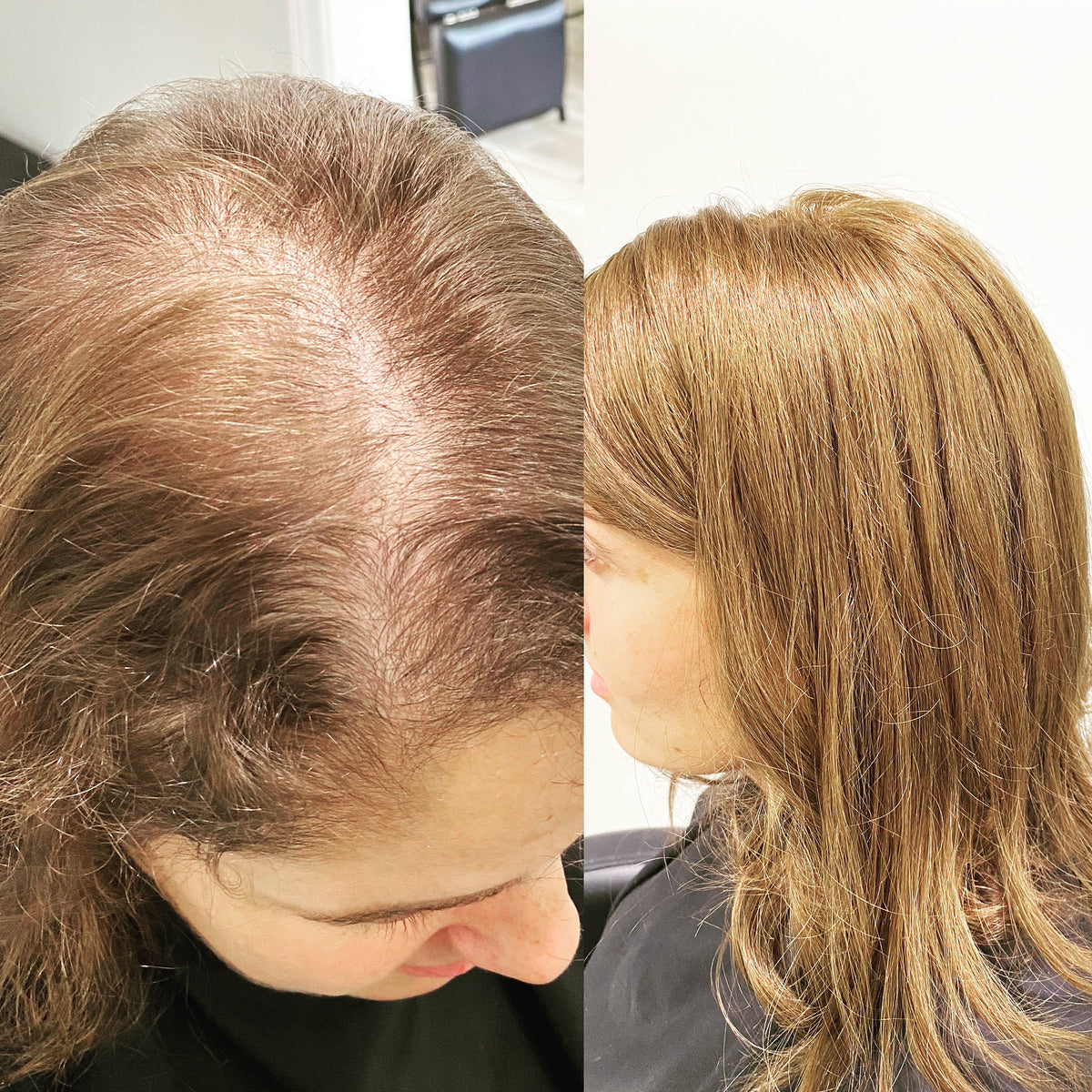


Hair Toppers vs. Wigs: Which Hair Loss Solution Is Right for You?
For women experiencing hair loss, one of the first questions is often:
"Should I get a hair topper or a wig?"
The answer is not always straightforward.
After working with women experiencing thinning hair, female pattern hair loss, alopecia, chemotherapy-related hair loss, and other forms of hair loss for decades, I have found that many women assume they need a wig when they may actually be better candidates for a customized hair topper.
Both solutions can be life-changing. However, they are designed for different levels of hair loss, different lifestyles, and different goals.
If you're unsure which type of hair loss you're experiencing, our guide to Hair Loss Solutions in Boston can help explain the most common causes of female hair loss and the treatment and coverage options available.

What Is The Difference Between A Hair Topper And A Wig?
A wig is designed to replace all of the hair on the head.
A hair topper is designed to add coverage, density, and fullness to specific areas while blending with your existing hair.
Women experiencing complete hair loss from conditions such as Alopecia Totalis, extensive alopecia, or complete chemotherapy hair loss often require a wig because there is little or no existing hair available for blending.
Women experiencing:
- Female pattern hair loss
- Crown thinning
- Diffuse thinning
- Menopausal hair thinning
- Hormonal hair loss
- Early-stage alopecia
- Chemotherapy regrowth
often find that a topper provides a more natural and comfortable solution because they still have healthy hair around the sides and back of the head.
One of the biggest misconceptions I see is that choosing between a topper and a wig is the most important decision.
It isn't.
The most important decision is choosing the correct solution, density, size, attachment method, and customization strategy for your specific type of hair loss.
If you're still trying to understand what's causing your hair loss, identifying the reason behind the thinning can help determine whether a topper, wig, extensions, or another solution may be the best fit.
Hair Topper vs Wig: Quick Answer
Hair toppers are designed for women who still have enough existing hair to support and blend with a coverage system. Wigs are designed to replace all of the hair on the scalp and are often recommended for women experiencing extensive or complete hair loss. The best choice depends on the amount of hair loss, scalp visibility, lifestyle needs, and long-term goals.
Hair Topper vs Wig: Which Solution Is Usually Best?
| Condition | Often Best |
|---|---|
| Crown Thinning | Hair Topper |
| Diffuse Thinning | Hair Topper |
| Female Pattern Hair Loss | Hair Topper |
| Menopause Hair Loss | Hair Topper |
| Chemotherapy Regrowth | Hair Topper |
| Alopecia Totalis | Wig |
| Alopecia Universalis | Wig |
| Extensive Chemotherapy Hair Loss | Wig |
Not All Hair Toppers And Wigs Are Created Equal
This is where many women get overwhelmed.
There is no such thing as a standard hair topper or a standard wig.
Both can vary dramatically in:
- Density
- Base size
- Hair quality
- Human hair versus synthetic hair
- Hairline design
- Color matching
- Gray blending
- Length
- Layering
- Attachment methods
A woman with mild thinning along her part line may need a completely different topper than someone experiencing advanced diffuse thinning throughout the crown.
Likewise, a wig that looks beautiful on one woman may appear unnatural on another if the density, color, or hairline are not customized correctly.
In my experience, customization is often the difference between a result that looks obvious and a result that looks completely natural.
This is one of the biggest reasons online shopping can be frustrating for women experiencing hair loss. Two toppers may look similar in photos, yet fit and perform completely differently depending on the base size, density, hair quality, and how well they match the wearer's natural hair. The same is true for wigs. The most successful outcomes usually come from customization rather than purchasing a one-size-fits-all solution.

Choosing the proper base size is especially important.
Too small and it may not provide enough coverage.
Too large and it may feel bulky or unnatural.
The same applies to density.
Many women think they need more hair than they actually do. In reality, matching the density of the existing hair often creates the most believable result.
Why Most Women With Thinning Hair Choose Hair Toppers
Most women who visit our salon are not completely bald.
They have hair.
The problem is that the hair no longer provides the coverage, density, or confidence they once had.
This is where hair toppers shine.
A properly customized topper allows us to:
- Cover visible scalp
- Improve density
- Restore volume
- Create a fuller part line
- Blend seamlessly with existing hair
- Maintain a natural appearance
Because the topper works with the hair that remains, many women find it feels lighter, more comfortable, and more natural than wearing a full wig.

One of my favorite things about hair toppers is that they can be customized for virtually any hair color, including gray, silver, salt-and-pepper, highlighted, dimensional, and color-treated hair.
When density, color, and hairline design are properly matched, the result often looks completely seamless.
Why Most Of Our Clients Prefer Attached Hair Toppers
One important distinction is that many women assume all toppers are clip-in systems.
That is not how most of our clients wear them.
While clip-in toppers can work well for some women, many clients eventually prefer attached systems because they provide greater security, comfort, and freedom.
They can:
- Exercise comfortably
- Enjoy windy days
- Stop worrying about movement
- Feel more secure throughout daily life
For many women, confidence comes from not having to think about their hair every moment of the day.
Another factor is emotional comfort.
A wig can be removed at night.
For some women, that's perfectly fine.
For others, it becomes a daily reminder of their hair loss.
Many women tell me they want to wake up, relax at home, spend time with family, and go to bed feeling like themselves with hair still on their head.
Attached topper systems often help bridge that gap.
For women experiencing long-term thinning, attached systems can also feel more like a lifestyle solution than a temporary fix. Many clients tell me they stop planning their day around their hair and start focusing on living their lives again.

The Biggest Mistake I See With Hair Toppers
One area where my philosophy differs from many providers is attachment methods.
I do not believe in gluing hair toppers directly to fragile hair.
In my experience, aggressive adhesive systems can create unnecessary stress and damage to hair that may eventually recover and regrow.
Hair loss solutions should not create additional hair loss.
That is why we frequently recommend attachment methods that prioritize hair preservation and long-term hair health.
In some situations, women may also benefit from Mesh Integration Hair Systems, particularly when additional support is needed for fragile or thinning hair. You can learn more in our article, What Is Mesh Integration and Who Is It Best For?
The goal is always the same:
Create a secure, natural-looking result while protecting the existing hair underneath.

Watch A Real Hair Topper Transformation
Seeing a transformation often explains more than words ever can.
When A Wig Is The Better Solution
Although I recommend toppers more often, there are situations where a wig is absolutely the best solution.
Women experiencing:
- Alopecia Totalis
- Alopecia Universalis
- Complete chemotherapy hair loss
- Extensive hair loss with little remaining hair
may simply not have enough hair available to support a topper.
In these situations, a wig often provides the most practical and beautiful solution.
If I am recommending a wig, I generally encourage women to consider a high-quality human hair lace-front wig whenever possible.
Human hair offers:
- Natural movement
- Realistic texture
- Styling flexibility
- More believable density
- Better longevity
However, even the highest-quality wig usually requires customization.
The cut, color, layering, density, and hairline design often determine whether a wig looks natural or "wiggy."
I have found that customization is just as important with wigs as it is with toppers. Even an expensive human hair wig may require cutting, thinning, reshaping, or color adjustments before it truly looks natural.

What Happens When Hair Starts Growing Back After Chemotherapy?
One of the most rewarding journeys I witness is helping women transition after chemotherapy.
Many women initially rely on wigs because complete hair loss leaves few alternatives.
But something interesting often happens when the hair begins growing back.
The first question is frequently:
"Can I stop wearing my wig?"
In many cases, the answer is yes. As new hair begins returning, we often transition clients into hair toppers, extensions, or a combination of both. The goal is to support the regrowth process while helping women feel comfortable and confident during every stage of recovery.
As regrowth progresses, many women begin exploring:
- Hair toppers
- Hair extensions
- Combination topper and extension systems
- Attached integration systems
The goal shifts from replacing all of the hair to enhancing and supporting the hair that is returning.
Every stage of hair growth requires a different strategy.

Why The Consultation Matters
The best hair loss solution is never chosen from a catalog.
Every consultation should evaluate:
- Hair density
- Hair strength
- Scalp visibility
- Hair loss pattern
- Lifestyle needs
- Desired maintenance level
- Long-term hair goals
A woman with diffuse thinning requires a different strategy than a woman with crown thinning.
A chemotherapy client requires a different strategy than a woman with female pattern hair loss.
The consultation process helps determine not only whether a topper or wig is appropriate, but which specific design will provide the most natural and comfortable result.
Hair Toppers vs. Wigs: Which Is Right For You?
For women experiencing complete hair loss, a wig may be the most appropriate solution.
For women experiencing thinning hair, crown thinning, diffuse thinning, female pattern hair loss, menopausal hair loss, or chemotherapy regrowth, a customized hair topper is often the more natural and comfortable choice.
The most important factor is not whether a system is called a topper or a wig. The real difference comes from choosing the correct size, density, attachment method, hair quality, and customization strategy for your individual needs.
The right solution should not only look beautiful today—it should support your confidence, comfort, and long-term hair health as well.
Frequently Asked Questions
Are hair toppers better than wigs?
Hair toppers and wigs serve different purposes. Women with thinning hair, crown thinning, or partial hair loss often prefer hair toppers because they blend with existing hair. Women experiencing complete hair loss may be better candidates for a wig. The best solution depends on the amount of hair loss, the condition of the existing hair, and individual lifestyle needs.
Can a hair topper look natural?
Yes. When the density, base size, color, hair quality, and hairline are properly customized, a hair topper can blend seamlessly with existing hair and create a very natural appearance. Customization is often the difference between a result that looks obvious and one that looks completely natural.
Can I sleep in a hair topper?
Attached hair topper systems are designed for longer-term wear and many women sleep comfortably in them. Clip-in toppers should generally be removed before sleeping. The best option depends on the type of topper and attachment method being used.
What is the difference between a clip-in topper and an attached topper?
A clip-in topper is removed daily and attached using clips. An attached topper is secured using specialized attachment methods and designed for longer-term wear. Many women prefer attached systems because they provide greater security, comfort, and confidence throughout daily activities.
Are human hair toppers better than synthetic toppers?
Human hair toppers typically provide the most natural appearance, movement, styling flexibility, and longevity. They can also be customized to match existing hair color, texture, density, and length more accurately than most synthetic alternatives.
Can chemotherapy patients wear hair toppers?
Yes. Many women transition from wigs to hair toppers as their hair begins growing back after chemotherapy. Depending on the amount of regrowth and overall hair density, a topper can often provide a natural-looking solution during the recovery process.
Schedule Your Complimentary Hair Loss Consultation
Choosing between a hair topper and a wig can feel overwhelming, especially when every woman's hair loss journey is different.
At Noelle Salon, we help women experiencing thinning hair, female pattern hair loss, alopecia, chemotherapy-related hair loss, and other forms of hair loss find solutions that look natural while protecting the health of their existing hair.
During your consultation, we can evaluate:
- Hair density
- Hair strength
- Scalp visibility
- Hair loss pattern
- Lifestyle needs
- Topper, wig, extension, and integration options
Unlike many providers that require special ordering and long wait times, our hair toppers and hair extensions are stocked in-salon, allowing many clients to receive same-day service and leave with a solution immediately.
Whether you're considering a hair topper, wig, mesh integration system, or hair extensions, we'll help you determine which option is the best fit for your needs.
Schedule your complimentary hair loss consultation today.


