

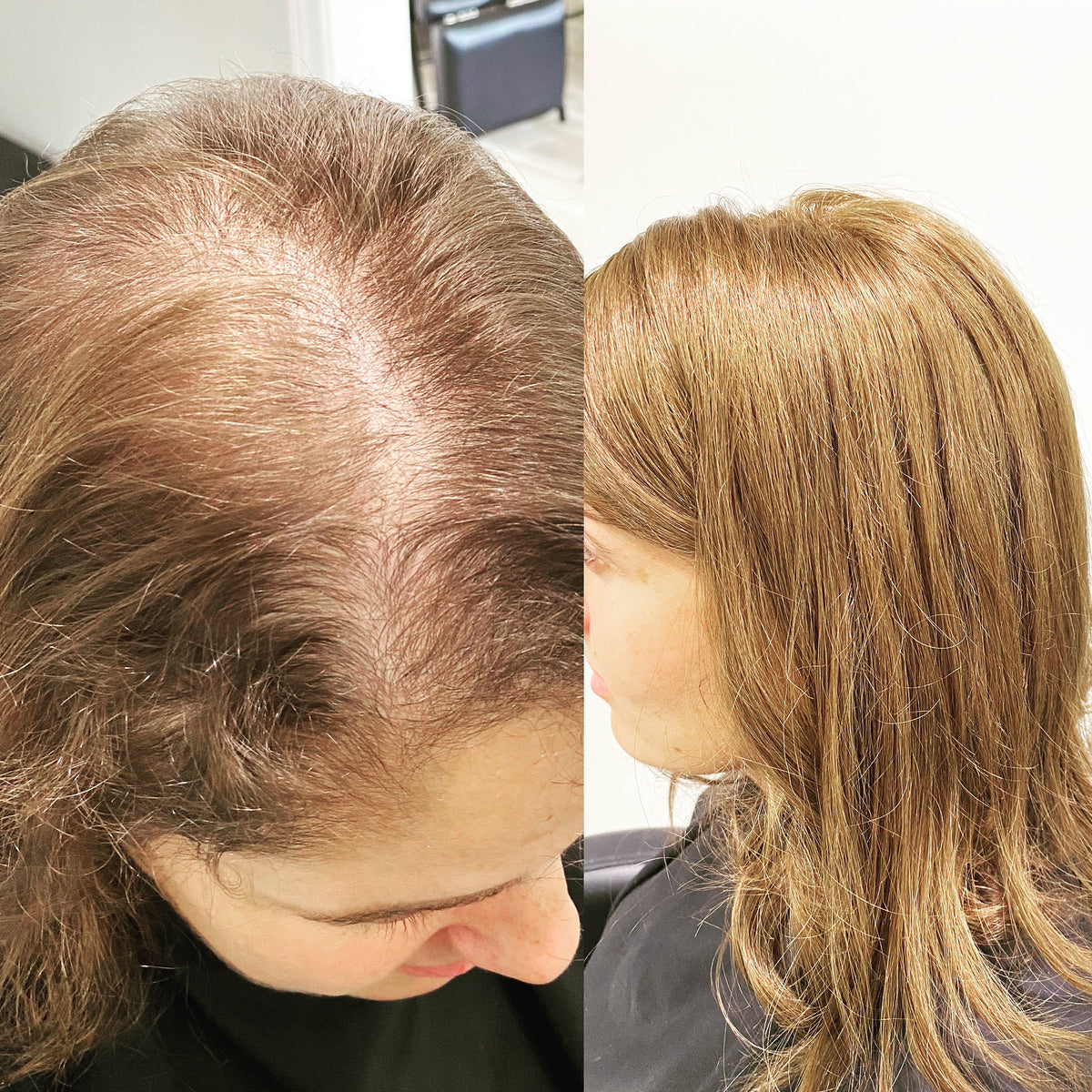


How To Choose A Hair Loss Specialist In Boston: 10 Things To Look For Before You Book
Quick Answer: How Do You Choose The Right Hair Loss Specialist?
Choosing a hair loss specialist is about far more than finding someone who offers hair toppers, mesh integration systems, wigs, or hair extensions. The best specialists combine years of hands-on experience, education, compassion, proven results, and a deep understanding of different hair loss conditions.
When evaluating a hair loss specialist, look for documented before-and-after transformations, client reviews, experience with conditions such as Female Pattern Hair Loss, Telogen Effluvium, alopecia, and Trichotillomania, as well as a commitment to protecting your existing hair while helping you achieve your goals.
Many techniques can be learned in a class or from a video. Expertise is developed through years of working with real people, real hair loss challenges, and real outcomes.
If you're researching solutions for thinning hair, start by exploring our Hair Loss Boston services and reading Why Is My Hair Thinning? The 12 Most Common Causes of Hair Loss for Women In Boston before deciding which type of help may be right for you.
Why Hair Loss Requires A Different Type Of Expertise
One of the biggest misconceptions I encounter is the belief that a hair loss specialist is simply a hairstylist who offers toppers, wigs, or extensions.
Hair loss work is very different.
When a woman comes to us with thinning hair, scalp visibility, Female Pattern Hair Loss, Telogen Effluvium, alopecia, menopause-related thinning, or Trichotillomania, the goal is not simply to add more hair.
The goal is to understand the situation, evaluate the existing hair, protect what remains, and recommend a solution that will still make sense months or years from now.

Experience Cannot Be Learned From A Weekend Class
One of the biggest mistakes women make when searching for help is assuming that a certification automatically creates expertise.
Many techniques can be taught.
Some can even be learned online.
Learning how to attach a topper, install mesh integration, or apply extensions does not automatically make someone a hair loss specialist.
What cannot be learned overnight is experience.
Over more than 35 years, I've worked with women experiencing:
-
Female Pattern Hair Loss
-
Telogen Effluvium
-
Menopause-related thinning
-
Alopecia
-
Trichotillomania
-
Medical hair loss
-
Fine hair challenges
-
Diffuse thinning
-
Crown thinning
Every case is different.
The ability to evaluate density, support capacity, scalp visibility, texture, and long-term goals comes from years of hands-on experience, not simply attending a training course.
Different forms of hair loss often require different approaches. For example, menopause-related hair loss frequently presents differently than other types of thinning, which is why I encourage women to learn about the unique challenges associated with hormonal hair changes in our article Menopausal Hair Loss Before and After: Real Solutions for Thinning Hair Over 50.
Can They Show You Real Results Similar To Your Situation?
One of the most important questions you can ask is:
"Have you worked with someone like me before?"
Anyone can claim to be an expert.
Evidence matters.
Look for:
-
Before-and-after photos
-
Video transformations
-
Google reviews
-
Educational content
-
Client testimonials
-
Real case studies
The closer the examples are to your situation, the more confidence you can have in their experience.


If You Have Trichotillomania, Experience Matters Even More
One area where experience becomes especially important is Trichotillomania.
Hair pulling creates unique challenges that many professionals rarely encounter.
Some clients have isolated patches.
Some have diffuse loss.
Some are actively pulling.
Others are years into recovery.
No two cases are identical.
Because every situation is different, successful outcomes often require extensive customization.
Women struggling with hair pulling often need more than a cosmetic solution.
They need understanding, privacy, patience, and someone who recognizes the emotional impact of the condition.
Women experiencing hair pulling often benefit from working with a specialist who understands both the emotional aspects of recovery and the range of available solutions, from customized coverage options to long-term hair restoration planning.
If you're researching options, I recommend reading our article on Trichotillomania Client Transformations And Recovery Stories.

The Specialist Should Understand More Than One Solution
One of the biggest red flags is when every client receives the same recommendation.
A qualified specialist should understand:
-
Hair Toppers
-
Hair Topper vs Hair Extensions For Thinning Hair
-
Mesh Integration Systems
-
Wigs
-
Fill-In Hair Pieces
-
Hair Extensions For Fine Hair
-
Combination Solutions
Hair loss is not one-size-fits-all.
The right solution depends on:
-
Density
-
Support capacity
-
Hair texture
-
Lifestyle
-
Goals
-
Stage of hair loss
Product Quality Matters More Than Most People Realize
Not all hair toppers, wigs, mesh integration systems, and hair extensions are created equal.
A knowledgeable specialist should understand sourcing, manufacturing, hair quality, longevity, and customization options.
The quality of the product can significantly impact comfort, appearance, durability, and overall satisfaction.
This is one reason I believe relationships with trusted manufacturers and suppliers are so important.
I've seen firsthand how differences in hair quality, construction methods, and customization can affect not only how natural a solution looks, but also how comfortable and durable it is over time.
A Good Hair Loss Specialist Educates Instead Of Sells
A consultation should never feel like a sales presentation.
The best specialists explain:
-
Why a solution is recommended
-
Why another solution may not be appropriate
-
Limitations
-
Maintenance requirements
-
Long-term expectations
-
Alternative options
The goal is helping clients make informed decisions.
Education should always come before a recommendation.
If you've never met with a hair loss specialist before, our guide on What To Expect During A Hair Loss Consultation explains how we evaluate hair density, scalp visibility, support capacity, hair loss patterns, and potential solution options during the consultation process.
A Good Hair Loss Specialist Knows When To Refer You To A Dermatologist
One of the most important signs of an experienced hair loss specialist is knowing when a medical evaluation should come before a cosmetic solution.
If a client is actively shedding, experiencing sudden density loss, scalp symptoms, or has never received a medical evaluation, I often encourage them to consult with a dermatologist before pursuing a hair topper, mesh integration system, or hair extension solution.
While hair loss specialists can help evaluate cosmetic options, diagnosing medical hair loss conditions falls outside our scope. The best outcomes often come from having the right professionals involved at the right time.
Look For Compassion, Privacy, And Respect
Hair loss is emotional.
Many women arrive feeling embarrassed, isolated, frustrated, or defeated.
Technical skill matters.
Compassion matters too.
A good specialist should make you feel heard, respected, and supported.
"She didn't just see hair; she saw me."
— Gioia
"You never feel like a transaction. You feel understood and in very capable hands."
— Amy
The Ability To Cut Hair Loss Solutions Is Often Overlooked
Many women don't realize that cutting a topper, wig, mesh integration system, or hair extensions is completely different from cutting natural hair.
The haircut often determines whether the result looks natural.
A specialist should understand:
-
Density reduction
-
Weight distribution
-
Face framing
-
Topper customization
-
Wig customization
-
Extension blending
These skills are developed through repetition, experience, and continuing education.
Why Ongoing Education Still Matters
Experience matters.
But so does continuing education.
The best specialists continue learning because hair loss solutions continue evolving.
Look for professionals who invest in:
-
Industry conferences
-
Advanced training
-
New techniques
-
Professional organizations
-
Product research
-
Better methods
The best practitioners never stop learning.
Conclusion
If there's one thing I've learned after more than 35 years helping women with hair loss, it's that hair loss is never just about hair.
It's about confidence.
Identity.
Feeling comfortable in your own skin.
The best specialists don't simply install a topper, attach extensions, or create a mesh integration system.
They educate.
They listen.
They evaluate.
They customize.
And they continue learning because every client presents a unique challenge.
Finding the right professional may take time, but choosing someone with experience, compassion, strong technical skills, and a commitment to ongoing education can make all the difference.


Schedule A Hair Loss Consultation In Boston
If you're concerned about thinning hair, scalp visibility, excessive shedding, Female Pattern Hair Loss, Trichotillomania, menopause-related hair changes, or simply want answers, we're here to help.
During your consultation, we'll discuss your concerns, review your history, evaluate your hair, and help you better understand your options.
Schedule Your Free Hair Loss Consultation
About The Author
Noelle, Founder of Noelle Salon & Hair Loss Specialist
For more than 35 years, Noelle has helped women navigate hair loss, thinning hair, fine hair challenges, trichotillomania, alopecia, menopause-related hair changes, and non-surgical hair replacement solutions.
Her work focuses on helping women understand their options while protecting the integrity of their existing hair. Over the course of her career, she has worked with thousands of women experiencing Female Pattern Hair Loss, Telogen Effluvium, trichotillomania, menopause-related thinning, and other forms of hair loss.
Noelle's expertise includes hair toppers, mesh integration systems, customized hair extension solutions for fine and thinning hair, and advanced hair loss consultations. She is also the founder of a luxury hair extension manufacturing company and has spent decades studying hair quality, customization, product sourcing, and natural-looking hair replacement solutions.
Her approach combines technical expertise, ongoing education, compassion, and individualized planning to help women restore confidence while maintaining the health of their natural hair.
Frequently Asked Questions
How Do I Know If A Hair Loss Specialist Has Experience?
Look for before-and-after photos, video transformations, reviews, educational content, and examples that closely resemble your situation.
Should I See A Dermatologist Or A Hair Loss Specialist?
Many women benefit from both. A dermatologist can help diagnose medical causes of hair loss, while a hair loss specialist can help evaluate cosmetic and non-surgical solutions.
Can Hair Extensions Be Used For Hair Loss?
In some cases, yes. The answer depends on support capacity, density, and the type of hair loss. Not every client is a good extension candidate.
What Is Mesh Integration?
Mesh integration is a customized non-surgical hair replacement solution designed for some women experiencing advanced thinning or hair loss while still maintaining existing hair.
What If I Have Trichotillomania?
Look for a specialist with documented experience helping Trichotillomania clients. Every case is different, and customized solutions are often necessary.
How Do I Choose A Hair Loss Specialist In Boston?
Look for experience, documented results, educational content, reviews, compassion, and expertise with conditions similar to your own. A qualified specialist should be able to explain multiple solution options and help you understand which approach may be most appropriate for your situation.
What Should Happen During A Hair Loss Consultation?
A consultation should include discussion of your history, goals, scalp visibility, density, support capacity, lifestyle, and potential solution options—not just a sales presentation.


