



Can Menopause Cause Hair Loss? What Women Need To Know

Quick Answer
Yes, menopause can contribute to changes in hair density, texture, growth cycles, and scalp visibility. However, not every woman experiences hair loss during menopause. Some women notice significant thinning, while others experience mostly texture changes associated with graying hair. Understanding the difference is often the first step toward finding the right solution.
If you're concerned about thinning hair, a widening part, or increased scalp visibility, our Hair Loss Boston specialists can help evaluate what may be happening and discuss appropriate next steps.
Does Every Woman Experience Hair Loss During Menopause?
One of the biggest misconceptions I hear is that every woman will experience significant hair loss during menopause.
That simply isn't true.
Many of my clients maintain excellent density throughout menopause. Their biggest complaint is often that their hair feels different. Gray hair can become coarser, drier, more resistant, or more difficult to style than it was previously.
With proper care, coloring techniques, conditioning, and styling strategies, many women continue to enjoy healthy-looking hair throughout menopause.
Others, however, notice changes in density, scalp visibility, or a widening part. Every woman's experience is different.
Some women experience mostly texture changes associated with graying hair and maintain very good density throughout menopause.

What Women Commonly Notice During Menopause
| What You Notice | What It May Mean |
|---|---|
| Hair feels drier or coarser | Texture changes associated with graying hair |
| Hair doesn't style the same | Texture and density changes |
| Wider part line | Possible reduction in density |
| Smaller ponytail | Possible loss of volume |
| Increased scalp visibility | Possible thinning |
| No major changes | Also completely normal |
What Changed In My Own Hair During Perimenopause
As someone who has spent more than 35 years working with hair, I can tell you that perimenopause affected my own hair as well.
Even with access to the latest products, techniques, and industry knowledge, I noticed changes. My hair behaved differently. Certain styles didn't look the same. The density wasn't quite what it had been years earlier.
One lesson I learned is that there isn't always a perfect solution.
Hormonal changes can influence hair in ways that products alone cannot completely overcome.
I've had clients tell me that hormone replacement therapy (HRT) improved their hair. Others noticed little difference. Because I am not a physician, I always encourage women to discuss medical treatment options with their healthcare provider.

What Women Usually Notice First
In many cases, women don't notice dramatic hair loss.
Instead, they notice subtle changes:
-
Their ponytail feels smaller.
-
Their scalp is more visible in bright lighting.
-
Their part line looks wider.
-
Their hair no longer styles the way it once did.
-
They need different products than they used before.


Many of these early signs are discussed in our articles on Why Is My Part Getting Wider?, Female Hair Loss Stages, and Why Is My Hair Thinning?
Menopause Hair Changes vs Female Pattern Hair Loss
One of the most important distinctions is that menopause does not automatically mean Female Pattern Hair Loss.
Sometimes menopause contributes to temporary or gradual changes in hair density.
Other times, menopause may reveal an underlying pattern of Female Pattern Hair Loss that was already developing.
This is one reason why professional evaluation can be so helpful.
Many women visiting our Boston hair loss clinic initially assume every change in density is caused by menopause, when in reality several overlapping factors may be contributing to their hair loss.
For a deeper discussion, read Female Pattern Hair Loss vs Telogen Effluvium: How To Tell The Difference and Early Female Pattern Hair Loss: What Happens After You're Diagnosed?
When I Recommend A Medical Evaluation
I recommend discussing your concerns with a healthcare provider if you experience:
-
Sudden excessive shedding
-
Rapid thinning
-
Patchy hair loss
-
Scalp symptoms
-
Hair changes accompanied by other health concerns
As a hair loss specialist, I do not diagnose medical conditions. However, I frequently encourage women to seek medical evaluation when something appears outside the normal range of age-related hair changes.

What Can You Actually Control?
One of the healthiest approaches to menopause-related hair changes is focusing on the things you can control.
These may include:
-
Maintaining scalp health
-
Using appropriate hair care products
-
Gentle coloring strategies
-
Regular trims
-
Protecting fragile hair from unnecessary damage
-
Managing expectations realistically
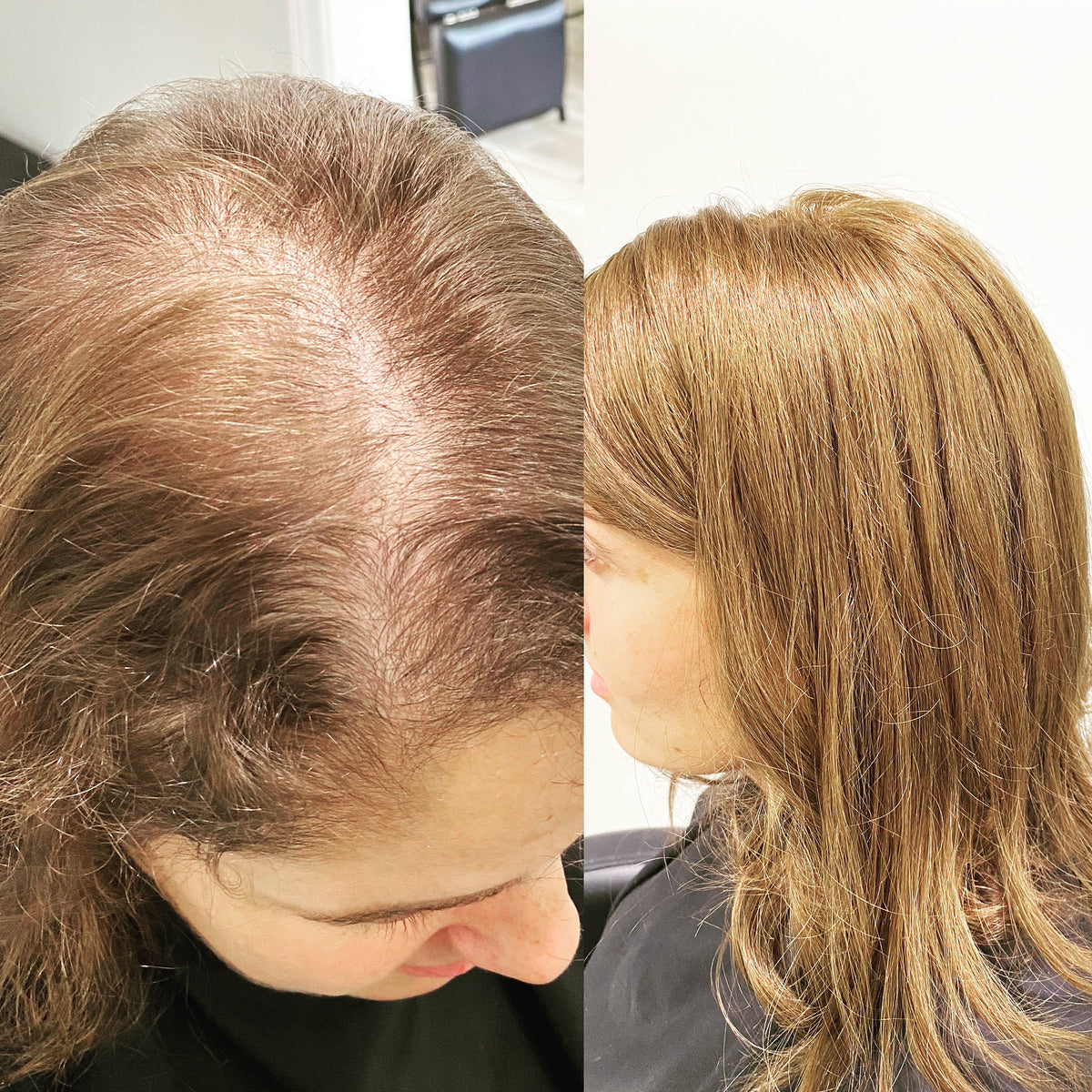
Real Example: Gray Hair And Menopause-Related Thinning
This client experienced thinning and density changes while wanting to maintain a natural gray and silver appearance. The goal was not to create unrealistic hair, but to create believable density while preserving a natural look.
Customized gray hair solution created for a woman experiencing thinning and density changes while maintaining a natural silver and salt-and-pepper appearance.

For women experiencing significant thinning, hair loss solutions such as toppers, customized hair systems, wigs, or other cosmetic options may also be appropriate depending on the situation.
For additional examples, see Hair Topper Before And After: Real Results For Crown Thinning and How To Choose The Right Hair Topper For Your Hair Loss Pattern.
What Happens During A Hair Loss Consultation?
Many women arrive convinced they know the cause of their hair changes.
Sometimes they're right.
Sometimes the situation is more complicated.
During a consultation, I evaluate:
-
Hair density
-
Scalp visibility
-
Hair texture
-
Family history
-
Lifestyle factors
-
Previous hair loss experiences
The goal is not simply to recommend a solution. The goal is to understand what you're experiencing and discuss realistic options.
Learn more in What To Expect During A Hair Loss Consultation.
Conclusion
Menopause can affect hair, but it doesn't affect every woman the same way.
Some women notice texture changes. Some experience thinning. Some maintain excellent density and simply adjust their routine as gray hair develops.
The most important thing is understanding what you're seeing, knowing when to seek guidance, and focusing on realistic strategies that support healthy hair moving forward.
Hair Loss Boston Consultation
If you're concerned about menopause-related hair changes, our Hair Loss Boston specialists can help evaluate your situation and discuss appropriate options for your individual needs.
Whether you're noticing a widening part, increased scalp visibility, changes in texture, or reduced density, the first step is understanding what you're experiencing and what options may be available.
Schedule a Free Hair Loss Consultation to discuss your concerns and receive personalized recommendations.

Frequently Asked Questions
Can menopause cause hair loss?
Yes. Some women experience thinning, reduced density, or increased scalp visibility during menopause, although not every woman will experience hair loss.
Does every woman lose hair during menopause?
No. Many women experience mostly texture changes associated with graying hair rather than significant thinning.
Can HRT help menopause hair loss?
Some women report improvement with HRT, while others do not. Medical treatment decisions should always be discussed with a qualified healthcare provider.
Is a widening part normal during menopause?
A widening part can occur during menopause, but it may also be associated with Female Pattern Hair Loss or other factors.
What is the best solution for menopause hair loss?
The best solution depends on the cause, severity, and pattern of hair changes. A professional evaluation can help determine the most appropriate options.
When should I seek help for menopause-related hair changes?
If you notice rapid thinning, excessive shedding, scalp visibility, patchy loss, or changes that concern you, it may be helpful to seek professional guidance.


