

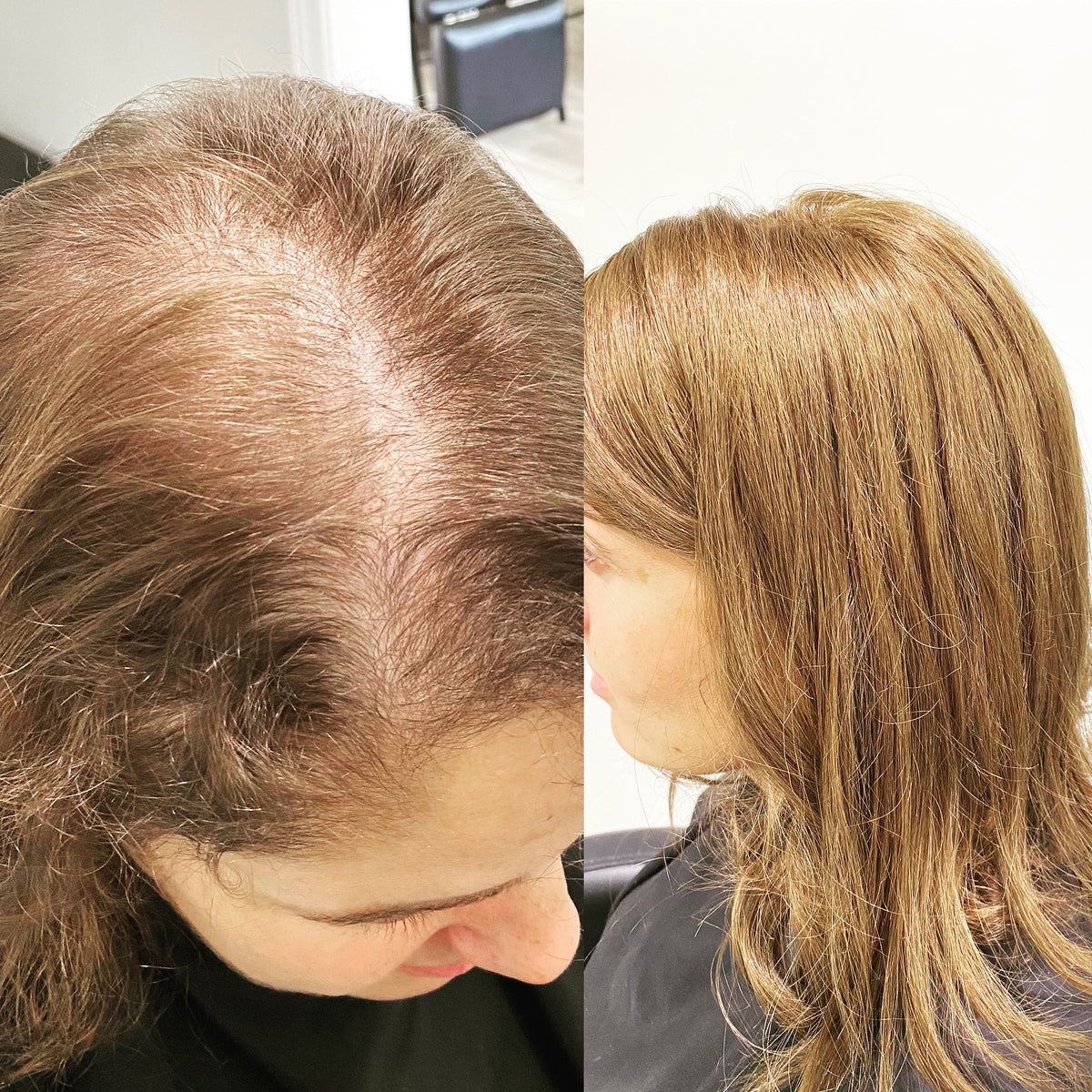


How an experienced hair loss consultation helps determine the safest cosmetic solution for alopecia, trichotillomania, female pattern hair loss, lichen planopilaris, chemotherapy-related hair loss, and other forms of hair loss.
Quick Answer
Many types of hair loss can look surprisingly similar, but they don't always have the same cause—or the same cosmetic solution. After more than 35 years of hair loss consultations, I've learned that the best recommendations don't come from looking at the hair alone. They come from understanding your diagnosis, medical history, symptoms, lifestyle, and what you hope to achieve. That's why every hair loss consultation begins with questions before we ever discuss hair toppers, mesh integration, hair extensions, wigs, or any other cosmetic solution. Understanding your diagnosis and goals first leads to safer recommendations and more natural-looking results.

Noelle's Perspective
After more than 35 years helping women navigate hair loss, I've learned that the biggest mistakes don't happen because someone chooses the wrong topper or extensions. They happen when the wrong solution is recommended before anyone understands the whole story. That's why every consultation begins with questions—not assumptions.
Every week I meet people who are convinced they already know what's causing their hair loss. Sometimes they're right. Sometimes they're not.
After more than 35 years of hair loss consultations, I've learned that two people can walk into my consultation room with hair loss that looks remarkably similar, yet require completely different consultation plans and cosmetic recommendations based on their diagnosis, medical history, and the health of their remaining hair.
I know that by the time many people walk into my consultation room, they've already spent months—or even years—wondering what happened to their hair. My goal isn't simply to recommend hair. It's to help you feel heard, understood, and hopeful about the next step.
Why Appearance Alone Isn't Enough
One of the biggest misconceptions about hair loss is that it can be identified simply by looking at it. While certain patterns may raise questions during a consultation, appearance alone rarely tells the whole story. Over the years, I've met clients who were convinced they had trichotillomania when they were ultimately diagnosed with alopecia areata, and others who believed they were simply experiencing stress-related shedding when a dermatologist later identified a completely different condition. I've also worked with clients whose hair loss looked remarkably similar but required completely different cosmetic recommendations based on their diagnosis, medical history, and the health of their remaining hair.
That's why every consultation at Noelle Salon begins with a conversation—not a recommendation.
Before we discuss hair toppers, mesh integration, hair extensions, wigs, or any other solution, I want to understand your story. If you're just beginning your hair loss journey, you may also find our Hair Loss Boston Resource Center helpful. It brings together many of the conditions, treatment journeys, and cosmetic solutions I discuss with clients during consultations.
Have you already received a diagnosis, or are you still searching for answers? Have you seen a dermatologist? Have you had a scalp biopsy? Are you experiencing active shedding? Do you have itching, burning, tenderness, or a history of hair pulling?
The answers to those questions are often just as important as what I see during the consultation.
As a hair loss specialist, my role is not to diagnose medical conditions. My job is to understand your diagnosis whenever possible, recognize patterns I've observed after more than 35 years of consultations, and recommend the safest, most realistic cosmetic solution based on your individual situation. Sometimes that means moving forward with a topper or extensions. Sometimes it means recommending a wig while your hair is actively shedding. And sometimes it means encouraging you to see a dermatologist before making any cosmetic decisions at all.
The right solution doesn't begin with choosing the right hair. It begins with asking the right questions.
Can different types of hair loss look the same?
Yes. Many types of hair loss can appear surprisingly similar, especially in the early stages. Conditions such as trichotillomania, alopecia areata, female pattern hair loss, lichen planopilaris, traction alopecia, and active shedding can create similar visual patterns even though they have very different causes. That's why appearance alone isn't enough to determine the cause of hair loss or the most appropriate cosmetic solution. An experienced consultation, combined with medical evaluation when needed, helps ensure you're moving forward with the safest, most realistic approach for your individual situation.
Every Hair Loss Consultation Begins the Same Way
Although every client's story is different, my consultation process is surprisingly consistent. Before I ever recommend a hair topper, mesh integration system, hair extensions, or a wig, I begin by listening.
I want to understand how your hair loss started, whether you've already received a medical diagnosis, how your hair has changed over time, and what you've already tried. Then I begin making careful observations—not to diagnose your condition, but to determine whether a cosmetic solution is appropriate and, if so, which one is most likely to give you a natural, comfortable, and realistic result.
One of the biggest mistakes I see is assuming that everyone with hair loss needs the same solution. They don't. Some people are wonderful candidates for a lightweight hair topper. Others may be more comfortable with mesh integration, carefully placed hair extensions, or even a wig while they're going through medical treatment or active shedding. My goal isn't to fit every client into one solution. My goal is to find the solution that best fits their diagnosis, lifestyle, comfort level, and long-term goals—even if that means recommending something completely different than they expected when they walked through my door.

The First Things I Notice During a Hair Loss Consultation
By the time most people come to see me, they've usually already seen a dermatologist and have a diagnosis. Many know whether they're dealing with alopecia areata, lichen planopilaris, female pattern hair loss, trichotillomania, or another form of hair loss. My consultation isn't about questioning that diagnosis—it's about understanding how it affects the cosmetic options we discuss.
Once we've talked about your diagnosis and your hair loss journey, I begin making careful observations. I'm looking at where the hair loss is occurring, the condition of the remaining hair, whether the scalp appears healthy, and whether I see anything that changes how I approach the consultation.
One of the first things I want to determine is whether the hair appears to be stable or actively shedding. If I perform a gentle tug test and multiple hairs release easily, that immediately tells me we need to slow down. Rather than talking about hair extensions or a topper, we may need to discuss whether it's better to wait, explore a temporary wig, or continue working with your dermatologist before attaching anything to the remaining hair.
I'm also looking closely at the scalp itself. Cuts, abrasions, inflammation, tenderness, or areas that appear irritated may indicate that we need to be especially careful before moving forward with any cosmetic solution. My priority is always protecting the health of the scalp and the hair you still have.
Every observation helps guide the consultation, but none of them replaces a medical diagnosis. My goal is to understand how your diagnosis, the condition of your hair, and your personal goals come together so we can choose the safest and most realistic cosmetic solution for you.
Sometimes the Best Solution Isn't the One a Client Expected

One of the things that surprises me most is how differently people react to the same cosmetic solution.
Some clients walk into their consultation convinced that a hair topper will look fake or feel bulky. Once they see how lightweight today's toppers can be and experience one for themselves, they're amazed by how natural they look and wonder why they waited so long.
Others have the exact opposite reaction. Even when a topper is small and lightweight, they immediately know it isn't something they'll feel comfortable wearing every day. That's important for me to know because a solution only works if someone feels confident enough to wear it.
When a client isn't completely sure, I don't believe they should feel pressured to commit. I'll often suggest wearing the topper as a simple clip-in system first. This gives them time to get used to seeing themselves with it, styling it, and living with it before we discuss attaching it more permanently. For many people, that gradual transition makes all the difference.
If someone ultimately decides a topper isn't right for them, that doesn't mean we've reached the end of the consultation—it simply means we become more creative. Depending on their diagnosis, the stability of their hair, and the amount of healthy hair available, we may explore alternatives such as carefully sized hair extensions, scalp fibers or powders, or custom mesh techniques designed to create the appearance of a natural part. Every recommendation is tailored to the individual rather than forcing everyone into the same solution.
Real Consultation Example: When One Solution Doesn't Fit Everyone
Not every client is comfortable wearing a traditional hair topper. In this case, we created the appearance of a natural hair part using two custom mesh pieces because it was a better fit for her hair, comfort level, and goals. This is exactly why every consultation is individualized—sometimes the best solution is one that's designed specifically for the person sitting in front of me.
In this client, a traditional topper wasn't the right fit. Instead, we created the appearance of a natural hair part using two custom mesh pieces and carefully placed hair additions. The goal wasn't perfection—it was creating the most natural, comfortable result for her unique situation.
When Different Types of Hair Loss Can Look Surprisingly Similar
One of the reasons consultations are so important is that different types of hair loss can sometimes appear surprisingly similar, especially to someone experiencing hair loss for the first time. While I don't diagnose medical conditions, I do pay close attention to the patterns I see and how they affect the cosmetic solutions we discuss. The chart below reflects common observations I make during consultations—not a medical diagnosis. Every client's situation is unique, and whenever there is uncertainty, I recommend working with a dermatologist before moving forward.
| What I Observe During a Consultation | Why It Matters During the Consultation | How It Can Change the Cosmetic Recommendation |
|---|---|---|
| Smooth, well-defined bald patch | Different types of hair loss can sometimes look very similar. I rely on the client's medical diagnosis rather than appearance alone. | We discuss cosmetic options that work with the client's diagnosis and treatment plan, which may include a topper, wig, or another temporary solution. |
| Short, broken hairs of varying lengths | Broken hairs may tell a very different story than complete hair loss. | We may discuss protecting regrowth with mesh integration and consider hair extensions later if the hair becomes healthy and stable. |
| Hair that releases easily during a gentle tug test | Active shedding can make attaching hair unsafe, uncomfortable, or unsuccessful. | I usually slow the consultation down and may recommend waiting or using a wig until the shedding is better understood. |
| Redness, cuts, abrasions, tenderness, or inflammation | A healthy scalp is essential before attaching any cosmetic hair solution. | Protecting the scalp becomes the priority, and I may recommend medical follow-up before moving forward. |
| Stable thinning with healthy remaining hair | Healthy remaining hair may be able to support certain cosmetic options. | We can often discuss lightweight toppers, carefully sized hair extensions, or customized solutions based on the client's diagnosis and goals. |
| A client who immediately dislikes wearing a topper | The best solution is one the client feels comfortable and confident wearing every day. | We explore creative alternatives such as mesh techniques, scalp fibers or powders, and customized extension approaches instead of forcing one solution. |
| The client's expectations are different from what their hair can realistically support | Setting realistic expectations is just as important as choosing the right cosmetic solution. | Sometimes the best recommendation is completely different from what the client expected—or it may mean waiting until the hair and scalp are healthier before moving forward. |
Why I Sometimes Recommend Waiting Before Moving Forward
I know it can be disappointing when someone comes to see me hoping to leave with a cosmetic solution, and I recommend waiting instead. But sometimes, waiting is the safest and most successful decision we can make.
If your hair is actively shedding, attaching a topper or hair extensions may not provide the secure, long-lasting result you're hoping for. As the hair continues to shed, the foundation supporting that cosmetic solution may change, making it less comfortable and less stable over time.
There are also times when the scalp itself needs to heal. If I see cuts, abrasions, inflammation, or other signs of irritation, my priority is protecting the health of your scalp rather than covering it immediately. A healthy scalp creates the best environment for future cosmetic options.
In some situations, I may recommend leaving the affected area uncovered—or wearing a wig instead of an attached hair solution—until your dermatologist has had an opportunity to evaluate your scalp and your hair loss has stabilized. This also allows your physician to examine your scalp more easily and prescribe topical medications if needed. Covering the area too soon can sometimes interfere with that process.
Waiting isn't about doing nothing. It's about giving your hair, your scalp, and your medical treatment the opportunity to move in the right direction before we decide which cosmetic solution will give you the best long-term result.
I've learned that protecting the hair and scalp you still have is almost always more important than rushing into a cosmetic solution.
Every consultation is different because every person sitting in my chair is different. I hope this article has helped you better understand why asking the right questions—and sometimes waiting—is just as important as choosing the right cosmetic solution.
Continue Learning About Hair Loss
Every hair loss journey is different, and no single article can answer every question. If you're looking for more information about your diagnosis or the cosmetic solutions discussed in this article, these resources may help.
Hair Loss Diagnoses
- Female Pattern Hair Loss vs. Telogen Effluvium: How to Tell the Difference
- When Should I Seek Help for Hair Loss? Dermatologist or Cosmetic Specialist
- Hair Replacement for Lichen Planopilaris
- Trichotillomania Recovery: What Happens After Hair Pulling Stops
- Chemotherapy Hair Loss: What to Expect Before, During, and After Treatment
Cosmetic Solutions
- How to Choose the Right Hair Topper for Your Hair Loss Pattern
- Can Hair Extensions Help Hide Hair Loss? When They Work—and When They Don't
- What Is a Medical Hair Prosthesis?
- What to Expect During a Hair Extension Consultation: What 35 Years Has Taught Me
Frequently Asked Questions
Can a hair loss specialist diagnose my hair loss?
No. As a hair loss specialist, my role is not to diagnose medical conditions. My job is to understand your diagnosis whenever possible, evaluate the health of your hair and scalp, and recommend the safest cosmetic solution based on your individual situation. If you haven't been diagnosed or something doesn't seem consistent with your history, I may recommend seeing a dermatologist before moving forward.
Why would you recommend waiting before getting a hair topper or hair extensions?
If your hair is actively shedding or your scalp is irritated, attaching a cosmetic hair solution may not be the best decision. Waiting allows your dermatologist to evaluate your scalp, begin treatment if necessary, and gives your hair the best opportunity to stabilize before we discuss long-term cosmetic options.
Can different types of hair loss really look similar?
Yes. Different types of hair loss can sometimes appear surprisingly similar, especially in the early stages. That's why I never recommend a cosmetic solution based on appearance alone. Your diagnosis, medical history, scalp health, and the stability of your hair all influence which cosmetic option is most appropriate.
What if I don't like wearing a hair topper?
Not everyone does—and that's perfectly okay. One of the most important parts of a consultation is finding a solution you'll actually feel comfortable wearing. Depending on your diagnosis and remaining hair, we may discuss alternatives such as mesh integration, carefully placed hair extensions, scalp fibers, or other customized approaches.
What should I bring to my hair loss consultation?
If you've already seen a dermatologist, it's helpful to know your diagnosis and any treatments you're currently using. If you've had a scalp biopsy, blood work, or are using prescription medications, that information can also help guide the consultation. Most importantly, come prepared to share your hair loss journey, your concerns, and what you're hoping to achieve so we can determine the most appropriate cosmetic solution together.
How long does a hair loss consultation take?
Most consultations last about 60 to 90 minutes, depending on how much we need to talk through. Your consultation is free.
Can I bring a friend or family member?
Absolutely. Many clients feel more comfortable bringing someone they trust, and you're welcome to wear a hat or whatever makes you feel most at ease.
Does insurance ever cover hair loss solutions?
Sometimes. If your hair loss is documented, a hair piece may qualify as a cranial prosthesis, and some plans reimburse part of the cost. We go over this during your consultation and provide receipts with the terminology your insurance company needs.
What happens after the consultation?
You leave with care instructions, maintenance guidance, and product recommendations, and every client gets a complimentary two-week follow-up check-in. Hair loss changes over time, and we stay available as your needs change.
Final Thoughts
Hair loss can be emotional, confusing, and sometimes overwhelming. I've met countless people who walked into my consultation feeling frustrated because they didn't know who to trust or what solution was right for them.
My goal has never been to recommend the same solution for everyone. It's to listen to your story, understand your diagnosis whenever possible, protect the hair and scalp you have, and help you choose a cosmetic solution that fits your life—not just your hair.
If you're ready to explore your options, I'd be honored to help you take that next step.
Book Your Free Hair Loss Consultation
Whether you've recently noticed hair loss, already have a medical diagnosis, or simply aren't sure which cosmetic solution is right for you, a consultation is the best place to start.
During your consultation, we'll discuss your hair loss history, review any diagnosis or treatment you've received, evaluate the health of your hair and scalp, and talk honestly about the cosmetic options that best fit your goals and lifestyle. If I don't believe you're ready for a cosmetic solution yet, I'll tell you that too—because protecting your hair and scalp will always come first.
Schedule your complimentary Hair Loss Consultation at Noelle Salon in Melrose, or call +1 781-324-9779, and let's find the solution that's right for you.


