



What 35 Years Has Taught Me About Comfort, Confidence, and Restoring More Than Hair
Quick Answer
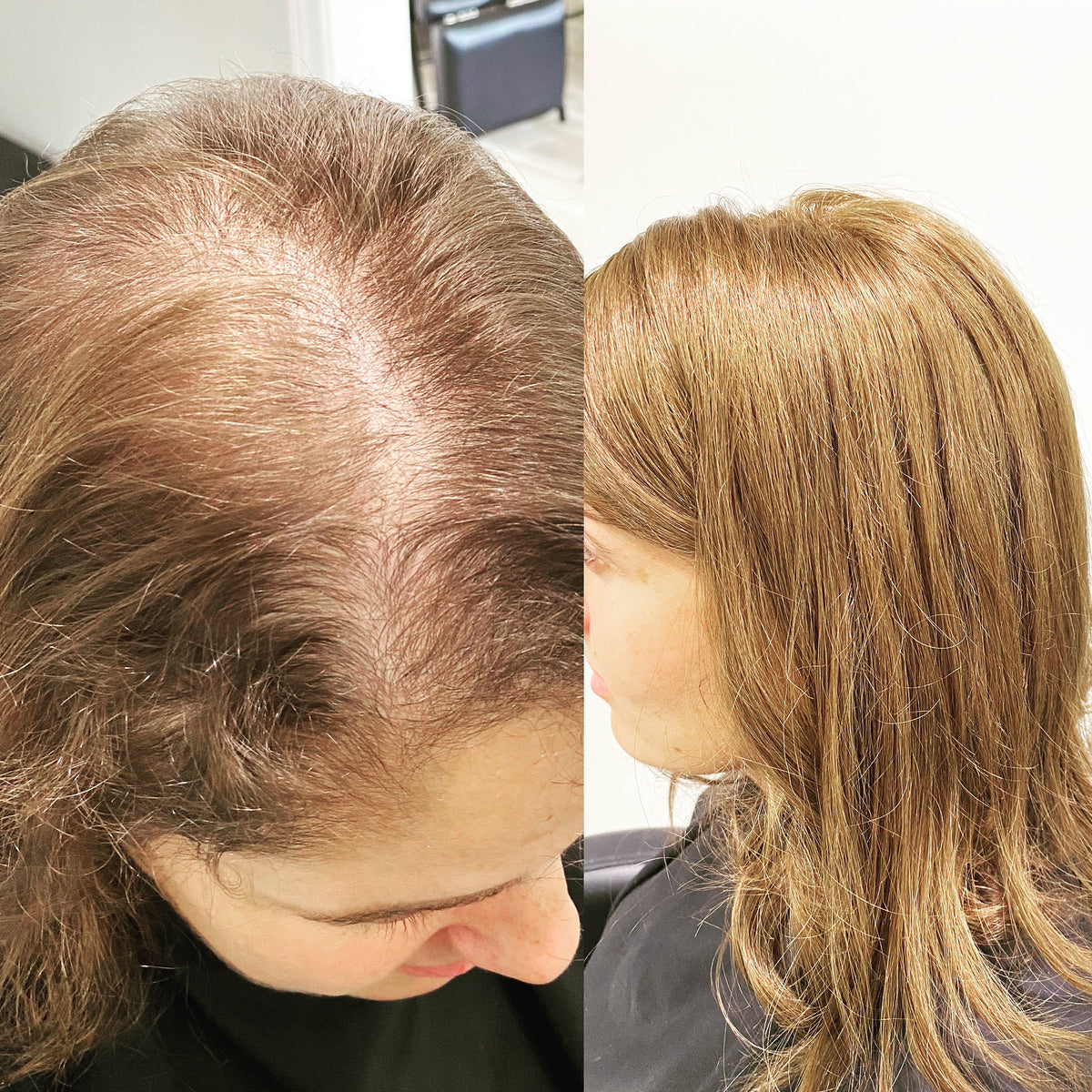
Lichen Planopilaris (LPP) is a form of scarring hair loss that often affects the front hairline and scalp, causing inflammation, tenderness, and permanent hair loss in the affected areas. Because many women continue seeing their dermatologist for ongoing treatment, I often recommend lightweight, removable hair replacement options that respect the health of the scalp while restoring confidence. At my Hair Loss Boston consultation practice, every recommendation is based on your pattern of hair loss, the condition of your scalp, your lifestyle, and your long-term goals—not simply the diagnosis itself.
Everything you'll read in this article comes from thirty-five years of working beside women living with hair loss. While every diagnosis is unique and medical care should always be guided by your dermatologist, the conversations, observations, and lessons shared here are real.
Medical Note: Lichen Planopilaris (LPP) is a medical condition that should always be diagnosed and treated by a qualified dermatologist. The guidance I share in this article is based on more than thirty-five years of helping women find comfortable, natural-looking hair replacement solutions while working alongside their medical care. My goal is never to diagnose or treat LPP, but to help women understand the cosmetic options available as they navigate their hair loss journey.
There Are Some Conversations I'll Never Get Used To
There are some conversations I'll never get used to.
A woman sits in my chair, gently touches the front of her hairline, and quietly says,
"My dermatologist told me it probably isn't coming back."
Even after more than thirty-five years specializing in hair loss, those words still stop me.
Not because I don't know what to say.
But because I know what they mean.
They mean someone has been carrying fear, uncertainty, and grief long before she ever walked through my door.
Over the years, women have traveled to our Boston-area salon from throughout New England—and occasionally from much farther away—because living with complex hair loss often means searching for someone who understands both the medical journey and the emotional one. By the time many women arrive for a Hair Loss Consultation, they've often seen dermatologists, tried medications, applied topical treatments, and spent months wondering what the future will look like.
Most aren't asking me for a miracle.
They're asking something much more personal.
"Will I ever feel like myself again?"
That is the question I've been trying to answer for most of my career.

Hair Replacement Should Never Begin With the Hair
Before I ever recommend a hair topper, a wig, or any type of hair replacement, I spend time listening.
I want to know what your dermatologist has shared with you.
I want to understand how your scalp feels.
I want to hear what worries you the most.
Sometimes what worries a woman isn't what I expected.
It's not always the hair loss itself.
Sometimes it's the fear of looking in the mirror.
Sometimes it's worrying that her grandchildren will notice.
Sometimes it's wondering whether she'll ever feel comfortable going out to dinner, attending a family wedding, or having her picture taken again.
Those conversations shape every recommendation I make.
Hair replacement should never begin with the hair.
It should begin with the woman.
Every woman who walks into my consultation room brings a different story.
Some have just received a diagnosis.
Some have been living with Lichen Planopilaris for years.
Some have experienced periods where the condition seemed quiet, only to become active again months later.
Others are exhausted—not only from managing the condition itself, but from constantly trying to hide it.
My first responsibility isn't deciding what kind of hair replacement to recommend.
It's understanding the woman sitting in front of me.
Only then can we begin exploring the solution that's right for her.
The First Thing Many Women Notice Isn't the Hair Loss
One of the things I've learned about Lichen Planopilaris is that many women notice discomfort before they notice significant hair loss.
Their scalp feels tender.
They describe burning or soreness.
Some notice small areas of irritation near the front of the hairline.
Then, little by little, they begin seeing strands disappear from the very place they look at every morning.
The front of the hairline.
That can be one of the most emotionally difficult parts of living with Lichen Planopilaris.
Most of us see ourselves from the front.
It's the reflection we know.
When that reflection begins to change, many women tell me they no longer recognize themselves.
Some women struggle to even look in the mirror.
I've learned not to rush those moments.
Sometimes we begin our consultation by simply talking.
Sometimes I turn the chair away from the mirror until they're ready.
Hair loss affects much more than our appearance.
It affects how we see ourselves.
And before we can restore hair, we first have to restore hope.

Respecting the Scalp Comes Before Restoring the Hair
One of the biggest lessons Lichen Planopilaris has taught me is that successful hair restoration doesn't begin with adding hair.
It begins with respecting the scalp.
Unlike many other types of hair loss, women living with Lichen Planopilaris often continue seeing their dermatologist for years. Their scalp may have periods of inflammation, tenderness, or soreness. Some are applying prescription medications or topical treatments. Others are carefully monitoring the condition to make sure it remains stable.
Because of that, my recommendations are often very different from what people expect.
Many women arrive thinking they need "more hair."
What they actually need is a solution that works with their scalp—not against it.
Comfort becomes just as important as appearance.
Sometimes even more important.
After spending so many years working with women experiencing different forms of hair loss, I've learned that the most beautiful result isn't always the one with the most hair.
It's the one that allows someone to forget they're wearing it.

Choosing the Right Solution Together
No two women with Lichen Planopilaris have exactly the same pattern of hair loss.
Some experience recession mainly along the front hairline.
Others lose density across the top of the scalp.
Some have areas that remain very sensitive while other areas are completely comfortable.
That's why I never begin by choosing a hair system.
I begin by understanding what your scalp is telling us.
|
If your hair loss looks like... |
I often recommend... |
Why |
|
Hair loss primarily along the front hairline |
Hairline topper |
Lightweight, breathable, easy to remove for dermatologist appointments and treatments. |
|
Hair loss across the top of the scalp |
Lightweight custom human hair topper |
Provides natural coverage while remaining gentle on the scalp. |
|
Extensive progression requiring more coverage |
Customized human hair wig |
Designed specifically for comfort, realism, and your lifestyle—not simply maximum hair. |
Every recommendation is customized.
Not because every woman wants something different.
Because every scalp deserves to be treated differently.

Restoration Doesn't Always Mean More Hair
One thing surprises many women during their consultation.
Sometimes I recommend less hair than they expected.
That may sound unusual, but I've learned that restoration isn't about creating the biggest transformation possible.
It's about helping someone recognize herself again.
If a woman has always worn shoulder-length hair, giving her twenty-four inches of long, thick hair rarely feels authentic.
If her natural density has always been fine, creating extremely full hair can actually make her feel less like herself.
Instead, I focus on restoring what she feels she's losing.
A natural hairline.
Soft movement.
Gentle density.
Confidence.
The goal isn't for someone to walk into a room and have everyone notice her hair.
The goal is for her to walk into a room feeling like herself again.
That's real restoration.
Following the Journey Together
One of the biggest misconceptions about hair replacement is that the consultation is the end of the journey.
For many of my clients living with Lichen Planopilaris, it's actually the beginning.
I don't simply fit a woman with a hair topper and hope everything goes well.
We continue walking through this journey together.
Many of my clients return every other month.
Sometimes we're checking the condition of their scalp.
Sometimes we're evaluating whether their dermatologist's treatment is helping stabilize the condition.
Sometimes we're simply making sure their hair system continues to feel comfortable as life changes.
Over time, I begin documenting something that many women tell me no one else has ever done.
We take photographs.
Not because we're looking for perfection.
Because we're looking for progress.
When you're living with Lichen Planopilaris, change often happens so gradually that it's difficult to know whether your condition is improving, remaining stable, or becoming more active.
Those photographs become part of your story.
They help us celebrate stability.
They help us recognize changes early.
And sometimes...
they simply reassure someone that what she's feeling is real.

Looking Beyond the Mirror
One thing I've learned is that most women only ever see one angle of their hair.
The front.
It's the reflection you've known your entire life.
When Lichen Planopilaris begins affecting the front hairline, your reflection suddenly feels unfamiliar.
That can be incredibly emotional.
Sometimes a woman asks me to take photographs from angles she's never seen before.
Not because she's ready.
Because she wants to understand what's happening.
Those moments require sensitivity.
Sometimes we discover that the condition has remained stable for months.
Sometimes we notice changes that help guide conversations with her dermatologist.
Either way, knowledge replaces uncertainty.
And uncertainty is often one of the heaviest burdens women carry.

Sometimes Comfort Is the Best Appointment
Not every appointment is about adjusting a hair topper.
Not every visit is about adding hair.
Sometimes the most meaningful appointment is simply helping someone feel comfortable again.
Many of my Lichen Planopilaris clients look forward to something very simple.
A gentle shampoo.
A careful scalp massage.
Ten quiet minutes enjoying our Waterfall Head Spa while avoiding any unnecessary tension on an already sensitive scalp.
It's a small part of the appointment.
But it often becomes their favorite part.
Living with a sensitive scalp can make every brush stroke, every shampoo, and every styling appointment feel stressful.
For just a little while, I want my clients to feel cared for.
Not rushed.
Not treated like another appointment.
Just cared for.
Because healing isn't always measured by new hair growth.
Sometimes it's measured by finally relaxing enough to exhale.

Finding Your Place Again
There is another moment I treasure.
It's usually not during the first appointment.
It's somewhere down the road.
A woman who once asked for the most private room in the salon is now sitting comfortably on the salon floor.
She's talking with another client.
Laughing.
Watching someone else receive a hair topper.
Sharing encouragement with a woman who's just beginning her own journey.
That's when I know something beautiful has happened.
Hair restoration helped.
But it wasn't the only thing that changed.
She no longer feels alone.
For me, that's one of the greatest transformations I ever get to witness.
They're Seeing Your Confidence, Not Just Your Hair
There is something I say to my clients quite often.
It's one of my favorite conversations because it usually happens after everything else has settled down.
The consultation is over.
The hair has been customized.
The topper feels comfortable.
They're beginning to recognize themselves again.
Then they come back for a follow-up appointment smiling.
They tell me something their husband said.
Or their partner.
Or their children.
Sometimes it's a friend who hasn't seen them in months.
They'll say,
"He keeps telling me how beautiful I look."
Or...
"Everyone says I look so much happier."
I always smile.
Then I tell them something that surprises them.
"They're seeing your confidence...
not just your hair."
For a moment they usually become very quiet.
Because deep down...
they know it's true.
Hair can restore a reflection.
Confidence restores the person.
I've watched it happen thousands of times.
The shoulders relax.
The smile comes back naturally.
Eye contact returns.
The woman who once apologized for her hair begins talking about vacations, grandchildren, holidays, work, and life again.
That's when I know we've accomplished something much bigger than creating a beautiful hair system.
We've helped someone feel comfortable being herself again.
From My Chair
After thirty-five years behind my chair, Lichen Planopilaris has taught me something I never expected.
Hair loss changes much more than hair.
It changes routines.
Relationships.
Photographs.
Confidence.
Sometimes it even changes the way a woman sees her own reflection.
But it has also taught me something beautiful.
People are remarkably resilient.
I've watched women walk into my consultation room convinced they would never feel like themselves again.
Months later, I watch those same women laughing with another client across the salon.
Sharing advice.
Offering encouragement.
Living their lives.
That transformation has very little to do with me.
It belongs to them.
My role has simply been to walk beside them.
To listen.
To guide.
To create the most natural, comfortable solution possible.
And to remind them that losing hair never means losing who they are.
If there is one lesson these women have taught me over thirty-five years...
it's this:
Restoration isn't measured by how much hair we add.
It's measured by how much of yourself you get back.
That is the privilege of my career.
And it is one I will never take for granted.
If You're Living With Lichen Planopilaris
If you've recently been diagnosed with Lichen Planopilaris, you may have more questions than answers right now.
You may be wondering if your hair loss will progress.
You may be trying to understand your treatment options.
Or you may simply be looking in the mirror and wondering if you'll ever feel like yourself again.
If there's one thing I've learned after more than thirty-five years working with women experiencing hair loss, it's this:
You don't have to have everything figured out before asking for help.
Sometimes the first step isn't choosing a hair topper.
It isn't choosing a wig.
It isn't making any decision at all.
Sometimes the first step is simply having a conversation.
During your consultation, we'll talk about your diagnosis, your dermatologist's recommendations, your scalp health, your lifestyle, and how you hope to feel when you look in the mirror again.
Only then do we begin exploring the options that are right for you.
Whether that means a lightweight hairline topper, a custom human hair topper, a wig, or simply helping you understand what's possible, my goal has always been the same.
To help you feel comfortable.
To help you feel confident.
And to help you feel like yourself again.
If you're ready, I'd be honored to meet you.
Schedule a private Hair Loss Consultation at Noelle Salon, where women from Boston, New England, and beyond have found compassionate guidance for more than thirty-five years.
With Gratitude
Every woman who has trusted me with her story has taught me something I could never have learned from a textbook.
Your courage has shaped the way I listen.
Your resilience has shaped the way I care.
And your trust has shaped the professional I have become.
Thank you for allowing me to walk beside you.
It has been one of the greatest privileges of my life.
Frequently Asked Questions About Lichen Planopilaris Hair Replacement
Can I wear a hair topper if I have Lichen Planopilaris?
Yes. Many women with Lichen Planopilaris wear lightweight, removable human hair toppers very comfortably. The right topper depends on your pattern of hair loss, the sensitivity of your scalp, and your dermatologist's treatment plan.
Will wearing a topper make Lichen Planopilaris worse?
A properly fitted, lightweight topper should not place unnecessary stress on your scalp. During your consultation, I evaluate your scalp health and recommend the gentlest option based on your individual needs.
Why do you often recommend removable hair replacement?
Many women with Lichen Planopilaris continue seeing their dermatologist and may use prescription medications or topical treatments. A removable solution makes it easier to continue medical care while still enjoying natural-looking hair.
What if my hair loss progresses?
One of the reasons I enjoy following my clients over time is that we can adjust their hair solution as their needs change. Some women continue wearing a hairline topper for years, while others eventually transition to a larger topper or a custom human hair wig. Every recommendation is based on where you are today—not where you might be years from now.
Can you match my gray hair?
Absolutely. Whether your hair is naturally gray, highlighted, or a blend of several shades, my goal is always to create the most natural result possible.
How often should I come back?
Every woman is different, but many of my Lichen Planopilaris clients enjoy returning every couple of months. These visits allow us to check the condition of your scalp, maintain your hair system, review progress photographs when appropriate, and make sure everything continues to feel comfortable.
Do I need to decide on a hair topper during my consultation?
Not at all.
Many women simply come to learn about their options. My consultations are educational, relaxed, and never rushed. Sometimes the most valuable part of the appointment is simply understanding what's possible before making any decisions.
Continue Your Journey
Every type of hair loss tells a different story. If you're exploring your options, these articles may also be helpful.
-
How To Choose the Right Hair Topper for Your Hair Loss Pattern
- Trichotillomania What Happens After the Pulling Stops
- What is Mesh Integration
No matter where you are in your journey, I hope these resources help you feel informed, understood, and a little less alone.


