

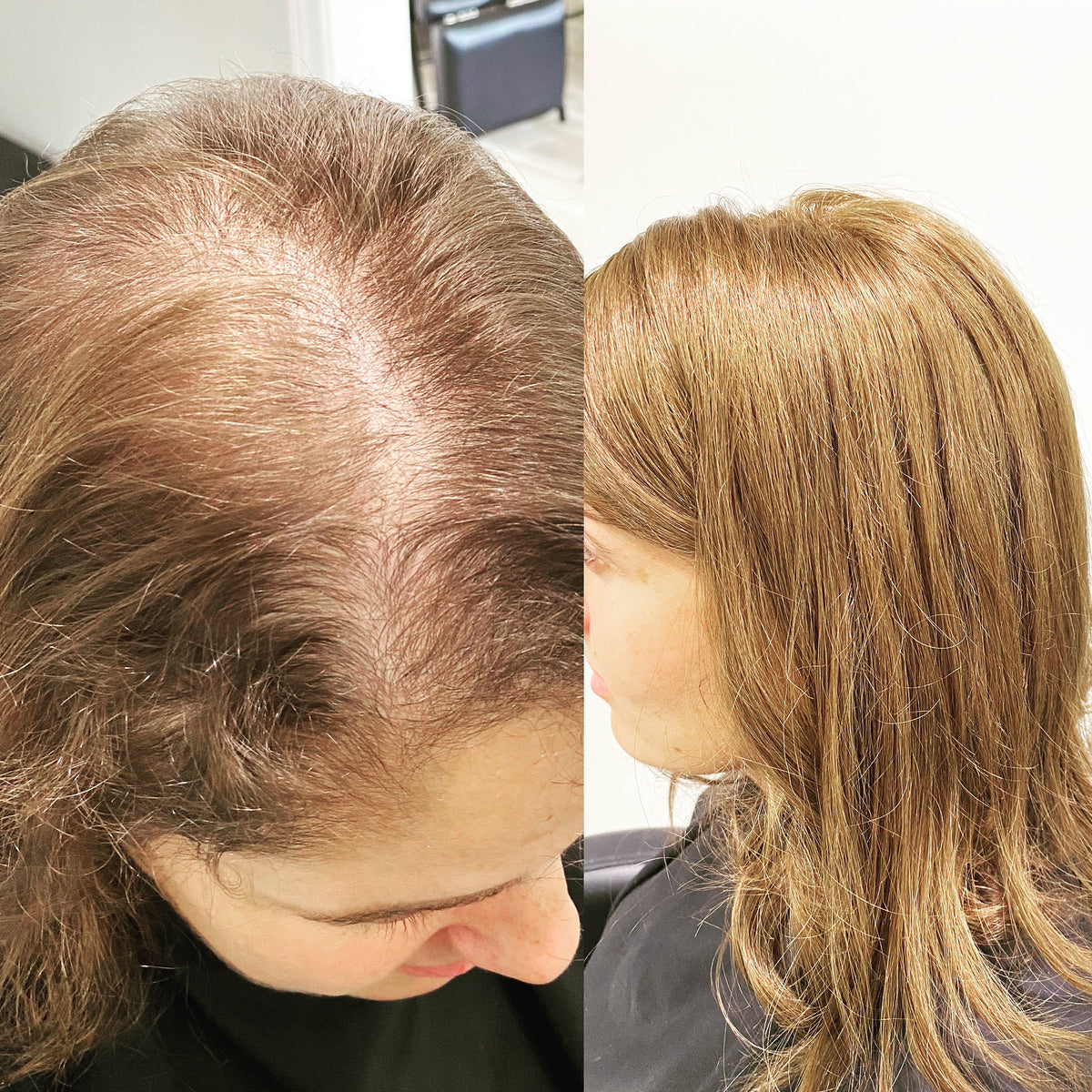


Trichotillomania Recovery: What Happens After Hair Pulling Stops?
For more than 35 years, I have helped women experiencing hair loss, thinning hair, and scalp conditions. One of the questions I am asked most often is:
"How did you become involved with trichotillomania?"
The answer is simple.
Long before trichotillomania became widely discussed, clients were coming into my salon with hair loss patterns that looked different from anything I had seen before.
It didn't look like alopecia.
It didn't look like female pattern hair loss.
It didn't look like medical hair loss.
The hair loss was often patchy. Some areas would begin growing back while others continued to become thinner. Many clients seemed embarrassed discussing what had happened.
Because of that embarrassment, many created explanations for their hair loss.
I heard stories about gum getting stuck in hair.
Curling irons damaging hair.
Chemical services causing breakage.
Stress causing unexplained bald spots.
But the explanations never quite matched what I was seeing.
Finally, after building a close relationship with one client, I gently asked a question that would change the direction of my career.
"Are you pulling your hair out?"
For a moment she was silent.
Then she opened up.
That conversation introduced me to a condition many people had never heard of at the time: Trichotillomania, a body-focused repetitive behavior (BFRB) involving recurrent hair pulling.
Over the years, I have been featured on local television programs, newspaper articles, and interviews discussing trichotillomania and hair restoration. What began as helping clients conceal hair loss evolved into something much more meaningful.
Today, my greatest reward isn't creating a beautiful hair system.
It's watching clients regain confidence, experience regrowth, and eventually return to the salon for normal services again.
Haircuts.
Highlights.
Hair extensions.
Wedding styling.
The things many of them once thought would never be possible.

What Happens After Hair Pulling Stops?
Quick Answer
After hair pulling stops, many people begin seeing regrowth within several months, although recovery varies significantly. Some experience full regrowth, while others notice texture changes, uneven density, or slower recovery in certain areas. Hair density, scalp health, duration of pulling, and individual growth patterns all influence the recovery process.
Recovery often involves more than simple regrowth. Some people experience texture changes, uneven density, slower-growing areas, or ongoing styling challenges even as hair begins returning.
In reality, recovery often happens in stages.
Some people begin seeing regrowth within a few months.
Others experience uneven regrowth, texture changes, or areas that recover more slowly than expected.
Many clients ask:
-
Will my hair grow back?
-
Why is some hair growing back differently?
-
Will I always need a topper?
-
Can I ever wear my hair down again?
-
Will I ever be able to have hair extensions?
The answer is different for everyone.
Typical Trichotillomania Recovery Timeline
| Timeframe | Common Experience |
|---|---|
| 1–3 Months | Early regrowth may begin in some areas |
| 3–6 Months | Increased density and improved coverage |
| 6–12 Months | Greater styling flexibility and longer regrowth |
| 12+ Months | Evaluation of long-term solutions and ongoing recovery progress |
Every recovery journey is unique. Some people experience faster regrowth, while others may continue to notice uneven density or texture changes as hair recovers.
Trichotillomania Recovery Featured on FOX
For more than three decades, I have worked with women experiencing trichotillomania-related hair loss. This FOX affiliate news segment highlights the emotional impact of trichotillomania, the challenges of recovery, and the hair restoration solutions that can help clients regain confidence while their hair recovers.
One of the most important messages from this segment is that recovery is possible. While every person's journey is different, many clients experience regrowth, improved confidence, and the ability to return to normal activities they once avoided because of hair loss.
Trichotillomania Recovery
After hair pulling stops, many people begin seeing regrowth within several months, but recovery varies. Some experience uneven regrowth, texture changes, reduced density, or areas that recover more slowly. Depending on the amount of regrowth, some people transition from hair toppers and mesh integration systems to hair extensions or their natural hair over time.
Hair density, scalp health, duration of pulling, and individual growth patterns all play a role.
Healing Is About More Than Hair
One thing I have learned from working with trichotillomania clients for decades is that recovery is rarely just about hair.
It is about:
-
Feeling hopeful again
-
Feeling understood
-
Wearing your hair down
-
Going out without anxiety
-
Taking photographs
-
Dating
-
Getting married
-
Feeling like yourself again
Many clients arrive feeling ashamed or isolated.
They leave realizing they are not alone.
What Real Recovery Looks Like
Jennifer's Story
One client wore a hair topper for more than ten years while managing trichotillomania.
As she gained greater control over her disorder and experienced substantial regrowth, she was eventually able to transition from a topper to hair extensions.
Today she visits the salon for maintenance, extensions, and regular services she once thought would never be possible again.

Alana's Story
Another client lived with trichotillomania for more than twenty years.
She described years of hiding and embarrassment before finally receiving a customized solution that allowed her to wear her hair down again.
She later shared that she had not felt this comfortable and confident in years.

Emily's Story
One client struggled with trichotillomania for more than thirty years.
She described her experience as life-changing and said the support, understanding, and customized solutions helped restore confidence she thought was lost forever.
These stories matter because they remind us that recovery is possible.
Recovery may not happen overnight.
But it happens.
While every recovery journey is different, these are not isolated experiences. Read our Trichotillomania Client Transformations and Recovery Stories to see additional before-and-after examples and the customized solutions we have created for clients experiencing trichotillomania-related hair loss.
Can Hair Grow Back After Years of Trichotillomania?
In many cases, yes.
Some clients experience significant regrowth even after years of pulling.
Others may continue to have areas of reduced density or visible scalp.
Because trichotillomania can wax and wane over time, every situation is unique.
This is why individualized evaluation is so important.
Because trichotillomania is only one cause of hair loss, understanding the underlying reason for thinning is important. Read Why Is My Hair Thinning? The 12 Most Common Causes of Hair Loss for Women in Boston and Early Female Pattern Hair Loss: What Happens After You're Diagnosed? to learn more about other common causes of hair loss and thinning in women.
When Hair Growth Needs Additional Support
Even when regrowth occurs, some clients still experience:
-
Visible scalp
-
Uneven density
-
Sparse crown areas
-
Short regrowth mixed with longer hair
-
Areas that never fully recover
Depending on the situation, we may recommend:
-
Hair Toppers Boston
-
Mesh Integration Systems
-
Partial Mesh Integration
-
Hair Extensions Boston
-
Customized combination approaches
Learn more about What Is Mesh Integration and Who Is It Best For?
Some clients benefit from hair toppers, while others eventually transition into hair extensions as regrowth improves. Learn more about Hair Topper vs Hair Extensions for Thinning Hair: Which Solution Is Right for You?

The Most Rewarding Part of My Career
People often assume the most rewarding part of my work is creating beautiful transformations.
The truth is something different.
The most rewarding part is seeing clients return years later for completely normal salon appointments.
Some no longer need the systems they once depended on.
Some are wearing hair extensions.
Some are coloring their hair.
Some are preparing for weddings.
Some are simply enjoying life without constantly thinking about hair loss.
That is what recovery looks like.
And that is why I continue doing this work.

Frequently Asked Questions About Trichotillomania Recovery
Can hair grow back after years of trichotillomania?
In many cases, yes. The amount of regrowth depends on the duration of pulling, scalp health, and individual hair growth patterns.
Will I always need a hair topper?
Not necessarily. Some clients eventually transition to hair extensions or rely solely on their natural hair as regrowth improves.
Can hair extensions help with trichotillomania?
In some situations, yes. When enough healthy hair remains, customized extension solutions can provide additional fullness and confidence.
Is mesh integration helpful for trichotillomania?
Many clients benefit from mesh integration because it provides natural-looking coverage while working with existing hair.
Can trichotillomania go into remission?
Yes. Many clients experience periods of remission, although the condition may wax and wane over time.
How do I know which solution is right for me?
A private consultation allows us to evaluate your hair, discuss your goals, and determine the most appropriate solution.
Schedule Your Free Trichotillomania Consultation
If you are struggling with trichotillomania, visible hair loss, regrowth challenges, or thinning hair, you do not have to navigate it alone.
At Noelle Salon, our mission has never been simply to sell a product.
Our mission is to provide compassionate, judgment-free support while helping you understand your options and regain confidence.
Whether the answer is a hair topper, mesh integration system, hair extensions, or a customized combination approach, we will help you find the solution that fits your unique journey.
For more than 35 years, we have helped clients throughout Boston and Massachusetts navigate trichotillomania recovery, hair regrowth, and customized hair restoration solutions.


