



What Is A Medical Hair Prosthesis? A Hair Loss Specialist Explains What Insurance May Cover
Quick Answer
Many women visiting our Hair Loss Boston clinic are surprised to learn that a medical hair prosthesis is not limited to a traditional wig.
A medical hair prosthesis (also called a cranial prosthesis or scalp prosthesis) may include wigs, hair toppers, mesh integration systems, closures, and other customized hair loss solutions designed to help individuals experiencing medical hair loss.
Over the past 35 years, I've helped women experiencing female pattern hair loss, alopecia, trichotillomania, chemotherapy-related hair loss, scarring alopecia, hormonal hair loss, and other conditions explore both cosmetic and medically supported solutions.
One of the biggest misconceptions I encounter is that insurance only recognizes wigs.
In reality, coverage varies significantly by insurance company, diagnosis, and physician documentation. In many situations, clients may be eligible to seek reimbursement for customized hair loss solutions prescribed by their physician and documented as a cranial prosthesis.

Most women seeking a medical hair prosthesis are not looking for a wig. They're looking for answers about hair loss and what options may be available.
The Biggest Misconception About Medical Hair Prostheses
One of the biggest myths surrounding medical hair prostheses is that they only refer to wigs.
While wigs are certainly one type of prosthetic hair replacement solution, they are far from the only option.
Depending on the diagnosis, density, scalp visibility, and remaining hair, a medical hair prosthesis may include:
- A custom hair topper
- A closure
- A mesh integration system
- A partial hair replacement system
- A customized hairpiece
- A combination solution using multiple components
The goal is not simply replacing hair.
The goal is restoring confidence while creating the most natural appearance possible.
Most Women Never Walk In Asking For A Medical Hair Prosthesis
In more than three decades of consultations, I can count on one hand the number of women who walked in specifically asking for a "medical hair prosthesis."
Most women come in saying:
- "I think I need a wig."
- "My hair keeps getting thinner."
- "Can hair extensions help?"
- "Can a topper cover this?"
- "My doctor told me to look into hair replacement."
Most people are searching for a solution, not a medical term.
The terminology often comes later when discussing physician documentation and insurance reimbursement.
What Is A Medical Hair Prosthesis?
A medical hair prosthesis is a hair replacement solution designed for individuals experiencing hair loss due to medical conditions.
You may hear several terms used interchangeably:
| Term | Meaning |
|---|---|
| Medical Hair Prosthesis | General insurance and medical term |
| Cranial Prosthesis | Common insurance reimbursement term |
| Scalp Prosthesis | Similar insurance terminology |
| Hair Prosthesis | General replacement solution |
Most insurance companies recognize cranial prosthesis terminology more readily than cosmetic terms.

Medical hair prosthesis solutions may include toppers, closures, mesh integration systems, and customized hair enhancement options—not just wigs.
What Types Of Hair Loss May Qualify?
Coverage depends on both the diagnosis and the insurance company.
Conditions commonly associated with cranial prosthesis reimbursement include:
| Hair Loss Condition | Common Solution | May Be Documented As A Cranial Prosthesis |
|---|---|---|
| Chemotherapy Hair Loss | Wig | Often Yes |
| Alopecia Areata | Topper, Wig, Mesh Integration | Often Yes |
| Female Pattern Hair Loss | Topper, Mesh Integration, Custom Solutions | Depends on Insurance |
| Trichotillomania | Topper, Closure, Mesh Integration | Depends on Diagnosis |
| Scarring Alopecia | Custom Prosthesis, Topper, Wig | Often Yes |
| Diffuse Thinning | Topper or Custom Solution | Depends on Insurance |
One important point many clients don't realize is that Trichotillomania is often documented under alopecia-related diagnoses when physicians provide supporting medical documentation.
Women experiencing gradual density loss may also benefit from understanding the differences between Female Pattern Hair Loss and Telogen Effluvium, since the causes and treatment paths can be very different.
If you're still trying to determine what may be causing your thinning, our guide on Why Is My Hair Thinning? The 12 Most Common Causes of Hair Loss for Women in Boston explains many of the underlying factors we commonly see during consultations.
For women struggling with hair pulling, our article on Trichotillomania Recovery: What Happens After Hair Pulling Stops? discusses both recovery expectations and cosmetic hair restoration options.

Medical hair prosthesis solutions can be customized for many different hair loss conditions and stages.
Does Insurance Automatically Pay?
No.
This is one of the biggest misconceptions I encounter.
Many women assume that if they receive a prescription, insurance automatically covers the entire cost.
That is rarely how the process works.
Coverage may include:
| Insurance Outcome | What It Means |
|---|---|
| Full Reimbursement | Insurance reimburses the entire approved amount |
| Partial Reimbursement | Insurance pays a portion |
| Annual Allowance | Coverage resets each year |
| Deductible Credit | Expense may count toward deductible |
| No Coverage | Depends on policy and diagnosis |
Every insurance company is different.
This is why I encourage every client to contact their provider directly before assuming what is or is not covered.
What Documentation Is Usually Required?
Most insurance companies require:
- Physician diagnosis
- Prescription
- Supporting documentation
- Itemized invoice
When helping clients pursue reimbursement, I typically provide invoices using terminology such as:
Cranial Prosthesis
or
Scalp Prosthesis
because those descriptions align more closely with how insurance carriers classify hair replacement solutions.
Many Women Are Shocked Insurance May Offer Anything
One of the most rewarding conversations I have is when a client discovers they may have options.
Many women have spent years assuming:
"I'll have to pay for everything myself."
Often they are pleasantly surprised to learn they may qualify for partial reimbursement, annual allowances, or deductible credits.
Not every client receives reimbursement.
But every client deserves to know their options.
Most Women Think They Need A Wig
Many clients arrive convinced a wig is their only option.
Often it isn't.
Explore Additional Hair Loss Solutions
If you're researching medical hair prosthesis options, these articles may help you better understand some of the alternatives available for different types of hair loss:
- Hair Topper Before And After: Real Results For Crown Thinning
- How To Choose The Right Hair Topper For Your Hair Loss Pattern
- What Is Mesh Integration And Who Is It Best For?

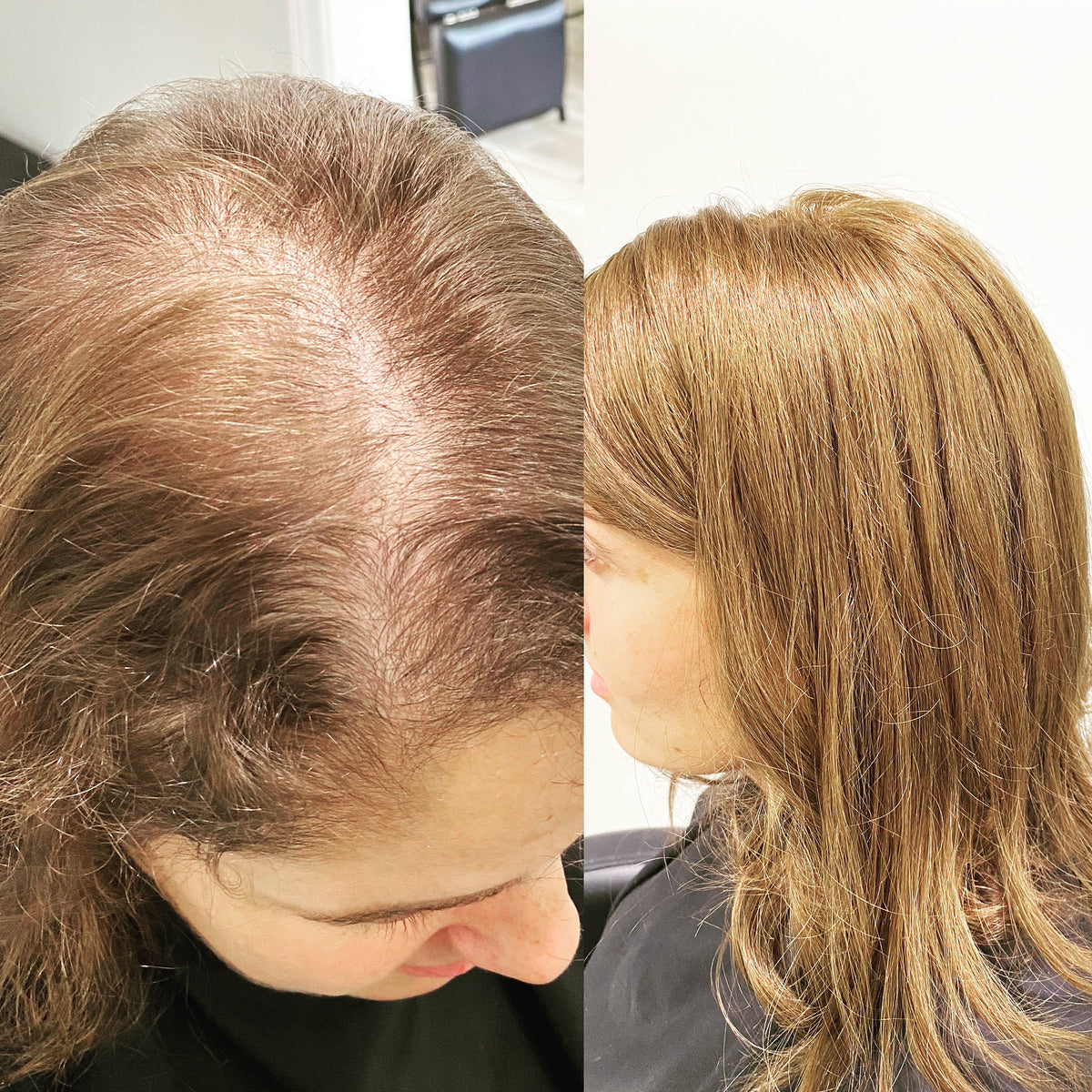
This client initially believed she needed a wig. After evaluation, a customized solution created natural coverage while preserving her existing hair.
When A Wig Isn't The Best Solution
Wigs can be wonderful solutions for:
- Complete hair loss
- Extensive scalp exposure
- Chemotherapy-related hair loss
- Advanced alopecia
However, many women still have enough hair to support:
- Hair toppers
- Closures
- Mesh integration systems
- Combination prosthetic solutions
These approaches often create more natural results because they incorporate existing hair.
IVF Hair Loss Example: A Customized Alternative To A Wig
Following IVF-related hair loss, this client achieved natural density and coverage using a customized topper and hair extension-supported solution rather than a traditional wig.
Can Hair Extensions Be Part Of A Medical Hair Prosthesis?
This is another area of tremendous confusion.
Traditional cosmetic Hair Extensions Boston services are generally considered beauty services rather than medical hair loss solutions by insurance companies.
One of the biggest misconceptions I see is that insurance companies view all hair extensions as cosmetic beauty services. While traditional extension services are generally not reimbursed, some customized cranial prosthesis solutions may incorporate hair extensions alongside mesh integration systems, closures, or hair toppers to restore density and coverage.
However, not every woman experiencing hair loss is automatically a candidate for extensions. Factors such as density, scalp visibility, support capacity, and the ability to conceal the extensions all play an important role. In Can Fine Hair Safely Wear Hair Extensions? What I Evaluate Before Saying Yes, I explain the consultation process I use to determine whether extensions are a realistic and safe option.
The focus is not cosmetic enhancement. The focus is restoring realistic density and coverage while protecting the existing hair.
Not Every Medical Hair Prosthesis Covers The Entire Head
Some prosthetic solutions are surprisingly small.
Many women only need coverage in specific areas.

Some prosthesis solutions are designed to fill specific areas of hair loss rather than cover the entire scalp.
What Makes A Medical Hair Prosthesis Look Natural?
After more than 35 years helping women with hair loss, I've learned that natural results depend on:
- Appropriate density
- Natural hairline design
- Proper color matching
- Correct gray percentage
- Texture matching
- Proper base size
- Professional customization
The prosthesis itself is only part of the equation.
The customization often determines whether the result looks believable.
Why Online Shopping Often Falls Short
Many online companies ask for:
- Head measurements
- Hair length
- Hair color
Unfortunately, they cannot evaluate:
- Density
- Scalp visibility
- Hairline shape
- Gray percentage
- Texture
- Hair loss pattern
- Existing hair integration
This is why many online purchases ultimately require professional customization.
About The Author
Noelle Spinosa
After more than 35 years helping women with hair loss, one thing has remained consistent: most women are overwhelmed by conflicting information. Very few arrive asking for a medical hair prosthesis. Most simply want to understand why their hair is changing and what realistic options exist. My role is to help evaluate the hair, explain the available solutions, and guide clients toward the most natural and sustainable outcome.
Conclusion
Most women searching for a medical hair prosthesis are not actually searching for a prosthesis.
They're searching for answers.
They're trying to understand why their hair is changing, what options exist, and whether insurance may help offset some of the cost.
For some women, the best solution is a wig.
The most important thing I've learned after 35 years is that the right solution depends on the person—not the diagnosis alone.
For others, it may be a topper, closure, mesh integration system, or a customized combination approach.
The most important step is understanding your options before assuming there is only one solution.
Every hair loss situation is different, which is why personalized evaluation is often the most important step in determining whether a wig, topper, mesh integration system, closure, or customized cranial prosthesis is the best fit.
Frequently Asked Questions
What is a medical hair prosthesis?
A medical hair prosthesis is a hair replacement solution prescribed for individuals experiencing hair loss due to medical conditions.
Is a cranial prosthesis the same as a wig?
Not always. A cranial prosthesis may include wigs, toppers, closures, mesh integration systems, and other customized hair loss solutions.
Does insurance cover medical hair prostheses?
Coverage varies significantly by insurance carrier, diagnosis, and policy terms.
Can Trichotillomania qualify for reimbursement?
In some situations, physician documentation may support reimbursement requests under alopecia-related diagnoses.
Can a hair topper be considered a medical hair prosthesis?
Yes. Depending on the diagnosis and treatment plan, a topper may qualify as part of a cranial prosthesis solution.
Can hair extensions be part of a medical hair prosthesis?
Some customized prosthetic solutions incorporate extensions alongside toppers, closures, or mesh integration systems.
Do I need a wig if I have hair loss?
Not necessarily. Many women achieve excellent results using toppers, mesh integration systems, closures, or customized prosthetic solutions.
Schedule A Free Hair Loss Consultation
If you're experiencing hair loss and wondering whether a wig, topper, closure, mesh integration system, or medical hair prosthesis may be right for you, we can help.
During your complimentary consultation we evaluate:
- Hair density
- Scalp visibility
- Hair loss pattern
- Existing hair condition
- Coverage goals
- Potential insurance documentation needs
Together, we'll determine the most natural and realistic solution for your individual situation.


