



The Truth Revealed: Where Do Human Hair Extensions Come From
The question “where does human hair for extensions truly come from—and is it ethically sourced?” is asked more than ever. Because there is no single global authority regulating human hair, conscientious brands lean on fair trade–aligned factories and transparent suppliers. The goal is to buy hair collected at organized, monitored mass collection sites where men and women are paid a fair price and consent to the sale. Large factories depend on consistent volume and quality, so they are incentivized to work with reliable, cleanly run collection channels rather than shadowy middlemen. Even so, gaps in oversight have allowed unethical practices to persist, and misinformation online can make it harder for shoppers to tell the difference. We pursue fair trade sourcing and educate clients on what ethical human hair sources look like.

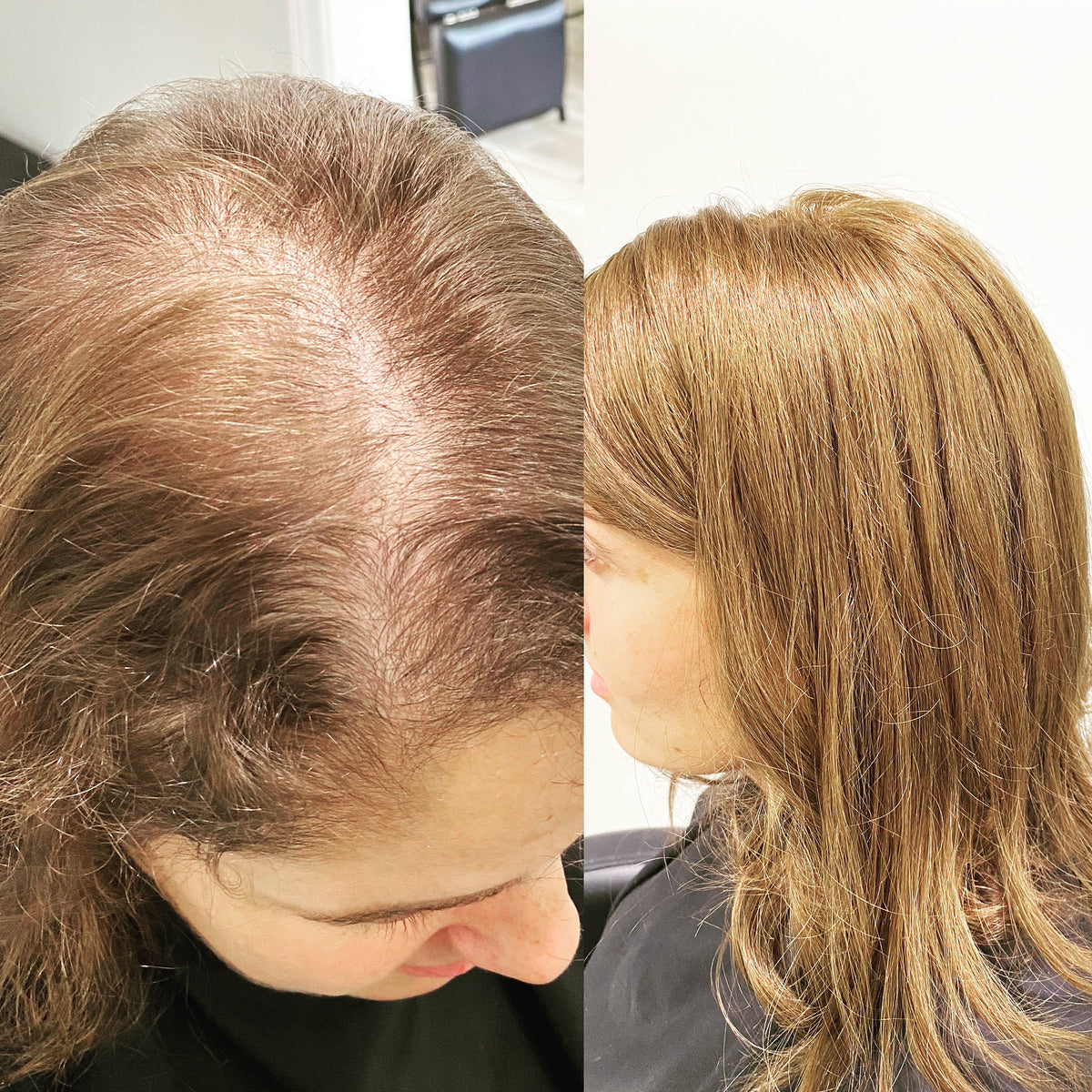
Above: Blonde looks often rely on minimally processed, cuticle-aligned hair. Most important is the path from donor to weft—transparency, traceability, and fair pay.
If you’re considering ethically sourced hair extensions in Boston, choosing the right method matter
Where Do Most Hair Extensions Come From? Ethical Human Hair Sources Explained
Most hair comes from the continent of Asia, especially from Cambodia, India, and Malaysia, with large-scale processing and manufacturing concentrated in China. There, collected hair is sorted, cleaned, and crafted into wigs and a range of hair extensions. Marketing often mentions Russian hair, yet genuinely sourced Russian ponytails are extremely rare. Many women in Russia and Eastern Europe wear extensions themselves and are not inclined to sell their own hair. You may find hair marketed as “Russian” when it is actually selected from neighboring regions such as Mongolia or mixed with other origins, then shipped to markets in Russia before being resold abroad. In short, labels can be misleading; the most trustworthy signals remain consistent sourcing, clear chain-of-custody, and fair compensation to donors.
When evaluating origin claims, ask yourself: Does the supplier explain how hair is gathered? Is there a documented path from collection site to factory? Are descriptions about texture and processing realistic for the stated region? Ethical human hair sources prioritize openness on these basics, while vague or sensational claims often signal corners being cut.
Where do human hair extensions typically originate from?
Human hair extensions typically come from diverse regions—most commonly India, Brazil, and Southeast Asia. These areas offer a breadth of textures via robust collection networks. High-quality hair may be “virgin,” a term used when fibers have not been chemically processed before collection. Virgin hair retains its natural cuticle, movement, and luster, which often leads to a more seamless, natural look when installed.
Two important definitions help you assess quality:
- Remy hair: Hair whose cuticles are kept aligned in the same direction from root to tip during collection and manufacturing. Proper alignment helps reduce tangling and preserve shine.
- Virgin hair: Hair that has not been chemically colored, bleached, permed, or relaxed prior to collection. Virgin hair can also be Remy if the cuticles are kept in order; these qualities are related but not identical.
Because terminology is often misused in marketing, it pays to ask clarifying questions. For example: Is the hair truly uncolored prior to collection, or was it toned post-collection for color matching? Is the cuticle still intact, or has it been stripped and replaced with silicone? Ethical vendors will answer plainly and consistently.
Hair Extensions from Brazil
There are established collection networks in Brazil, and we work with the country’s largest supplier to access a breadth of textures with minimal processing. Brazilian bundles are favored for their naturally wavy, curly, and deep curly patterns and for fiber resilience that holds up to styling and color work when performed correctly. Brazilian hair often feels sturdy yet flexible; this strength means the curl and wave can remain defined for longer with the right care routine.
By contrast, curls permed from naturally straight hair often relax quickly—especially with heavy heat or frequent washing. The difference is not that one region is “bad” and another “good,” but rather that true-to-origin curl patterns and responsible processing typically last longer and perform more predictably.

Shown above: A defined, bouncy finish commonly associated with Brazilian-origin curl patterns. Maintenance matters—hydrating products, gentle detangling, and low-heat styling help curls stay lively without overprocessing.
Hair Extensions from Asia
Asian hair encompasses a spectrum of qualities, and its performance begins with the collection method. If the hair is “one-donor” virgin hair, it has been cut from a single person in a single direction, yielding uniform color and excellent resilience. Broadly, Indian hair available on the market is not always one-donor, but better grades are often sold as “Remy,” meaning the hair's cuticle is aligned from root to tip. Cuticle alignment is key to smoother wear and less matting over time.
Texture varies by subregion. Indian strands are usually fine to medium, whereas Cambodian, Malaysian, and Mongolian fibers tend to be thicker and more robust. Thicker strands can withstand more frequent styling and may hold body longer, while finer strands blend beautifully with naturally fine hair. Whichever origin you choose, using the right detangling tools—such as gentle hair brushes designed for extensions—can preserve the cuticle and extend the life of your set.
A quick reflection: Are you choosing based on marketing names alone, or does the fiber origin match your natural density and desired styling? The best match often comes from discussing your everyday routine, heat styling habits, and color goals alongside origin.
European Hair Extensions: The Premium Choice
European hair extensions are frequently presented as a premium option. Sourcing commonly references Eastern European countries, including Ukraine and Russia, with a reputation for soft, fine textures and long wear when responsibly collected and minimally processed. Often sold voluntarily for a modest payment, these bundles can be closer to virgin, preserving the natural structure, sheen, and movement people seek.
Longevity is a major appeal. With proper care—thoughtful washing, detangling, heat protection, and routine adjustments—many users find European-origin bundles can maintain a refined look for months on end. The fibers often blend easily with numerous hair types, particularly when matching naturally fine to medium densities. While the price can be higher, the combination of wear time and realistic blending helps justify the investment for clients who prefer minimal daily fuss.
That said, headlines can outpace reality. Availability is limited, and claims of exclusively “Russian” hair should be approached with measured skepticism unless accompanied by verifiable sourcing details. Asking specific questions about collection and processing provides a clearer picture than labels alone.
Ethically Sourced Hair Extensions At Noelle Salon
As a responsible hair extension salon and vendor, we work to verify sourcing at each step. We ask partner factories to document where hair was collected and under what conditions it was acquired in the supply chain. Our factories share live videos from auctions and sales, and we have footage from certain collection sites where consenting adults choose to sell their hair for payment. Transparent, fairly compensated exchanges—similar to methods highlighted by Dan Choi, founder of REMY NY—help protect donor dignity while supporting quality control.
We are proud to offer our Veila Hair extensions, designed around a pull-thru technique that avoids glue, tape, or sewing. This approach has gained traction in the professional community, including in Vietnam, because it emphasizes clean application and comfortable wear. As interest has grown among stylists and clients, we’ve focused on partnering with manufacturers that can sustain both ethical sourcing and consistent product performance.
About Noelle Salon and Veila Hair Extensions
Noelle Spinosa, owner of Noelle Salon and Veila Hair Extensions, evaluates your natural hair and listens carefully to your preferences for style, color match, density, and finish. She works with premium options, including 100% Remy human hair and Virgin Hair, and favors techniques that preserve scalp health and fiber longevity. Hair extensions can be tailored for short crops needing volume or longer looks up to 24 inches, and our team has experience with multiple methods—tape-in extensions, clip-in hair extensions, keratin bonds—while often recommending the Veila pull-thru method for its balance of security and easy maintenance.
Styling possibilities range from sleek flat-iron finishes to embracing your natural curl pattern or building sculpted curls. If you’re craving a one-day transformation—like a playful high pony—an elevated ponytail extension can deliver instant polish. Your growth journey can also benefit from protective styling, mindful heat use, and routine follow-ups to ensure the health of your bio hair. Many clients are surprised by how quickly they can achieve their dream look once the right match of fiber origin, method, and maintenance plan comes together.
Quick self-check: What is your daily styling time? Do you heat style often, sleep with hair braided, or prefer wash-and-go routines? Sharing these details helps us recommend extensions that work with your habits rather than against them.
The Pros and Cons of Different Hair Extension Types
Navigating the global hair trade requires balancing budget, maintenance, and desired aesthetics. The market offers everything from high-quality synthetic fibers to premium human hair. Synthetic extensions are typically more affordable and can hold set curls well, but they rarely mimic the feel, movement, or heat-styling flexibility of human hair. Human hair, by contrast, is an investment that rewards you with a realistic look, customizable styling, and repairable wear when cared for properly.
Origin matters, too. Bundles sourced from Asian or European regions—and, in some cases, limited North American collections—carry distinct traits. Some Asian-origin sets are budget-friendly but may be exposed to more aggressive processing to achieve certain colors and textures, which can affect fiber strength. Meanwhile, European hair extensions are often less processed, with finer strands that blend seamlessly for many wearers, though they command a higher price. Your best choice depends on how you prioritize longevity, texture match, and upkeep.
Ethics cross every category. Even a beautiful bundle loses appeal if it was sourced without clear consent or fair payment. Consider not only how hair looks in its first weeks, but also how it was obtained, labeled, and handled along the way.
Advantages and Disadvantages of Asian Hair Extensions
Asian hair extensions—including those offered from hubs such as Hong Kong, India, and China—span a wide range of quality tiers. On the plus side, they are widely available and often more budget-conscious than premium European options. Many clients also appreciate the breadth of textures and straight-to-wavy styles attainable from these sources, making it easier to find a visual match for everyday wear. With the right supplier, Asian-origin hair can be cuticle-aligned, well-finished, and a reliable choice.
Potential drawbacks stem largely from heavy processing. To meet demand across colors and curl patterns, some manufacturers bleach, dye, perm, and coat bundles. Excessive chemical processing can leave hair weaker over time, leading to dryness, matting, or a loss of luster after initial wear. Packaging and finishing may look stunning out of the box, but the real test is how the hair behaves after washing and routine styling. Because transparency varies, sourcing can also prompt ethical questions, including how donors were approached and whether hygiene steps—like careful inspection for lice—were taken before processing.
If you’re considering Asian-origin sets, look for consistent descriptions, realistic color claims, and clear maintenance guidance. Ask whether cuticles remain intact, whether fibers are truly Remy, and how textures were achieved. Reputable vendors share this information proactively.
The Unique Benefits and Challenges of Slavic Hair Extensions
Slavic hair extensions are prized for soft texture, fine diameter, and graceful movement. Often described as naturally virgin hair when unprocessed, Slavic bundles can require less chemical intervention to achieve popular shades, helping fibers retain their natural sheen. This subtle, authentic finish is why many clients view Slavic-origin hair as a benchmark for premium quality and blending.
The challenge is supply. Genuine Slavic ponytails are limited and, as demand rises, locating consistent sources becomes harder. Scarcity can raise prices and introduce confusion as different sellers use similar labels across mixed origins. The key is to work with partners who disclose collection details, color history, and processing steps. When those conditions are met, Slavic bundles often justify their higher cost with long wear and exceptional realism.
Ask yourself: Are you prioritizing the softest possible texture for intricate styles, or do you need a slightly sturdier strand for frequent heat styling? Slavic sets typically favor a delicate, silky finish that excels in natural-looking, low-maintenance styling when matched thoughtfully to your routine.
Ethical vs. Unethical Sourcing: How to Tell the Difference
Ethical sourcing centers on consent, compensation, and traceability. Ideally, hair is collected at organized sites or salons where sellers understand what they are offering and are paid a fair value. Paper trails, videos from auctions, and consistent factory relationships build accountability. Unethical practices often involve vague supply stories, cash-for-hair schemes that exploit vulnerable populations, or aggressive processing used to disguise mixed or damaged fibers.
Because the market is complex, a nuanced approach helps:
- Ethical practices: Documented collection sites, fair payment, donor consent, hygiene checks, and factory processes that preserve quality without excessive coverups.
- Unethical practices: Lack of clear origin, inconsistent labeling (e.g., “Russian” hair without proof), overuse of silicone to mask stripped cuticles, and evasive answers to basic sourcing questions.
Hypothetical scenario: Imagine two curly bundles labeled identically. One was collected from a donor with naturally coily hair, cleaned, and lightly finished; the other was permed from straight hair and coated with silicone. Both look glossy initially. After several washes, the first retains coil definition and soft touch; the second loses curl memory and feels dry. The difference isn’t just feel—it reflects how origin and processing reveal themselves over time.
Additional hypothetical dilemmas:
- Coerced donations: Imagine a young woman in a rural community where hair symbolizes pride. A local group offers to fund her family’s medical bills if she sells her hair. She agrees under pressure, blurring the line between consent and coercion and revealing how poverty and tradition can be exploited.
- Supply chain fraud: Picture an earnest brand paying premiums for “verified” hair. A broker secretly blends in stock from unregulated markets and forges paperwork. The brand’s ethics messaging holds, but the reality is compromised by weak traceability.
- Misleading claims: Consider a label that touts “exclusively European” bundles while relabeling primarily Asian stock to command higher prices. Consumers pay for a story rather than proof, underscoring why origin verification matters.
Consumer Checklist: Questions to Ask About Hair Extension Sourcing
- Origin specifics: From which country and region was the hair collected? Is it one-donor, multi-donor, Remy, or virgin?
- Collection method: Was the hair cut from a consenting adult at a salon or collection site? How was payment determined?
- Processing disclosure: Was the hair bleached, dyed, permed, or silicone-coated? Are cuticles intact and aligned?
- Traceability: Can the vendor describe the chain-of-custody from collection through factory to final product?
- Quality indicators: What does the vendor recommend for care, and how does the hair perform after multiple washes?
- Consistency: Are color names and textures realistic for the stated origin? Do samples match retail stock?
- Support: What maintenance guidance, adjustment schedules, or troubleshooting does the salon provide?
If any answer feels evasive, pause. Reputable providers are comfortable discussing these details and often volunteer them before you ask.
Care, Maintenance, and Longevity Across Hair Types
Even the finest bundle needs a thoughtful routine. Gentle detangling from ends upward, sulfate-aware cleansing, and heat protection minimize wear. Sleeping in a loose braid or silk wrap helps reduce friction. Schedule timely maintenance for your chosen method—tape-ins, clip-ins, keratin bonds, or pull-thru—so tension remains balanced and your bio hair stays healthy. With these basics in place, well-sourced hair holds its beauty far longer, regardless of origin.
Consider adopting a simple rotation: On high-heat styling days, lower the temperature and use a protectant; on low-effort days, lean on air drying and lightweight leave-ins. Over a full wear cycle, this balance supports softness, shine, and reduced breakage.
Reflective Questions to Guide Your Choice
- What is your primary goal—length, volume, texture enhancement, or color flexibility without dye?
- How much daily styling do you enjoy, and how often do you use hot tools?
- Do you prefer the delicate feel of fine strands or the durability of thicker fibers?
- How important is documented, ethical sourcing to you when comparing similar-looking options?
- What maintenance schedule fits your lifestyle and budget over the full life of the extensions?
Conclusion: Choose Beauty with Integrity
Human hair extensions can be both stunning and responsibly sourced when you know what to look for. Most hair on the market originates in Asia—augmented by supplies from India, Brazil, and parts of Europe—with processing centralized in major factories. Labels alone don’t guarantee quality; ethical human hair sources are grounded in consent, fair compensation, and traceable movement through the supply chain. Understanding core terms like Remy and virgin, asking direct sourcing questions, and aligning texture with your lifestyle are the best ways to secure a set that looks gorgeous and wears beautifully.
Whether you are drawn to the refined feel of European and Slavic fibers, the resilient curls associated with Brazilian textures, or the broad availability of Asian-origin bundles, balancing origin, method, and maintenance will reward you with long-lasting results. With transparency as your guide and a thoughtful salon partner, you can enjoy extensions that honor both your style and the people behind the hair. If you’re not sure which option is right for you, you can book a free hair extension consultation to get personalized recommendations.


