

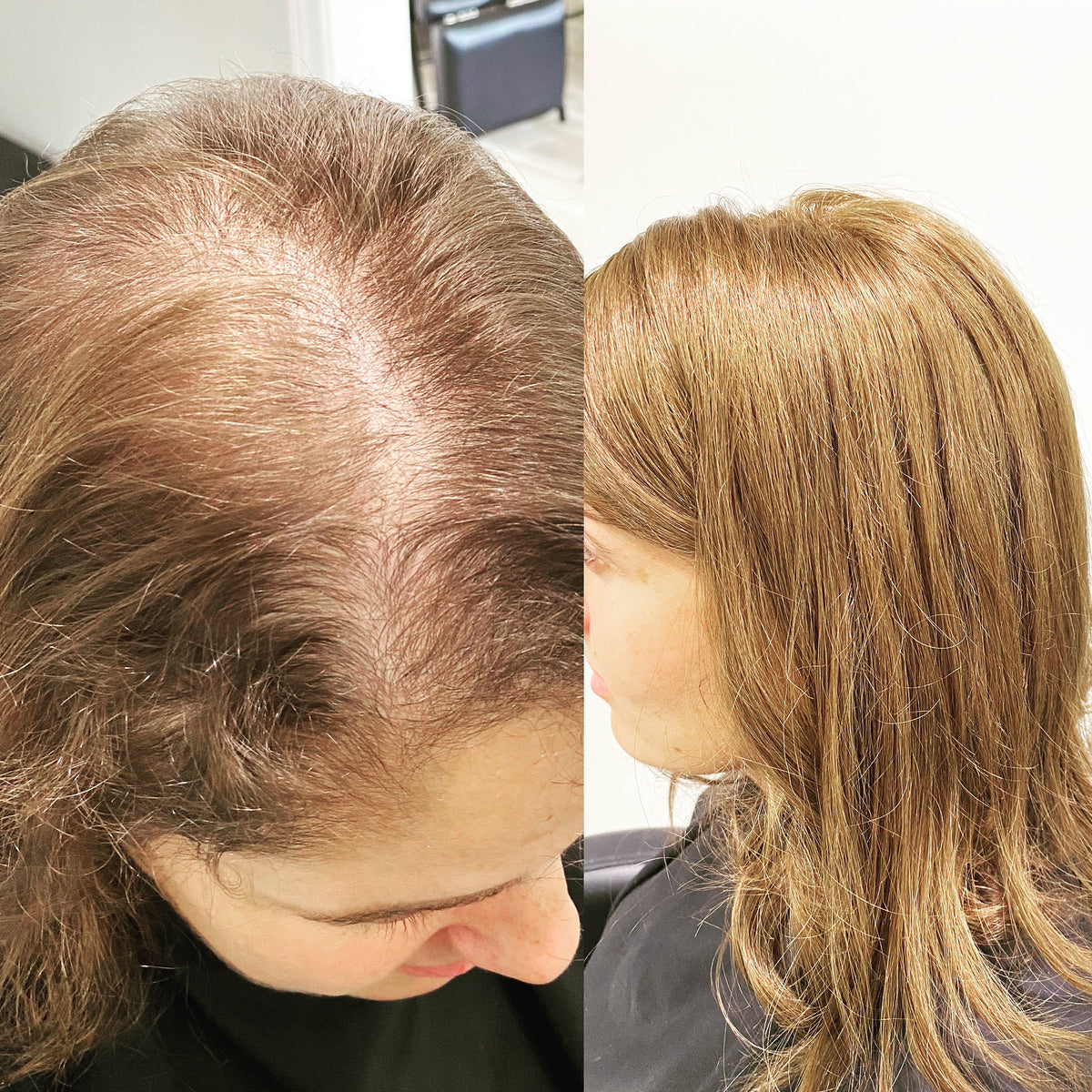


Transforming Lives: A Trichotillomania Success Story

She walked into the salon with a full head of her own hair, shoulders back, and a confidence that filled the room. The last time I had seen her—during that first consultation with her mom—she looked exhausted, discouraged, and overwhelmed by the challenges of trichotillomania. For those seeking support with Trichotillomania Boston, stories like this show what’s possible with the right approach and consistent care.
Seeing her return so grounded and self-assured was a powerful reminder of how deeply hair pulling can affect identity, confidence, and daily life—but also how meaningful progress can be over time. Her journey reflects what many experience: the struggle, the turning point, and the steady work that leads to real change.
At Noelle Salon, our team supports individuals navigating trichotillomania hair salon Boston concerns through compassionate consultations, protective hair systems, and long-term recovery-focused care.
This is the story of her transformation—from the weight of hair pulling to a personalized plan, ongoing support, and ultimately, renewed confidence.
The Emotional Impact of Hair Pulling
For many who live with Trichotillomania, the experience can feel isolating. Shame, fear of judgment, and the secrecy of pulling can make even simple moments—like getting ready for a friend’s event—emotionally heavy. When this client first arrived, she worried I would judge her. I made it clear that she was not alone; she was one of millions who silently struggle with hair pulling. Over the years, the medical community has classified Trichotillomania in different ways—sometimes overlapping with OCD, anxiety, or self-harm—and today it is recognized within BFRB (body-focused repetitive behaviors). Labels may shift, but what clients describe is often the same: a sense of being out of control, followed by remorse, and then the cycle begins again. With the emotions named, we could turn toward understanding the condition itself.
Understanding Trichotillomania—Causes and Symptoms
Trichotillomania (“Trich”) is a mental health disorder defined by recurrent, irresistible urges to pull out one’s hair, causing noticeable loss on the scalp, eyebrows, eyelashes, or other areas. It’s more common than people realize—affecting an estimated 1–2% of the population—yet it often stays hidden. This isn’t a simple habit or a matter of willpower; it’s tied to deeper psychological processes, including anxiety regulation, sensory feedback, and learned coping strategies. Misconceptions persist: some see it as vanity, a passing phase, or something that stops if you “just try harder.” In truth, urges can feel compelling, the act brings brief relief, and the cycle—tension, pulling, relief, remorse—can repeat despite sincere efforts to stop. No one plans to pull out their hair; the behavior can feel trance-like in the moment and heartbreaking afterward. With this context, we moved from awareness to action.
Clients often describe a push and pull of emotions: relief during the act, panic/regret after, then determination to stop—until the next trigger appears. Understanding these triggers is a critical part of recovery. Many notice patterns around stress, fatigue, boredom, or deep focus, while others are surprised by sensory cues like feeling a coarse hair and wanting it gone.
Common hair-pulling triggers
- Stress or anxiety spikes that increase urges
- Fatigue, boredom, or long periods of inactivity
- Deep focus tasks (studying, scrolling, work at a screen)
- Tactile/sensory cues, like finding a coarse or irregular hair
- Bedtime routines, mirrors, or tools that invite picking
Seeking Help and Treatment
When this client and her mom sat down for their consultation, we talked through everything: what Trichotillomania is, why it’s not their fault, and how a protective hair system can interrupt the cycle. I explained that our goal was to restore her hair, rebuild confidence, and set her up for long-term success. She was quiet and cautious at first, but as we moved through the details, I saw relief wash over her—relief that there was a plan, a team, and a path forward. She wasn’t being judged; she was being supported.
Tools that help: Hairpieces for those with Trich
Many clients are surprised when I can identify their triggers and patterns. That recognition alone can be powerful—someone “gets” what they’re going through. A hairpiece can act like a compassionate barrier to hair pulling. Once applied, it physically blocks fingers from easily accessing the areas where they typically pull. People often tell me that seeing themselves in the mirror—looking like their old self—reignites their motivation to protect their progress. We anchor strategies in small steps, focusing on not pulling “one day at a time,” where consistency beats perfection.
That barrier effect can be nothing short of transformative. The hairpiece changes the environment: the hair is protected, and the urge is harder to act on. As clients lean into maintenance and routine, they develop new habits that replace hair pulling. We also build in frequent, supportive check-ins. Early on, we schedule a two-week tightening to maintain the system and celebrate wins. Many can’t wait to share their progress: the first week with no pulling, noticing little sprouts of regrowth, or feeling more confident in photos. That set the stage for clear maintenance milestones.
Maintenance and Milestones
Our longer maintenance cycle is typically every four weeks. During these visits, we remove the hairpiece—often called a hair topper—wash both the client’s hair and the system, reapply, then cut or style as needed. Clients watch their own hair grow back appointment by appointment, and we mark each milestone together. While everyone’s timing is individual, many people see substantial regrowth across months, and the average client’s hair fills in over the span of a year. Of course, setbacks can happen. When they do, we meet them with compassion and simply start again. Recovery is not linear, and that is okay.
Our application method is designed to protect natural hair. Unlike hair clubs that rely on shaving or harsh adhesives, we never remove a client’s hair to make a system “fit.” We do not use methods like full-head glue-down hair systems that can damage delicate follicles and impede regrowth. Instead, we use a careful knotting technique with minimal tension. The aim is always to support healthy hair growth while the system serves as a shield against hair pulling.
Reflection and Growth

In my decades behind the chair, I’ve seen how this approach helps clients move from secrecy and shame to pride and routine care. The client who walked back in with her own hair flourishing had worked with our system for years, using it as a stepping stone to healing. Many former Trich clients now visit us just for color, trims, or special occasion styling, knowing we’re here for them if they ever need a topper again. Their stories share a common theme: when hair pulling is interrupted and supported with empathy, confidence returns and life opens back up.
From plan to practice: step-by-step to build support
- Notice patterns and jot down hair-pulling triggers and times of day.
- Schedule a judgment-free consultation with a professional familiar with BFRBs.
- Discuss a protective hair system and a maintenance plan you can sustain.
- Set two-week and monthly check-ins to reinforce progress and routines.
- Invite supportive people—parent, partner, or therapist—into your plan.
- Track wins (days without pulling, new growth) to stay motivated.
Imagine a few familiar scenarios. You’re in a quiet meeting, fingers drifting to a spot on your scalp, searching for that one coarse strand. Or you’re studying late at night, zoning out, and the urge sneaks in as a way to self-soothe. Maybe you’re getting ready for a big event and panic hits—how will you hide the thin area this time? Each of these moments can be softened by speaking them aloud, by building a small team around you, and by using smart, gentle tools that reduce opportunity for pulling. Sharing your story, even with one trusted person, can chip away at shame and replace it with accountability and care.
My personal insight after years of working with BFRB clients is this: the emotional journey belongs to both the person in the chair and the professional at their side. Clients teach me courage every day—they show up, try again, and let us in on tender parts of their lives. As providers, our role is to hold a steady, judgment-free space, to offer practical solutions, and to remind them that setbacks do not erase progress. Small wins matter. A single week without pulling is worth celebrating; a partial fill-in at the crown is a triumph. Over time, those moments add up to an entirely new chapter.
Testimonials and Success Stories
Success Story
The client mentioned earlier partnered with us for several years, staying consistent with maintenance and leaning on our team during tough moments. She ultimately grew back her hair and no longer needed a hairpiece. She’s one of many who have transitioned to regular salon services, returning for color, trims, and styling while keeping the option open to use a topper if life gets stressful again. The pride she felt walking in with her natural hair was contagious—and a reminder that practical support, patience, and community can change everything.
After more than 30 years as a stylist, I know this is the work that keeps me energized. Helping someone reclaim their sense of self—especially when hair has been a source of pain—feels meaningful beyond measure. Below is a client review that captures the emotional arc many people experience, from secrecy and fear to freedom and joy. Together, these reflections close the arc—from experience to treatment, to maintenance, to renewed confidence.
This is the beautiful “Rachel.” Her courage in sharing her Trichotillomania journey helps others feel seen. Her smile says it all.

★★★★★ 2 days ago
" Noelle literally changed my life! I have been struggling with Trichotillomania for over 15 years. At a time when my friends were celebrating engagements, weddings, and babies, I was worrying about how to style my hair to hide the bare spots from pulling. After seeing photos from my best friend’s bridal shower, I started searching for wigs and extensions—anything to even out my hair before the wedding. After a few disappointing extension consultations, I found a video where Noelle explained the system she uses for people with Trich. I reached out and scheduled a consultation. I had only recently found the courage to tell my primary care doctor and my mom about my hair pulling, so I felt extremely self-conscious and private about the whole thing.”
“My initial consultation was with Noelle and my mom at the salon. She walked us through the process in detail and showed such compassion and empathy for what I was going through as someone suffering from Trich. For the first time in a long time, I didn’t feel alone. After she answered all of our questions, we agreed it was the right step. Noelle ordered my first hairpiece, and I booked the installation when it arrived.”
“At my installation appointment, I met Yodit. She brought me to a private room and began the process. She cut the hairpiece to the style I wanted, and I left the salon gleaming! From then on, I went in every month for maintenance—Yodit would color, wash, and dry my hair, then reinstall, almost always adding curls I still can’t replicate. I would plan a fun night out after maintenance to enjoy the fresh style. Between monthly appointments, I’d come back after two weeks so she could move the beads up for new growth.”
“There aren’t enough words for how Noelle Salon changed my life. You don’t realize how much of a woman’s identity and confidence is tied to her hair until it’s compromised. After working with Yodit and Noelle, I felt like a new woman. Everyone around me noticed how differently I carried myself once I felt confident in my hair.”
Note: Unlike Alopecia Areata, fungal infections, thinning hair, and other autoimmune-related issues or female pattern baldness where hair loss occurs, Trichotillomania involves physically removing hair by pulling. Our salon supports clients across many types of hair loss, but our approach to Trichotillomania is specialized and focused on protecting follicles while encouraging stronger regrowth.
What does recovery feel like? For some, it looks like a quiet moment after a maintenance visit, catching your reflection and recognizing yourself again. For others, it’s a small breakthrough—attending a special event without worrying about bare spots, or noticing new growth where there used to be none. Community support often makes the difference. When family, friends, and professionals align around you with patience and practical tools, it becomes easier to keep going even when the urge returns.
To anyone navigating Trichotillomania: your experience is valid, you are not alone, and recovery is possible. Sharing your story—whether with a stylist, therapist, parent, or close friend—can chip away at secrecy and set the stage for change. Replace self-criticism with curiosity, build routines that protect your progress, and celebrate each small win. The journey isn’t about perfection; it’s about steadily reclaiming the parts of you that hair pulling has overshadowed.
Conclusion
This client’s transformation is a powerful reminder that healing is both emotional and practical. With a thoughtful plan, a protective hair system, consistent maintenance, and the support of an empathetic team, it’s possible to interrupt the cycle of hair pulling and support healthy regrowth.
Progress doesn’t happen overnight, but small, steady steps can lead to meaningful, lasting change. With the right guidance and support, confidence can be rebuilt and daily life can feel lighter again.
If you or someone you love is navigating trichotillomania, you don’t have to go through it alone.
👉 Book your free trichotillomania consultation and take the first step toward support, recovery, and renewed confidence.


