



Essential Support Resources for Managing Trichotillomania

Supporting individuals with trichotillomania (TTM) has been a central part of my work for over 20 years. During that time, I’ve had the privilege of working with children, adults, and families who have shared their experiences, challenges, and the support systems that helped them move forward.
One of the most important things I’ve learned is this: no one overcomes trichotillomania Boston alone. While our in-salon solutions—such as customized hair systems that act as a gentle barrier to reduce pulling—can support regrowth and confidence, long-term progress depends on a strong, well-rounded support system.
Clinical and Professional Support in Boston
For those seeking structured, evidence-based care, Boston offers access to leading specialists in trichotillomania and related BFRB (Body-Focused Repetitive Behaviors):
-
Mass General Hospital – Center for OCD and Related Disorders (Boston)
Led by Dr. Nancy Keuthen, a leading expert in trichotillomania, this program offers specialized treatment including Cognitive Behavioral Therapy (CBT) and Habit Reversal Training (HRT). These approaches help build awareness, interrupt pulling patterns, and develop healthier responses. Medication, such as SSRIs, may also be part of a comprehensive plan when appropriate. -
Boston University Programs
Boston University has contributed to research and support for younger individuals, as trichotillomania often begins in childhood or adolescence. Early intervention can make a meaningful difference in long-term outcomes.
National Support Organizations
In addition to local care, several national organizations provide valuable education, community, and resources:
-
International OCD Foundation (IOCDF) – iocdf.org
Offers directories of providers, support groups, educational materials, conferences, and telehealth options. Their resources are helpful for individuals, families, and clinicians. -
The TLC Foundation for Body-Focused Repetitive Behaviors – bfrb.org
A leading resource for trichotillomania and related behaviors, offering research, treatment guidance, support groups, and tools to better understand and manage BFRBs.
Support Groups and Community
Community support can be incredibly powerful. Whether through in-person groups, online forums, or family involvement, having others who understand the experience can reduce isolation and provide accountability.
Tools, Apps, and Awareness Strategies
Many clients benefit from tools that increase awareness and interrupt automatic behaviors:
-
TrichStop App
A structured program designed to support behavior change and track patterns throughout the day. Often recommended for teens and adults, it provides a detailed, step-by-step approach to reducing pulling. -
Wearables, fidgets, and habit trackers
These tools can help bring attention to unconscious pulling and create opportunities to pause and redirect.
The Role of Hair Solutions in Recovery
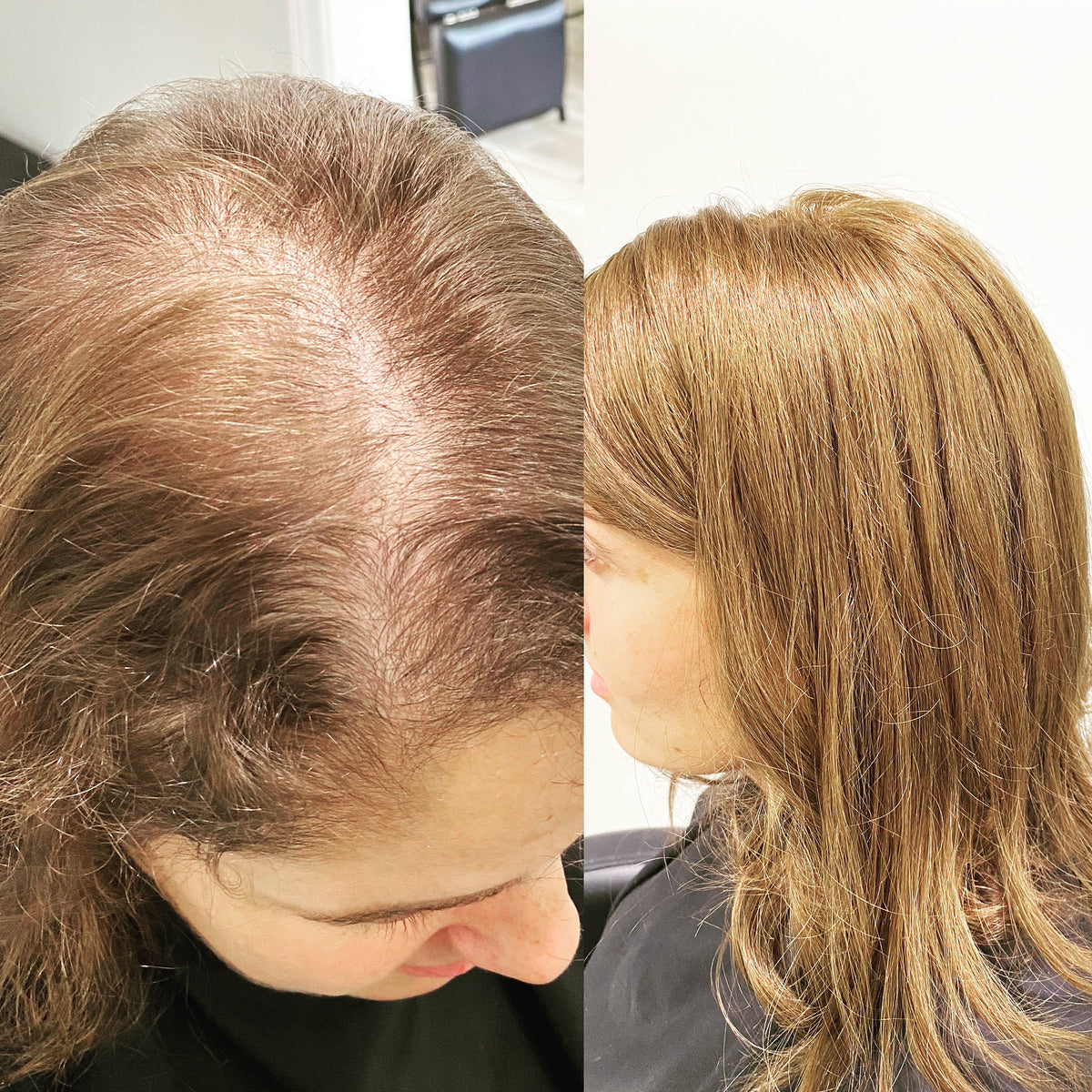
Hair solutions can play a supportive role in the recovery process. For some individuals, customized hair systems or toppers act as a protective barrier, reducing access to hair while also restoring a natural appearance.
As hair begins to regrow, regular maintenance is important. Systems and extensions may need adjustments over time, and the choice between them often depends on the location and pattern of hair loss.
At Noelle Salon, we approach trichotillomania with both compassion and practicality—supporting not just hair restoration, but the overall journey toward confidence and control.
You Are Not Alone
Trichotillomania is complex, but support is available. With the right combination of professional care, community, tools, and personalized solutions, many people make meaningful progress.
If you’re navigating trichotillomania, or supporting someone who is, know that understanding, guidance, and real solutions exist—and that recovery is possible with the right support system in place.
👉 Book your free trichotillomania consultation to explore supportive, personalized options designed for your needs.


