



Caring for Natural Hair: Chemical-Free Straightening and Smoothing Without Damage
Natural hair is beautiful in every texture, and the movement toward embracing curls, coils, and waves has inspired many to prioritize natural hair care alongside healthy styling. At the same time, some still enjoy smoothing and hair straightening Boston their hair for versatility, with chemical-free straightening as a first choice when possible. The key is doing so safely. Have you weighed long-term hair health before choosing a method? A thoughtful approach helps you enjoy sleek styles while preserving elasticity and shine.
Natural hair texture varies widely, and the best way to straighten or smooth depends on curl pattern, density, porosity, and desired results. Many of our clients who choose individual-strand hair extensions—such as i-tip links or keratin bonds—prefer a smoother base so the extensions blend seamlessly and grow out neatly. Oval-shaped follicles tend to produce curly hair; as regrowth twists and turns, the fiber can be more vulnerable at bends, which is why curly hair often needs extra TLC to stay resilient during styling.
We frequently meet clients with curls that have been compromised by prior heat or chemical misuse. Our first line of defense is to opt for the mildest effective process, paired with damage-aware extension methods. We do not offer sew-in weaves, especially with tight top closures, because ongoing tension can contribute to traction alopecia. Gentle techniques, careful placement, and a maintenance plan make a measurable difference in protecting the hair and scalp you rely on for long-term growth.
Chemical-Free Straightening and Smoothing
Whenever possible, we lean into chemical-free straightening. A classic roller set under a hooded dryer creates smooth, stretched results with controlled heat and minimal stress compared with hot combs, intense silk presses, or repeated high-heat flat ironing. Many “wash and set” clients visit weekly, combining a roller set with moisture-rich conditioning. This routine supports natural hair care by replenishing hydration and reinforcing the cuticle—especially important if you wear extensions and want to minimize friction between extension strands and your own hair.
Small adjustments amplify results. Lower heat settings, larger rollers for more stretch, a wide-tooth comb, and a microfiber towel to reduce frizz are simple choices that protect your cuticle. Have you noticed breakage near the nape or edges after heat styling? That can be a sign to scale back on direct heat and lean into indirect drying paired with lightweight leave-in products. Chemical-free straightening methods are especially helpful when hair is highly porous, color-treated, or recovering from prior damage.
Natural Hair Care Techniques: Understanding Textures and How They Respond
Clarity around texture helps set realistic expectations and guide gentle straightening techniques:
- Wavy: S-shaped bends that smooth relatively easily; tends to respond well to roller sets and gentle blowouts.
- Curly: Defined loops with more shrinkage; benefits from careful detangling, sectioning, and thoughtful heat control.
- Coily: Tight zig-zags or coils with the most shrinkage; requires thorough hydration, slow tension stretching, and extra care at bends.
Porosity matters too. Low-porosity hair may resist moisture and need more time under a dryer to set, while high-porosity hair absorbs product quickly but can dry out fast without layered hydration. Density and strand diameter influence how much tension or heat the hair tolerates. Are you matching your tools and techniques to your texture, porosity, and goals? Aligning these details supports natural hair care, reduces stress on the cuticle, and improves outcome consistency.
Keratin Treatments
Keratin treatments infuse supportive proteins into dry hair of many textures, especially curly hair that needs frizz management and a smoother cuticle. A professional keratin service will not make hair bone straight, nor does it permanently alter curl bonds; instead, it softens frizz, reduces puffiness, and improves manageability. Our preferred option is the Brazilian Blowout brand, which is formaldehyde-free. Results gradually wash out over a few months; it is not a permanent transformation, which makes it a flexible choice for those who like to move between smooth and textured styles.
Be aware that some products are mislabeled as “keratin treatments” yet contain harsher chemicals often imported from other regions; they are not the same. Always request a full ingredient discussion, and when in doubt, insist on a strand test to rule out adverse reactions or buildup conflicts. A keratin service can also complement stronger methods like Japanese Straightening or relaxers by acting as a smoothing refresh between major touch-ups—just confirm compatibility with your stylist and your hair’s history.
Aftercare and maintenance tips:
- Cleanse with gentle, sulfate-free shampoo and follow with a hydrating conditioner to preserve smoothness.
- Limit high direct heat; a quick tension blow-dry with a heat protectant is often enough to reactivate sleekness.
- Before swimming, apply a light conditioner and rinse immediately afterward to reduce salt or chlorine exposure.
- Sleep on a satin or silk pillowcase, or wrap hair to maintain a sealed cuticle and reduce frizz.
- Watch for signs of protein overload—stiffness or brittleness—and balance with moisture masks if needed.
Potential risks include sensitivity to product fumes during application, protein imbalance if overused, or dryness if aftercare is neglected. Have you noticed your hair feeling rigid after a protein-based service? That can be a cue to increase hydration and reduce heat for a few weeks.
Hair Relaxers
Relaxers with sodium hydroxide are powerful and should be reserved for the healthiest, most resilient hair. Choices today are more refined than in years past, but caution remains crucial. We prefer mild relaxer formulations with supportive emollients such as shea butter. After relaxing, we recommend roller setting instead of blow drying and flat ironing because hair is at its most fragile immediately following the chemical process. A relaxer is permanent on the treated portion; new growth retains its natural texture and requires gentle touch-ups as hair grows.
Safety, technique, and care:
- Always do a strand test and avoid overlapping onto previously relaxed hair to reduce breakage.
- Protect the scalp with a proper base and follow precise timing; thorough neutralization is non-negotiable.
- Alternate protein and moisture treatments to restore balance after the service and in the weeks that follow.
- Trim routinely to remove weak ends and maintain shape between touch-ups.
- If you rely on extensions, consider scheduling them at a time when the hair has regained strength post-relaxer.
Common risks include scalp irritation, over-processing, loss of elasticity, and increased dryness if maintenance is inconsistent. Ask yourself: Are you prepared for dedicated moisturizing, careful detangling, and protective styling between touch-ups? If not, a milder smoothing route might better support long-term health.
Japanese Straightening
Japanese Straightening uses ammonium thioglycolate to restructure hair bonds, a less caustic active than sodium hydroxide but still a serious chemical service. Both processes temporarily make bonds permeable to change shape; here, hair is methodically straightened with multiple thermal passes. It is labor-intensive, produces very sleek results, and is permanent on treated hair. As regrowth appears, it must be addressed separately to maintain uniform texture.
What to expect and how to care:
- Expect a detailed appointment with careful processing and flat ironing; patience is part of the process.
- In the initial days after treatment, be gentle—keep hair smooth, minimize creasing, and avoid tight ties or clips.
- Use hydrating, lightweight products to replenish moisture without weighing hair down.
- If hair is heavily highlighted, previously relaxed, or fragile, discuss whether this method is safe for you.
- Protect ends from dryness with leave-ins and schedule regular trims to preserve the glassy finish.
Risks include dryness, brittleness on sensitized hair, and tension lines if extensions or tight styles are added too soon. A thoughtful consultation and strand test can prevent most surprises and help you decide if the commitment aligns with your routine.
Real-World Approach: Strand Testing and Stepwise Care
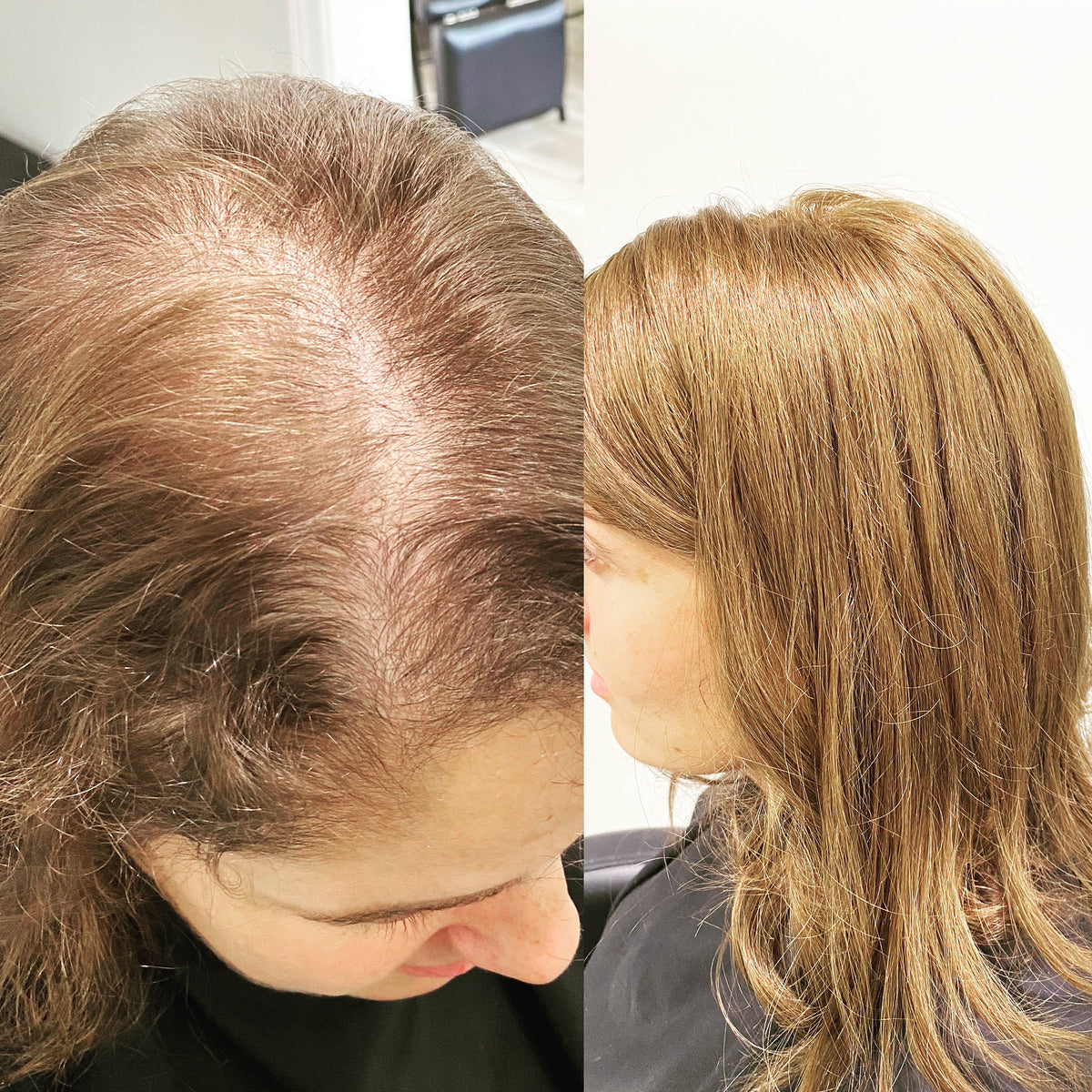
In the below picture, our client presented with severely compromised curls. We performed a strand test to see whether a keratin treatment could smooth the cuticle without triggering breakage. A strand test should never be skipped; it is the most reliable way to gauge how hair will respond before treating the full head. In her case, the keratin treatment gently refined the cuticle. We explained that she would still need a careful blow-dry to create a sleek finish and that chemical-free straightening techniques would remain valuable between salon visits.

We can and do attach hair extensions after a keratin treatment when the hair is stable. For her, we chose an individual-strand method of hair extensions, customized to her density and the strength of her follicles. Approximately 100 strands of 1 gram extensions were placed with careful spacing. We do not recommend attaching extensions right after Japanese Straightening or relaxers because the hair can be too pliable; indentation at the attachment area is a risk when the fiber is freshly processed.
The good news is that she wore extensions only until her own hair felt stronger and looked fuller. She now enjoys her natural texture with less effort and more confidence. Choosing a conservative extension technique and the least invasive smoothing option made that outcome possible. When interviewing salons, ask targeted questions: Do they require a strand test? Will they tailor methods to your hair’s history and density? Are aftercare steps detailed? Trust professionals who prioritize improvement over shortcuts.
Hypothetical Scenarios to Guide Your Choice
Scenario 1: You have coils with moderate frizz and want occasional sleek looks without committing to a permanent change. A chemical-free routine—roller sets, low-tension blowouts, and protective wraps—paired with periodic keratin smoothing for humidity control can deliver versatility while preserving curl integrity.
Scenario 2: Your wavy hair expands in humidity and you wear i-tip links for fullness. A gentle keratin service followed by low-heat maintenance helps the extensions blend while keeping your natural hair manageable. You limit flat ironing, rely on heat protectant, and schedule regular hydration treatments.
Scenario 3: Your curls are sensitized from past color and heat. You skip chemical straightening altogether, focusing on deep moisture, tension stretching, and satin-wrapped nights. Over time, breakage decreases and shape improves—then you reassess whether mild smoothing fits your goals.
Natural Hair Care Considerations
- Budget and time: Plan for consultation, application, and maintenance visits that align with your schedule.
- Lifestyle: Workouts, swimming, and humidity exposure may influence the best smoothing approach.
- Hair history: Color, bleach, and prior chemical services affect what your hair can safely tolerate.
- Texture and porosity: Match technique to your curl pattern and how your hair absorbs moisture.
- Aftercare commitment: Are you ready for protective styling, trims, and consistent hydration?
- Scalp and edges: Prioritize tension-free methods to safeguard fragile areas prone to stress.
- Expectations: Smoother does not always mean pin-straight; balance desired look with hair health.
- Consultations: It’s normal to meet multiple stylists; trust your instincts about their expertise and care..
Summary and Next Steps
Healthy smoothing is about balance—choosing the right approach for your hair while maintaining its strength, movement, and natural texture. Whether you prefer a more natural, chemical-free routine or occasional smoothing treatments, the goal is always hair that feels manageable, polished, and true to you.
The right products, techniques, and maintenance routine can make a noticeable difference in how your hair looks and behaves day to day.
At a hair salon Boston clients trust, we focus on creating styles that enhance your natural texture while delivering smooth, controlled, and wearable results.
If you’re ready to refine your look and achieve a smoother, more polished finish, it’s time to book a hairstyling appointment and experience a customized approach designed for your hair.


