

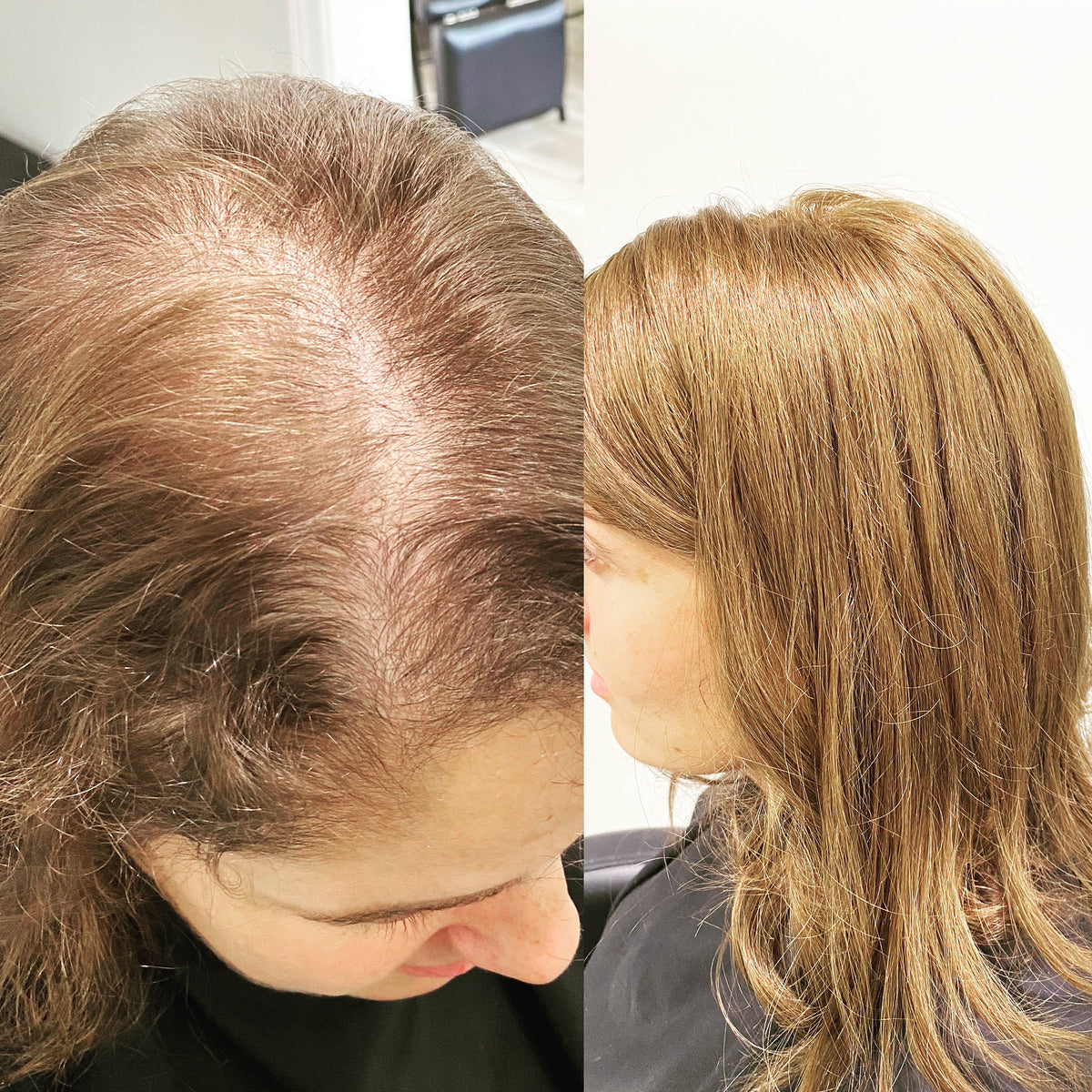


Bald Spots in Women: Top Hair Loss Solutions in Boston
Noticing bald spots or sudden thinning can feel alarming—especially when it seems to happen without warning. For many women, one of the most common causes of patchy hair loss is alopecia areata, an autoimmune condition that causes the body to attack its own hair follicles, leading to round or irregular bald spots on the scalp.
For those navigating hair loss Boston, the experience often goes beyond the physical changes. Bald spots can affect how you style your hair, how you feel in social settings, and how confidently you show up in everyday life.
The good news is that understanding the cause is the first step toward finding the right solution. Whether your hair loss is related to alopecia areata, stress, hormonal changes, or other factors, there are both medical and non-surgical options available to support regrowth, provide coverage, and restore a natural look.
In this guide, we’ll break down the causes of bald spots in women, explain how alopecia areata differs from other types of hair loss, and explore the most effective solutions available in Boston—from clinical treatments to advanced, natural-looking hair replacement options.
Understanding Hair Loss Causes in Boston
Hair loss among women in Boston can arise from multiple overlapping factors. Genetics play a major role, as does hormone fluctuation from life stages such as pregnancy, perimenopause, and menopause. Elevated stress, insufficient nutrition, iron deficiency, thyroid irregularities, and certain autoimmune conditions may also contribute. The most common cause is androgenetic alopecia—often called female‑pattern baldness—a hereditary condition that leads to progressive miniaturization of hair follicles over time. Early evaluation is important: testing for thyroid function, iron levels, and hormone imbalances can clarify your individual picture and guide a plan of care. Understanding how hair loss appears—whether as diffuse thinning, widening of the part, or circular bald patches—can help you and your clinician target the right options.

Genetic factors
Androgenetic alopecia (female‑pattern baldness) with a family history commonly drives gradual thinning and part‑line widening.
Hormonal changes
Pregnancy, perimenopause, and menopause can shift hormones and trigger shedding or miniaturization that benefits from timely evaluation.
Stress and nutrition
High stress, iron deficiency, thyroid irregularities, and insufficient protein can exacerbate shedding; targeted testing helps clarify next steps.
Hair Restoration Solutions for Women
Innovative, custom‑made human hair patches can provide targeted coverage where you need it most. While some mass‑market patches rely on synthetic fibers and limited shade ranges, customized human‑hair options are crafted to blend with your unique color, texture, and length. This is especially helpful if your hair is long, normal‑density, or highlighted, and you want a natural result without excess bulk.
We recognized a gap for people with random bald spots from conditions such as Trichotillomania and Alopecia Areata. A hair topper or full wig can be ideal for broader coverage or overall thinning, but they may feel like “too much hair” for a small spot. In addition, there may be no hair in the area to attach hair extensions to. When scarring alopecias are suspected, the medical priority is to calm disease activity and preserve remaining follicles—another reason why a gentle, targeted patch can be a thoughtful choice while medical care proceeds.

Understanding key terms: androgenetic alopecia and Trichotillomania
Androgenetic alopecia, also known as female‑pattern baldness, is a hereditary condition in which hair follicles gradually become finer and shorter, leading to visible thinning, most often at the crown and part line. Trichotillomania is a hair‑pulling disorder characterized by recurrent, hard‑to‑resist urges to remove hair from the scalp, brows, or lashes; over time, it can create patchy areas of loss. Both conditions can cause distress, but they are manageable with supportive strategies, targeted cosmetic solutions, and medical care when indicated.
Mesh Integration Hair System
A mesh integration hair loss system—sometimes called a “hair patch” solution—can be customized to virtually any size and shape to blend with your existing hair. Because the mesh lets your natural hair breathe and move, it can create a realistic look while covering the exact area where thinning or baldness appears. Many clients appreciate that this approach focuses on the problem spot rather than covering the entire head.
Modern advances in custom human‑hair patches make it easier to match color, density, highlights, and length. These systems can be artfully designed for long hair and typical densities, offering nuanced coverage for scattered bald spots from conditions like Trichotillomania or Alopecia Areata. Unlike full wigs or large toppers, a precision patch can deliver a seamless outcome without extra volume you do not need. The result is a subtle blend that looks and feels like your own style, helping restore poise in daily life.

Solutions and discovery
When addressing a bald spot, a thorough evaluation helps determine whether you are seeing inflammatory hair loss, hormonal influences, nutrient shortfalls, or behavioral factors. Custom human‑hair patches can offer immediate coverage while medical care proceeds. In some cases, clinicians may use anti‑inflammatory therapies such as corticosteroids applied topically or injected into small areas of the scalp to calm activity. For select autoimmune forms of hair loss, additional immunomodulating medications may be considered under medical supervision. Because responses vary, it is essential to partner with a qualified healthcare professional who can assess your scalp, review your history, and recommend an individualized plan.
Cosmetic systems are often most successful when paired with holistic habits: gentle scalp care, balanced nutrition with sufficient protein and iron, stress‑management practices, and hairstyles that avoid tension at the roots. With a mesh integration hair system, you can cover a precise area without the weight or heat of a full wig, and with the reassurance that the system was designed to work with your hair’s movement. Many clients tell us that the smallest, most tailored solution is the one that restores everyday confidence the fastest.

How do human hair patches cover hair loss?
Many first encounter bald spots at the nape, temples, or crown. Instead of using extensions—which require hair to anchor—we place a custom patch directly over the sparse area and blend it with your existing style. For those who like to wear hair up or off the face, this can be a game‑changer. Tailored color matching and light, flexible construction allow the patch to disappear into your hair, giving you back styling freedom without drawing attention to the spot.
We have seen how hair changes impact children, teens, and adults alike. Some young clients with patchy loss share that they feel singled out at school or activities. A natural‑looking patch can help them experience normal routines without the pressure of explaining their hair to others. Compassionate application, gentle maintenance, and thoughtful follow‑ups support healthy regrowth when the underlying condition allows.
If you are seeing increased shedding or a new spot, visiting a dermatologist is a wise first step. Triggers can include stress, hormonal shifts, genetics, and medical conditions such as telogen effluvium, in which hair enters a resting phase after a physical or emotional event. A dermatologist can evaluate your scalp, order relevant bloodwork, and discuss options matched to your diagnosis. Practical guidance on hair care—like gentle detangling, avoiding tight styles, and balancing heat use—can also support your plan.

Boston hair loss solutions in practice
Every prosthesis or patch can be tailored to your hair’s color, density, length, and style. That includes nuanced blending for balayage, highlights, curls, and coils. Many clients also ask about coverage options through insurance plans that recognize cranial prostheses; we help you explore what your policy may provide so you can make an informed decision.
In a city as active as Boston, it is common to need a solution that moves with you—from the Charles River to a workday meeting to dinner in the North End. Lightweight, breathable materials and precise installation ensure comfort throughout your day. Whether you want a patch that vanishes into a casual ponytail or a polished finish for professional settings, your look can be designed to match your routine.
When to Seek Professional Help
A dermatologist is your partner in uncovering the “why” behind hair changes. After reviewing your history, examining the scalp, and ordering any needed tests—such as iron, vitamin levels, or hormone panels—they can outline options tailored to your diagnosis. Lifestyle shifts may be suggested alongside cosmetic or procedural strategies. In the salon, experts can apply a patch and blend it to look natural while you follow your medical plan. At Boston Hair Loss, Noelle Salon, we remain optimistic about emerging technologies that may help prevent hair loss. Some clients using a topical or oral regimen—such as our Happy Head Hair Loss Treatment—note that changes may be seen in as little as 3–6 months, while recognizing that timelines vary.

Real‑life scenarios you may recognize
Imagine styling your hair before a big presentation. You reach for your usual side part, but a small, circular spot makes you second‑guess your look. A color‑matched patch that blends with your highlights gives back peace of mind, letting you focus on your message rather than your hair.
Or picture jogging along the Esplanade with your hair in a high ponytail. Previously, an area near the nape kept you from wearing your hair up. With a breathable mesh integration patch designed specifically for that spot, you run, stretch, and cool down feeling comfortably yourself.
For some, the emotional impact is the hardest part. After a tough season, shedding may have increased, leaving hair feeling thin. Gentle care, nutrition, stress support, and a short‑term cosmetic cover while growth rebounds can make everyday life feel manageable again.
Free consultations
If you or someone you love is experiencing hair loss, a private consultation can help you explore options without pressure. Many guests enjoy an invigorating scalp experience with steam and essential oils during their visit, and some also opt for a nourishing egg‑yolk mask as part of their self‑care. Gentle massage may help “wake up” sleepy follicles while promoting relaxation, which many find restorative.
Frequently asked questions about women’s hair loss in Boston
How do I know whether I have androgenetic alopecia or something else?
A widening part, gradual thinning, and a family history can suggest androgenetic alopecia, but only a professional evaluation can determine the cause. Dermatologists may use a clinical exam, dermoscopy, and bloodwork to clarify the diagnosis. Would you feel more at ease after a clear, personalized explanation of your condition?
What is Alopecia Areata?
Alopecia Areata is an autoimmune condition that can cause sudden, round patches of hair loss. Patches may appear on the scalp, brows, or elsewhere. Some people experience regrowth; others may have recurrent episodes. With medical guidance and sensitive cosmetic coverage, many manage it successfully. Would a plan for both medical care and cosmetic blending help reduce day‑to‑day stress?
What is Trichotillomania?
Trichotillomania is a hair‑pulling disorder that can create patchy loss over time. A compassionate, multidisciplinary approach—enlisting behavioral support and low‑tension cosmetic solutions—can be effective. Gentle, non‑glue attachment methods are particularly important here to protect fragile areas as recovery progresses. Would a supportive, judgment‑free environment help you or your loved one break the cycle?


