



Cold Capping for Chemotherapy Hair Loss: Hair Toppers & Extensions Guide
Chemotherapy-related hair loss can feel sudden and deeply personal, affecting not only appearance but also identity and emotional well-being. Cold capping—also known as scalp cooling—is a technique designed to help reduce hair loss Boston during chemotherapy by lowering the temperature of the scalp. This process constricts blood vessels, limiting how much medication reaches the hair follicles and helping preserve more hair during treatment.
For many individuals, especially those navigating breast cancer treatment, maintaining some of their natural hair can make a meaningful emotional difference during an already challenging time.
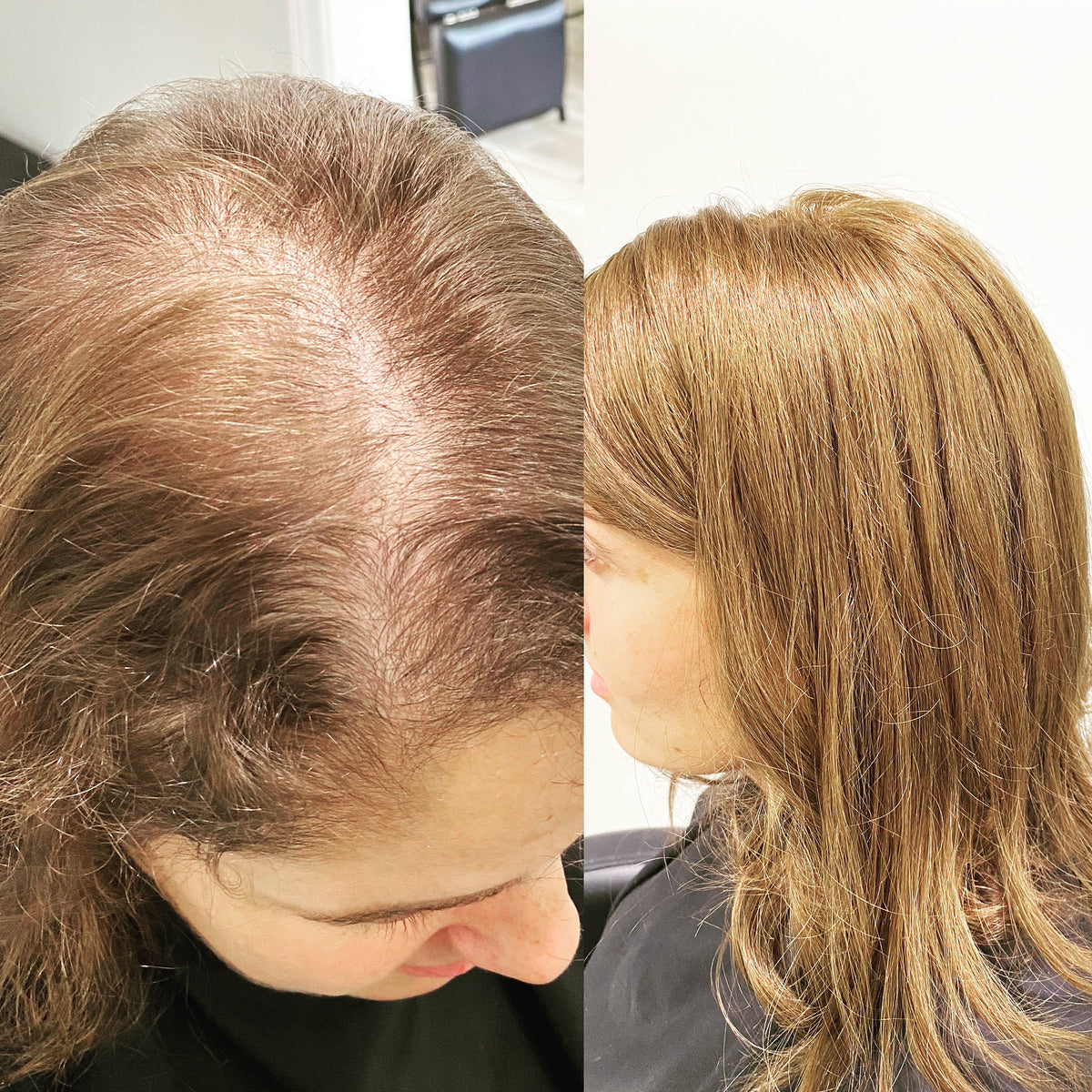
In our experience supporting clients who use cold caps, many retain a significant amount of their own hair. With thoughtful evaluation throughout treatment, we can often enhance what remains—integrating a hair topper without shaving or adhesive, or placing micro-extensions in areas of thinning to rebuild density.
The goal goes beyond appearance. It’s about helping you feel like yourself, maintaining a sense of normalcy, and supporting your confidence through every stage of the process.
Understanding Cold Capping for Chemotherapy Hair Loss: Benefits, Definitions, and Limitations
Cold capping is a non-surgical approach used during chemotherapy infusions. A specialized cap chilled to very low temperatures is worn before, during, and after chemotherapy sessions. The cooling helps reduce drug delivery to hair follicles, which can lessen shedding. While outcomes vary, the technique can be especially meaningful for those who value maintaining hair coverage throughout their care plan. Do you picture yourself feeling more confident leaving an infusion with your style still in place?
Important definitions and caveats help set expectations:
- Cold capping (scalp cooling): Wearing a chilled cap around chemotherapy sessions to reduce hair loss.
- Hair topper: A partial hairpiece that blends with your remaining hair to cover thinning at the part, crown, or front.
- Hair extensions: Added strands that create volume and length to complement retained hair.
- Limitations: Not all chemotherapy drugs respond the same way to cooling, and results can vary by hair type, regimen, and consistency of use.
- Care considerations: The scalp and hair may be more fragile during and shortly after treatment; gentle methods are essential.
Cold capping is not a guarantee against hair loss, and some shedding is common; however, preserving even partial coverage can ease the transition and support self-esteem. Have you discussed cold capping with your medical team to see if it fits your treatment protocol?
Hair Extensions as a Chemotherapy Hair Loss Solution: Comfort, Confidence, and Control
Wigs have long been an option for chemotherapy-induced hair loss, but they are not the only solution. Some find wigs hot, heavy, or difficult to maintain. As a non-surgical hair restoration option, hair extensions can provide a natural and flexible alternative by restoring fullness and framing the face while blending with hair retained through cold capping. Would a lighter, more customizable option help you feel at ease day to day?
Extensions can be tailored to match density, color, and texture, offering subtle volume or more dramatic thickness. This approach can be especially helpful when hair thins only in certain areas rather than uniformly. With professional guidance, extensions can support your desired look during recovery without overwhelming delicate strands. What level of coverage would make your routine feel manageable again?
The Advantages of Hair Toppers After Cold Capping for Chemotherapy-Related Thinning
Hair toppers are partial pieces designed to integrate seamlessly with your existing hair, covering areas where shedding is most noticeable—often the crown, part line, or anterior hairline. Unlike full wigs, toppers allow your own hair to show, which can feel more familiar and breathable. Would blending a topper with your preserved hair give you the natural look you want?
Key advantages of hair toppers for chemotherapy-related hair loss include:
- Targeted coverage that focuses on thinning zones rather than the entire head.
- Lightweight construction for comfort during daily wear.
- Customizable base sizes and densities to suit your pattern of hair loss.
- Styling versatility to match your cut, wave pattern, and color.
- A gentler alternative to full wigs when sensitivity or heat is a concern.
When paired with cold capping results, a topper can complete the picture—filling gaps while keeping your natural hairline visible. How important is it for you to maintain your usual part or silhouette?
Types of Hair Extensions for Cold Capping and Chemotherapy Hair Loss: Options, Methods, and Scalp-Friendly Choices
Choosing the right extension method after chemotherapy depends on hair strength, density, and your styling goals. Each technique has its own care and maintenance routine, and a professional consultation is essential. Which method sounds like it would best match your lifestyle and hair goals?
Common extension types for those who have retained hair through cold capping include:
- Clip-in extensions:
- Temporary wear; easy to apply and remove at home.
- Useful for special occasions or part-time fullness.
- Minimal stress on hair when used correctly.
- Tape-in extensions:
- Flat, lightweight wefts secured with medical-grade adhesive tape.
- Can last for weeks with proper care and periodic reapplication.
- Provide a smooth, natural blend along the hair shaft.
- Fusion (keratin bond) extensions:
- Strand-by-strand attachments designed for longer-term wear.
- Customizable placement for even weight distribution.
- Appropriate only when hair is strong enough for bonding.
- Micro extensions:
- Attached with small, discreet beads—no heat or harsh adhesives.
- Strategic placement in thinning zones for subtle fill.
- Gentle on the scalp when installed and maintained properly.
We can discreetly place micro extensions at the top of the head using our Combline technique, which carefully pairs one extension strand to one of your own strands. If more hair is needed, we also work with V-light hair extensions; the attachment area is virtually undetectable, and the adhesive is available in shades that blend with your color. The V-light system allows us to customize size, length, and volume, and the extensions are cured with an infrared light for secure wear. Would a nearly invisible attachment give you the confidence to style your hair freely?
Extensions should never compromise scalp comfort or hair integrity during recovery. A thoughtful plan—focusing on conservative weight, delicate placement, and measured timing—helps ensure a supportive experience. How gently do you want to transition as your hair regrows?
How to Choose the Right Hair Extensions or Hair Topper After Chemotherapy and Cold Capping
Selecting an approach starts with an evaluation of hair condition and your goals for coverage, length, and ease of care. The objective is a solution that blends naturally, feels comfortable, and supports daily life. What look would make getting ready each morning feel simple again?
Considerations when choosing extensions or toppers include:
- Hair health: Density, elasticity, and scalp sensitivity.
- Color and texture: Seamless matching for a believable result.
- Coverage needs: Crown, part line, or overall volume enhancement.
- Lifestyle: Low-maintenance routines versus more styling flexibility.
- Timing: Waiting a few months after your last treatment can be wise, as post-chemotherapy hair regrowth and shedding patterns vary.
- Professional oversight: Guidance helps protect fragile hair while achieving the desired look.
October is Breast Cancer Awareness Month, and many breast cancer survivors and their families use this time to explore supportive options. A cancer diagnosis often brings swift changes, and hair loss can be one of the most visible. Cold capping can be promising in preserving hair, and we can enhance what remains with extensions or a topper as needed. We will evaluate your hair strength and discuss whether extensions or a topper make sense for your current stage. Would a personalized plan help you move forward with more confidence?
The Process of Applying Hair Extensions or Hair Toppers After Chemotherapy and Cold Capping
Application methods vary by extension type and the condition of your hair. For clip-ins and tape-ins, the hair is sectioned neatly and the pieces are placed to blend with your growth pattern. For strand-based techniques such as fusion or micro methods, a skilled stylist positions attachments carefully to support a secure, natural outcome. Does a step-by-step, gentle process feel reassuring as you rebuild your routine?
Our Combline approach is particularly suited to fragile hair, provided there is sufficient coverage to attach. We methodically comb one extension strand into one of your hair strands for precision and lightness. This detailed service is time-intensive and is recommended for filling areas of loss rather than dramatically increasing length. For those seeking primarily density and subtle blending, it can be an elegant solution. Would filling just the sparse spots give you the look you’re envisioning?
General steps you can expect include:
- Consultation and assessment of hair health and shedding patterns.
- Color matching and texture selection for seamless blending.
- Test placement to confirm comfort and appearance.
- Full application with attention to balance and weight.
- Cutting and blending for a natural finish.
- Education on daily care, washing, drying, and safe styling.
Your comfort is central throughout the process. Gentle techniques and careful spacing protect your scalp while delivering the coverage you want. Would a thorough care plan help you feel confident maintaining your new style?
Noelle Salon’s Expertise in Chemotherapy Hair Loss: Support, Skill, and Ongoing Care
Noelle Salon provides guidance for cold capping and advanced extension methods tailored to those experiencing chemotherapy-induced hair loss. Our team includes certified hair loss specialists with advanced training in scalp-cooling support, toppers, and micro/extension application for sensitive scalps, and we prioritize comfort, discreet placement, and realistic styling goals. We have worked closely with oncology patients for many years, refining gentle placement strategies and maintenance protocols. Collectively, our experts have over 15 years of experience delivering specialized hair solutions for chemotherapy patients, backed by advanced training from recognized hair-restoration programs. We collaborate with oncology providers and cancer support organizations and have supported hundreds of clients through treatment, recovery, and regrowth. Personalized consultations ensure that each person’s needs and preferences lead the plan—from hair toppers for strategic coverage to micro and V-light methods for refined blending. How valuable is an experienced partner who understands both aesthetics and sensitivity during this time?
We offer maintenance education and follow-up support so you can enjoy your extensions or topper safely, with empathy and practical strategies that honor your pace. Our stylists hold relevant certifications in cold capping guidance and extension application, and we document outcomes during follow-ups to continually tailor your plan. We will always tell you honestly whether you are a candidate for specific services or whether it is best to wait. Would compassionate, straightforward advice make this decision easier?
The Benefits of Micro Hair Extensions for Chemotherapy Hair Loss and Post-Chemo Cold Capping Results
Micro extensions can be especially helpful when hair is delicate yet present. These small, discreet attachments are designed to blend seamlessly and feel lightweight for comfortable daily wear. With thoughtful placement, micro extensions can enhance fullness without overwhelming fragile areas. Would a barely-there attachment that still lifts your style feel right for you?
Why clients appreciate micro extensions after chemotherapy-induced hair loss:
- Lightweight feel that respects scalp sensitivity.
- Subtle, undetectable attachments for natural movement.
- Customizable density to suit different levels of thinning.
- Low-maintenance routines with gentle care.
- Compatibility with selective coverage in the crown and part.
Because the method avoids heavy bonds and harsh adhesives, it can be kinder to recovering hair when applied by professionals. Combined with a mindful at-home routine, micro extensions can bridge the transition until your natural density returns. Could this be the “in-between” solution you’ve been seeking?
Real Experiences: Cold Capping, Hair Extensions, and Toppers for Chemotherapy Hair Loss
People who choose scalp cooling and carefully selected enhancements often share how these tools help them feel more like themselves. Client testimonials and hair loss support stories frequently highlight natural-looking results, improved confidence, and the comfort of a routine that works. While every journey is unique, hearing from others can provide reassurance and a clearer picture of what day-to-day life might look like. Would learning from lived experiences help you imagine your own path forward?
Hair loss support communities often mention the relief of seeing familiar features in the mirror—even when hair is thinner than before. Blending preserved strands with a topper or micro extensions can restore the silhouette you recognize, which may make social situations and workdays feel easier. We are honored to be recommended in community spaces and remain devoted to compassionate, individualized care. What part of your look matters most to your sense of self?
Care, Maintenance, and Safety Considerations for Hair Extensions After Chemotherapy
After chemotherapy, the scalp and hair can be sensitive, so gentle maintenance is essential. Collaborating with professionals minimizes strain and supports healthy regrowth. Do you want a clear, simple care plan to protect your progress?
- Washing and drying:
- Use gentle techniques and avoid vigorous scrubbing near attachments.
- Pat dry and detangle from ends upward with a soft brush.
- Styling:
- Keep heat on the lowest effective setting and avoid direct heat on bonds.
- Embrace air-drying or low-tension styles to limit stress.
- Sleeping:
- Consider a loose braid or silk accessory to reduce friction.
- Check attachments regularly for comfort.
- Follow-ups:
- Attend recommended maintenance visits for repositioning and scalp checks.
- Adjust density as your natural hair changes during post-chemotherapy hair regrowth.
Extensions and toppers should never cause discomfort. If sensitivity arises, prompt adjustments can help maintain scalp health. Would routine check-ins give you peace of mind as you wear your new look?
Addressing Common Misconceptions About Cold Capping, Wigs, Hair Toppers, and Extensions for Chemotherapy Hair Loss
Clear information makes decision-making easier when coping with hair loss. Have you encountered any of these common misunderstandings?
- “Cold capping guarantees no hair loss.” While scalp cooling can reduce shedding, results vary and some loss is typical.
- “Extensions always damage hair.” When matched to hair strength and installed professionally, extensions can be gentle and supportive.
- “Toppers look obvious.” With proper color, texture, and base selection, toppers blend naturally and move like real hair.
- “You must shave to wear a topper.” Toppers are designed to integrate with existing hair; shaving is not part of this process.
- “Wigs are the only choice.” Wigs are one option; cold capping, toppers, and selective extensions can also be effective, depending on your needs.
The best approach is the one that fits your health, comfort, and style preferences. With realistic expectations, you can choose the support that feels right for you. What misconception have you heard that you’d like clarified?
Consultations for Personalized Hair Loss Solutions: Hair Extensions and Toppers at Noelle Salon
Personalization sits at the heart of an excellent outcome. We listen to your styling goals, assess hair and scalp condition, and craft a plan that meets you where you are. From color matching to base design for toppers and measured placement for micro methods, every detail supports a believable result. Would a customized roadmap help you feel more in control?
Noelle Salon offers individualized guidance, from initial evaluation to maintenance scheduling. We balance aesthetics with sensitivity and always prioritize your comfort and hair health. If it is better to wait before applying extensions or a topper, we will explain why and map out a timeline. Are you ready to discuss options that align with your recovery pace?
Conclusion: Why Cold Capping With Hair Extensions or Toppers Can Outperform Wigs for Chemotherapy Hair Loss
Cold capping can be a meaningful way to help preserve your hair during chemotherapy, supporting both your appearance and your sense of identity during treatment. When paired thoughtfully with lightweight extensions or a custom hair topper, it’s often possible to maintain volume, shape, and a more familiar style while working with the hair you retain.
These options are breathable, customizable, and designed to adapt to your changing needs throughout treatment. For many, they offer a practical and more natural-feeling alternative to full wigs, especially when some of your own hair remains.
Every journey is different, and the right approach depends on your hair, your treatment plan, and your comfort. With careful evaluation and gentle techniques, it’s possible to create a solution that supports both scalp health and confidence along the way.
If you’d like guidance tailored to your situation, you don’t have to navigate this alone.
Book your free hair loss consultation to explore supportive options designed around your comfort, your treatment, and your goals.


