

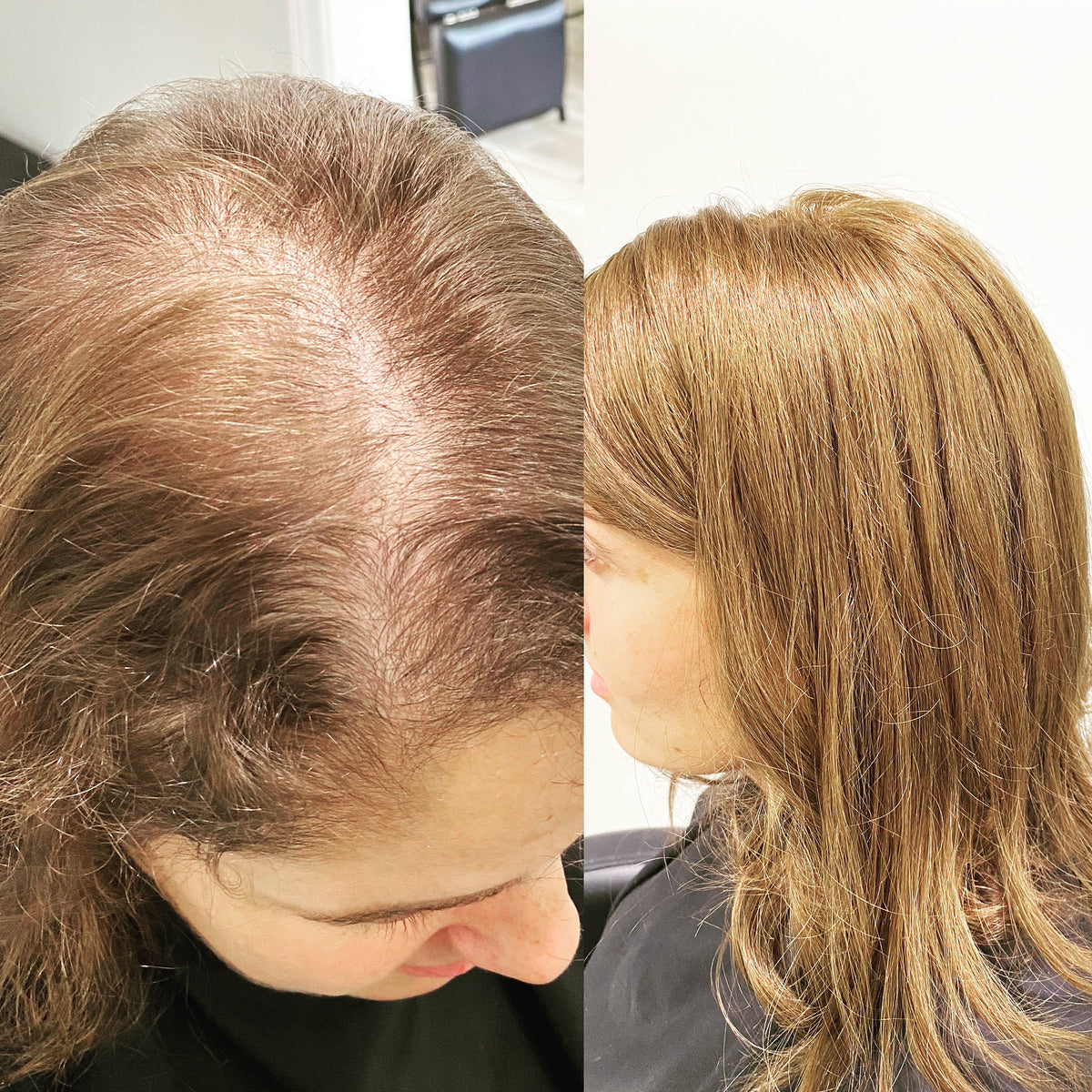


My Experience With Combline Hair Extensions in Boston
Initially, I was hesitant about trying Combline hair extensions in Boston, but my first hands-on session changed my mind: the application felt smooth and the extensions were light and flexible, blending into a natural-looking fullness that felt like healthier hair without the heaviness of traditional bonds. For me, the magic has been in adopting a hybrid approach—using traditional hair extensions for overall body and length, then applying Combline at the crown and top where hair is most delicate. This combination gives me the volume I want while keeping my healthy hair safe and happy. I also appreciate that the hair is reusable and, in my experience, Combline can last up to 1 month with mindful care and gentle daily habits.
The application process for Combline extensions uses a tiny amount of gentle adhesive to blend human hair with your own strands. Here's how it feels and looks:
- Blending human hair: The extensions merge seamlessly with your strands to create a soft fringe effect that fills and thickens areas of hair thinning for a fuller, natural-looking finish.
- Natural look: Expect subtle, believable fullness that mimics your own hair.
- Light and flexible: Ideal for fine or thinning hair, the system feels airy and gentle on the scalp.
- Adhesive release: The applicator precisely dispenses the adhesive where needed.
- Combing and separation: Each hair extension strand is gently combed in, then brushed and separated for a smooth blend.
Nearly invisible attachment
The result is a nearly invisible attachment that imitates natural hair growth for an undetectable finish.
Combline glue is similar to keratin adhesive—without heat
- Performance: The adhesive performs much like keratin bonds and supports a secure, flexible hold.
- Shade selection: It comes in two shades—one for darker hair and one for lighter tones—so color matching is crucial to avoid visibility in bright light or when hair is lifted.
- User-friendly: Think of it like eyelash glue—medical grade and hypoallergenic, without harsh fumes or stinging odors you might associate with nail glue.
Combline glue is a light-weight adhesive—medical grade ISO 10993-5 certified.
- It is not applied to the scalp.
- Allow it to set before separating the strands for the cleanest, most secure bonds.
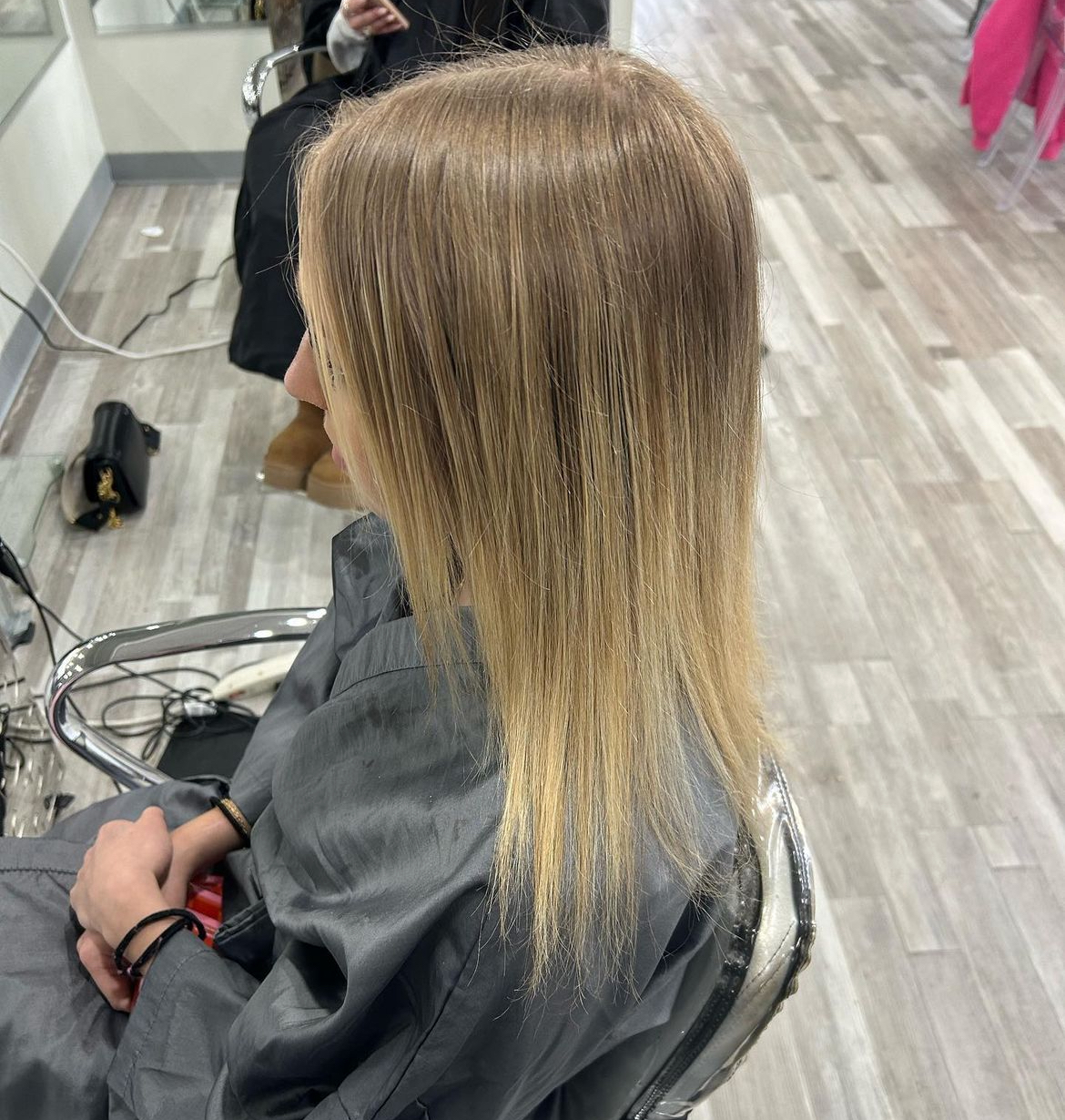
The unique features of Combline extensions
Combline hair extensions use a micro attachment system designed to feel barely there while delivering a softly fuller look. Whether your hair is fine, wavy, or even coily, the goal is seamless blending for a discreet enhancement that appears to grow from your scalp.
- Tiny, featherlight bundles of hair are added one by one with a precision tool.
- Each small bundle is secured with a pinpoint of adhesive so the result lies flat, moves naturally, and avoids bulky bonds.
- Because it's so light, it's ideal for thin hair where heavy attachments could feel uncomfortable or show through.
What stands out to me most is comfort. There's no tugging sensation, and the bonds flex with your natural hair, which helps you forget they're even there.
Comparing Combline with traditional extensions
When choosing hair extensions, it helps to understand how Combline differs from full-size methods. Combline works beautifully on fine or thinning hair and is especially helpful for targeted filling on the crown, along the part, and at the front hairline. For best coverage, you generally need at least about half of your own density to hide the micro bonds effectively. Its strength is integration and subtle thickening—think refinement and soft fullness rather than a dramatic, all-over transformation in one sitting. Compared with some full-size attachments that can feel heavier and look less seamless up top, Combline's gentle micro bonds stay lighter and move more naturally.
How traditional extensions work
By “traditional extensions,” I mean full-size attachment methods best for light/medium to thick densities. Many keratin bonds weigh about one gram per bond, while Combline adds just a few hairs in each placement. I often customize traditional extensions for volume and length throughout the bulk of the hair, and then use Combline to fill thinner areas—like the crown, top, or sides—where big bonds might show through.
Traditional options often outlast Combline and can be quicker to apply when the goal is a full, voluminous head of hair. Combline excels when subtlety and precision are the priority.
Initial impressions of Combline extension strands
With Combline, the hair enhancement looks and feels organic—like thicker versions of your own strands. The lightweight adhesive keeps the attachments comfortable, and the tiny strands offer precise coverage right where thinning is most obvious. The technique, refined by innovators such as Philip from LA, can add subtle length while restoring airy fullness. It's an excellent way to fill sparse spots from hair thinning or early hair loss where bulky bonds would be too noticeable.
Great for fringe and bangs
I especially love using this method to refine fine bangs—for both thickening and slight lengthening. I'll leave out a thin veil of the client's hair to cover the attachments, then comb in tiny bundles with the applicator for a natural sweep. For denser bangs, I may choose micro bonds to build weight faster. Side-swept or fuller bangs are easy to craft with the Combline method, giving a face-framing boost that still moves naturally.

Challenges faced with Combline extensions
I've tried creating dramatic length and fullness on clients with medium to thicker densities using only Combline, and the hair simply wasn't ample enough to achieve the goal. Because Combline adds just a few hairs per placement, blending into naturally thick hair can be difficult. After hours of careful application, I still needed to supplement with larger keratin bonds to complete a seamless blend—Combline alone wasn't meant for that kind of transformation.
Clients love the concept of invisible bonds, but when you're chasing a full-head makeover, the quantity placed doesn't always match the time involved. In my chair, an all-over Combline application often took about three times longer—and still required additional traditional bonds for density.
Hybrid technique: combining Combline with traditional extensions
Blending techniques delivers the best of both worlds. I use traditional methods for volume and length through the mid-lengths and ends, then layer in Combline where hair is sparse—at the top, along the part, in the crown, or near the fringe. This strategic pairing allows for comfortable, discreet attachments up top while keeping the overall style plush and full.
For clients with a perm pattern, fringe goals, or crown thinning, the hybrid approach can be a game-changer: traditional bonds create the foundation, and Combline perfects the details. The result is a tailored, modern system that many salon professionals in LA and beyond have embraced for its finesse and comfort.
Why opt for a hybrid technique?
A hybrid technique lets each method play to its strengths. Combline excels at delicate, targeted filling, while traditional extensions pack in fast volume where density can hide larger bonds. The strand-by-strand detail is similar to eyelash extensions, which is ideal for fragile or fine hair that can't support heavy attachments.
This pairing is perfect for enhancing bangs or supplementing spots with lower follicle density, so the final style looks consistent from hairline to hem.
The process of applying a hybrid extension
I begin by mapping where density is needed. Traditional extensions add body through the lengths, then Combline fills the top, part, or crown with lightweight bonds to preserve comfort and invisibility. This approach respects different hair conditions—curly, fine, or thinning—and yields a harmonious, full look that's gentle on the scalp.
Combline hair extension review
For clients with hair loss or visible thinning, I reach for Combline—or sometimes micro-bonds—as my go-to tools. My “ideal candidate” typically has roughly 50% of their own hair in the area to conceal the micro attachment effectively. If a client shows more significant loss than that, I'll recommend custom mesh integration or a topper for broader coverage. Combline is also fantastic for bulking up delicate bangs without stiffness.
While the application usually takes longer than traditional methods, the wear time is shorter because we're placing tiny groups of strands. As natural hairs shed, the micro attachments either release and comb out easily or grow down and slide free without trauma. It's a low-bulk, low-stress option for precisely the spots that need it most.
Preferred technique for thinning hair
Combline hair enhancement extensions are a strong choice for anyone navigating thinning hair challenges. The combination of medical-grade adhesive and tiny, flexible attachments makes them friendly to many hair types—perm, natural texture, or fine. Clients with curly hair, general thinning, or early-stage hair loss appreciate how featherlight and adaptable the system feels.
Technical insights and durability of Combline extensions
The Combline system is engineered for resilience while staying soft and wearable. Each bond relies on medical-grade adhesive to create a secure, discreet seal that tolerates daily styling and movement. When cared for properly—think gentle brushing and regular conditioning—the extensions retain their integrity. With thoughtful maintenance, longevity can reach up to eight weeks.
Below is a simplified snapshot to make the system easier to understand, even if you're new to extensions:
- Bonding method: Medical-grade adhesive that does not touch the scalp
- Longevity: Up to 8 weeks with proper care
- Ideal hair type: Fine to thinning hair and areas needing discreet coverage
- Maintenance level: Moderate—gentle brushing and hydrating care
- Applicator tool: A comb-like device that places tiny hair bundles precisely
How Combline's unique tool revolutionizes attachment
The innovative applicator comb is central to the method. It places individual micro bundles exactly where you need a density boost—no heat and no bulky bonds required. The comb ensures consistent adhesive placement, limits tension, and supports comfort throughout the service. For anyone with fine or thinning hair, that precision means a flatter, more natural lay that blends into your own strands beautifully.
The process is a lot like eyelash extensions: each little bundle is applied with care, strand by strand. This helps preserve the health of your natural hair and supports a believable finish. Stylists may use an extension shield during application to keep neighboring strands protected, so every bond sits cleanly without disturbing surrounding hair.
One more advantage is how approachable the tool feels to skilled stylists. With practice, it speeds up precise placement while keeping clients comfortable—an experience that elevates the overall service.
The role of UV light in enhancing Combline extension durability
Some practitioners incorporate UV light to cure the medical-grade adhesive after placement. Curing helps create a stronger bond that resists everyday friction and reduces the chance of slippage common in some traditional methods. For active lifestyles, this extra step contributes to staying power while you move through your day.
Once cured, the adhesive lies very flat, which minimizes tangling and matting. The flatter profile looks more natural, feels smoother against the scalp, and supports long-lasting comfort. Pair that with smart at-home care—avoid excessive heat and stick with gentle, sulfate-free products—and you set your Combline extensions up for success.
Conclusion: bringing it all together
Combline extensions are designed for subtle, targeted enhancement—especially for thinning areas at the crown, part, and fringe where traditional methods can feel too heavy or visible. With a lightweight micro-attachment system and precise placement, they create natural-looking fullness while protecting delicate hair.
If you're ready to explore whether Combline or a hybrid extension approach is right for you, you can book a free hair extension consultation to create a personalized plan tailored to your hair type, density, and goals.


