



Expert Picks: Best Brush for Hair Extensions
Struggling to find the best brush for hair extensions in Boston without causing tangles, frizz, or breakage? Certain tools truly make extension care easier—helping you detangle gently, add shine, and minimize static. The ideal brush can vary by extension type and by where you’re brushing, whether it’s from roots to ends or only through the added hair. Our natural hair produces oil that travels down the strand, but with extensions, that oil often doesn’t reach the mid-lengths and ends. That’s why the right brush matters so much. Some of the following picks might seem unconventional at first glance, but they work—and they work well. By the end of this guide, you’ll know which brush to grab for every phase of your hair extension routine and how to use each one with confidence.
The loop brush (made of silicone loops) will separate individual strand hair extensions at the root. Carefully brushing in small sections—rather than one big pass—keeps tension low and prevents snagging. Because individual strands can twist together at the base, the silicone loops glide between bonds to gently lift and separate them without catching. Picture this: you wake up with a few strands hugging each other at the roots; a few patient, downward strokes with a loop brush can free each bond and reset your base with minimal stress on your natural hair.
The best loop brush with silicone loops

Recommended Brushes for Caring for Hair Extensions
The Denman brush, originally created in the 1930s, features evenly spaced, firm rows of bristles that help define curls, detangle with control, and shape hair during blow-drying. While it can be used on many hair textures, it especially shines on curly patterns and natural hair, including curly hair extensions. Its design tugs the hair taut to smooth frizz, clump curls, and sculpt shape. Imagine refreshing second-day curls on your extensions: spritz on a lightweight leave-in, then use a Denman to encourage uniform curl groups from mid-lengths to ends without disturbing your attachment points.
Made of 100% boar bristle, the classic Mason Pearson–style brush is a verifiably natural bristle option. Boar bristles are known for distributing natural oils from roots through mid-shafts and ends—exactly what hair with extensions needs for softness and shine. These bristles are gentle on the cuticle, help stimulate the scalp to encourage circulation, and enhance natural luster. They’re also excellent for polishing a blow-dry. Visualize smoothing your finished style: a few steady passes with a boar bristle brush reduce flyaways, create a glossy finish, and keep extension hair looking healthy between washes.
Spornette DeVille Boar Bristle Brushes
These boar bristle brushes deliver intense shine and come in oval, paddle, or sculpting shapes, so you can match the tool to your styling goals. The natural bristles gently stimulate the scalp and help move existing oils onto the extension hair, where moisture is often lacking. Keep one in your purse to revive hair extensions on the go, soften ends, and maintain a silky, detangled finish throughout the day. If your ends start to feel dry or static-prone, a quick brush-through with boar bristle brings back smoothness without tugging on bonds or tapes.
Section Summary: For curls and frizz control on both natural hair and curly extensions, use a Denman to define shape and a boar bristle brush to distribute oils and boost shine. Choose an oval or paddle boar bristle for daily polishing and portable touch-ups.
How to Select the Perfect Brush for Your Hair Extensions
When choosing the best brush for hair extensions, consider soft, flexible bristles (avoid metal pins that can snag), and pick the right shape for your goal. Wide-tooth and flexible-pin brushes excel at detangling, while boar bristle shines at smoothing and distributing oils. An ergonomic handle helps you maintain control without adding pressure near bonds. Materials also matter; natural bristles are superb for finishing, and cushioned bases reduce tension on both your hair and the extensions.
Think about how you’ll use each brush: a loop brush for the root area of strand-by-strand attachments, a flexible detangler for mid-lengths and ends, and a boar bristle finishing brush for shine. If you frequently style wet, look for a brush designed to be gentle on damp hair. And if your extensions are especially thick, longer pins can reach through dense sections more easily, reducing the number of passes you’ll need.
Section Summary: Match bristle softness, pin length, and brush shape to your attachment method and styling steps. Choose flexible detanglers for knots, boar bristle for gloss, and loop brushes for root separation on individual strands.
Detangling Bristle Hairbrush
Because extensions add volume and length, they also require more mindful detangling—especially after shampoo and conditioner. A detangling brush with flexible or ball-tipped bristles reduces breakage risk and helps prevent matting. Use it on damp hair to distribute leave-in products and on dry hair for gentle maintenance throughout the day. Winter’s dry air can increase static and tangles; a soft detangler keeps buildup at bay and makes it easier to evenly apply hydrating products.
Picture this routine: after washing, hold your hair in sections and start detangling at the ends, working upward in small increments. On dry hair, use short, controlled strokes when you feel resistance. This approach protects your natural hair and keeps attachment points stable while you smooth out knots.
Section Summary: A flexible, soft-bristle detangling brush is your everyday workhorse for both wet and dry hair. Always start from the ends and work upward in sections to safeguard the integrity of your extensions.
1) Porcupine Nylon Dog Brush Works Great on Thick Extensions
The porcupine dog brush made by Chi is designed for a pet’s coat—yet its combination of nylon pins with soft bristles works surprisingly well on human hair extensions. The longer pins reach into dense hair to detangle, while the softer bristles add shine and help tame flyaways. If you’re managing very thick extensions, the extra pin length can make the process faster and more efficient with fewer passes.
I accidentally purchased one and tried it in a pinch—no static, lots of shine, and a smoother finish than expected. That experience led me to keep them on hand for clients with especially full extensions. Imagine facing a stubborn knot after a long day: the elongated pins slide through bulkier sections, and the soft bristles polish the surface for a neat, frizz-minimized result.
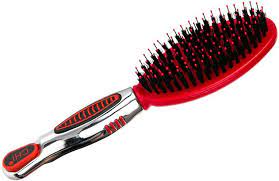
Pro tip: Use gentle, downward strokes over your hand or a section you’re lightly supporting to protect attachment points, particularly when working near the mid-shafts.
2) In our salon, we work with lots of hair extensions, hair systems, and wigs, we use the Scalp Master Detangling brush. It is made of flexible ball-tipped bristles, similar to the wet brush, but I love the handheld portion of the brush. I use it to spread a hair mask on wet hair and detangles dry hair well. This brush has worked to detangle the nastiest hair knots. It is also a scalp massager, you may want to use it to promote healthy hair growth.

Scenario to try: Apply a leave-in conditioner or lightweight mask from mid-lengths to ends, then glide the Scalp Master through damp sections. The flexible pins distribute product evenly and gently, while the ergonomic grip gives you better control near bonds and tapes.
Section Summary: For dense or stubborn tangles, longer-pin tools like the porcupine-style brush can reach through bulk, while flexible ball-tipped detanglers excel at both wet and dry maintenance and product distribution.
Extension Brush for Your Purse
3) We all need a compact brush for our purse—and this one includes a mirror for quick checks before meetings, dinners, or photos. The function is straightforward: it keeps ends smooth, helps tame flyaways, and maintains a neat finish in between thorough brushing sessions at home. For quick refreshes, lightly mist your ends with a leave-in and use the portable brush to re-smooth, working in small sections so you don’t disrupt attachment points.

Section Summary: A pocket-size brush is perfect for gentle touch-ups on the go. Use it to maintain sheen, tidy flyaways, and extend your smooth style between full detangling sessions.
Best Practices for Brushing Wet Hair Extensions
Spornette DeVille brushes, made of boar bristle, excel at adding shine to dry hair and finishing styles. For wet hair, reach for flexible pin or ball-tipped detanglers first. When hair is damp, it’s more vulnerable, so always support each section with your hand, start at the ends, and work upward in small increments. Once knots are out and hair is partially dry, you can finish with a boar bristle brush to polish and distribute oils without pulling on attachments.
For detangling, consider the Porcupine Dog Brush to reach through thicker sections on damp hair—but do so with extra care, keeping tension light and your strokes short. Choosing the right brush type at the right moment protects the cuticle, reduces frizz, and helps your extensions last longer.
Section Summary: On wet hair, use flexible detanglers first and boar bristle second for shine. Work from ends upward with gentle tension and support sections as you go.
Final Thoughts: Choosing the Best Brush for Your Hair Extensions
The right brush is essential for healthy, long-lasting extensions. Recap your toolkit: a loop brush to separate and protect individual strand attachments at the roots; a flexible detangler with soft or ball-tipped pins for gentle knot removal on damp or dry hair; and a boar bristle brush on dry hair to distribute oils, smooth frizz, and add shine. Work in small sections, start at the ends and move upward, support hair near bonds, and avoid metal pins that can snag.
Conclusion
Using the right brush is one of the simplest ways to protect your investment and keep your hair extensions looking smooth, healthy, and long-lasting. From separating bonds at the root to gently detangling and adding shine through the ends, the right tools make daily maintenance easier and help prevent unnecessary breakage or stress on your natural hair.
For hair extensions Boston clients trust, proper care is just as important as the installation itself. Book a free hair extensions consultation to get personalized guidance on the best methods, tools, and maintenance routine for your specific hair type and lifestyle.


