

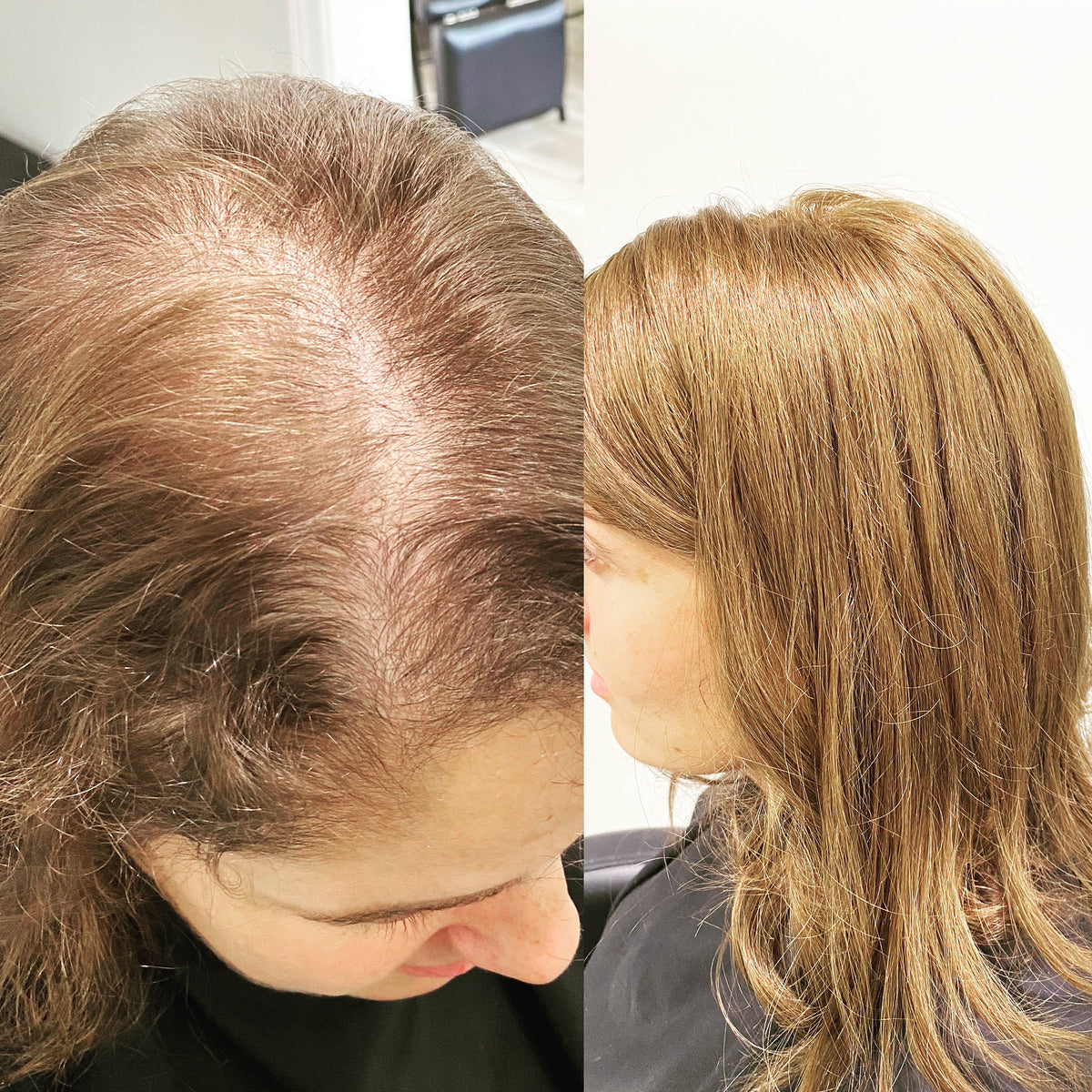


Quick Answer
Yes, hair extensions can contribute to hair loss in some situations. However, the extension method itself is rarely the entire problem. Hair density, follicle density, scalp sensitivity, attachment size, placement, maintenance habits, and the experience of the person applying them all play important roles.
The good news is that many cases of extension-related hair loss are preventable when the correct person, placement strategy, attachment size, and maintenance plan are chosen.
In my experience, many extension-related problems occur because the hair cannot adequately support the weight, tension, or placement of the extensions being used.
If you're concerned about thinning hair, breakage, scalp discomfort, or previous extension damage, our Hair Extensions Boston specialists can help evaluate whether extensions are appropriate for your hair and discuss safer alternatives when necessary.
Why This Question Is More Complicated Than Most People Think
One of the most common statements I hear online is:
"Hair extensions don't cause hair loss if they're installed correctly."
While there is some truth to that statement, it oversimplifies a much more complex issue.
Over the past 35 years, I have seen clients successfully wear hair extensions for many years without problems.
I've also seen clients develop thinning, breakage, scalp irritation, and hair loss after wearing extensions that were simply too heavy, too large, improperly placed, or unsuitable for their hair type.
The reality is that hair extensions are not automatically good or bad.
The outcome depends on whether the extension strategy matches the individual's hair and scalp.
The Biggest Risk Factors I See
| Risk Factor | Why It Matters |
|---|---|
| Low hair density | Less support capacity for extensions |
| Fine hair | More vulnerable to excessive weight and tension |
| Scalp sensitivity | Can trigger scratching, pulling, and irritation |
| Oversized attachments | May place unnecessary stress on the hair |
| Improper placement | Can create leverage and tension problems |
| Poor maintenance | Can increase tangling, pulling, and breakage |
| Aggressive removal | Can damage healthy hair unnecessarily |

Fine, low-density hair is not always a safe candidate for traditional extension methods. Evaluating support capacity is one of the most important parts of the consultation process.
One of the most common misconceptions I see is that all extension discomfort is caused by excessive weight. In reality, some clients are wearing extensions that simply are not appropriate for their density, support capacity, or scalp sensitivity. If you're experiencing discomfort, loosening attachments, breakage, or scalp tenderness, you may also benefit from reading Are My Hair Extensions Too Heavy?, which discusses some of the warning signs I commonly see during correction consultations.
Hair Density Matters More Than Most People Realize
Many people focus entirely on extension methods.
In reality, I often focus more on the hair itself.
Some individuals have plenty of strands but very fine hair.
I often explain to clients that hair length creates leverage. The longer and heavier the hair becomes, the more stress is placed on the attachment point. This is why support capacity often matters more than extension method.
Others have thicker strands but lower follicle density.
Some have active shedding or ongoing hair loss conditions.
Before recommending extensions, I evaluate:
-
Hair density
-
Follicle density
-
Scalp visibility
-
Support capacity
-
Growth patterns
-
Shedding history
-
Previous extension experiences
This evaluation often determines whether extensions are appropriate at all.
Sometimes the safest recommendation is a different solution entirely.
If you have fine hair, density and support capacity often matter more than the extension method itself. Many of the concerns discussed in this article are explored in greater detail in Why Fine Hair Requires A Different Extension Strategy, where I explain how density, weight distribution, and attachment size influence long-term hair health.
Scalp Sensitivity Is An Often Overlooked Cause Of Extension Problems
One factor that rarely gets discussed is scalp sensitivity.
Some clients tolerate extensions extremely well.
Others experience tenderness, itching, or constant awareness of the attachments from the first day they are installed.
When extensions feel uncomfortable, clients sometimes begin touching, scratching, pulling, or manipulating them throughout the day.
Over time this repeated irritation can contribute to:
-
Inflammation
-
Tenderness
-
Itching
-
Small scalp lesions
-
Additional hair loss

Clients with sensitive scalps may repeatedly manipulate their extensions in an effort to relieve discomfort, which can contribute to additional hair loss.
Attachment Size Matters
Another common mistake I see is oversized attachments.
Larger is not always better.
In some cases, large keratin bonds, oversized tape panels, stacked wefts, or heavy attachment points place unnecessary stress on vulnerable hair.
Similar extension methods can produce dramatically different results depending on customization, attachment size, and installation strategy.
One of the most painful correction appointments I recently encountered involved a client who had keratin bonds installed elsewhere.
The attachments were extremely large and difficult for her to tolerate. When removal became necessary, the process was uncomfortable because the attachments had not been customized appropriately for her hair.
The issue was not keratin bonds themselves.
The issue was how they were designed and applied.
Placement Matters More Than Method
Many people ask:
"Which extension method causes the least damage?"
The truth is that placement often matters more than the method itself.
I've seen beautiful results with methods that are sometimes criticized online.
I've also seen significant problems with methods that are marketed as completely safe.

Placement and weight distribution often matter more than the extension method itself.

Proper spacing and customization can significantly reduce stress on vulnerable hair.
Why Proper Removal Matters
Removal is one of the most overlooked parts of the extension process.
Improper removal can damage healthy hair that might otherwise have remained intact.
Video: Safe Hair Extension Removal
When removal becomes excessively painful, it often suggests that something about the installation, attachment size, maintenance schedule, or removal technique needs to be reconsidered.
What I Look For During A Consultation

Before recommending extensions, I evaluate:
-
Hair density
-
Follicle density
-
Scalp visibility
-
Hair texture
-
Growth patterns
-
Scalp sensitivity
-
Lifestyle
-
Styling habits
-
Previous extension experiences
The goal is not simply to install extensions.
The goal is to determine whether extensions are truly appropriate and, if so, which strategy is most likely to protect the client's existing hair.
Some clients arrive after years of successful extension wear, while others come in after experiencing breakage, thinning, discomfort, or damage from previous installations. If you're concerned about an existing installation, you may also find Hair Extension Correction Boston helpful, where I discuss how we evaluate and address common extension-related problems.
When Hair Extensions May Not Be The Best Solution
Sometimes extensions are not the best answer.
In certain situations, alternative approaches may be safer, including:
-
Hair toppers
-
Customized hair systems
-
Wigs
-
Alternative hair loss solutions
-
Hairstyle modifications
-
Hair loss treatment plans
The safest recommendation is not always the one that involves more hair.
Founder Perspective
After more than 35 years working with women experiencing fine hair, thinning hair, hair loss, extension damage, trichotillomania, alopecia, and scalp sensitivity, one lesson has remained consistent:
One of the biggest misconceptions in the hair extension industry is that there is a universally safe method. In my experience, success depends far more on customization than method alone.
Success comes from matching the right solution to the right person.
The healthiest hair extension result is not the longest or thickest result.
It's the result that still allows the client to have healthy hair years later.
Conclusion
Can hair extensions cause hair loss?
Yes, they can contribute to hair loss in certain situations.
However, the extension method alone is rarely the problem.
In my experience, hair density, scalp sensitivity, attachment size, placement, maintenance habits, and consultation quality are often far more important factors.
The best outcomes occur when extensions are customized to the individual's hair rather than forcing the hair to adapt to the extensions.
Schedule A Free Hair Loss Consultation
If you're experiencing thinning, scalp discomfort, breakage, or concerns about existing extensions, schedule a free hair loss consultation. We'll evaluate your hair density, scalp health, support capacity, and goals to help determine the safest path forward.
Frequently Asked Questions
Can hair extensions permanently cause hair loss?
Most extension-related hair loss improves once the source of tension or irritation is removed, but prolonged stress can sometimes contribute to permanent damage in certain areas.
Which hair extension method causes the least damage?
There is no universally safest method. The safest choice depends on hair density, scalp sensitivity, support capacity, and proper placement.
Can hair extensions cause traction alopecia?
Yes. Excessive tension over time can contribute to traction alopecia in susceptible individuals.
Are hair extensions safe for fine hair?
Some people with fine hair can successfully wear extensions. Others may require customized approaches or alternative solutions depending on density and support capacity.
Why do my hair extensions hurt?
Pain may result from excessive tension, oversized attachments, improper placement, scalp sensitivity, or installation techniques that are not appropriate for your hair type.
Should I remove extensions immediately if they hurt?
Persistent discomfort should always be evaluated. Extensions should not cause ongoing pain or significant scalp irritation.


