



Why Do Hair Extensions Hurt? Common Causes, Warning Signs, and What To Do
Quick Answer
Hair extensions should not cause ongoing pain.
It is normal to feel aware of new hair extensions for the first week or two, especially when sleeping or brushing. But sharp pain, throbbing, swelling, redness, burning, bumps, or constant tenderness are not normal.
Hair extensions may hurt when they are installed too tightly, placed too close to the scalp, attached to too little natural hair, poorly sectioned, or when crossover hairs become trapped between rows, beads, tape tabs, or bonds. Even one trapped hair can cause surprising discomfort.
At hair extensions Boston, our goal is not just to make extensions look beautiful. The goal is to protect the scalp, preserve the natural hair, and create a comfortable, wearable result.
| Symptom | Usually Normal | Should Be Evaluated |
|---|---|---|
| Mild awareness of extensions | ✓ | |
| Slight tightness for a few days | ✓ | |
| Mild discomfort while sleeping during the first week | ✓ | |
| Sharp pain | ✓ | |
| Burning sensation | ✓ | |
| Redness around attachments | ✓ | |
| Swelling | ✓ | |
| Small bumps on the scalp | ✓ | |
| Pain that worsens after installation | ✓ | |
| Headaches from tension | ✓ | |
| Constant itching that leads to scratching | ✓ |
Founder Insight: I Started With Hair Extensions Before They Were Popular
I started specializing in hair extensions long before they became mainstream. Over the past 35+ years, I've worked with nearly every major extension method, educated other stylists, manufactured luxury hair extensions, and helped thousands of women achieve longer, fuller hair safely.
Over time, my work evolved beyond cosmetic length and volume. Today, much of my work focuses on women experiencing hair loss, thinning hair, trichotillomania, alopecia, chemotherapy-related hair loss, postpartum shedding, and menopause-related changes. Because many of these clients have fine hair, low-density hair, active shedding, or scalp sensitivity, I've become especially focused on scalp health, comfort, support capacity, and proper extension placement.
That unique combination of extension expertise and hair loss experience has taught me something important: pain should never be ignored.
While some awareness of new extensions can be normal during the adjustment period, ongoing pain is often a sign that something needs to be evaluated. In my experience, the cause is rarely the extension method alone. More often, it comes down to placement, sectioning, support capacity, tension, or scalp health.
Hair Extensions Should Feel Secure, Not Painful
Some scalp awareness is common after a fresh installation.
You may notice:
-
Tightness for the first few nights
-
Mild sensitivity while sleeping
-
A new feeling when brushing
-
Awareness of the attachment points
That should gradually improve.
What should not happen:
-
Sharp pain
-
Redness
-
Swelling
-
Burning
-
Scalp bumps
-
Headaches from tension
-
Pain that gets worse instead of better
-
Itching that makes you scratch the scalp
I am not going to tell someone to just take a pain reliever and wait it out. If extensions hurt, the real question is: why?

Hair extensions need enough natural hair to support each attachment. When too little hair supports the extension, the weight can feel heavy or painful.
Hair Extensions Need Enough Natural Hair To Support Them
This is one of the biggest causes of extension pain that clients do not always understand.
The extension itself may not be too heavy, but if it is attached to too small of a natural hair section, the weight becomes concentrated in one tiny area.
That can create pulling, tenderness, scalp stress, and eventually breakage.
This is especially important for clients with fine hair, thin hair, low-density hair, or hair loss. The amount of natural hair supporting the extension matters just as much as the extension method.
This is why I always evaluate density, support capacity, scalp visibility, and natural hair strength before deciding what type of extension is appropriate.
For more on this, link to Are My Hair Extensions Too Heavy? and Why Fine Hair Requires A Different Extension Strategy.
Extensions Installed Too Close To The Scalp Can Hurt
Some clients want extensions placed extremely close to the scalp because they think the extensions will last longer.
The problem is that extensions need room to move.
When an attachment is placed too close to the scalp, it can pull every time you brush, sleep, style, or move your hair.
I generally recommend placing hair extensions at least 1/4 inch away from the scalp. This allows the hair to move naturally and reduces unnecessary tension on the follicles.
Extensions placed too close can cause:
-
Tenderness
-
Bumps
-
Redness
-
Itching
-
Follicle stress
-
Hair breakage
-
Traction-related hair loss
If your extensions were installed improperly, you may benefit from a professional evaluation. Read Hair Extension Correction Boston: How To Recover From A Bad Hair Extension Installation to understand the recovery process.

Redness, bumps, swelling, or itching are warning signs that extensions may be too tight, too close, or poorly placed.
Redness, Bumps, and Swelling Are Warning Signs
Pain is not the only sign that extensions need attention.
If you see redness, swelling, irritation, or little bumps around the attachment points, the extensions may be too tight or placed incorrectly.
Scratching can make this worse. Once the scalp is irritated, scratching can create more inflammation and discomfort.
If this happens, contact your stylist. Do not ignore it.
If painful extensions are ignored, excessive tension may contribute to breakage and traction-related hair loss. Learn more in Can Hair Extensions Cause Hair Loss? What 35 Years Has Taught Me.
 Even one crossover hair trapped between extension sections can create pain because it pulls from the wrong direction.
One Tiny Crossover Hair Can Cause Significant Pain
This is one of the most overlooked causes of painful hair extensions.
When extensions are installed, each section must be clean. If one hair from a nearby row, bead, tape tab, or bond gets caught in the wrong attachment, that hair can pull from two directions at once.
That single trapped hair can cause sharp discomfort.
This can happen with:
-
Sew-in extensions
-
Tape-in extensions
-
Keratin bonds
-
I-tip extensions
-
Butterfly wefts
-
Beaded rows
Sometimes the extension method is not the problem. The problem is poor sectioning or trapped crossover hairs.
A Simple At-Home Check For Trapped Hairs
If your extensions feel uncomfortable, gently check above the row or attachment.
Use your fingers or a Wet Brush to softly brush above the extensions and separate the natural hair near the scalp.
This may release trapped hairs from:
-
Sew-in rows
-
Tape-in sections
-
Butterfly wefts
-
Beaded rows
-
Individual extension attachments
Do not pull aggressively. If you cannot relieve the discomfort easily, contact your stylist.
 Clean sectioning helps prevent crossover hairs, uneven tension, and painful pulling.
Proper Placement Matters As Much As The Extension Method
Many articles talk about extensions being too tight or too heavy.
Those things matter, but placement matters too.
If sections are messy, uneven, too small, or overlapping, the hair cannot move properly. This creates tension points that may hurt even if the extensions look fine from the outside.
Proper placement means:
-
Clean sections
-
Enough natural hair supporting each attachment
-
Proper spacing from the scalp
-
No trapped crossover hairs
-
Balanced weight distribution
-
Comfortable movement
This is why experience matters so much with hair extensions Boston clients, especially those with fine hair, thin hair, or previous hair damage.
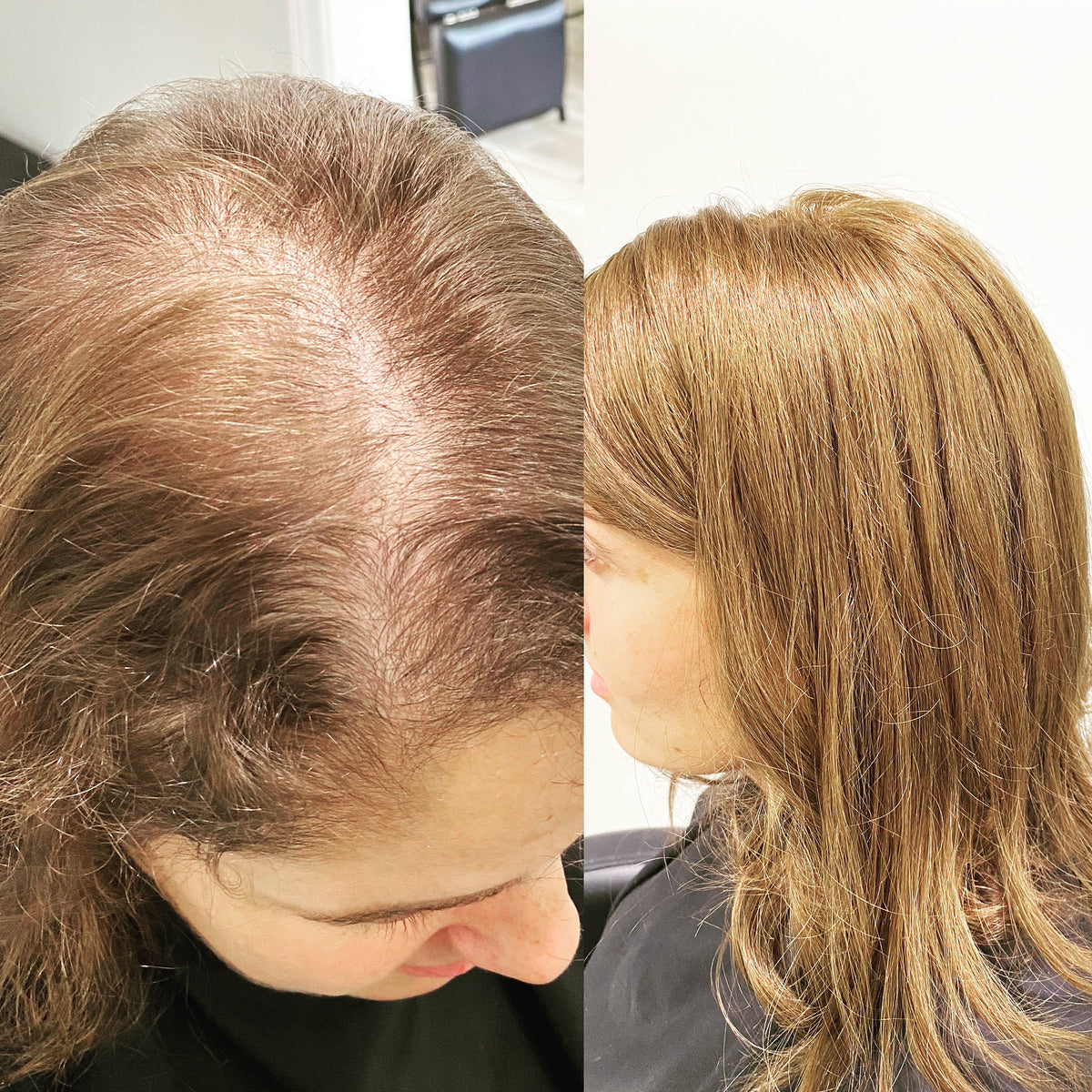
This video shows hair loss caused by previous hair extensions, followed by properly applied extensions and the final result. It demonstrates why placement, support capacity, and extension correction experience matter.

Properly installed sew-in extensions should have clean rows, balanced tension, and enough space for natural movement.
What Properly Installed Extensions Should Look And Feel Like
Properly installed extensions should feel secure without pulling.
They should allow your natural hair to move. You should be able to brush near the root carefully. You should not feel constant throbbing, sharp pulling, or scalp soreness.
A clean installation should have:
-
Organized sections
-
Even tension
-
Proper spacing
-
No trapped hairs
-
No redness or swelling
-
Enough natural hair supporting the extensions
Comfort is part of a good installation.
Shed Hair Can Cause Pain Over Time
Your natural hair sheds every day.
When you wear extensions, some of that shed hair stays trapped inside the extension attachment instead of falling away naturally.
Over time, this can cause:
-
Tangling near the root
-
Matting
-
Pulling
-
Scalp discomfort
-
Difficulty brushing
-
Excess tension
This is especially important for extensions worn for several months.
I do not recommend wearing hair extensions longer than about five months without removal and maintenance. There is simply too much shed hair trapped by that point.
Brushing and detangling near the root is very important. If you cannot safely detangle the area yourself, have your stylist help you.
Should You Go Back To The Original Salon?
In most cases, yes.
I do not recommend salon hopping as the first step if your extensions feel uncomfortable.
Start by contacting the stylist or salon that installed your extensions. They know the method, placement, and installation pattern. Often, they can make a small adjustment that relieves the discomfort quickly.
However, if you see severe redness, swelling, open areas, intense pain, or signs of hair loss, you may need a more advanced extension correction consultation.
What I Check During A Hair Extension Correction Consultation
When someone comes to Noelle Salon with painful extensions, I evaluate:
-
Scalp redness
-
Swelling
-
Small bumps
-
Attachment placement
-
Distance from the scalp
-
Section size
-
Crossover hairs
-
Weight distribution
-
Natural hair density
-
Support capacity
-
Shedding and matting
-
Signs of breakage or traction stress
The goal is not just to remove discomfort.
The goal is to understand what caused the pain and protect the natural hair going forward.
When Hair Extensions May Not Be The Right Choice
Sometimes the safest answer is not more hair extensions.
If the natural hair is too fragile, too thin, actively shedding, or unable to support the weight, I may recommend a different solution.
That may include:
-
A lighter extension method
-
Smaller custom bonds
-
A single lightweight row
-
A topper
-
Mesh integration
-
A hair replacement solution
-
Waiting until the scalp or hair is healthier
A good consultation should be honest, not just focused on selling extensions.
Conclusion
Hair extensions should not cause ongoing pain.
Mild awareness during the first week or two can be normal, but sharp pain, swelling, redness, bumps, burning, or constant tenderness are signs that something may be wrong.
Pain can come from extensions being too tight, too close to the scalp, too heavy for the natural hair, poorly sectioned, or attached with crossover hairs trapped between sections. It can also happen when shed hair builds up over time and creates tangling near the root.
The most important thing is to identify the cause early.
Do not simply take a pain reliever and ignore the problem. Comfortable extensions require proper placement, clean sectioning, enough support hair, and an installation designed for your natural hair density.
Schedule A Hair Extension Consultation In Boston
If your extensions hurt, feel too tight, or are causing irritation, Noelle Salon can help evaluate what is happening.
We specialize in extension correction, fine hair extensions, thinning hair, hair loss solutions, toppers, mesh integration, and customized extension strategies designed to protect your natural hair.
Schedule A Free Hair Extension Consultation to determine whether your extensions need adjustment, removal, correction, or a completely different approach.
Frequently Asked Questions
Is it normal for hair extensions to hurt?
It is normal to feel some awareness or mild tightness for the first week or two. Sharp pain, swelling, redness, burning, bumps, or ongoing tenderness are not normal.
Why do my extensions hurt at the root?
Root pain may come from extensions being too tight, too close to the scalp, attached to too little natural hair, poorly sectioned, or tangled with shed hair.
Can one trapped hair really cause pain?
Yes. Even one crossover hair caught between two extension sections can pull from the wrong direction and cause significant discomfort.
How far from the scalp should extensions be installed?
In general, I prefer extensions to be placed at least 1/4 inch away from the scalp so the hair can move naturally and avoid unnecessary follicle tension.
What should I do if my extensions hurt?
Contact the stylist who installed them first. They may be able to adjust the placement, release trapped hairs, or correct the tension.
Should I take pain medication for painful extensions?
I do not recommend simply taking a pain reliever and ignoring the issue. If extensions are causing significant pain, the cause should be evaluated.
Can painful extensions cause hair loss?
Yes, if extensions are too tight, too heavy, poorly placed, or worn too long without maintenance, they may contribute to breakage or traction-related hair loss.
How long can hair extensions be worn safely?
This depends on the method and the client's hair, but I generally do not recommend wearing extensions longer than about five months without removal and maintenance because of trapped shed hair and tangling.
Why do my extensions itch?
Itching may come from scalp irritation, tight placement, trapped shed hair, product buildup, or inflammation. Persistent itching should be checked by your stylist.
Can painful extensions be fixed without removing them?
Sometimes, yes. If the issue is trapped hairs, minor tension, or placement adjustment, your stylist may be able to correct it. If there is severe irritation or damage, removal may be necessary.


