



Are My Hair Extensions Too Heavy? 7 Warning Signs Your Extensions May Be Damaging Your Hair
Hair Extensions Boston clients choose should make their hair feel fuller, more confident, and easier to wear.
They should not hurt.
They should not constantly slip.
They should not leave you wondering if your hair is becoming thinner than when you started.
Over the past 35 years, I have corrected hundreds of hair extension installations. One of the biggest misconceptions I see is that if extensions are professionally installed, they must be safe for everyone.
The truth is more complicated.
The same extension method that works beautifully on one client may create significant problems for another if the natural hair cannot safely support the weight.
This is especially true for women with fine hair, thinning hair, low-density hair, chemically processed hair, or hair loss concerns.
In many cases, the problem is not the extension method itself. The problem is that the amount of hair, attachment size, length, or weight exceeds what the natural hair can safely support.
Can Hair Extensions Be Too Heavy?
Quick Answer
Yes. Hair extensions can be too heavy if the amount of hair, attachment size, placement, or weight exceeds your natural hair's support capacity. Common warning signs include scalp discomfort, slipping attachments, visible breakage, thinning around attachment points, headaches, and extensions that constantly feel bulky or difficult to hide.
The Biggest Myth About Hair Extensions
Most people think the problem is weight.
In my experience, the real problem is usually support capacity.
The amount of hair your scalp can safely support depends on:
- Hair density
- Follicle density
- Hair strength
- Chemical history
- Existing thinning
- Hair loss conditions
- Scalp health
There is no universal amount of hair that is safe for everyone.
Two clients may receive the same extension method, but one experiences beautiful results while the other experiences breakage, shedding, and discomfort because their hair simply cannot support the same amount of weight.
This is one of the reasons I wrote Why Fine Hair Requires a Different Extension Strategy: What 35 Years Has Taught Me.
What Breaks My Heart Most About Hair Extension Damage
One of the most difficult parts of my career is meeting clients after the damage has already happened.
I regularly see women with:
- Hair broken near the root
- Severe shedding
- Visible scalp exposure
- Thinning around attachment points
- Early traction alopecia
Many arrive believing something is wrong with their hair.
Often, the problem isn't their hair.
The problem is that the extensions exceeded what their hair could safely support.
Recently, a client arrived after wearing extremely long, heavy extensions attached to severely lightened hair. The breakage was so advanced in some areas that the immediate goal was no longer creating more volume or length.
The goal became preserving the remaining hair and allowing recovery.
Situations like this are one of the reasons we frequently perform Hair Extension Correction Boston services for clients who have experienced breakage, excessive tension, or poor weight distribution from previous installations.
Many women assume more hair automatically creates a better result.
In reality, excessive weight, oversized attachments, poor weight distribution, and unrealistic length are some of the most common causes of extension-related damage I see.
The goal should never be to install the most hair possible.
The goal should be to install the amount of hair your hair can safely support.
Warning Sign #1: Your Extensions Hurt
Hair extensions should never be painful.
Persistent soreness, tenderness, pressure, or headaches are warning signs that something may be wrong.
Some clients are told discomfort is normal.
It isn't.
While mild adjustment during the first day or two may occur, ongoing pain often indicates excessive tension, oversized attachments, or excessive weight.

Warning Sign #2: The Corners of Your Wefts Constantly Loosen
This is one of the biggest clues I see in consultations.
When the corners repeatedly loosen, the problem is not always the installation.
Often the natural hair cannot safely support the amount of weight attached to it.
The hair is essentially trying to release the tension.
Many women repeatedly tighten the same row without realizing the underlying issue is support capacity.
Many women visiting our Boston salon are surprised to learn that repeated loosening is often a support-capacity issue rather than an installation issue.
Warning Sign #3: You Can Feel Every Attachment
Extensions should blend into your daily life.
If you constantly feel:
- Large bonds
- Oversized tapes
- Bulky microlinks
- Heavy knots
your installation may be carrying more weight than necessary.

Warning Sign #4: Your Attachments Are Difficult To Hide
Many women assume visibility means poor placement.
Sometimes the issue is actually excessive size.
Oversized attachments require more natural hair to conceal them.
This can be especially problematic for women with:
- Fine hair
- Thinning hair
- Low-density hair
- Hair loss
If hiding your extensions feels like a daily battle, the installation may be too large for your natural hair.

Warning Sign #5: You Notice More Hair In Your Brush
Some shedding is normal.
Increasing breakage is not.
If you notice:
- More hair on your brush
- Hair wrapped around attachments
- Broken hairs around bonds
- Increased shedding during maintenance
your extensions may be placing excessive stress on your natural hair.

Warning Sign #6: Your Extensions Feel Heavy Even After Several Weeks
Many clients assume they simply need time to adjust.
In reality, properly customized extensions often feel surprisingly lightweight.
If your extensions constantly feel:
- Bulky
- Heavy
- Difficult to wear
- Difficult to style
- Difficult to conceal
it may be time to reevaluate the installation.
What Lightweight Extensions Should Feel Like
Many women are surprised to learn that creating fullness does not always require adding more hair.
In many situations, customized placement, lightweight attachments, or a combination of solutions creates a better result than simply increasing weight.
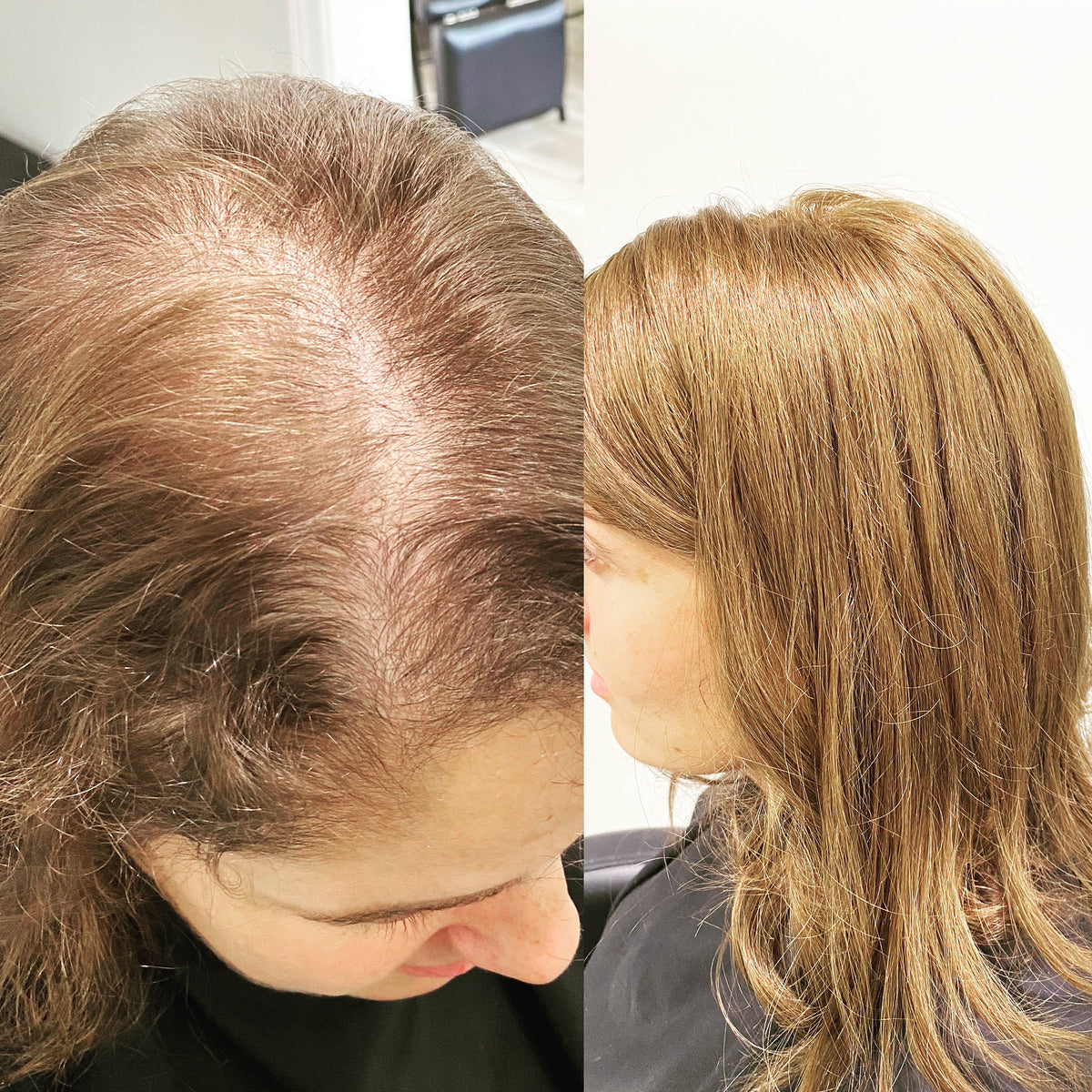
This transformation is a good example of why more hair is not always better. The focus was creating natural-looking density and coverage without excessive weight, oversized attachments, or unnecessary tension.
Warning Sign #7: Your Hair Is Thinner Than When You Started
This is the warning sign that concerns me most.
Many women invest in extensions because they want more confidence.
Unfortunately, some discover their hair becomes thinner over time.
When excessive tension continues for months or years, damage can accumulate.
This is why ongoing evaluation and maintenance are so important.
Common Causes of Excessive Weight
The issue is not always the extension method itself.
More often, the issue is how the method is being used.
Common causes include:
- Heavy machine wefts
- Multiple stacked rows
- Oversized tape panels
- Large keratin bonds
- Brazilian Knot extensions
- Excessively long extensions
- Too much hair for the client's density
- Poor weight distribution
If you're unsure whether your extensions are too heavy, this quick reference guide can help identify common warning signs.
Signs and Possible Causes
| Warning Sign | Possible Cause |
|---|---|
| Scalp soreness | Excessive tension |
| Headaches | Too much weight |
| Slipping corners | Insufficient support capacity |
| Visible attachments | Oversized installation |
| Increased shedding | Excessive stress on follicles |
| Bulky feeling | Too much hair |
| Progressive thinning | Long-term overload |
When To Seek Help Immediately
Some discomfort can occur during the first day or two after an installation. However, ongoing symptoms should never be ignored.
Consider scheduling a professional evaluation if:
- Pain lasts longer than a few days
- Headaches continue after the adjustment period
- Breakage is becoming visible
- Thinning around attachment points is increasing
- Your scalp becomes irritated or inflamed
- Extensions repeatedly loosen despite maintenance
- Your hair feels weaker than before the installation
Many women visiting our Boston salon assume discomfort is normal until they learn their extensions are carrying more weight than their hair can safely support.
The sooner a problem is identified, the easier it often is to prevent long-term damage.
What If Your Hair Cannot Support Extensions?
Not everyone is an ideal extension candidate.
Depending on your density and support capacity, alternatives may include:
- Hair Topper vs Hair Extensions for Thinning Hair
- What Is Mesh Integration and Who Is It Best For?
- Can Hair Extensions Help Hide Hair Loss?
The safest solution is always the one that protects your natural hair.
Some women discover they are not ideal candidates for traditional hair extensions and may benefit from Hair Toppers Boston, What Is Mesh Integration and Who Is It Best For?, or other customized hair-loss solutions depending on their density, support capacity, and long-term hair goals.
For women experiencing significant thinning, diffuse hair loss, or scalp visibility, our Hair Loss Boston specialists often recommend evaluating multiple options before choosing a solution.
Frequently Asked Questions
Can hair extensions be too heavy?
Yes. Excessive weight can lead to discomfort, breakage, shedding, and long-term thinning.
Are heavy wefts bad for fine hair?
Not always, but fine hair often requires lighter weight distribution and customized placement.
Why do my wefts keep loosening?
Repeated loosening may indicate your hair cannot safely support the weight being attached.
Can heavy extensions cause hair loss?
Over time, excessive tension may contribute to traction-related hair loss and breakage.
What are the best extensions for fine hair?
The answer depends on density, support capacity, lifestyle, and overall hair health.
Why do my hair extensions feel heavy?
Hair extensions may feel heavy when the attachment size, amount of hair, length, or placement exceeds what your natural hair can comfortably support. Fine hair and thinning hair often require lighter weight distribution and customized placement strategies.
Book Your Free Hair Extension Consultation
If your hair extensions feel heavy, painful, difficult to conceal, or you are concerned about breakage, thinning, or long-term damage, a professional evaluation can help determine whether your current installation is appropriate for your hair.
At Noelle Salon, we evaluate:
- Hair density
- Follicle density
- Support capacity
- Scalp health
- Existing hair loss or thinning
- Chemical history
- Long-term hair goals
In many cases, the safest solution is not adding more hair. It is finding the amount of hair your natural hair can safely support.
Whether the answer is lightweight extensions, customized micro bonds, a topper, mesh integration, or simply a different placement strategy, our goal is always the same:
Protect your natural hair while creating the most natural-looking result possible.
👉 Book Your Free Hair Extension Consultation


