



Can Fine Hair Safely Wear Hair Extensions? What I Evaluate Before Saying Yes
Quick Answer
Yes, many women searching for hair extensions Boston are surprised to learn that fine hair does not automatically disqualify them from wearing extensions. The real question isn't whether your hair strands are fine. The question is whether your hair has enough density, support, and coverage in the right areas to comfortably conceal and support hair extensions.
Over the past 35 years, I've worked with women experiencing fine hair, thinning hair, menopause-related changes, female pattern hair loss, trichotillomania, alopecia, and hair extension damage. One of the biggest misconceptions I hear is that fine hair automatically means you can't wear extensions.
That's simply not true.
Some women with extremely fine strands are excellent extension candidates, while others with seemingly thicker hair may struggle to support extensions safely.
The difference comes down to proper evaluation, strategic placement, support capacity, density, and realistic expectations. Hair extensions are only as good as the hair supporting them. That's why every consultation begins with determining whether your hair can comfortably support and conceal extensions—not simply choosing a method.
In many cases, women with fine hair can achieve beautiful, natural-looking results. In other situations, a hair topper, mesh integration system, or a combination approach may create a safer and more realistic outcome.
Fine Hair Does Not Automatically Mean You're A Bad Candidate
One of the first things I explain during a consultation is that fine hair and thin hair are not the same thing.
Many women have fine individual strands but still have excellent overall density. These clients can often wear extensions beautifully.
Some of my best extension candidates have extremely fine strands but excellent density. Dense fine hair can often support beautiful, natural-looking extensions when placement and weight are customized correctly.
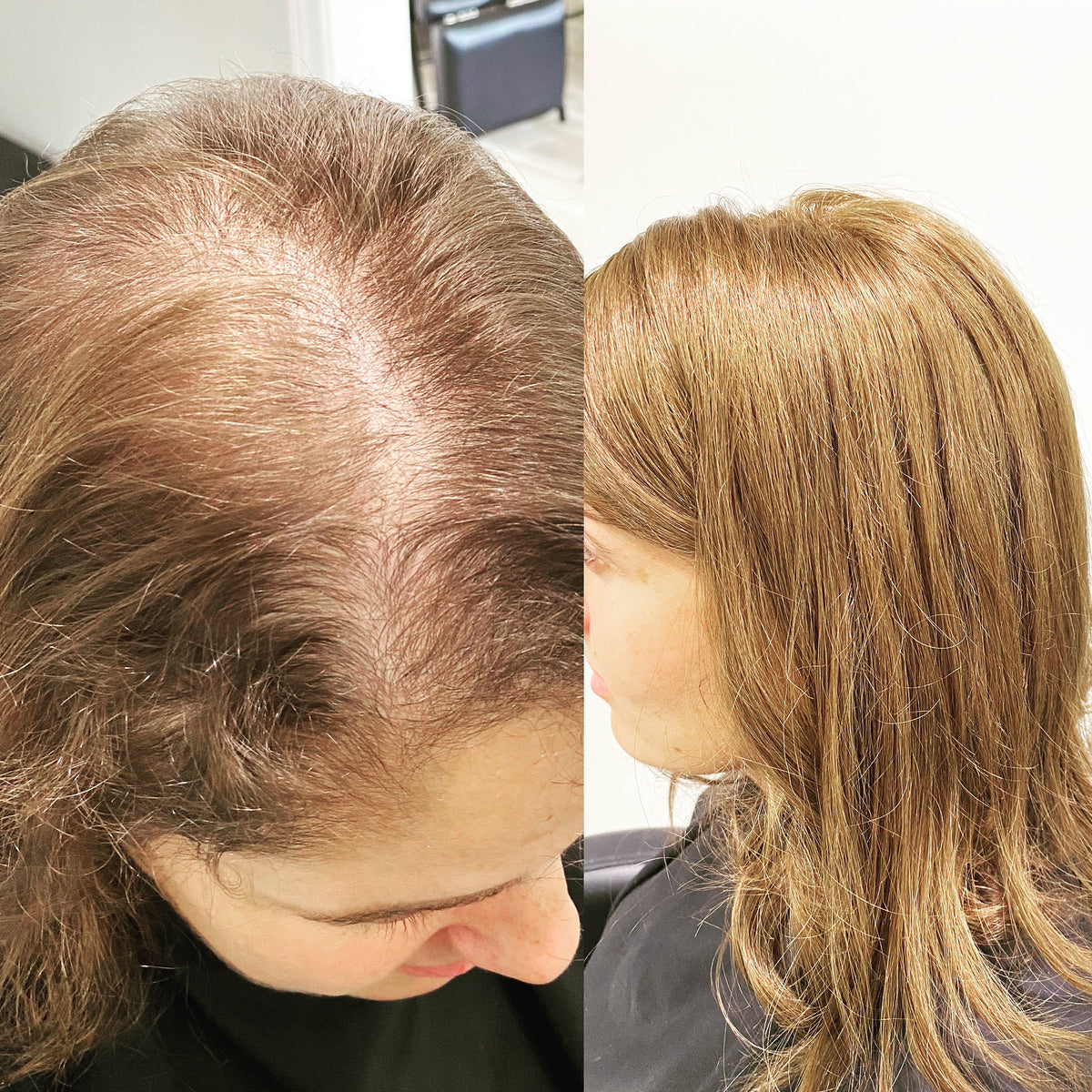
On the other hand, some women have moderate strand thickness but significant scalp visibility, widening parts, or reduced density that may make traditional extensions less appropriate.
Which Solution Is Usually The Best Fit?
| Situation | Extensions May Work Well | Topper May Be Better | Mesh Integration May Be Better |
|---|---|---|---|
| Fine strands but good density | ✓ | ||
| Widening part | ✓ | ✓ | |
| Crown thinning | ✓ | ✓ | |
| Trichotillomania | ✓ | ||
| Alopecia Areata | ✓ | ||
| Female Pattern Hair Loss | ✓ | ✓ | |
| Wants length and volume only | ✓ | ||
| Significant scalp visibility | ✓ | ✓ |

Fine hair refers to strand size. Thin hair refers to density. The distinction matters when evaluating extension candidacy.
The First Thing I Evaluate Isn't Your Hair Texture
When a client comes to Noelle Salon for a Hair Extensions Boston consultation, I am not immediately focused on extension methods.
Instead, I evaluate:
-
Crown density
-
Part-line visibility
-
Overall scalp exposure
-
Hair support capacity
-
Hair strength
-
Breakage patterns
-
Perimeter density
-
Existing hair loss concerns
One of the most important questions is:
Does the client have enough hair in the right areas to naturally conceal the extensions?
Hair extensions must be hidden by your own hair.
If there is not enough density where extensions would be placed, visibility becomes a problem regardless of method.

Every successful extension transformation begins with evaluating density, scalp visibility, support capacity, and realistic goals.
Hair Extensions Are Only As Good As Your Own Hair
This is one of the most important lessons I've learned over 35 years.
Hair extensions cannot replace missing density on the top of the head.
They cannot completely disguise significant scalp visibility.
They cannot solve every hair loss pattern.
The success of extensions depends heavily on the foundation they are attached to.
Women often focus on:
-
Length
-
Color
-
Extension method
-
Number of rows
What matters just as much is the condition of the hair supporting the extensions.
I've seen women spend thousands of dollars on premium hair extensions only to be disappointed because the real issue wasn't the quality of the extensions—it was the amount of natural hair available to support and conceal them. Extensions can enhance your hair, but they cannot replace the foundation underneath them.
Why More Hair Isn't Always Better
One of the most common mistakes I see is the belief that adding more hair will solve every problem.
Many stylists install excessive amounts of hair because clients want dramatic volume.
Unfortunately, more hair often means:
-
More weight
-
More stress
-
More visibility
-
Poor blending
-
Shorter longevity
Heavy installations may look impressive initially but can create unnecessary strain on fine hair.
The goal is not to install the most hair possible.
The goal is to install the right amount of hair for your support capacity.
For many women, lightweight customized approaches create the most natural and sustainable results.
Many extension problems are caused by poor weight distribution, excessive density, or unrealistic expectations rather than the extension method itself. I discuss these concepts in Why Fine Hair Requires A Different Extension Strategy: What 35 Years Has Taught Me and Are My Hair Extensions Too Heavy? 7 Warning Signs Your Extensions May Be Damaging Your Hair
Why AI Hair Inspiration Doesn't Always Translate To Real Life
Recently, more clients have been bringing AI-generated hair inspiration images to consultations.
These images can be helpful for discussing goals, but they often create unrealistic expectations.
AI does not evaluate:
-
Hair density
-
Scalp visibility
-
Hair loss patterns
-
Support capacity
-
Existing breakage
-
Fine versus coarse hair
-
The amount of natural hair available to conceal extensions
An AI-generated transformation may show beautiful color, dramatic volume, and flawless density.
In real life, we must work with the unique characteristics of your hair.
The happiest extension clients aren't necessarily the clients who achieve the most dramatic transformation.
They're the clients whose results look believable, feel comfortable, and work with their natural hair.

AI can create beautiful inspiration, but real-world results must be designed around your unique density, support capacity, and hair goals.
Can Your Hair Hide Extensions?
Some clients have enough hair to support extensions but not enough hair to fully conceal them. In those situations, visibility—not weight—often becomes the deciding factor.
One of the most overlooked questions in extension consultations is whether the client's hair can adequately conceal the extensions.
This becomes especially important around:
-
The crown
-
The sides
-
The perimeter
-
The hairline
-
The bangs
Fine-haired clients often need customized placement strategies rather than standard installations.
Fine hair often requires strategic placement around the bangs and front hairline to maintain a natural appearance while preserving hair integrity.
When A Hair Topper May Be The Better Solution
If a client has significant scalp visibility, widening parts, or fragile density at the crown, a topper may create a better result than extensions alone.
Hair toppers provide:
-
Direct coverage
-
Density at the scalp
-
Crown concealment
-
Natural fullness
In many cases, a topper addresses the primary concern more effectively than adding extensions throughout the rest of the hair.
Many women with crown thinning may be better candidates for a topper. You can see examples in Hair Topper Before And After: Real Results For Crown Thinning And Hair Loss, How To Choose The Right Hair Topper For Your Hair Loss Pattern
When Mesh Integration Makes More Sense
Sometimes extensions alone are not enough.
For women experiencing:
-
Female Pattern Hair Loss
-
Trichotillomania
-
Alopecia
-
Advanced thinning
Mesh integration can create a more realistic and supportive solution.
One of the reasons I often recommend mesh integration is that it allows us to combine:
-
Lightweight toppers
-
Hair integration systems
-
Hair extensions
This creates natural density while protecting fragile areas that may not tolerate traditional extensions.

Not every fine hair client requires the same solution. The best option depends on density, scalp visibility, and support capacity.
For women experiencing advanced thinning, trichotillomania, or female pattern hair loss, I often discuss What Is Mesh Integration And Who Is It Best For? because extensions alone may not provide enough coverage or support.
Conditions That Often Require More Than Extensions Alone
This is one reason many women first searching for hair extensions eventually discover that a topper, mesh integration system, or combination approach may better address the underlying cause of their hair concerns.
Hair extensions may not be the best standalone solution for:
-
Female Pattern Hair Loss
-
Alopecia Areata
-
Trichotillomania
-
Advanced crown thinning
-
Significant scalp visibility
In these situations, combining extensions with other hair loss solutions often creates the most natural result.
Founder Insight
One of the most difficult conversations I have is explaining to a woman that the hairstyle she brought from Pinterest, Instagram, or an AI-generated image may not be realistic for her hair. My responsibility isn't to sell the most hair possible. It's to recommend the solution that will look believable, feel comfortable, and protect the integrity of her natural hair long term.
What I've Learned After 35 Years
The biggest mistake in hair extensions isn't choosing the wrong method.
It's choosing a solution that doesn't match the reality of the client's hair.
The best transformations happen when expectations, support capacity, density, and goals all align.
Hair extensions are not about creating the most dramatic result.
They're about creating the most believable one.
About The Author
Noelle is the founder of Noelle Salon and has spent more than 35 years helping women with fine hair, hair loss, trichotillomania, alopecia, mesh integration, hair toppers, and customized hair extension solutions. She specializes in creating realistic, scalp-conscious solutions designed around each client's unique density and support capacity.
Frequently Asked Questions
Can women with fine hair wear hair extensions safely?
Yes. Many women with fine hair wear extensions successfully. The key factors are density, support capacity, placement, and selecting the right amount of hair.
What's the difference between fine hair and thin hair?
Fine hair refers to strand diameter. Thin hair refers to overall density. Many women with fine hair still have enough density to support extensions.
Are extensions safe for thinning hair?
It depends on the cause and severity of the thinning. Some women benefit from extensions, while others may be better candidates for toppers or mesh integration.
Can extensions hide a widening part?
Not usually. Extensions add volume and length but do not directly cover scalp visibility at the crown or part line.
What if I have hair loss and still want longer hair?
Many women benefit from combining toppers, mesh integration, and extensions to create both coverage and length.
Can fine hair wear weft hair extensions?
Sometimes, but not always. Fine-haired clients often require customized solutions. In some cases, lightweight keratin bonds, micro bonds, toppers, or mesh integration may create a more natural and comfortable result than heavier weft installations.
Schedule A Free Hair Extension Consultation
If you're wondering whether hair extensions are safe for your fine hair, the best first step is a professional evaluation.
During your complimentary consultation, we'll evaluate:
-
Density
-
Scalp visibility
-
Hair strength
-
Support capacity
-
Hair loss concerns
-
Realistic extension options
Together, we'll determine whether extensions, toppers, mesh integration, or a combination approach will create the most natural and sustainable result for your hair.
There is no obligation and no pressure to move forward. The goal is simply to determine whether extensions, toppers, mesh integration, or another solution is the best fit for your hair goals.
Schedule Your Free Hair Extension Consultation Today


