



Quick Answer
Hair loss after surgery, illness, or a stressful period is almost always temporary — it's usually a form of Telogen Effluvium, a shedding cycle triggered by physical or emotional shock to the body. But temporary doesn't mean it's the right time for new hair extensions. In most cases, I recommend waiting until recovery is underway and shedding has slowed before adding anything new. If you already have extensions in during this time, the focus shifts to protecting them: leave-in conditioner, gentle washing (even when it's hard), help from someone you trust, and sleeping in a cap. This is a timing conversation, not a "never" conversation — extensions and toppers are still wonderful options once your hair and body are ready for them.

Hair changes after surgery, illness, or a hard stretch of life catch almost every client off guard. They'll tell me their ponytail feels thinner, their brush is fuller than usual, or they're seeing more scalp in photos than they remember. It's frightening, and I never want a client to feel dismissed when this happens. Recovery is hard enough without also worrying about your hair.
I've spent more than 35 years sitting across from women going through exactly this. And one thing I've learned is that how we handle hair extensions during this window matters just as much as what happens with the hair itself. So before we talk about new extensions, I want to walk you through what I actually tell my own clients — before surgery, during recovery, and during a stressful season — and why.
If you're looking for a fuller picture of hair loss causes, consultations, and cosmetic solutions, I'd also encourage you to visit our Hair Loss Boston page before or after reading this.
Why Surgery, Illness, and Stress Affect Your Hair in the First Place
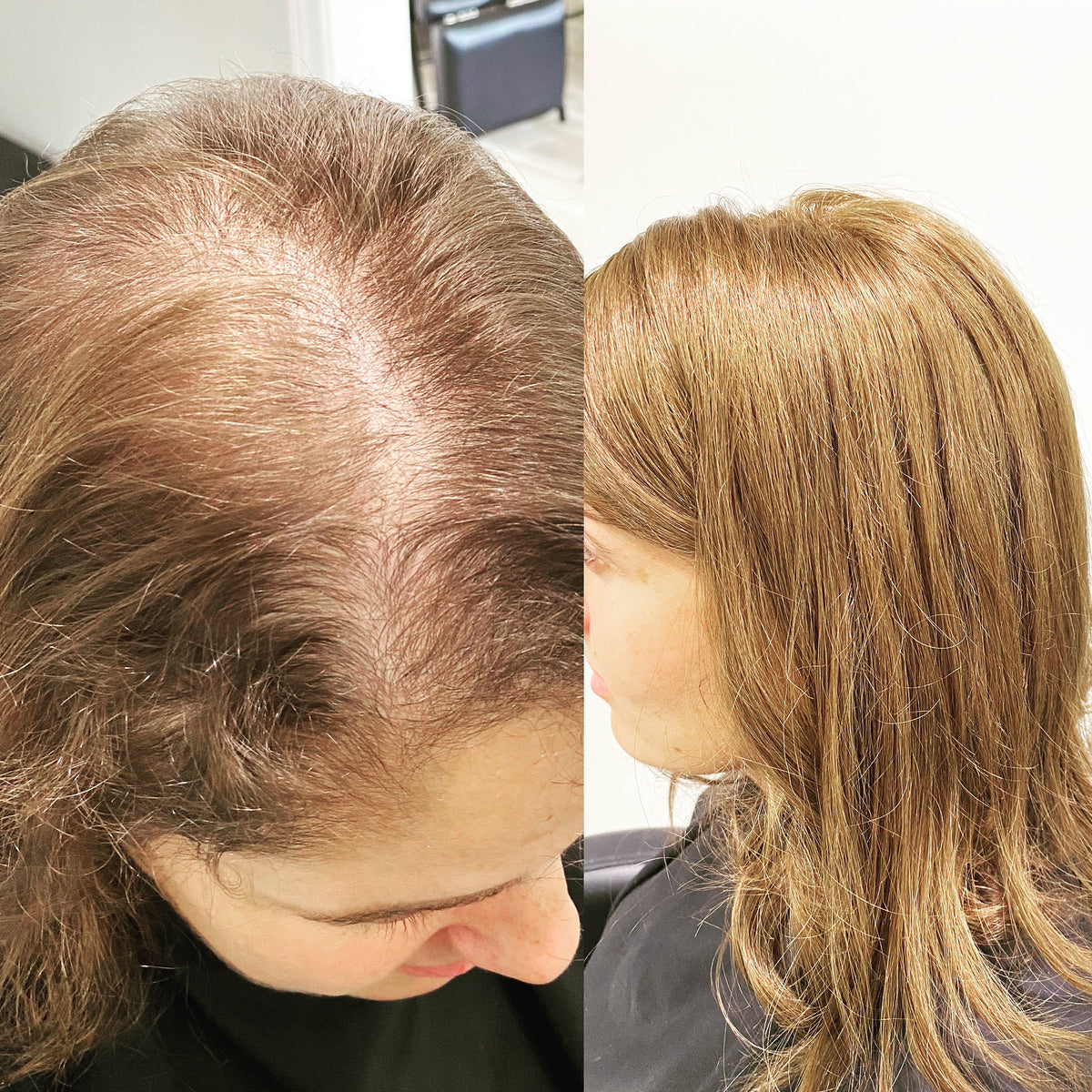
Most of the shedding I see after surgery, illness, or a stressful event is Telogen Effluvium — a temporary shift where a large number of hair follicles get pushed into their resting phase all at once, then shed a few months later. It can look alarming, especially in the shower or on your pillow, but for most women it resolves once the body recovers from whatever triggered it.
That said, I never assume. Two clients can describe nearly identical shedding and be dealing with two different things. If you want to understand more about what's actually happening beneath the surface, I've written more on this in Can Hair Grow Back? A Hair Loss Specialist Explains What I've Learned After 35 Years and Female Pattern Hair Loss vs. Telogen Effluvium: How To Tell The Difference.
Before Surgery: Why I Usually Recommend Waiting on New Extensions
When a client is preparing for an upcoming surgery and asks about getting new extensions beforehand, my honest answer is usually: let's wait.
That's not a blanket rule, and it isn't about telling anyone no. It's about setting you up for the best outcome. A few things I weigh:
Recovery already asks a lot of you. Managing incisions, medication schedules, physical limits, and simply resting takes real energy. Adding a new set of extensions — and the styling and upkeep they require in the first few weeks — is one more thing to manage at a time when you have the least capacity for it.
Medication and anesthesia can also dry out the hair itself, which affects how new extensions look and how well they hold up. Hair that goes into surgery already compromised doesn't blend or wear the same way.
For most clients, the better plan is to go into surgery with your natural hair, focus on recovery, and revisit extensions once you're steadier. If you'd like to understand what a consultation actually looks like so you know what to expect when you're ready, I walk through it in What To Expect During A Hair Extension Consultation.
A Real Client Story
I have a client I've worked with for over 20 years who was preparing for knee replacement surgery. She wanted her extensions replaced beforehand. Instead, I removed them. I knew from experience how difficult it is to properly care for extensions during that kind of recovery, and I didn't want her dealing with that on top of everything else.
After she recovered, she told me it was the best advice I'd ever given her — she said she never could have kept up with the care her extensions needed during that time. That conversation is a big part of why I now share this same guidance with every client facing surgery.

If You're Already Wearing Extensions Into Surgery or Illness
Plenty of clients already have extensions in when surgery or illness happens, and understandably, no one wants to remove them right beforehand. In that case, the goal shifts from "should I get new ones" to "how do I protect what I have."
A few things I tell every client in this situation:
Leave-in conditioner becomes essential. Medication and anesthesia dry hair out from the inside, and extensions need extra moisture to compensate.
Washing may be difficult, but it's usually still necessary. I know it can feel like the last thing you want to deal with during recovery, and I'm not going to pretend it's simple. But skipping washes for too long causes its own problems, especially with extensions. Go gently, and don't feel like you have to do it on the exact same schedule you did before.
Let someone help you. So many of my clients lean on a spouse, partner, sibling, or close friend to wash or brush out their hair when they can't manage it alone. There's no shame in that — it's one of the kindest things a hair care routine can include during a hard time.
Sleep in a cap. A sleeping cap protects the extensions overnight, cuts down on tangling and friction, and honestly just makes mornings easier when brushing is the last thing you have energy for.

If your extensions start to feel heavy, tender, or uncomfortable during this period, it's worth a look — I go into the warning signs in Are My Hair Extensions Too Heavy? 7 Warning Signs Your Extensions May Be Damaging Your Hair
Hair Loss During Illness
Illness follows the same general care approach as surgery recovery, but it can be less predictable — some illnesses resolve in days, others take months, and the hair impact varies just as much. The priority is comfort and low-maintenance care rather than adding anything new. Protect what you have, keep it conditioned, and lean on help when washing or brushing feels like too much.
If your shedding continues well past feeling better, or if you're not sure whether what you're seeing is normal, that's worth a real conversation rather than guessing. I always start those conversations by talking through your history first — I explain why in Can Hair Grow Back?
Stress-Related Shedding: Why I Wait to Apply New Extensions
Stress is a different situation, and I want to be direct about it: if a client's hair is actively shedding from stress, I won't apply new extensions. Not because extensions are off the table forever — but because stress accelerates shedding, and adding weight and tension to hair that's already thinning isn't the right call. It puts strain on hair that needs a chance to recover, not more work to do.
The encouraging part is that stress-related shedding is usually temporary. Once the stressful period passes and your body settles, most women see the shedding slow down and eventually stop on its own. That's the point where new extensions become a much safer, more successful option — the hair underneath is stronger, and the results simply last longer and look better.

Sometimes Protecting You Means Removing the System, Not Just Waiting
This same philosophy applies to hair toppers and mesh integration, not just extensions.
One of my clients wears a hair topper attached with mesh integration. During a routine visit, I noticed she was experiencing severe shedding underneath the system. Rather than simply reattaching it and moving on, I asked her to remove the hair system and see a dermatologist before we did anything else.
She followed up with me afterward and told me that her dermatologist said it was very responsible of me to have her come in and get evaluated rather than covering the shedding back up. That stayed with me, because it's exactly how I think about this work: my job is to help you look and feel like yourself, but never at the expense of your actual hair or health. If something underneath a system doesn't look right, pausing to get answers always comes first.
To see what a custom mesh integration transformation actually looks like, here's a recent client we worked with who was ready to stop waiting for her hair to grow back on its own:
A custom mesh integration transformation for a client with trichotillomania and side hair loss, designed for natural-looking bangs, seamless coverage, and the confidence to wear her hair down again.
If you're curious how mesh integration compares to a traditional topper, I cover that in Mesh Integration vs. Hair Topper: Which Creates Better Coverage For Hair Loss?
What I Typically Recommend, At A Glance
| Situation | What I Usually Recommend | Why |
|---|---|---|
| Preparing for upcoming surgery | Wait on new extensions | Recovery takes priority; anesthesia and medication can dry the hair |
| Already wearing extensions into surgery/illness | Protect, don't replace | Leave-in conditioner, gentle washing, help from a loved one, sleeping cap |
| During illness, hair stable | Case-by-case | Depends on how the illness is affecting energy, hair, and scalp |
| Actively shedding from stress | Wait on new extensions | New weight and tension can add strain to hair already shedding |
| Severe or unexplained shedding under a topper or mesh system | Remove the system, see a dermatologist | Covering up shedding delays the answers you actually need |
| Shedding has slowed / stabilized | Good time to revisit extensions | Healthier foundation means better blend and longer wear |
This Isn't About Telling You No — It's About Timing
I want to be clear about something: none of this is me steering clients away from extensions, toppers, or other cosmetic hair solutions. I've built my entire career around helping women feel like themselves again through hair. What I'm describing is timing, not refusal.
Every client's situation is different, and "wait" doesn't always mean waiting long. Sometimes it's a few weeks. Sometimes it's until a follow-up appointment with your doctor gives us more clarity. Sometimes a lighter, less invasive option — rather than a full new set — is the better fit for where you are right now. That's exactly why I recommend an actual consultation instead of guessing from a blog post: I need to see your hair, hear your story, and understand what you've been through before I can tell you what's realistic for you.

Related Reading
- Female Pattern Hair Loss vs. Telogen Effluvium: How To Tell The Difference
- What To Expect During A Hair Extension Consultation
- Are My Hair Extensions Too Heavy? 7 Warning Signs
- Can Hair Extensions Cause Hair Loss? What 35 Years Has Taught Me
- Mesh Integration vs. Hair Topper: Which Creates Better Coverage For Hair Loss?
Frequently Asked Questions
Can I get hair extensions right before surgery?
In most cases, I recommend waiting. Recovery deserves your full attention, and medication or anesthesia can dry out the hair, affecting how new extensions look and hold up. It's usually better to go into surgery with your natural hair.
Will hair loss from surgery, illness, or stress grow back?
For most women, yes. This type of shedding is usually Telogen Effluvium, a temporary reaction to physical or emotional stress on the body. Once the triggering event resolves, hair typically recovers over the following months.
How do I take care of extensions during recovery?
Use a leave-in conditioner to combat dryness from medication, wash gently even when it's difficult, ask a partner or family member to help with washing or brushing, and sleep in a cap to reduce tangling and friction.
Is it ever okay to get extensions during a stressful period?
If your hair is actively shedding, I don't recommend it — the added weight can add strain to hair that needs to recover. Once shedding slows and stabilizes, it's a much better time.
What if I'm not sure whether my shedding is normal?
That's exactly what a consultation is for. Every client's history is different, and guessing from general advice isn't the same as having your hair and story actually evaluated.
What if I notice shedding under my hair topper or mesh system?
Don't just reattach it and move on. I always recommend removing the system and having a dermatologist take a look first, so we know what we're actually dealing with before covering it back up.
Ready to Talk Through Your Situation?
If you're recovering from surgery, illness, or working through a stressful season and aren't sure what's right for your hair, you don't have to figure it out alone. During a complimentary Hair Loss Consultation at Noelle Salon in Melrose, Massachusetts, we'll talk through what you've been through, evaluate your hair and scalp, and build a plan that fits where you are right now — not a generic timeline. If extensions are part of that plan already, you can also book a complimentary Hair Extension Consultation and we'll go from there together.


