

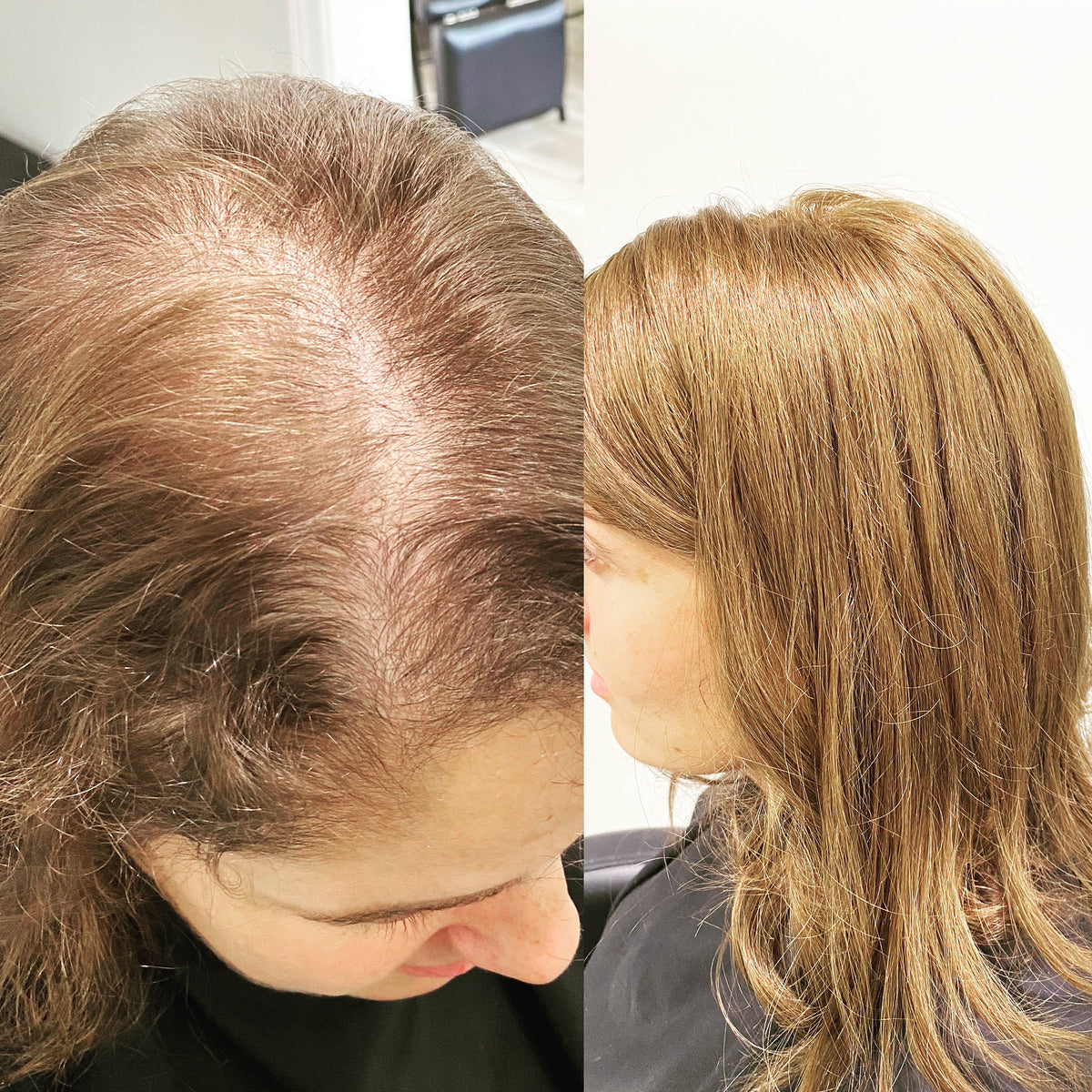


Can Hair Grow Back? A Hair Loss Specialist Explains What I've Learned After 35 Years
Quick Answer
One of the first questions women ask me during a hair loss consultation is:
"Will my hair grow back?"
I wish there were one simple answer.
Unfortunately, there isn't.
After more than 35 years helping women experiencing every type of hair loss imaginable, I've learned that the answer depends almost entirely on why your hair changed in the first place.
Some types of hair loss have an excellent chance of regrowth. Others improve once the underlying cause is treated. Some can be managed with medical care. Unfortunately, some conditions permanently damage the hair follicle, making regrowth unlikely.
The encouraging news is that even when hair doesn't grow back the way you hoped, you still have options.
As a cosmetic hair loss specialist, my role isn't to diagnose medical conditions. My role is to evaluate your hair, understand any diagnosis you've already received, and recommend cosmetic solutions that work alongside—not instead of—your medical care.
Over the years, I've learned something important:
The women who have the best long-term outcomes are usually the ones who first understand why their hair changed before deciding how they want to restore it.
If you're looking for comprehensive information about hair loss solutions in Boston, including consultations, hair toppers, mesh integration, wigs, and hair replacement options, I encourage you to visit our Hair Loss Boston page before exploring the different conditions discussed below.
When Women Walk Into My Consultation Room, They're Usually Asking The Wrong Question
Very few women sit down and immediately tell me exactly what's causing their hair loss.
Instead, I hear questions like:
"Why does my ponytail feel so much smaller?"
"I can suddenly see my scalp in pictures. Is that normal?"
"My hair doesn't style the way it used to."
"Every time I wash my hair, it feels like I'm losing handfuls."
"Will my hair grow back?"
The last question is understandable.
But it's rarely the first question we need to answer.
The better question is:
"Why has my hair changed?"
Once we understand that, we can begin talking about what the future may look like.
Hair Changes Don't Always Mean Permanent Hair Loss
One thing I've learned after thousands of consultations is that many women don't realize they're experiencing hair loss.
They simply know something feels different.
Their hair feels finer.
Their ponytail isn't as thick.
Their scalp seems easier to see under bright lights.
Their bangs don't fall the same way.
Their crown won't hold volume.
Sometimes friends and family don't notice anything at all.
Other times everyone notices except the person experiencing it.
Hair changes can happen gradually over several years or almost overnight.
That's why I never assume I know what's happening within the first few minutes of meeting someone.
Two women can appear to have very similar thinning while experiencing completely different conditions.
That's one reason I believe every hair loss consultation should begin with a conversation—not a cosmetic recommendation.
Every Hair Loss Consultation Begins With Your Story
People are often surprised that I don't immediately begin talking about hair toppers, mesh integration, or extensions.
Instead, I start asking questions.
When did you first notice a change?
Did it happen suddenly or gradually?
Has your ponytail gotten smaller?
Have you recently had surgery?
Been sick?
Had COVID?
Started menopause?
Changed medications?
Experienced a particularly stressful time in your life?
Lost a significant amount of weight?
Started a GLP-1 medication like Ozempic®, Wegovy®, or Zepbound®?
Have you had recent bloodwork?
Have you already seen a dermatologist?
Those answers help me begin understanding what may be happening before I even separate your hair.
Sometimes a woman's history immediately points me in one direction.
Other times it completely changes what I expected to find.
That's why I never assume.
Every consultation is different.
Then I Begin Evaluating The Hair
Once we've talked, I begin carefully examining the hair itself.
I separate the hair in multiple areas.
I evaluate the part line.
The crown.
The front hairline.
The sides.
The back of the head.
I gently lift sections of hair to evaluate the density underneath.
One of the most encouraging things I look for is tiny new hairs beginning to emerge from the follicles.
Those little hairs often tell me that healthy follicles are still producing new growth.
I also look for:
-
Areas where the hair is becoming finer.
-
Whether one side appears denser than the other.
-
Scalp visibility.
-
Miniaturization.
-
Signs of active shedding.
-
Overall hair density.
-
Whether I see patterns that resemble Female Pattern Hair Loss, diffuse shedding, Alopecia Areata, Trichotillomania, or another condition.
If appropriate, I perform a gentle pull test to determine whether active shedding appears to be occurring.
No single observation gives me the answer.
Instead, I combine everything I see with everything you've told me.
That's how I begin putting the puzzle together.

Sometimes The Most Honest Answer Is, "I Don't Know Yet."
People often expect me to answer immediately.
"Will it grow back?"
Sometimes...
I honestly don't know yet.
And I'm comfortable saying that.
Not because I lack experience.
Because I don't believe in giving false hope.
Nor do I want to take hope away unnecessarily.
If someone doesn't yet have a clear diagnosis...
If I believe they're still actively shedding...
If I think additional medical evaluation could provide important answers...
I'll tell them exactly that.
After more than 35 years, I've learned that honesty builds far more trust than pretending to know something I don't.
One Question I Almost Always Ask
If someone tells me,
"My dermatologist told me I have alopecia."
My next question is almost always,
"Do you know what type?"
Many people don't realize that alopecia simply means hair loss.
It isn't actually a diagnosis by itself.
The reason behind the hair loss is what matters.
Female Pattern Hair Loss.
Alopecia Areata.
Lichen Planopilaris (LPP).
Traction Alopecia.
Telogen Effluvium.
Each behaves differently.
Each has a different long-term outlook.
Each requires different cosmetic planning.
If a client isn't sure exactly what type of hair loss they have, I often encourage them to ask additional questions during their next dermatology appointment.
Sometimes bloodwork helps.
Sometimes a biopsy provides more answers.
The more we understand about why the hair changed, the better decisions we can make moving forward.
Why I Sometimes Recommend Bloodwork Before Hair
One of the biggest changes I've seen over the past several years is the number of women experiencing diffuse shedding after major life changes.
Sometimes it's illness.
Sometimes surgery.
Sometimes childbirth.
Sometimes menopause.
And increasingly...
Significant weight loss.
Particularly after taking GLP-1 medications.
As a cosmetic specialist, I don't determine the medical cause.
But if someone tells me they've recently lost a substantial amount of weight, I often encourage them to discuss bloodwork with their physician.
Low iron.
Low protein.
Vitamin deficiencies.
Thyroid changes.
These can all influence the hair growth cycle.
If there is an underlying medical issue contributing to hair loss, addressing it may improve not only the hair but overall health as well.
Sometimes I Recommend Waiting
People are often surprised when I tell them they may not be ready for cosmetic hair.
I know that sounds unusual coming from someone who specializes in hair restoration.
But I've never believed in selling someone hair simply because they walked into my salon.
If I believe someone is actively shedding because of an untreated medical condition, significant nutritional deficiency, or another issue that should be evaluated first, I'll explain exactly why.
Sometimes waiting a few weeks—or even a few months—results in a better long-term outcome.
Ultimately, the decision is always my client's.
My responsibility is simply to provide the most honest advice I can.
Why Dermatologists And Cosmetic Hair Specialists Make A Great Team
One of my favorite moments is when a client returns and says,
"My dermatologist loved what you did."
That means a great deal to me.
Medical treatment and cosmetic restoration shouldn't compete with one another.
They should work together.
My job isn't to replace your physician.
My job is to help you feel like yourself again while supporting the treatment plan you've already begun.
Sometimes that means creating a topper that works around medication.
Sometimes it's selecting extensions that won't place unnecessary stress on fragile hair.
Sometimes it's designing a custom mesh integration system that still allows access to the scalp for topical treatments.
Every recommendation begins with one simple question:
"What's going to give this woman the best possible outcome?"
Can Hair Grow Back? It Depends On The Type Of Hair Loss
After more than three decades, I've worked with women experiencing many different forms of hair loss, including:
-
Chemotherapy hair loss
-
Trichotillomania
-
Female Pattern Hair Loss
-
Telogen Effluvium
-
GLP-1 related shedding
-
Alopecia Areata
-
Lupus and other autoimmune conditions
-
Lichen Planopilaris (LPP)
-
Other scarring alopecias
Although nearly every woman asks me the same question—
"Will my hair grow back?"
—the answer depends on what's happening beneath the surface.
|
Hair Loss Condition |
Can Hair Grow Back? |
What I've Personally Observed |
|
Chemotherapy |
Usually Yes |
One of the most encouraging recoveries I see. Hair often returns healthy, although the texture may initially change. |
|
Trichotillomania |
Often Yes |
When pulling stops before permanent follicle damage occurs, I've seen remarkable regrowth. |
|
Telogen Effluvium |
Usually Yes |
Many women recover once the triggering event has resolved. |
|
GLP-1 Related Shedding |
Often Yes |
Frequently improves as nutrition stabilizes and the body recovers. |
|
Alopecia Areata |
Often |
Many women experience periods of regrowth, although recurrence is possible. |
|
Lupus & Autoimmune Conditions |
Sometimes |
Improvement often depends on controlling inflammation and working closely with medical providers. |
|
Female Pattern Hair Loss |
Usually Progressive |
Medical treatment may slow progression while cosmetic solutions restore fullness and confidence. |
|
LPP & Other Scarring Alopecias |
Usually No |
Once follicles scar, preservation and cosmetic restoration become the primary focus. |
Chemotherapy Hair Loss: One Of The Most Inspiring Journeys I Get To Witness

Few moments in my career are more rewarding than watching a woman regain her confidence after chemotherapy.
Chemotherapy-related hair loss is one of the types where I most often see excellent regrowth. (For what to expect before, during, and after treatment, see our full guide: Chemotherapy Hair Loss: What To Expect.) Here's one story that stays with me.
One client stayed in close contact with me throughout her recovery. When she first came back after treatment, she had about an inch of soft, curly new growth. Like many women, she was thrilled her hair was returning but missed the look and length she had before cancer.
Rather than rushing into a topper, we made a long-term plan together.
Every month she sent me updated photos so I could monitor her progress. As her own hair became stronger, we adjusted our approach. About four months later, she had nearly three inches of healthy new growth.
At that point, I performed a Yuko Anti-Frizz Treatment to gently smooth the new curls, making them easier to blend while still allowing the hair to continue growing naturally.
Once her own hair was strong enough, we added lightweight micro wefts and carefully placed individual keratin extensions to restore length and fullness without overwhelming her delicate new hair.
One thing I've learned is that many women who have gone through chemotherapy don't necessarily want to hide their new hair.
They're proud of it.
They've waited months to see it return.
Whenever possible, my goal is to work with that new growth instead of covering it.
Watching someone smile because she finally recognizes herself again never gets old.
Trichotillomania: Some Of The Most Rewarding Recoveries I Ever See

For more than three decades, I've worked with women, teenagers, and children living with Trichotillomania.
Many arrive feeling embarrassed, ashamed, or convinced no one will understand.
One of the first things I tell them is:
"You're not alone."
Hair pulling is far more common than most people realize.
When pulling stops before permanent damage occurs, I've seen incredible regrowth.
Some clients begin seeing tiny new hairs within a few months.
Others take longer.
Every recovery is unique.
While they're working with therapists, physicians, or support groups to address the underlying behavior, I help restore confidence through cosmetic solutions that protect the new growth.
Sometimes that's a lightweight topper.
Sometimes it's a custom mesh integration system.
Sometimes it's strategically placed extensions that blend areas of regrowth while allowing the natural hair to continue growing.
One of my favorite appointments is when a client tells me,
"I don't think I need as much hair anymore."
That's when I know both confidence and recovery are moving in the right direction.
Related Articles
-
Trichotillomania Recovery: What Happens After Hair Pulling Stops?
-
Trichotillomania Client Transformations and Recovery Stories
Telogen Effluvium: Temporary Hair Loss That Often Gets Mistaken For Something Permanent

One of the most common conditions I see is Telogen Effluvium.
Unlike Female Pattern Hair Loss, which usually develops gradually, Telogen Effluvium often appears suddenly.
A woman may tell me,
"Three months after surgery my hair started falling out."
Or,
"After having COVID I couldn't believe how much hair was coming out in the shower."
Others notice shedding after childbirth, a serious illness, emotional stress, rapid weight loss, or significant hormonal changes.
The amount of shedding can be frightening.
Many women become convinced they're going bald.
Fortunately, that's often not the case.
When the triggering event resolves, many women begin seeing regrowth over the following months.
During that waiting period, cosmetic hair solutions can restore confidence while their own hair recovers.
GLP-1 Hair Loss: A Conversation I'm Having Almost Every Week

Over the past few years, one topic has become increasingly common during consultations.
Many women tell me they've noticed increased shedding after significant weight loss while taking medications such as Ozempic®, Wegovy®, or Zepbound®. As a cosmetic specialist I don't determine the medical cause, but rapid weight loss, reduced protein intake, and vitamin deficiencies can all affect the hair growth cycle, so I encourage clients to discuss bloodwork with their physician when appropriate.
The encouraging news is that many women see improvement once their overall health stabilizes, and cosmetic solutions can help in the meantime. For a closer look at the research and what actually helps, see our full guide: Semaglutide and Hair Loss: Risks and Prevention.
Female Pattern Hair Loss: Protect What You Have

Female Pattern Hair Loss usually develops much more gradually than Telogen Effluvium.
Women often tell me,
"My ponytail keeps getting smaller."
"My scalp shows more than it used to."
"I just can't get the same volume anymore."
Female Pattern Hair Loss is generally progressive.
That doesn't mean there isn't hope.
Many women experience encouraging improvements while working closely with their dermatologist.
My job is different.
I focus on preserving the existing hair while creating natural-looking fullness.
Sometimes that's accomplished with lightweight hair toppers.
Sometimes with carefully customized hair extensions.
Sometimes it's a combination of several techniques.
The goal isn't simply adding hair.
The goal is making someone feel like herself again. If you're not sure what's driving your thinning, see: Why Is My Hair Thinning? The 12 Most Common Causes.
Alopecia Areata: Working With Your Medical Treatment, Not Against It

One client came to me after being diagnosed with Alopecia Areata.
Her dermatologist had prescribed topical medication.
Because the primary area of hair loss was toward the back of her head, I knew a traditional topper wasn't the best solution.
Instead, I designed a custom mesh integration system that restored the appearance of fuller hair while still allowing her to continue applying her medication directly to the scalp.
That combination allowed cosmetic restoration and medical treatment to work together.
Those are some of my favorite success stories. For more on causes, symptoms, and treatment options, see: Alopecia Areata: Causes, Symptoms, & Olumiant Treatment.
Lupus And Other Autoimmune Hair Loss
Autoimmune conditions affect every woman differently.
Some experience diffuse thinning.
Others develop patchy hair loss.
Some improve dramatically once inflammation is controlled.
Others experience ongoing changes over time.
That's why flexibility matters.
As the hair changes, the cosmetic solution often changes too. Read more: Understanding Lupus Alopecia: Navigating Hair Loss and Treatment Options.
Lichen Planopilaris (LPP) And Other Scarring Alopecias

LPP is one of the more difficult diagnoses because it permanently scars the hair follicle. (For a deeper look at diagnosis and care, see our full guide: Hair Replacement for Lichen Planopilaris (LPP).)
Once that follicle has been replaced by scar tissue, regrowth generally isn't possible.
While that's difficult news to hear, it doesn't mean there are no options.
It simply changes our focus.
Instead of waiting for hair to grow back, we work on protecting the healthy hair that remains while creating lightweight cosmetic solutions that feel comfortable and natural.
Helping someone regain confidence is just as meaningful as helping someone whose hair is actively growing back.
What Gives Me Hope During A Consultation
After thousands of consultations, there are certain things that always make me optimistic.
Tiny new hairs emerging from healthy follicles.
A shedding pattern that appears temporary.
A woman who finally has an accurate diagnosis.
Medical treatment beginning to work.
But hope isn't always measured by hair growth.
Sometimes it's watching someone smile when they see themselves in the mirror again.
Sometimes it's helping a teenager return to school feeling confident.
Sometimes it's helping a woman attend a family wedding without worrying about her hair.
Confidence matters.
Real Client Experience: Living With Hair Loss And Wearing A Hair Topper
"Many women worry that wearing a hair topper will feel uncomfortable or look unnatural. One of our clients shares her experience of how the right hair topper helped restore not only her hair, but her confidence."
In this short video, one of our clients explains why she chose a custom hair topper and how it allowed her to feel like herself again while managing hair loss.
What I've Learned After More Than 35 Years
People often assume my job is replacing hair.
It isn't.
My job is listening.
Asking questions.
Looking carefully.
Recognizing patterns.
Knowing when to move forward.
Knowing when to wait.
Sometimes I recommend hair immediately.
Sometimes I recommend more testing first.
Sometimes I encourage a woman to return after seeing her dermatologist.
Every recommendation begins with the same goal:
Helping someone make the best decision for her hair—not simply the fastest one.
After more than 35 years, I still love what I do because every consultation is different.
Every story is different.
Every woman deserves to feel heard.
Hair Loss Consultations & Cosmetic Solutions
- Hair Loss Boston – Learn about our private hair loss consultations, hair toppers, mesh integration systems, wigs, and customized hair replacement solutions.
- How To Choose The Right Hair Topper For Your Hair Loss Pattern
- What Is Mesh Integration And Who Is It Best For?
- Hair Extensions For Fine And Thinning Hair
Understanding Different Types Of Hair Loss
- Female Pattern Hair Loss vs. Telogen Effluvium: How To Tell The Difference
- Why Is My Hair Thinning? The Most Common Causes For Women
- Chemotherapy Hair Loss: What To Expect Before, During, And After Treatment
- Trichotillomania Client Transformations And Recovery Stories
- Hair Replacement For Lichen Planopilaris (LPP)
Before & After Transformations
- Why Fine Hair Requires a Different Hair Extension Strategy
- Hair Topper Before & After Transformations
- Trichotillomania Before & After
Frequently Asked Questions
Can hair grow back after years of thinning?
It depends entirely on the cause. Some conditions improve dramatically with treatment, while others are progressive. A proper diagnosis is the best place to begin.
Can hair grow back after chemotherapy?
In many cases, yes. Hair often returns within several months, although the texture may initially be different. Cosmetic solutions can help bridge the gap while it continues growing.
Can GLP-1 medications cause hair loss?
Many women notice increased shedding after rapid weight loss. Your physician can help determine whether nutritional deficiencies or other factors may be contributing.
Should I see a dermatologist before getting a topper or hair extensions?
Whenever possible, yes. Knowing the underlying diagnosis helps me recommend the safest cosmetic solution for your individual hair loss pattern.
Will hair extensions damage thinning hair?
Not when they're properly selected and customized. The best method depends on your hair density, scalp health, and overall goals.
Ready To Find Out What's Causing Your Hair Changes?
If you've been wondering whether your hair will grow back—or why it has changed in the first place—you don't have to figure it out alone.
During your complimentary hair loss consultation at Noelle Salon in Melrose, Massachusetts, we'll discuss your hair history, review any diagnosis you've already received, evaluate your scalp, hair density, and growth patterns, and recommend cosmetic solutions that fit your lifestyle and long-term goals.
Whether your hair is just beginning to thin, actively growing back, or you're looking for options after years of hair loss, my goal is always the same:
If you're ready for answers—not guesses—I invite you to schedule a complimentary Hair Loss Consultation. Together, we'll evaluate your hair, discuss your options, and create a personalized plan designed specifically for you.


