



Human vs. Synthetic Wigs & Hair Toppers
Clients often ask for a clear understanding of the difference between human hair and synthetic options for wigs and hair toppers (also known as hair systems). For those exploring solutions related to hair loss Boston, choosing the right material can make a significant difference in both appearance and daily maintenance.
Human hair wigs are made from real hair, offering the most natural look, greater styling flexibility, and long-term durability. They can be heat styled, colored, and customized to match your personal style. Synthetic wigs, on the other hand, are made from advanced fibers designed to mimic natural hair. They are typically more affordable, require less maintenance, and hold their style with minimal effort.
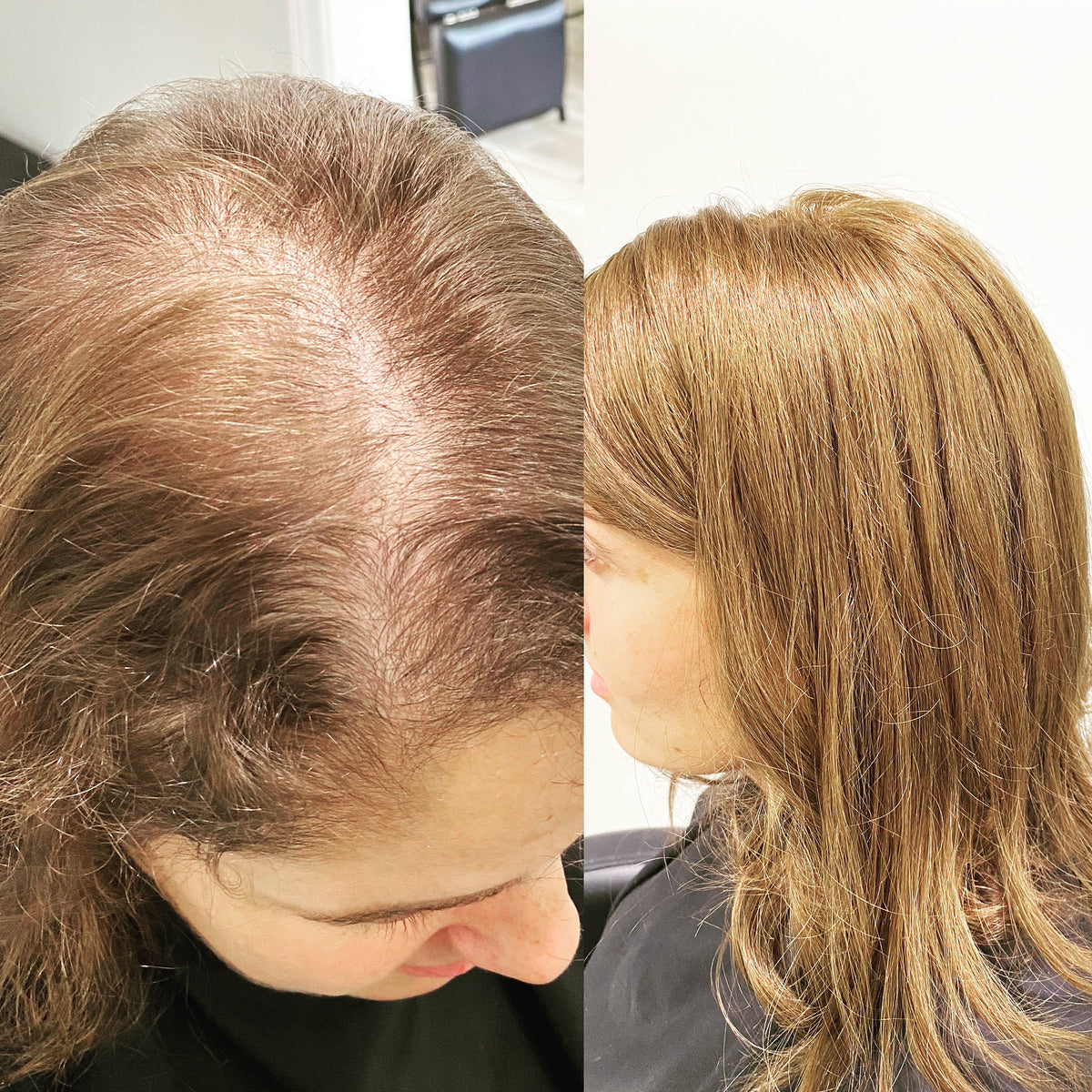
Hair toppers are specifically designed to integrate with your natural hair, making them ideal for targeted thinning at the crown, part line, or sides. Because blending is essential, human hair is often the preferred choice for toppers, as it allows for a more seamless, undetectable result.
Ultimately, the best option depends on your lifestyle, styling preferences, and how much flexibility you want in your daily routine. Some clients prioritize ease and low maintenance, while others prefer the ability to fully customize their look.
Key Differences at a Glance
Human hair wigs deliver the most natural look, high versatility, and strong durability. By contrast, synthetic wigs are typically more affordable, low maintenance, and excellent at holding a preset style. Your choice often comes down to budget, desired realism, styling freedom, and how much daily effort you want to invest. Have you weighed the value of effortless styling against the ability to curl, color, and restyle at will?
Well-made synthetics can closely resemble human hair in appearance and movement, but they cannot match human hair’s full spectrum of styling options. Synthetic fiber “remembers” its style and resists humidity changes, while human hair behaves like your own, responding to tools and products. Are you looking for a set-it-and-forget-it routine or do you prefer to customize your look day by day?
Benefits of Synthetic Wigs
Synthetic fibers are man-made; when exposed to high temperatures, plastic-based strands can melt or singe. Even with heat-friendly versions, you should avoid temperatures above 300 degrees to protect the fiber—and keep an eye on heat sources like ovens or open flames. Have you thought about how your daily environment (like cooking or outdoor heat) might affect your wig’s longevity?
Low Maintenance and Reliable Styling
One of the biggest perks of synthetic hair and synthetic fibers is their style memory. The fiber holds its intended shape, making it ideal for anyone who prefers quick, predictable styling. Synthetic hair “remembers” the curl pattern or sleek finish, so the look returns after washing—just avoid trying to restyle it with high heat. Have you considered how a preset style could simplify your morning routine?
When washing, use a gentle, sulfate-free cleanser or a dedicated wig shampoo, then allow it to air dry on a stand to preserve the shape. In many cases, a quick soak bath using a specialized synthetic cleanser can freshen the wig with minimal handling—dip, rinse in lukewarm water, and let it dry. This simple process helps maintain fiber integrity while restoring freshness. Would a straightforward wash routine help you wear your wig more often with confidence?

Between washes, a light, non-oily wig refresher spray can reduce odors and revive fiber appearance. While spray alone does not replace cleansing, it can extend time between shampoos. Note that some wearers with sensitive scalps may find synthetic fibers slightly itchy, especially in warm weather. However, synthetic wigs are typically more budget-friendly than human hair, and they’re available in straight, wavy, and curly preset looks—no hot tools required. Would a lower-cost, low-care option encourage you to experiment with multiple styles or colors?
Types and Grades of Synthetic Fibers
Not all synthetic wigs are alike. Traditional Kanekalon or Toyokalon fibers emphasize shape memory and shine reduction, while higher-end blends aim for a more matte, human-hair-like finish. Heat-friendly synthetics permit low-temperature touch-ups, but they still require caution near styling tools. Some premium fibers combine multiple deniers for a more lifelike density and movement. Have you considered whether you want the simplicity of a fixed style or the flexibility of occasional low-heat tweaks?
Hypothetically, a frequent traveler might choose a heat-friendly bob that can be quickly refreshed with a low-heat blow-dryer, whereas someone with a busy morning routine could prefer a classic, non-heat synthetic curl that snaps right back after air drying. A performer might keep a few preset styles on rotation to minimize backstage prep. What scenarios in your week call for quick changes with minimal fuss?
How Long Do Synthetic Wigs Last?
Most synthetic wigs and toppers are designed for a shorter wear cycle—often around three to six months—before fibers begin to fray or lose luster. Body heat, friction at the nape, and frequent wear can cause tangling or frizz over time, especially on longer lengths. If you work out regularly or experience heat buildup, you may notice faster wear on the nape area. Does your activity level suggest a backup style to switch in on high-friction days?
Benefits of Human Hair Wigs & Toppers
Human hair toppers and wigs are prized for natural movement and styling freedom. Because they’re made from real hair, you can curl, smooth, or shape them similarly to your own. This makes customizing your perfect wig more exciting—and often more precise—than with synthetic. Would being able to restyle for different occasions help you get more value from a single piece?
Human hair tends to last longer with proper care and may feel cooler and more breathable against the scalp. Many wearers find human hair more comfortable in warm climates because it wicks and moves more like bio hair. Are you seeking a piece that can transition from day to night styling with just a few tools?

Human Hair Quality: Grades and What to Look For
Like synthetic fibers, human hair varies widely in quality. Common categories include virgin (unprocessed), virgin one-donor (cut from a single source), Remy hair (cuticle-aligned), blended hair, and mixed collections. Unprocessed hair is typically more durable, though it often comes in darker shades unless custom colored. With one-donor bundles—even when processed—the hair’s cuticle direction and consistency help reduce matting and prolong life. Have you confirmed how the hair was sourced and whether the cuticles are aligned for smoother wear?
Inferior hair is sometimes swept from brushes or floors, which can lead to mixed cuticle directions. This mismatch causes friction, tangling, and matting, particularly at friction points like the nape. By contrast, Remy and carefully sourced one-donor hair maintain cuticle alignment, leading to better manageability and shine retention. Are you checking for consistent texture from root to tip, a reliable indicator of higher sourcing standards?
How Long Do Human Hair Wigs Last?
With thoughtful care, many human hair wigs last roughly one to four years, depending on wear frequency, cap construction, color processing, and at-home maintenance. High-quality hair, strong stitching, and a well-built cap contribute to a longer lifespan. Heat styling should be minimized to protect the cuticle, and air drying can help preserve softness. Do you plan to wear your piece daily, or will you rotate styles to extend its life?
Human hair looks and feels natural and can be virtually undetectable when properly fitted. Most pieces benefit from monthly cleansing, followed by styling to restore shape. The less direct heat applied, the better; air dry when possible and use rollers or low-heat tools to shape. Lightweight leave-in conditioners, humectant-rich treatments, and sulfate-free shampoos support moisture without overcoating the strands. Could a gentle, consistent routine help your piece maintain luster and movement longer?
One trade-off: human hair needs time and attention. If you prefer minimal upkeep, synthetics may better suit your schedule. Of course, you can always arrange professional maintenance if you’d rather not style it yourself. Would expert care give you confidence while protecting your investment?
Short Hair, Density, and Natural Results
Synthetic wigs often shine for short hairstyles because preset structure holds shape beautifully with minimal effort. They’re easy to swap and style, offering variety at a lower price point. Longer synthetic lengths can appear overly shiny or require more detangling, especially at the nape, so expectations should be set accordingly. Have you thought about starting with a short synthetic cut to explore color or texture changes?
Human Hair Toppers: Blending With Your Own Hair
For short hairstyles, a human hair topper typically needs higher density to look full and natural. While many toppers range from about 100% to 120% density, shorter cuts often benefit from 150% density or more to avoid a flat or see-through effect. If you cut a low-density hair topper too short, the base may peek through. In practice, a well-matched, higher-density topper can look seamless on clients with alopecia or thinning at the part and crown. Have you considered whether your target cut and coverage area call for a denser option?
Attachment methods vary. Many clients prefer lightweight, secure installs without glue, tape, or sewing for everyday comfort. For upkeep, gentle cleansing and simple products like light mousse or gel help the hair fall back into place after washing. If you need a fast refresh, you can wash the topper, pat dry, and shape as it air dries for a soft, natural finish. Would a quick, low-fuss reset routine make wearing a topper easier for you?
Sensitive Scalps and Comfort Considerations
A lightweight synthetic wig can feel comfortable for sensitive scalps, including those undergoing or recovering from medical treatments like chemotherapy. Breathable caps and soft linings further improve comfort, and lighter densities reduce pressure on tender areas. Have you explored cap materials and weight to find the best match for your scalp needs?
At Noelle Salon, our team specializes in human hair solutions and can also assist with synthetic wigs to meet a range of comfort, coverage, and styling goals. Free consultations are available for hair extensions, toppers, and wigs, and many toppers are in stock for same-day service. Expert application, cutting, and finishing help ensure that your piece looks natural and feels secure. Would guided support from selection through styling help you feel confident from day one?
Simplified Care: Human vs. Synthetic
Proper care extends the life and look of any wig or topper. A clear, simple routine helps you avoid common pitfalls and keep hair looking fresh. Which steps below fit your weekly calendar and comfort level?
- Detangle gently: Start from the ends and work up with a wide-tooth comb; avoid yanking on knots.
- Cleanse smartly: Use sulfate-free products or dedicated wig shampoos; avoid hot water that can harm fiber or fade color.
- Rinse and dry: Rinse thoroughly, then blot with a towel—do not rub. Air dry on a stand to maintain shape and cap integrity.
- Condition with care: Use light, wig-safe conditioners and avoid over-conditioning near knots or hand-tied areas.
- Minimize heat: For human hair, keep heat moderate and infrequent; for synthetics, avoid high heat unless the fiber is labeled heat-friendly—and even then, be conservative.
- Protect daily: Store on a stand, shield from friction (especially at the nape), and consider a silk pillowcase to reduce tangling.
- Refresh between washes: Use an approved refresher spray sparingly to extend time between cleans without buildup.
- Schedule maintenance: Periodic trims, deep conditioning (for human hair), or professional detangling can extend wear life.
Common mistakes to avoid include using very hot tools on synthetic fibers, over-brushing when hair is wet, and applying heavy, oily products that weigh hair down or loosen knots. Have you mapped out a simple weekly plan to prevent these issues before they start?
Pricing, Longevity, and Lifestyle Fit
Synthetics generally cost less up front and keep their shape with minimal effort, making them a strong value for those who want predictable styling. Human hair has a higher initial price but offers multi-year potential, salon-level styling, and a natural feel that many find worth the investment. Which matters more to you: a lower purchase price or longer-term versatility and realism?
If you want multiple looks with almost no styling time, a rotation of synthetic wigs in different lengths or colors can be very effective. If you prefer one premium piece you can cut, color, and style like your own hair, a human hair wig or topper is likely the best route. Do you envision one signature style—or a wardrobe of looks for work, weekends, and events?
Conclusion: Choosing the Right Wig or Topper
Both synthetic and human hair options offer distinct advantages. Synthetic wigs are budget-friendly, low maintenance, and designed to hold their style—making them ideal for consistent, everyday wear. Human hair pieces provide the most natural appearance, along with full styling flexibility and longer lifespan when properly maintained.
The right choice comes down to your lifestyle, routine, and how much versatility you want in your day-to-day look. When your selection aligns with your needs, the result feels effortless, comfortable, and truly your own.
If you’re ready to compare options in person and find the best fit for your hair, expert guidance can make the process simple and stress-free.
👉 Book your free hair loss consultation and explore human hair wigs, synthetic options, and hair toppers tailored to your style, comfort, and confidence.


